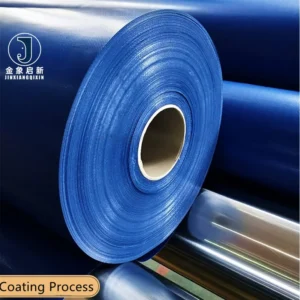
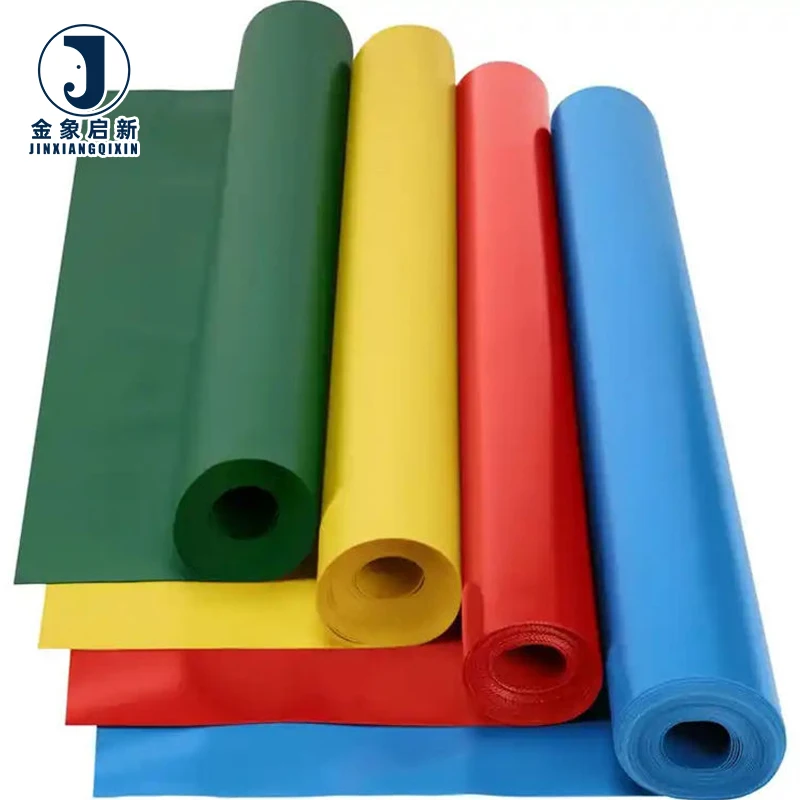
Precision Coating Control — Every roll of 500D500D 1817 PVC coated tarpaulin passes through a three-stage coating process verified by dedicated QA at each step, ensuring GSM consistency and adhesion strength match the specification sheet you approved before production.
Technical Specifications
| Parameter | Value |
|---|---|
| Product Type | PVC Coated Tarpaulin Roll |
| Base Fabric Denier | 500D×500D |
| Mesh Count | 18×17 |
| Coating Material | PVC |
| Flame Retardant | Available in flame retardant grades — confirm the grade required for your market |
| UV Treatment | UV treatment available — test basis to be confirmed per order |
| Anti-Mildew & Antibacterial | Supported |
| Oil and Stain Resistance | Supported |
| Acid and Alkali Resistance | Supported |
| Temperature Resistance | High temperature and cold resistance |
| Anti-Oxidation | Supported |
| Weather Resistance | Supported |
| Flexibility | Highly flexible, resistant to cracking |
| Self-Cleaning | Supported |
| Welding Compatibility | HF, Hot Air, Sewing |
Application Suitability
| Application | Exposure & Requirement |
|---|---|
| Tensile and membrane structures | Sustained structural tension, wind load flexing, long-term UV and weather exposure |
| Stadium architectural membranes | Public safety fire compliance, large panel welding, colour consistency across spans |
| Airport hangar covers | Wide-span coverage, fuel and chemical exposure, verified flame retardant documentation |
| Portable storage structures | Frequent assembly and disassembly, abrasion at frame contact points, weather sealing |
| Shade systems and shadings | Direct solar exposure, heat buildup, aesthetic consistency across installed panels |
What Denier and Mesh Count Actually Mean for Tensile Performance
The 500D×500D denier combined with an 18×17 mesh count establishes the tensile baseline before any coating weight is added. Technical buyers reviewing PVC coated tarpaulin 500D 18×17 base fabric specification often focus on GSM alone, but the base fabric construction determines how load distributes across the weave. A denser mesh with balanced denier provides more uniform stress transfer between warp and weft yarns, reducing the likelihood of tear propagation at stress concentration points. When specifying fabric for tensile structures, the relationship between denier, mesh count, and coating adhesion matters more than coating weight in isolation [NEED_CITE: tensile and tear test methods for coated fabrics per ISO 1421].
Base Fabric Construction and Load Distribution
The 500D×500D yarn construction creates a balanced fabric where warp and weft carry load equally, which matters for architectural membranes subjected to biaxial tension. The 18×17 mesh count provides sufficient yarn density for PVC coating to penetrate and lock into the weave, forming a mechanical bond that supports adhesion strength during HF or hot air welding. This PVC coated tarpaulin 500D 18×17 base fabric specification suits applications where panel seams must perform under continuous stress without delamination.
Coating Method and Weld Behaviour
PVC coating applied to this 500D×500D base must fill the interstices of the 18×17 mesh completely to achieve consistent weld integrity across the roll. Incomplete penetration leaves voids that weaken HF and hot air seams at the point where panels join. Fabricators working with this PVC coated tarpaulin 500D 18×17 base fabric specification should request coating weight data alongside GSM to confirm the coating-to-base ratio supports the welding method chosen for the project [NEED_CITE: DIN 4102 fire classification for building materials].
Understanding the Specification Beyond GSM
The 500D×500D denier indicates yarn thickness in both directions, while the 18×17 mesh count defines how many yarns per inch run in warp and weft. Together these two values determine the open area available for PVC coating to fill and bond. A fabric with identical GSM but a coarser mesh would rely on thicker coating to achieve the same weight, potentially compromising flexibility and weld response. Conversely, a finer mesh with lighter yarns might reach the same GSM with less coating but sacrifice tear resistance. The 500D×500D 18×17 combination occupies a middle ground where base fabric contributes meaningfully to tensile performance rather than serving as a passive carrier for coating weight. This matters when architectural membranes must meet structural load calculations verified by engineering review.
The Hidden Cost of Specifying on GSM Alone
Rolls that arrive lighter than the quoted GSM represent the most visible failure, but a more costly problem occurs when GSM matches the order yet the base fabric denier or mesh count differs from what was specified. A roll built on a lighter denier with heavier coating may pass a weight check but fail at the weld line because the yarn structure cannot support the thermal stress of HF joining. Batch-to-batch colour variation compounds the problem when panels hang side by side on a stadium roof or tensile canopy, forcing replacement of entire sections rather than individual rolls [NEED_CITE: common causes of coated fabric seam failure in architectural applications].
Why Technical Buyers Source This Grade Here
Three full production lines and 36 sets of professional equipment provide the capacity to maintain coating consistency across high-volume roll orders, with dedicated QA monitoring adhesion and colour at every stage. A 10-person R&D team develops custom samples within days, allowing fabricators to test weld parameters and colour matches before committing to a production run. Every roll ships with a material specification sheet stating exact GSM, base fabric denier, and coating weight, backed by 100% pre-shipment inspection. UV and flame retardant test reports are matched to the specific batch dispatched, giving site inspectors the documentation needed for compliance acceptance. ISO and CE certification underpins the quality management system across all production stages.
Documentation & Verification
- Material specification sheet confirming 500D×500D denier, 18×17 mesh count, and coating weight per roll
- UV resistance and flame retardant test reports tied to the shipped batch
- Roll packing list with colour reference and weight for each roll in the order
- ISO and CE certificates included with dispatch documentation
- Pre-shipment inspection record verifying GSM and visual consistency before loading
Fabrication, Handling & Storage
- HF welding suits this 500D×500D base construction; confirm power and dwell time on sample before full production
- Hot air welding requires consistent travel speed to avoid burning through the PVC coating layer
- Store rolls upright on cores to prevent flat spots that cause creasing during unrolling on site
- Allow cold-stored rolls to reach ambient temperature before unrolling to protect the PVC coating from cracking
- Sewn seams should use UV-stable thread compatible with the PVC coating to prevent wicking at needle holes
- Clean with mild detergent only; solvent-based cleaners may degrade the surface treatment
Request a Technical Quote
Provide your project application, the exposure conditions the membrane will face, and the flame retardant grade required by your local building code. Specify the roll width and colour needed, along with estimated annual volume, so we can confirm lead time and production scheduling. If your project requires sample panels for weld testing or colour approval, state this at inquiry stage.
Frequently Asked Questions
Q: How is GSM verified on arrival against the quoted specification?
A: Each roll ships with a material specification sheet stating the exact GSM, base fabric denier, and coating weight. Our 100% pre-shipment inspection record documents weight measurements taken during final QC. You can verify on arrival using the same test method referenced on the specification sheet.
Q: What flame retardant grade is available and which test report accompanies shipment?
A: Flame retardant treatment is available in multiple grades depending on your market requirements, such as B1, M2, or NFPA 701. Confirm the specific grade needed at inquiry stage. The corresponding test report is matched to the batch being shipped and included with dispatch documentation.
Q: What UV test basis supports the anti-UV treatment claim?
A: UV treatment is applied based on the exposure conditions you specify. The test basis and exposure hours backing the treatment are confirmed per order and documented in the test report that ships with your rolls. Request the specific UV test standard required for your application when placing your inquiry.
Q: Which welding method works best for this 500D×500D 18×17 base fabric?
A: HF, hot air, and sewing are all compatible with this construction. HF welding typically delivers the strongest seams on PVC-coated polyester of this denier. We recommend testing weld parameters on a sample piece before full production to confirm the method suits your fabrication equipment and seam requirements.