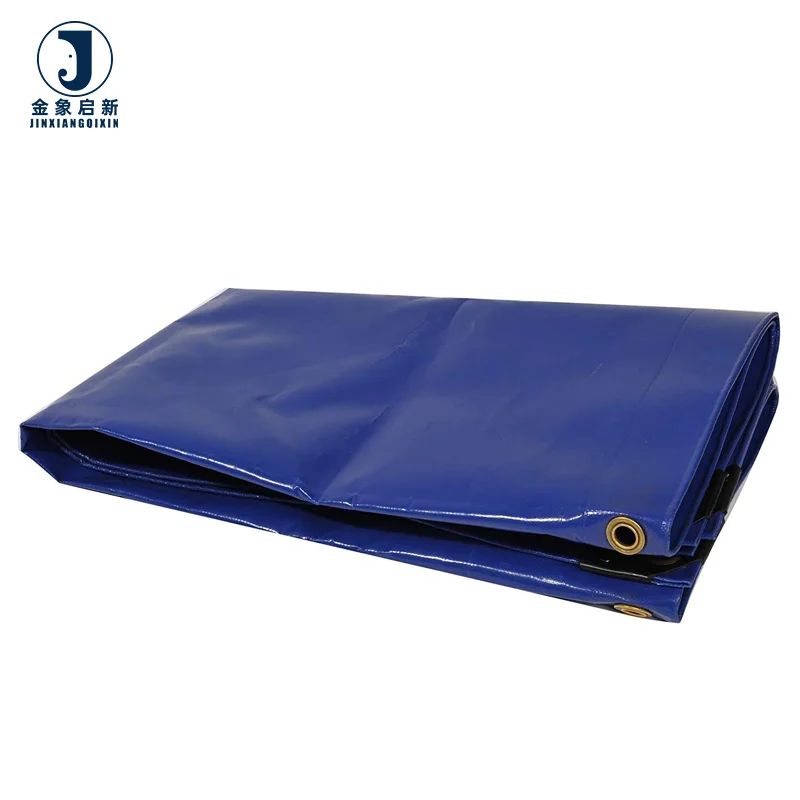
Precision Coating Control — Every roll of this knife-coated PVC tarpaulin passes through dedicated in-line GSM verification, ensuring the stated weight matches the delivered material across the full production run.
Technical Specifications
| Parameter | Value |
|---|---|
| Product Type | PVC Coated Tarpaulin |
| Weight | 900 GSM |
| Coating Method | Knife coated |
| Base Fabric Denier Options | 200D×300D / 500D×500D / 840D×840D / 1000D×1000D |
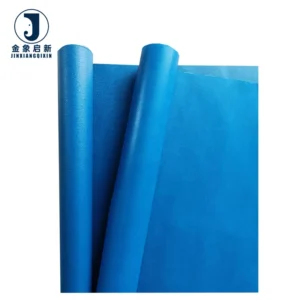
| Surface Finish | Available in glossy or matte |
| Waterproof | Yes — fully coated construction |
| Flame Retardant Treatment | FR treated (confirm the grade required for your market) |
| Anti-Fungal Treatment | Anti-fungal treated |
| UV Treatment | Customized (confirm the test basis for your specification) |
| Operating Temperature Range | -15ºC to 70ºC |
| Available Sizes | 3×4m / 6×8m / 8×10m / 10×12m or custom made |
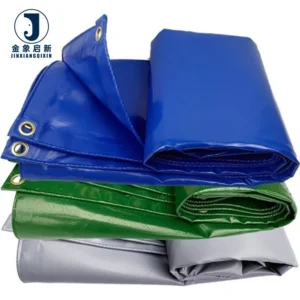
| Colour Options | Blue, Yellow, Black, Green, White, and custom colours |
| OEM / ODM | Accepted |
| Standards | ISO, CE |
Application Suitability
| Application | Exposure & Requirement |
|---|---|
| Lorry side curtains | Constant flexing at load points, road debris abrasion, sustained UV exposure |
| Trailer load covers | Wind lift stress, tie-down point strain, rain ingress prevention |
| Construction equipment covers | Puncture risk from sharp edges, site dust and chemical splash |
| Transport fleet covers | Repeated deployment and folding, thermal cycling across the operating range |
Why the Stated GSM Does Not Guarantee Fabric Performance
Coating weight alone does not determine how the material behaves under load — base fabric denier and weave density dictate tensile and tear response.
Technical buyers often receive a quotation specifying 900 GSM PVC coated tarpaulin and assume the mechanical strength follows directly from the weight. In practice, a 900 GSM fabric built on a 200D×300D base will handle very differently from the same weight built on a 1000D×1000D base. The heavier denier shifts the tensile capacity upward while the coating weight primarily governs abrasion resistance and puncture behaviour. Specifying PVC coated tarpaulin on weight without fixing the denier leaves a gap that only shows up once the curtain is hung and flexing under road conditions [NEED_CITE: tensile and tear test methods for coated fabrics per ISO 1421].
Base Fabric Denier and Its Role in Structural Integrity
The denier of the base fabric defines the diameter of the yarns woven into the scrim layer. Heavier deniers — such as 840D×840D or 1000D×1000D — produce a thicker yarn that resists tensile pull and slows tear propagation once a cut initiates. Lighter deniers like 200D×300D remain suitable for applications where the fabric is tensioned but not subject to point loads or sharp-edge contact. Selecting the correct denier at the specification stage avoids the cost of overspecifying while preventing premature failure in demanding use.
Coating Adhesion and Weld Seam Behaviour
The knife-coating process forces PVC paste into the weave interstices under controlled pressure, building adhesion between the coating and the base fabric. At 900 GSM, the coating layer is substantial enough to fill the weave completely, producing a uniform surface that responds predictably to high-frequency or hot-air welding. When the coating adhesion is strong, the weld seam reaches a significant percentage of the base fabric’s tensile strength rather than peeling under flex. Poor adhesion causes the coating to delaminate at the weld line before the fabric itself fails [NEED_CITE: peel strength testing for coated fabrics].
Temperature Range, Flexibility and Surface Finish Selection
The stated operating range of -15ºC to 70ºC defines the window in which the PVC compound retains flexibility without becoming brittle at the low end or softening at the high end. Within this span, the choice between a glossy and a matte surface finish affects how the material performs in the field. A glossy finish sheds dirt and moisture more readily and provides a smoother surface for printed graphics or branding application. A matte finish reduces glare and hides surface scuffing that accumulates during repeated deployment on transport fleets.
The Cost of Underspecifying the Denier-to-Weight Relationship
When a buyer selects a PVC coated tarpaulin based on GSM alone and accepts whatever denier the supplier defaults to, the result is a material that may meet the weight target but fall short on tear resistance. A curtain panel that tears from a small cut during a cold morning deployment traces back to an undersized denier rather than insufficient coating. Similarly, a weld seam that peels under repeated flexing often indicates that the coating adhesion was not matched to the base fabric density. These failures appear weeks or months into service, well after the shipment has cleared inspection [NEED_CITE: common failure modes in heavy-duty transport covers].
Why Source This Material Through Jinxiang
Nearly 30 years of focused production on coated fabric has produced deep process control over coating weight distribution and adhesion at every GSM grade. Three full production lines with 36 sets of professional equipment support bulk roll output while maintaining the consistency that fabricators depend on when welding multiple panels into a single curtain. A 10-person R&D team handles denier selection, custom sizing and sample development, delivering samples within days for buyer evaluation. Dedicated QA and QC staff inspect every roll before dispatch, verifying that the GSM, colour reference and surface finish match the approved specification. The material is supported by ISO and CE certification, with documentation structured to meet customs and compliance requirements across destination markets.
Documentation & Verification
- Material specification sheet stating GSM, base fabric denier, coating type and colour reference for the batch supplied
- Test report for flame-retardant grade where specified, matched to the production batch
- Pre-shipment inspection record with roll-by-roll GSM verification before dispatch
- Colour reference sample cross-checked between the buyer-approved swatch and the production run
- Certificate of origin and customs documentation prepared per destination market requirements
Fabrication, Handling & Storage
- Set hot-air welder temperature and speed to match the 900 GSM coating thickness; test on a scrap piece before production runs.
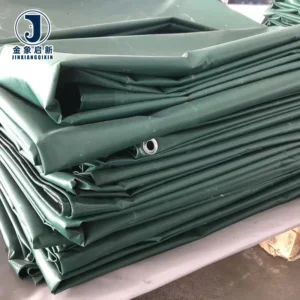
- Store rolls horizontally on a flat surface to prevent permanent creasing through the knife-coated PVC layer.
- Allow material to acclimatise to workshop temperature before unrolling if delivered in cold conditions below the operating range.
- Use a PVC-compatible cleaner on the glossy or matte surface; avoid solvent-based products that attack the coating.
- Plan panel layout to minimise cross-grain joins, aligning the warp direction with the primary stress path of the lorry curtain.
Preparing Your Enquiry
To move from a general interest to a firm specification, provide the denier grade required for your application, the surface finish preference and any flame-retardant or UV treatment standard your destination market mandates. If you need custom widths or pre-cut panels rather than roll stock, include the finished dimensions and the quantity per colour. Confirming these points early allows the R&D team to develop a matched sample for your approval before production is scheduled.
Frequently Asked Questions
Q: How is the 900 GSM weight verified before the roll ships?
A: Each roll is sampled and weighed against the stated GSM during the pre-shipment inspection stage. The QA team records the result on the inspection sheet, which accompanies the shipment documentation. Rolls that fall outside the agreed tolerance are pulled from the batch before packing.
Q: Which flame-retardant grade does this material carry?
A: The material is FR treated, but the specific grade depends on the standard required by your destination market. Confirm the fire classification needed — such as B1, M2 or NFPA 701 — so the correct formulation is applied and the matching test report is supplied with your order.
Q: What test basis supports the anti-UV treatment claim?
A: UV treatment is customised per order based on the exposure conditions you specify. The test method and duration should be agreed at the enquiry stage so that a verifiable test result can be provided alongside the material specification sheet for your batch.
Q: How does denier selection affect weld seam strength in fabricated curtains?
A: Heavier denier base fabrics provide a more stable substrate for welding because the thicker yarns resist distortion under heat and pressure. This produces a weld zone where the coating and base act as a single unit, reducing the risk of seam peel under repeated flexing at load points.