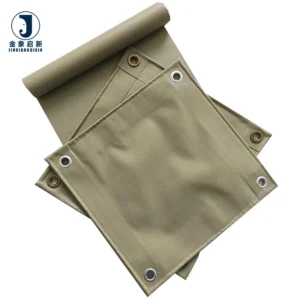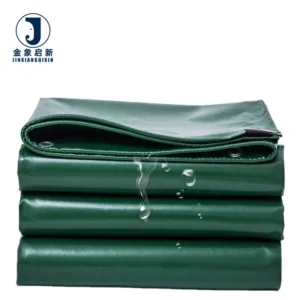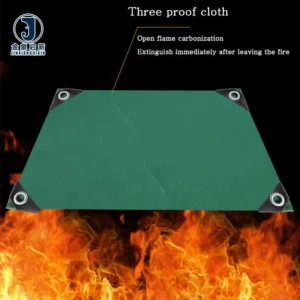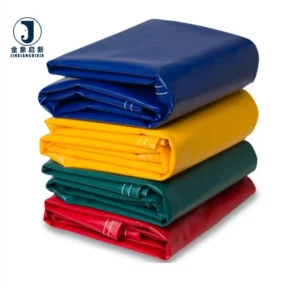
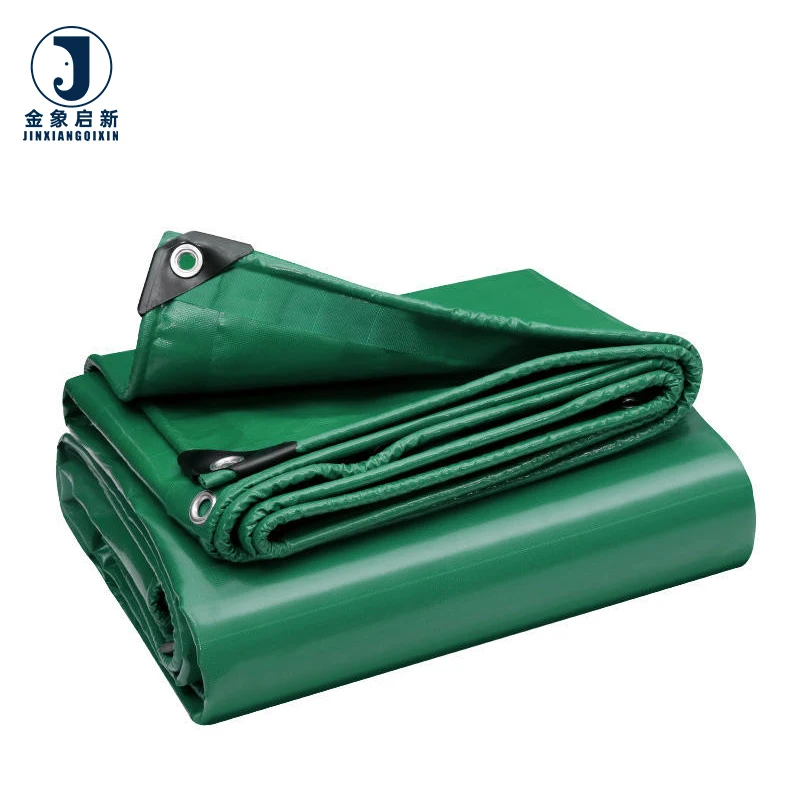
Deep Coating Process Control — Every roll of Heavy-Duty Vinyl Tarps PVC Tarpaulin 13mil – Technical Grade ships with a material specification sheet stating exact base fabric denier, coating weight and surface treatment for inbound verification against your purchase order.
Technical Specifications
| Parameter | Value |
|---|---|
| Product Type | PVC Coated Tarpaulin |
| Base Fabric Denier | 200DX300D / 500DX500D / 840DX840D / 1000DX1000D |
| Weight Range | 250gsm-1500gsm (confirm the grade for this item) |
| Coating Material | PVC |
| Surface Finish | Glossy or matte |
| Color Options | Blue, yellow, black, green, white, etc. |
| Size | 3x4m, 6x8m, 8x10m, 10x12m or custom made |
| Temperature Range | -15ºC to 70ºC |
| Waterproof | Yes |
| UV Treatment | Customized (test basis not stated) |
| Flame Retardant | Available (grade not stated — confirm the grade required for your market) |
| Anti-Fungal | Treated (standard not stated) |
| Working Life | 3-10 years depending on usage environment |
| Certifications | ISO, CE |
Application Suitability
| Application | Exposure & Requirement |
|---|---|
| Firewood cover | Prolonged outdoor UV exposure, rain ingress, stacking abrasion from bark and sharp wood edges |
| Roof protection | Direct sunlight thermal cycling, wind uplift flexing, water pooling at low-slope areas |
| Dump trailer cover | Road debris impact, constant tie-down tension at edge hems, diesel and hydraulic fluid contact |
| Pool cover | Chlorinated or saltwater splash, UV degradation at waterline, thermal expansion and contraction |
| Boat cover | Salt spray corrosion, wind-driven rain penetration, fabric flapping fatigue during transport |
| Camping and patio | Foot traffic abrasion, repeated fold-and-unfold cycles, mildew formation in humid storage |
PVC Coated Tarpaulin Material Coating Technology: Why Denier and GSM Must Be Read Together
Base fabric denier determines the structural skeleton; coating weight determines the protective armour — neither performs alone.
Technical buyers often receive a quotation stating a single GSM figure, only to find the material delivered feels lighter and tears more easily than expected [NEED_CITE: tensile and tear test methods for coated fabrics per ISO 1421]. The issue is rarely fraud — it is usually a specification gap. A 650 GSM fabric built on a 500DX500D base will behave very differently from one built on a 1000DX1000D base, even though the quoted weight is identical. The denser base fabric carries more of the tensile load, while the heavier coating on a lighter base simply adds bulk without proportional strength gain. Understanding this relationship is what separates a PVC coated tarpaulin that survives three seasons from one that fails at the first seam under load.
How Base Fabric Denier Drives Tensile and Tear Performance
The denier options for this PVC coated tarpaulin range from 200DX300D for lightweight covers up to 1000DX1000D for heavy-duty applications. Denier refers to the linear mass density of the yarn — a higher number means a thicker, heavier yarn in the warp and weft. A 1000DX1000D construction produces a base fabric with substantially higher tensile strength and tear resistance than a 200DX300D cloth, because each individual yarn can absorb more force before rupture. When the coated fabric is subjected to point loads — such as tie-down straps on a dump trailer or wind gusts on a roof cover — the base fabric denier is what resists tear propagation from that stress point.
Coating Weight, Adhesion and the Weld Line
The coating process determines how effectively the PVC layer bonds to the base fabric and to itself during heat welding. A glossy finish typically indicates a smoother surface with less texture for mechanical interlocking during welding, while a matte finish can provide slightly better adhesion at the weld seam due to increased surface contact area [NEED_CITE: heat welding parameters and peel strength for PVC coated polyester fabrics]. For fabricators joining panels into large covers, the choice between glossy and matte directly affects the welding temperature window and the resulting seam peel strength. The coating weight — expressed as total fabric GSM — also influences how much thermal energy the material absorbs during welding; heavier coatings require adjusted dwell times to achieve full fusion without scorching.
Decoding the Specification Sheet for Real-World Performance
GSM alone is an incomplete metric. A PVC coated tarpaulin rated at 900 GSM with a 1000DX1000D base fabric will deliver higher tear resistance than one at 900 GSM on a 500DX500D base, because the heavier yarns bear more of the mechanical load. The temperature range of -15ºC to 70ºC defines the operational envelope — below this range the PVC coating becomes increasingly rigid and susceptible to cracking when folded, while above it the plasticizer migration rate accelerates and the material softens. Surface finish selection between glossy and matte is not merely aesthetic; it influences dirt retention, ease of cleaning and the behaviour of the fabric during fabrication. Flame retardant and anti-fungal treatments are available as customised options, but the specific grade and test standard must be confirmed against your market’s regulatory requirements before ordering.
The Hidden Cost of Specifying on Price Per Square Metre Alone
When procurement decisions are driven primarily by unit cost, the specification shortcuts become visible only after the material is in service. A coating that arrives lighter than quoted may fail to protect the base fabric from UV degradation, leading to premature fibre embrittlement. A flame retardant grade that lacks documentation can halt a construction project at the inspection stage, forcing a complete re-order. Batch-to-batch colour variation across rolls in the same order becomes a visible defect once panels are installed side by side on a site cover or truck curtain [NEED_CITE: colour consistency standards in coated fabric production batches]. Welded seams that fail before the fabric itself indicate a mismatch between the coating formulation and the fabrication parameters used.
Why Fabricators Source This PVC Coated Tarpaulin Here
Three full production lines and 36 sets of professional equipment provide the capacity to fulfil bulk roll orders with consistent coating weight across every roll in the batch. A 10-person R&D team handles denier selection, coating formulation and sample development, allowing custom specifications to be confirmed before bulk production begins. Dedicated quality control at every production stage includes 100% inspection before shipment, with coating weight verified against the material specification sheet. Nearly 30 years of focused experience in coated fabric production provides deep process control over adhesion and coating uniformity. Samples for custom denier, GSM or treatment requirements are developed within days, reducing the procurement cycle.
Documentation & Verification
- Material specification sheet stating base fabric denier, coating weight and colour reference for every roll shipped
- UV and flame retardant test reports provided where applicable, with stated test standard
- Pre-shipment inspection record confirming GSM verification against quoted specification
- Roll packing list with individual roll identifiers for traceability
- ISO and CE certificates covering the production facility and processes
- Certificate of origin and customs documentation support for international shipments
Fabrication, Handling & Storage
- Adjust heat welding temperature and dwell time to the selected glossy or matte finish for optimal seam adhesion
- Reinforce tie-down points at edge hems with additional PVC patches to distribute load across the base fabric denier
- Store rolls horizontally on pallets to prevent permanent creasing in the PVC coating layer
- Allow material to acclimatise to ambient temperature before unrolling in cold conditions to avoid coating micro-cracking
- Clean with mild detergent and avoid solvent-based cleaners that may degrade the plasticizer in the PVC coating
- Plan panel layout to minimise weld seams at high-flex zones such as trailer corners and roof ridges
Requesting a Technical Quotation
Provide your application type, expected environmental exposure conditions and the denier or GSM range you are evaluating. If your market requires a specific flame retardant grade or fire classification standard, state this with your enquiry so the correct formulation can be confirmed. Specify whether you need roll stock in standard widths or finished cut sizes with edge reinforcement, and whether samples are required before bulk commitment.
Frequently Asked Questions
Q: How is GSM verified and what test method confirms coating weight on arrival?
A: Each roll ships with a specification sheet stating the target GSM. Verification is conducted by cutting a standard-area sample, weighing it on a calibrated scale and comparing against the stated value. We conduct this check at 100% pre-shipment inspection and the inspection record accompanies your dispatch documentation for your own receiving verification.
Q: What flame retardant grades are available and which test standards apply?
A: Flame retardant treatment is available as a customised option. The specific grade depends on your market’s regulatory framework — common standards include DIN 4102 B1 for European building applications and NFPA 701 for North American textile flammability. State your required standard at enquiry stage so we can formulate and test accordingly before production.
Q: How does base fabric denier selection affect tensile strength and tear resistance?
A: Higher denier yarns — such as 1000DX1000D compared to 200DX300D — produce a base fabric with greater individual yarn strength, directly increasing both tensile and tear performance. For applications involving point loads, tie-down stress or wind uplift, a higher denier base fabric provides a more reliable structural foundation beneath the PVC coating.
Q: How do glossy and matte finishes affect heat welding during fabrication?
A: Matte finishes generally offer a slightly larger surface contact area during heat welding, which can improve peel strength at the seam. Glossy finishes may require adjusted temperature settings to achieve equivalent adhesion. We recommend requesting a sample of your selected finish to confirm your welding parameters before committing to a full production run.
Q: What UV treatment options exist and what is the test basis for outdoor claims?
A: UV stabiliser packages are customised to the intended exposure environment and service duration. Test basis and accelerated weathering data are available upon request — specify your target market and expected exposure duration at enquiry so the appropriate UV formulation and test protocol can be confirmed for your application [NEED_CITE: UV accelerated weathering test standards for coated fabrics].