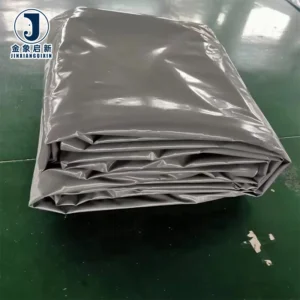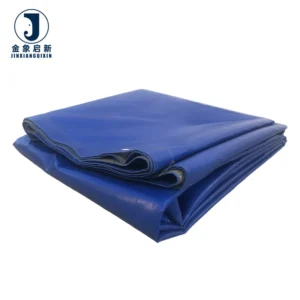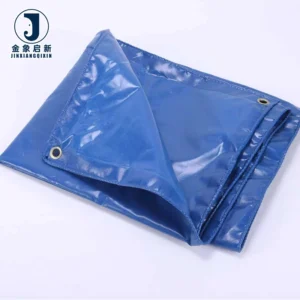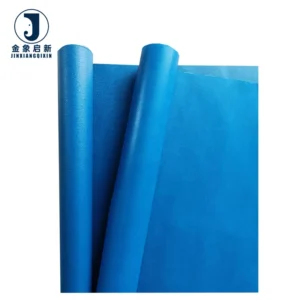
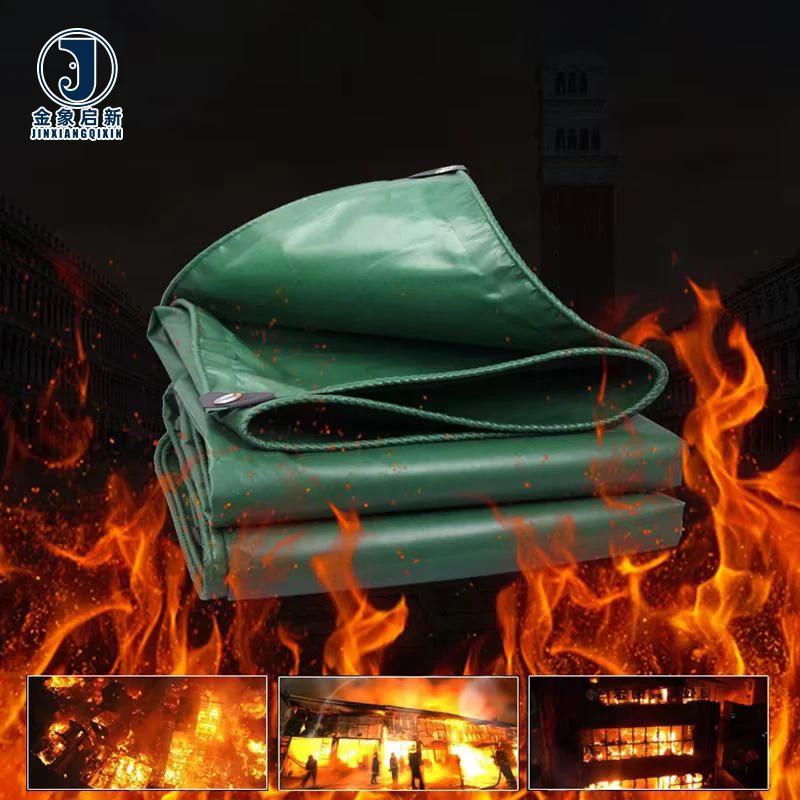
Coating Adhesion Control — deep process control over PVC weight and bond integrity on this knife coated tarpaulin, verified at every production stage before release.
Technical Specifications
| Parameter | Value |
|---|---|
| Product Type | PVC Coated Tarpaulin Fabric |
| Material | PVC Vinyl Coated Woven Fabric |
| Weight | At least 450 g/m² |
| Coating Method | Knife Coated |
| Base Fabric | 1000×1000 Denier Woven |
| Finish Options | Banner coated, Black back coated |
| Format | Roll |
| Waterproof | Yes |
| Customization | Custom size available |
Application Suitability
| Application | Exposure & Requirement |
|---|---|
| Truck side curtain fabric | Constant flexing, road debris impact, UV exposure, abrasion at tie-down points |
| Outdoor tent and awning structure | Wind loading, sustained UV, rain pooling, repeated pack-and-deploy cycles |
| Industrial equipment and stockpile cover | Abrasion from contact surfaces, weather exposure, puncture resistance at load points |
| Inflatable and membrane structure | Air pressure retention, seam welding integrity, surface finish for visual consistency |
Why Coating Method Matters More Than GSM When Selecting PVC Coated Tarpaulin Fabric
Knife coating delivers the adhesion strength that keeps seams intact long after the fabric has stopped flexing.
Most procurement decisions start with GSM, but a heavier fabric with poor coating adhesion will delaminate at the weld line under repeated stress. [NEED_CITE: tensile and tear test methods for coated fabrics per ISO 1421]. I have seen heavy-grade coated rolls fail at the weld line while lighter, well-coated material held firm for the same duty cycle. The failure does not show up on a data sheet — it appears on the jobsite when the load shifts and the flex point gives way.
How Knife Coating Builds Adhesion on Woven Substrates
The knife coated process forces PVC paste directly into the interstices of the 1000×1000 denier woven base fabric under controlled pressure and temperature. This mechanical lock between coating and yarn is what gives the bond its peel strength. Unlike laminated constructions where a pre-formed film is bonded to the surface, knife coating creates a continuous matrix through the weave, which is why PVC coated tarpaulin fabric produced this way performs consistently at welded seams and high-stress flex points.
What the Base Fabric Denier Actually Controls
Denier determines the yarn thickness in the warp and weft, and a 1000×1000 construction provides the tensile backbone for load-bearing applications. The weave density — how many yarns per unit length — works alongside denier to govern tear propagation resistance. A fabric may show strong tensile values on a strip test yet tear easily if the weave is too open, because the tear finds a path along the yarn channel. [NEED_CITE: tear propagation behavior in woven coated fabrics per ISO 1421]. This is why the 1000×1000 denier base is specified for truck curtain and structural membrane work where flex fatigue is the primary failure mode.
Reading the Specification Sheet Beyond Weight
GSM tells you the total mass per square metre, which includes both the base fabric and the PVC coating. Two rolls can share the same GSM yet differ substantially in performance if one achieves it through a heavier base fabric with less coating while the other relies on thick coating on a lighter base. Knife coated PVC coated tarpaulin fabric gains its waterproof and mechanical properties from the balance between coating weight penetrating the weave and the surface layer providing environmental protection. Anti-UV and flame retardant treatments are available in various grades — confirm the grade required for your market and request the corresponding test report before committing to volume.
The Cost of Specifying on Weight Alone
When GSM is the only selection criterion, rolls can arrive lighter than quoted because the coating weight was reduced during production to cut material cost. [NEED_CITE: PVC coating weight variance and its effect on tarpaulin service life]. Panels welded from underweight material fail at the seam before the fabric body degrades. In tent and awning applications, insufficient UV treatment — claimed without a test report to back it — leads to chalking and embrittlement within the first season of exposure. Colour drift between rolls in the same order becomes visible once panels are installed side by side on a truck or structure, triggering a full replacement rather than a spot repair.
Why Technical Buyers Source This Fabric Here
Nearly 30 years of focused coated fabric production translates into process parameters that are dialled in for knife coating on high-denier woven substrates, not adapted from unrelated product lines. Three full production lines and dedicated equipment sets support bulk roll output with consistent coating weight across the full width. The R&D team handles material selection and sample development so that custom GSM, colour, or treatment requirements are validated before bulk runs. QA/QC checks coating weight and adhesion at every stage, with pre-shipment inspection verifying that the roll you receive matches the specification sheet you approved.
Documentation & Verification
- Material specification sheet stating GSM, base fabric denier, coating method, and coating weight issued at quotation stage
- UV and flame retardant test reports provided where applicable with standard and grade explicitly stated
- Pre-shipment inspection record confirming GSM, colour reference, and roll count before dispatch
- Roll packing list detailing width, length, and weight per roll for logistics planning
- Certificate of origin and customs documentation supporting international shipment
Fabrication, Handling & Storage
- Use hot air welding parameters matched to the knife coated PVC layer thickness for consistent seam strength on truck curtain panels
- Reinforce eyelet and tie-down zones with additional PVC patches to distribute load across the 1000×1000 denier weave
- Store rolls upright on pallets in a dry, shaded area to prevent surface creasing that affects weld quality
- Allow cold-stored rolls to reach ambient temperature before unrolling to avoid coating crack at low temperatures
- Clean surfaces with mild detergent compatible with PVC vinyl coatings — avoid solvents that degrade the knife coated surface layer
What to Include With Your Enquiry
Provide the end-use application and the environmental exposure conditions the fabric will face, including UV intensity and temperature range for your region. Specify the required roll width and any colour or surface finish preferences so the sample can be developed to match. If your market requires a specific flame retardant grade or UV test standard, state the certification name so the correct treatment is applied and documented.
Frequently Asked Questions
Q: How is GSM verified against the quotation when rolls arrive?
A: The material specification sheet issued at quotation states the target GSM, base fabric denier, and coating method. Pre-shipment inspection includes weight verification per roll. On arrival, you can confirm by cutting a measured sample and weighing it — the knife coated construction means total weight reflects both the PVC layer and the 1000×1000 denier woven base combined.
Q: What test standards support the UV and flame retardant claims?
A: UV and flame retardant treatments are available in multiple grades depending on your target market. The applicable test report — whether DIN 4102, NFPA 701, or another standard — is provided when the grade is confirmed at order stage. Request the specific standard that applies to your end-use region before production begins.
Q: How does knife coating differ from laminated PVC for weld behaviour?
A: Knife coating forces PVC paste into the woven base fabric under pressure, creating a mechanical bond through the yarn structure. This gives higher peel strength at welded seams compared to laminated films bonded to the surface. For truck side curtains and structural membranes that flex repeatedly, knife coated PVC coated tarpaulin fabric maintains seam integrity longer under fatigue loading.
Q: What base fabric denier is needed for load-bearing curtain applications?
A: The 1000×1000 denier woven construction in this fabric provides tear propagation resistance suited to truck curtain and side panel duty. Denier and weave density together determine how the fabric resists tearing at flex points. Specify the load and flex frequency so the correct base fabric can be confirmed against your tensile and tear requirements.