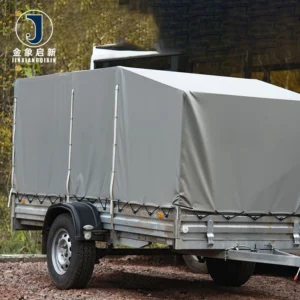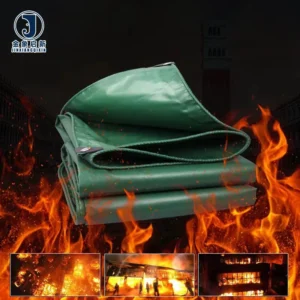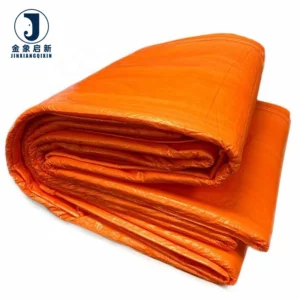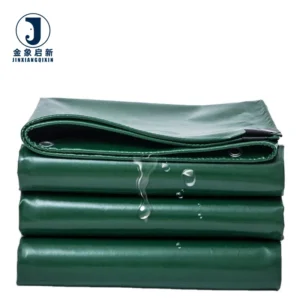
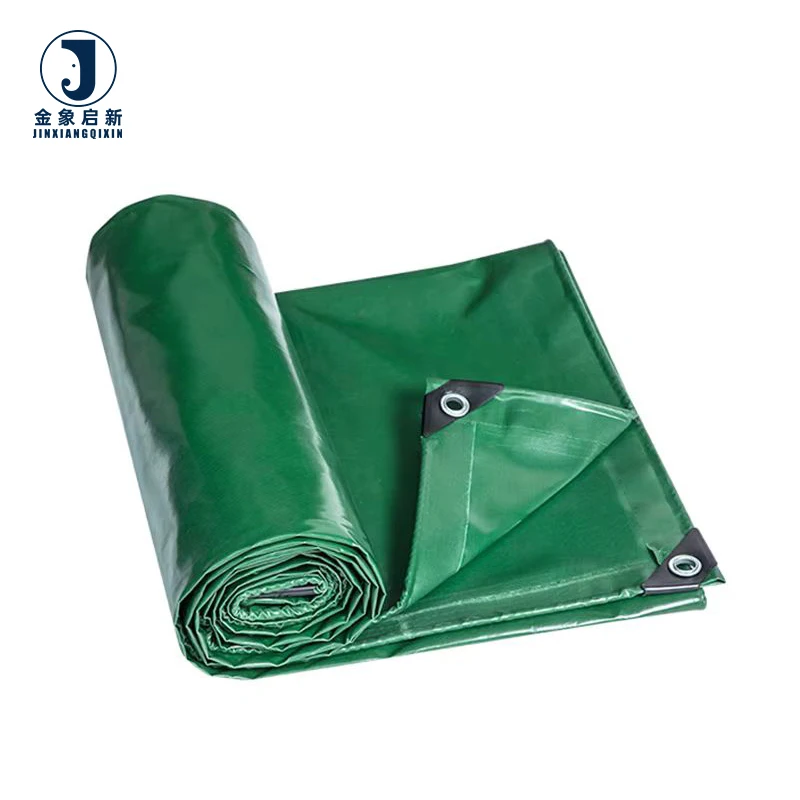
Coating Process Control — dedicated QA/QC verifies PVC coating weight and base fabric adhesion on every roll before it leaves the production line.
Technical Specifications
| Parameter | Value |
|---|---|
| Product Type | PVC Coated Fabric |
| Coating Material | PVC (vinyl) |
| Base Fabric | Woven polyester |
| Weight | ≥450 g/m² |
| Waterproof | Yes |
| Abrasion Resistance | High |
| Surface Finish | Vinyl-coated |
| Flame Retardant Grade | Available in flame retardant grades — confirm the grade required for your market |
| UV Treatment | Available with UV stabilisation — request test documentation for your exposure class |
| Anti-Static | Available on request — confirm certification needed for your site |
Application Suitability
| Application | Exposure & Requirement |
|---|---|
| Industrial equipment covers | Rain, dust ingress, handling abrasion during rigging and transport |
| Vehicle and fleet covers | Road debris impact, wind flap fatigue, prolonged weather exposure |
| Construction site sheeting | Puncture from sharp materials, water pooling, UV degradation over project duration |
| Agricultural structure covers | Moisture retention, wind load stress, chemical contact from fertiliser dust |
| Temporary warehouse enclosures | Thermal fluctuation, forklift contact, repeated installation and removal cycles |
Why Stated GSM Rarely Matches What Arrives on the Dock
A quoted weight means nothing unless every production stage verifies it against the material specification sheet.
Material arrives lighter than the GSM stated on the quotation, with no test documentation to support the UV or flame-retardant claims made during the sales conversation. This gap between what was promised and what lands in the warehouse forces fabricators into difficult choices — accept underweight fabric and absorb the failure risk, or reject the shipment and delay the project. [NEED_CITE: coating weight verification methods per ISO standards for coated fabrics] When PVC coated fabric 450 gsm is specified for a load-bearing cover, even a modest shortfall in coating weight reduces tensile capacity at the exact stress points where the material flexes most. The consequence is rarely visible at inspection; it appears months later when a seam splits or a panel tears under wind load.
Coating Adhesion and Base Fabric Selection
The performance of PVC coated fabric 450 gsm depends on how firmly the vinyl coating bonds to the woven base fabric. Poor adhesion causes delamination at fold lines and weld seams — the coating peels away from the substrate exactly where mechanical stress concentrates. Base fabric denier and weave density are selected to match the tensile and tear requirements of the intended application, with higher-density weaves providing the structural backbone that the coating alone cannot deliver.
Weld Behaviour at Flex Points
Fabricators frequently find that welded seams fail before the body of the fabric does, particularly at points where the material flexes repeatedly during use. The relationship between coating thickness, plasticiser content, and weld temperature determines whether a heat-welded joint* layer. [NEED_CITE: heat welding parameters for PVC coated polyester fabrics] Getting this balance right requires understanding the specific coating formulation — a parameter that varies between production batches if process control is inconsistent.
Reading the Specification Sheet Beyond GSM
Weight alone tells an incomplete story. The base fabric denier and weave density determine how a tear propagates once initiated — a tight weave arrests tear spread, while an open weave allows it to run. Coating method affects peel strength and weld compatibility; knife-coated fabrics typically offer better adhesion than laminated alternatives at this weight class. Surface finish influences both dirt retention and printability, with smoother finishes shedding contaminants more readily but potentially offering less grip during fabrication handling. The combination of these parameters defines how the material actually performs in service, well beyond what a single GSM figure communicates.
The Cost of Underspecifying the Base Fabric
When the base fabric denier is too low for the application load, the coating carries structural stress it was never designed to bear. [NEED_CITE: tensile and tear test methods for coated fabrics per ISO 1421] The result is not immediate failure but progressive degradation — micro-tears develop at stress concentrations, moisture penetrates the coating, and the base fabric rots from within. For vehicle covers subjected to highway-speed wind loading, this failure mode typically appears first at eyelet reinforcement points and along weld seams. Batch colour inconsistency across rolls compounds the problem when multiple panels are installed side by side, forcing either a full reorder or an accepted visual defect.
Why Procurement Teams Source This Grade Here
Coating weight and GSM are verified at every production stage through in-process QA checkpoints, not just at final inspection. The dedicated R&D team handles material selection and sample development, producing samples within days when custom weight, width, or treatment requirements fall outside standard stock grades. Roll-to-roll colour consistency is confirmed before dispatch, eliminating the visible variation that appears when panels from different rolls are installed adjacent to each other. Pre-shipment inspection covers every roll against the stated specification, so the material arriving at the fabrication shop matches the quotation in weight, denier, and coating formulation.
Documentation & Verification
- Material specification sheet stating exact GSM, base fabric denier and weave, and PVC coating material
- Test reports for UV stability and flame-retardant grades where applicable to your market requirement
- Weight verification per roll against the stated GSM before dispatch from the production facility
- ISO and CE certificates alongside pre-shipment inspection record accompanying each consignment
- Roll packing list with certificate of origin and full customs documentation support
Fabrication, Handling & Storage
- Heat welding temperature must match the specific PVC vinyl coating formulation to achieve full seam penetration
- Store rolls upright on end cores to prevent permanent creasing across the woven base fabric
- Cut panels with allowance for thermal expansion — vinyl-coated fabric shifts dimensionally with temperature swings
- Use compatible PVC-based repair patches for field damage to maintain coating continuity and waterproof integrity
- Plan panel layout from roll stock to minimise transverse welds across the primary load direction
What to Include in Your Specification Enquiry
Provide the intended application and exposure conditions — whether the fabric will face continuous UV, chemical contact, or mechanical abrasion — so the correct base fabric denier and treatment package can be recommended. Specify your target market’s fire classification or compliance requirements if the material will be used in enclosed structures or public-facing installations. State whether you require full roll stock or cut-to-size panels, and indicate annual volume to align production scheduling with your project timeline.
Frequently Asked Questions
Q: How is the actual GSM verified on arrival against the quoted specification?
A: Every roll undergoes in-process coating weight checks during production and a full pre-shipment inspection before dispatch. The material specification sheet accompanying your order states the verified GSM, base fabric denier, and coating weight — so you can cross-reference what arrives against what was quoted without needing independent laboratory testing.
Q: What base fabric denier options are available at this weight grade?
A: The woven base fabric is selected by denier and weave density to match your tensile and tear requirements. Higher deniers provide greater tear resistance for applications involving wind loading or mechanical stress. Specify your application and expected load conditions so the appropriate base fabric construction can be recommended and sampled before production.
Q: How does PVC coating weight relate to tensile and tear strength?
A: Coating weight contributes to waterproof performance and abrasion resistance, but tensile and tear strength are primarily determined by the base fabric denier and weave density. A heavier coating on a light base fabric will not deliver the mechanical performance of a properly balanced construction. Both parameters must be specified together for your application.
Q: What UV and flame-retardant treatment options are supported with test documentation?
A: Both UV stabilisation and flame-retardant treatments are available for this fabric grade, with test reports provided to confirm performance against the relevant standard. Confirm the specific grade or classification your market requires — building codes and transport regulations vary significantly between regions, and the correct treatment must be matched to your compliance obligation.
Q: How are welded seams tested to ensure they match the fabric’s mechanical performance?
A: Weld parameters are calibrated to the specific PVC coating formulation, and seam samples are tested for peel strength and tensile continuity during production. [NEED_CITE: weld testing protocols for coated fabric assemblies] This ensures the welded joint does not become the weakest point in the finished cover, particularly at flex zones where the material bends repeatedly under load.