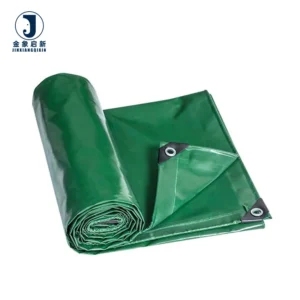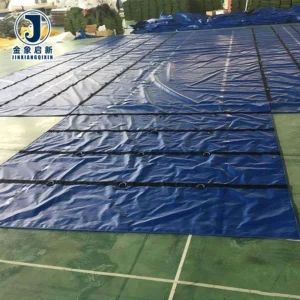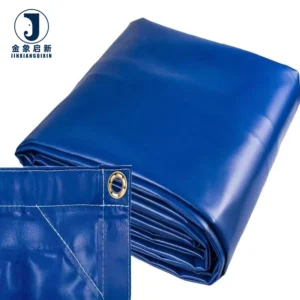
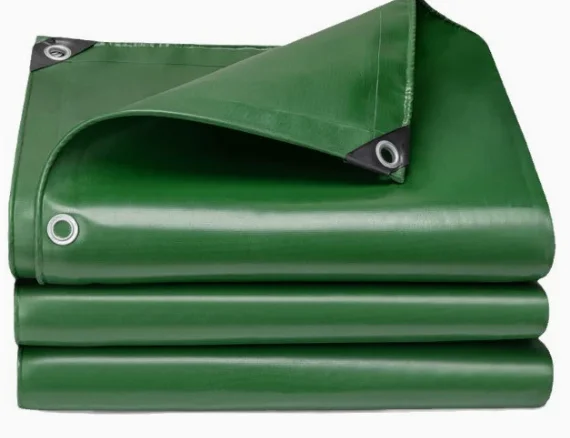
Deep process control over coating weight and adhesion — every roll of this PVC coated fabric is produced on dedicated lines with in-process QA holding the stated GSM against the material specification sheet before it leaves the facility.
Technical Specifications
| Parameter | Value |
|---|---|
| Product Type | PVC Coated Fabric |
| Material | PVC Vinyl |
| Fabric Type | Woven Fabric |
| Weight | At least 450 GSM |
| Waterproof | Yes |
| Key Features | High-strength, durable, resistant to wear and tear |
| Flame Retardant Grade | Available in flame retardant grades — confirm the grade required for your market |
| UV Treatment | Available with UV treatment — test report provided where applicable |
| Anti-Static | Available on request — confirm standard required |
| Certification | ISO, CE |
Application Suitability
| Application | Exposure & Requirement |
|---|---|
| Industrial equipment covers | Abrasion from handling, prolonged weather exposure, dust and moisture ingress |
| Vehicle and fleet coverings | Road debris impact, UV exposure during outdoor storage, repeated fitting and removal |
| Outdoor structure and site covers | Rain, snow and wind load, standing water on horizontal surfaces, long-term sun exposure |
| Roll stock for fabricators | Consistent coating adhesion for welding, uniform thickness across the roll width |
Why a Quoted GSM Does Not Guarantee the PVC Coated Fabric You Receive
The only GSM that matters is the one verified on the roll you cut open.
When a technical buyer specifies a mid-range grade for industrial covers, the expectation is a balanced combination of flexibility and mechanical strength. Material arrives lighter than agreed when coating weight is reduced to save cost without adjusting the quotation. The base fabric may be the correct denier, but a thinner PVC vinyl layer means less protection against abrasion at contact points and reduced waterproof integrity after repeated folding. This gap between quoted and delivered weight is one of the most common reasons coated fabrics fail earlier than the specification intended. [NEED_CITE: industry inspection practices for coated fabric weight verification per roll]
Coating Adhesion and What It Means for Fabricated Products
The bond between the PVC vinyl coating and the woven fabric substrate determines how the material behaves at welded seams and cut edges. Poor adhesion causes delamination when the fabric flexes under load or when heat is applied during fabrication. For a PVC coated fabric 450 gsm grade, the coating method — whether knife-over-roll, dip or calendered — directly influences how well the vinyl penetrates the weave and locks into the base fabric structure.
Woven Base Fabric as the Structural Backbone
The woven fabric provides dimensional stability and carries the tensile and tear loads. Denier and weave density of the base fabric set the mechanical ceiling; the PVC coating adds waterproofing, abrasion resistance and some additional tear containment. A tightly woven substrate resists tear propagation better than a loose weave at the same GSM. [NEED_CITE: relationship between base fabric weave density and tear strength in coated textiles per ISO 1421]
Reading GSM in Context with Base Fabric and Coating Weight
GSM is the combined mass of the base fabric plus the PVC vinyl coating per square metre. Two fabrics can share the same GSM but perform differently: one may use a heavier base fabric with a thinner coating, favouring tensile strength; the other may use a lighter base with a thicker coating, favouring surface abrasion resistance. For industrial and outdoor coverings, the balance between these two components determines whether the material resists puncture at a sharp edge or withstands repeated rubbing against a steel frame. Neither the coating method nor the total thickness is stated for this grade, so confirm these parameters when matching the material to your fabrication process. The waterproof performance relies on full coating coverage with no pinholes or thin spots across the roll width.
The Cost of Specifying on GSM Alone
When procurement selects a PVC coated fabric based on quoted weight without verifying the base fabric denier or coating adhesion method, the material may pass a simple scale test but fail in service. Welded seams can separate before the fabric body reaches its expected service life, particularly at points where the cover flexes under load or wind pressure. Batch-to-roll variation in coating thickness compounds this: some rolls within the same order may perform adequately while others delaminate early. Colour variation between rolls becomes visible once installed side by side on the same structure. [NEED_CITE: common causes of coated fabric delamination at welded seams in industrial applications]
What Process Control Means for This Grade
Coating weight and adhesion are controlled through dedicated QA at every production stage, not just a final check. The PVC coated fabric is manufactured on lines configured for consistent vinyl application across the full roll width. A 10-person R&D team handles material selection and sample development so that the grade you approve is the grade you receive in production. Pre-shipment inspection covers 100% of rolls, verifying coating weight against the material specification sheet before dispatch. Samples are developed within days for lab validation when your application requires confirmation of weld parameters or mechanical properties. The ISO and CE certified facility supports bulk capacity with reliable scheduling for repeat orders.
Documentation & Verification
- Material specification sheet stating GSM, base fabric type and PVC vinyl coating details for this grade
- Test report for UV treatment or flame retardant grades matched to the specific production batch
- Pre-shipment inspection record with roll-level coating weight verification against stated GSM
- ISO and CE certificates on file for facility and product compliance
- Certificate of origin and customs documentation included with each shipment
Fabrication, Handling & Storage
- Set heat welder temperature and dwell time based on the PVC vinyl coating thickness of this grade
- Allow roll to acclimatise before unrolling in cold conditions to avoid coating stiffness and crease marks
- Store rolls upright on end caps to prevent flat-spotting and permanent deformation of the woven fabric
- Use compatible PVC-based adhesives for patch repairs on this vinyl coated surface
- Plan cutting layout to minimise off-cuts given the roll width supplied for this grade
What to Share When Requesting a Quotation
Provide the application environment and the specific exposure conditions the cover will face — outdoor weather, chemical contact, abrasion type and frequency of handling. Confirm whether your market requires a specific flame retardant grade or UV treatment standard, as this affects the coating formulation. State the roll width, colour requirement and whether you need samples for weld testing before placing a bulk order for PVC coated fabric 450 gsm.
Frequently Asked Questions
Q: How is the coating weight verified and how can I re-check on arrival?
A: Every roll undergoes pre-shipment inspection where coating weight is measured and recorded against the stated GSM. On arrival, you can cut a sample of known area, weigh it, and separate the PVC vinyl coating from the woven base using solvent to verify each component individually. The inspection record included with your shipment documents the results from our side.
Q: What is the relationship between GSM, base fabric denier and tensile or tear strength?
A: GSM combines the base fabric and coating mass. Tensile and tear strength depend primarily on the base fabric denier and weave density, while the PVC coating contributes abrasion resistance and some tear containment. Two fabrics at the same GSM can differ significantly in strength depending on how that weight is distributed between substrate and coating.
Q: Which coating method is used and how does it affect adhesion and weldability?
A: The coating method for this specific grade is not stated in the current specification sheet. Coating method — knife-over-roll, dip or calendered — influences how deeply the PVC vinyl penetrates the woven fabric, which affects both peel strength and the heat weld parameters your fabrication team should use. Request the method detail when sampling.
Q: Are UV and flame-retardant treatments available for this grade?
A: UV treatment and flame retardant grades are available, but the applicable test standard depends on your market and end-use regulation. Confirm the grade required — such as the fire classification relevant to your jurisdiction — so the correct formulation is applied and the matching test report is provided with your shipment.
Q: How is batch-to-roll colour and coating consistency controlled?
A: Colour and coating thickness are monitored across the production run through in-process QA checks. The 100% pre-shipment inspection covers every roll to catch variation before dispatch. For orders where multiple rolls will be installed side by side, state this requirement at inquiry so additional consistency controls are applied to your batch.