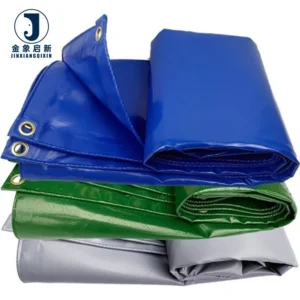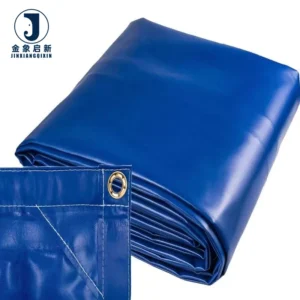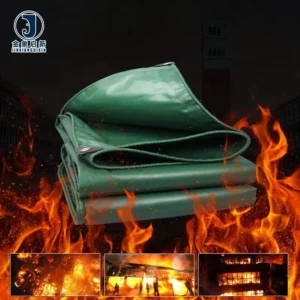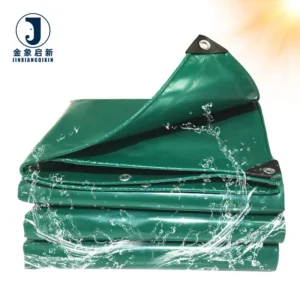
Coating Weight Control — every roll of PVC coated tarpaulin fabric produced on our dipping lines carries a verified GSM spot-check record before it leaves the facility, so the weight you specify is the weight that arrives.
Technical Specifications
| Parameter | Value |
|---|---|
| Product Type | PVC Coated Tarpaulin Fabric |
| Coating Material | PVC (100% PES dipping coating process) |
| Construction | Knitting / Plain weave options |
| Base Fabric Denier (medium-duty) | 500D |
| Base Fabric Denier (heavy-duty) | 1000D |
| Base Fabric Denier (super heavy) | 500D–2000D |
| Weight (medium-duty) | 400–500 g/m² |
| Weight (heavy-duty) | 700–1000 g/m² |
| Weight (super heavy) | 1100–1500 g/m² |
| Total Thickness (medium-duty) | 0.35–0.45 mm |
| Total Thickness (heavy-duty) | 0.70–1.0 mm |
| Total Thickness (super heavy) | 1.2–1.5 mm |
| Tensile Strength (medium-duty) | Warp 1500–2000 / Weft 1200–1800 N/5cm (test basis not stated) |
| Tensile Strength (heavy-duty) | Warp 2000–2500 / Weft 1800–2200 N/5cm (test basis not stated) |
| Tensile Strength (super heavy) | Warp 2500–3000 / Weft 2200–2800 N/5cm (test basis not stated) |
| Roll Width Options | 6 ft, 8 ft, 10 ft, 12 ft / 2 m, 4 m, 6 m |
| Roll Length Options | 100 yards, 100 meters, or custom |
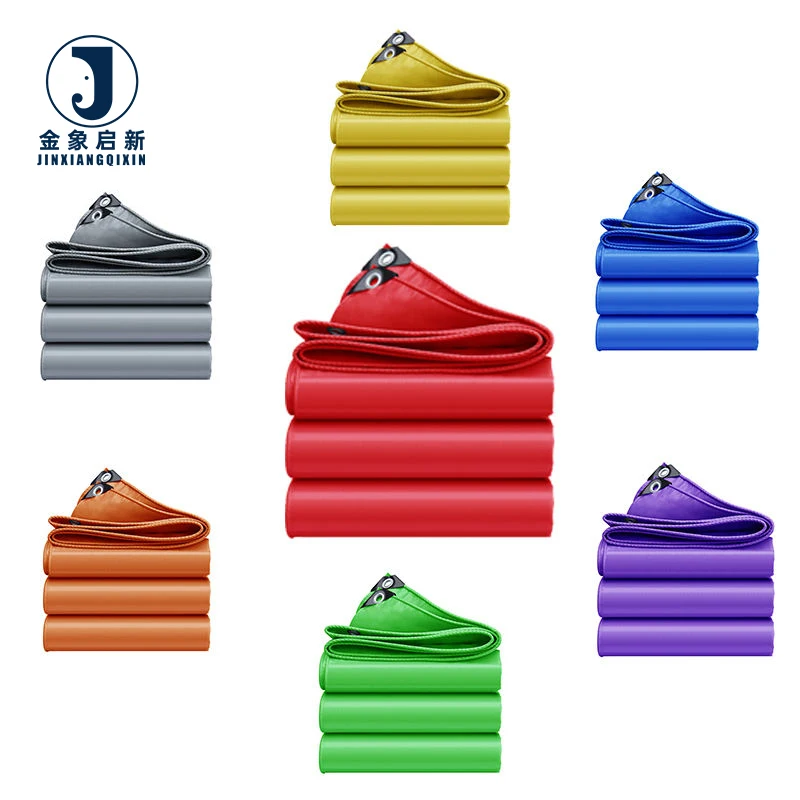
| Colour Options | Blue, Blue/Orange, Green, Grey, Black, Clear, Grey/Green, Orange, or custom |
| Treatment Options | UV treatment available (test basis not stated), mildew proof, anti-aging |
| Certification | ISO, CE (certificate details not stated) |
Application Suitability
| Application | Exposure & Requirement |
|---|---|
| Truck and trailer side curtains | Constant flexing at load points, road spray, UV exposure, abrasion from tie-down straps |
| Tensioned membrane structures | Sustained wind load, biaxial tensile stress, long-term UV and thermal cycling |
| Industrial pipe canopies | Chemical splash, concentrated heat, mechanical impact from overhead handling |
| Tent and event covers | Repeated fold-unfold cycles, ground moisture, wind uplift on seams |
| Heavy truck tarpaulins | High-speed airflow abrasion, snow and ice loading, thermal shock in cold climates |
Why Base Fabric Denier Matters More Than GSM Alone
GSM tells you how heavy the fabric is; denier tells you what the skeleton underneath is actually made of.
When a buyer specifies a PVC coated tarpaulin fabric by GSM alone, the coating weight can be inflated while the base polyester yarn remains thin. A 700 GSM roll built on a low-denier yarn will feel heavy in hand yet tear easily once a puncture starts. The denier of the base yarn — whether 500D, 1000D, or up to 2000D — determines how far a rip will propagate before the yarn structure arrests it. That relationship between base fabric construction and coating mass is what separates a tarpaulin that holds under tension from one that fails at the first stress concentration. [NEED_CITE: relationship between base yarn denier and tear propagation in coated polyester fabrics]
Coating Adhesion and Dipping Process Behaviour
The 100% PES dipping coating process used for this PVC coated tarpaulin fabric submerges the base polyester into liquid PVC, allowing the coating to penetrate between individual yarns rather than simply sitting on top. This produces stronger mechanical interlocking at the yarn-coating interface, which directly affects how the fabric behaves during high-frequency welding. When a fabricator heat-welds a seam, the coating must re-melt and bond across the overlap without delaminating from the base yarn. Dipping-coated material consistently shows better peel strength at the weld line compared to laminated alternatives of the same PVC coated tarpaulin fabric weight class.
Knitting Versus Plain Weave Construction Selection
The availability of both knitting and plain weave base constructions gives specifiers a meaningful choice at the material design stage. Plain weave offers higher dimensional stability and a flatter surface profile, which suits applications requiring precise panel cutting and large-format printing. Knitted construction provides greater inherent stretch recovery and conformability, making it preferable for tensioned membrane structures where the fabric must absorb dynamic wind loads without permanent deformation. Selecting the correct weave before coating is applied ensures the finished PVC coated tarpaulin fabric performs predictably under the specific loading pattern of the end use. [NEED_CITE: comparative tensile behaviour of knitted versus woven base fabrics under biaxial loading]
Reading the Tensile and Thickness Data Correctly
Tensile strength figures in the warp and weft directions reveal the directional load capacity of the fabric, which is critical for any application where the material is tensioned across a frame or structure. The super heavy grade delivers warp tensile values up to 3000 N/5cm, a level necessary for large-span membrane roofs or heavy-duty industrial enclosures where wind uplift generates sustained biaxial stress. Thickness correlates with puncture resistance and abrasion durability at contact points — a 1.2–1.5 mm super heavy panel will absorb mechanical impact that would penetrate a 0.35 mm medium-duty sheet. However, thickness alone does not predict weld seam integrity; that depends on the coating formulation and the heat-welding parameters used by the fabricator. Understanding the interplay between GSM, denier, thickness, and tensile data allows technical buyers to specify PVC coated tarpaulin fabric by actual performance requirements rather than a single headline number.
What Happens When Specification Mismatches Reach the Site
A fabricator who receives rolls lighter than the quoted GSM faces two bad options: proceed with production and deliver a finished cover that underperforms, or halt the line and wait for replacements. Either path costs time and credibility. Similarly, when colour varies between rolls in the same batch order, the variation becomes visible only after panels are installed side by side on a truck or structure — far too late to correct without a full tear-down. Coating adhesion failures at weld seams tend to appear weeks or months after installation, precisely at the flex points where the load cycles most. These are not rare events; they are the predictable outcome of specifying coated fabric without verifying material data at the roll level. [NEED_CITE: common failure modes in PVC coated fabric installations traced to specification gaps]
Production Infrastructure Behind This Fabric
Three full production lines with 36 sets of professional equipment provide the capacity to run multiple weight grades simultaneously without cross-contamination between coating formulations. A 10-person R&D team handles material selection and sample development, producing trial samples within days when a custom colour or non-standard width is required. Dedicated quality control operates at every coating stage — verifying coating weight, base fabric tension, and colour consistency before a roll moves to the next step. In-process inspection records accompany every batch, giving buyers traceability from raw yarn through to the finished roll. Nearly three decades of focused coated fabric production informs the process parameters used on every dipping run.
Documentation & Verification
- Material specification sheet confirming exact GSM, denier, and coating type per roll
- Test reports for UV and flame-retardant grades provided where applicable, batch-linked
- Pre-shipment inspection record with GSM spot-check and colour consistency data
- Roll packing list with individual roll weights and dimensions for customs clearance
- ISO and CE certification documents supplied with each shipment
Fabrication, Handling & Storage
- Heat-weld parameters must match coating thickness — 0.70–1.0 mm heavy-duty grades require higher dwell time than 0.35–0.45 mm medium grades
- PP rope reinforcement at hems distributes tie-down load across the warp yarns rather than concentrating stress at eyelets
- Store rolls upright on end cores to prevent flat-spot deformation on the coating surface
- Galvanised eyelets at 1-metre intervals suit standard truck tie-down spacing; confirm pattern matches your fleet hardware
- Avoid dragging unrolled fabric across abrasive ground — the PVC coating surface can scuff before puncture occurs
- Clean with mild detergent and soft brush; solvent-based cleaners may soften the PVC coating over repeated use
Requesting the Right Sample for Your Application
Provide the end-use application and the primary environmental exposures the fabric will face — wind load, UV intensity, chemical contact, or mechanical abrasion. Specify your target market’s fire classification requirements if the installation is subject to building code compliance. Indicate the roll widths you need and whether you require finished panels or stock rolls only, along with colour references from your existing brand palette if consistency with prior orders matters.
Frequently Asked Questions
Q: How is GSM verified and what tolerance applies per roll?
A: Every roll undergoes a spot-check weigh against the stated GSM range before dispatch, using standard cut-sample methods. The verification is recorded on the pre-shipment inspection document. If your project requires a tighter tolerance band than standard production allows, request this at the inquiry stage so process parameters can be adjusted before coating begins.
Q: What is the relationship between base fabric denier and tensile performance?
A: Higher denier yarns — 1000D and above — deliver greater tensile and tear resistance because each individual polyester filament carries more load before breaking. The 500D medium-duty grade suits applications where weight and flexibility are priorities, while the 500D–2000D super heavy range addresses structural membrane and heavy truck cover demands where sustained biaxial tension is present.
Q: What UV treatment test basis is available for outdoor service life?
A: UV treatment is available across all weight grades of this PVC coated tarpaulin fabric. The specific test method and exposure duration data can be supplied upon request. Share your regional climate classification and expected installation orientation so the appropriate treatment level and test documentation can be matched to your specification.
Q: How does the dipping coating process affect weld seam performance?
A: The 100% PES dipping process forces PVC into the yarn interstices, creating mechanical interlocking that resists delamination when the coating re-melts during high-frequency or hot-air welding. This produces stronger peel strength at the seam compared to laminated fabrics of equivalent weight, reducing the likelihood of seam failure before the body of the fabric reaches end of life.
Q: Can I receive a material data sheet before placing a trial order?
A: A full specification sheet covering GSM, base fabric denier, coating thickness, and tensile data for each available weight grade can be provided at the inquiry stage. Request this alongside a physical sample so you can verify hand feel, flexibility, and weld compatibility on your own fabrication equipment before committing to a production order.