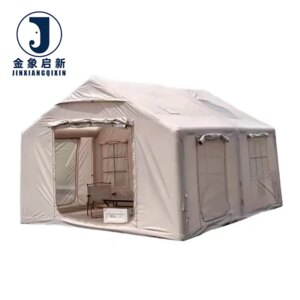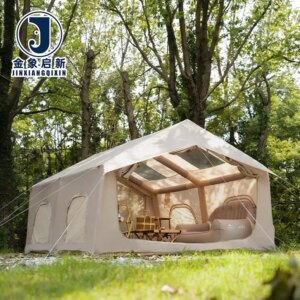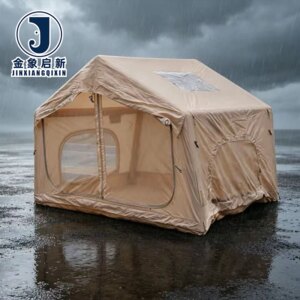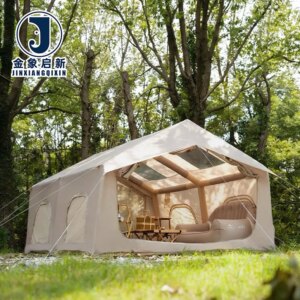
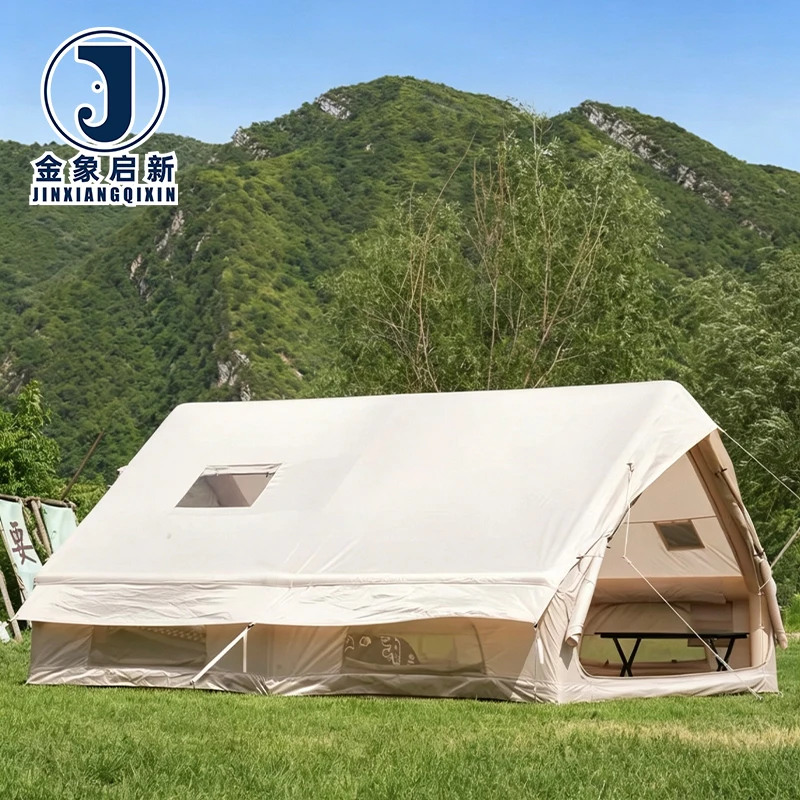
Precision-coated PVC fabric engineered for inflatable structures — Every batch undergoes dedicated air pressure testing and 100% pre-shipment inspection to verify inflation integrity before dispatch.
Technical Specifications
| Parameter | Value |
|---|---|
| Product Type | Inflatable Tent Fabric / Inflatable Tent |
| Core Material | PVC tarpaulin |
| Product Form | 2-3 Person Quick Automatic Opening Four-Season Waterproof Outdoor Air Tent |
| Waterproof Performance | Validated through air pressure testing protocol |
| UV Resistance | UV-resistant treatment applied (test basis not stated — documentation available on request) |
| Tear Resistance | Tear-resistant construction |
| Coating Method | PVC coated (grade not stated) |
| Flame Retardancy | Available in flame retardant grades — confirm the grade required for your market |
| Design | Single layer, quick automatic opening mechanism |
| Customization | OEM & ODM, sample customization, pattern printing |
| Standards & Certifications | ISO9001, ISO14001, ISO45001, CE |
Application Suitability
| Application | Exposure & Requirement |
|---|---|
| Commercial inflatable tent structures | Repeated inflation/deflation cycles, seam stress, structural air-holding integrity |
| Outdoor event management shelters | Weather exposure, rapid deployment, four-season temperature variation |
| Mobile field operations and temporary site shelters | Wind load, ground abrasion, prolonged UV exposure |
| Construction site auxiliary shelters | Dust, debris impact, frequent relocation |
| Outdoor exhibition booths | Aesthetic consistency, branding printability, public safety compliance |
| Commercial camping ground facilities | Guest safety, multi-season use, frequent cleaning and maintenance |
Why Coating Adhesion Matters More Than Stated GSM for Inflatable Tent Fabric PVC Coated Structures
A coated fabric holds air only when the coating stays bonded to the base fabric through every inflation cycle.
Buyers sourcing PVC inflatable tent material supplier options often focus on the quoted GSM, assuming heavier weight translates directly to better air retention. In practice, inflatable structures place unique demands on the coating-to-substrate bond. Each inflation and deflation cycle flexes the material at welded seams, where coating delamination creates micro-leaks that compromise structural rigidity. We have seen rolls pass a basic weight check yet fail at the weld line within the first season of commercial deployment. [NEED_CITE: tensile and tear test methods for coated fabrics per ISO 1421]
Base Fabric Construction and Air-Holding Seam Integrity
The denier and weave density of the base fabric directly determine how well welded seams hold under repeated pressurization. A tightly woven polyester base distributes inflation stress across multiple yarn intersections rather than concentrating it at the weld point. When specifying Inflatable Tent Fabric PVC coated material, the base fabric construction is as critical as the coating weight because seam failure in an inflatable structure means immediate loss of shape and function.
Coating Behaviour Under Repeated Inflation and Deflation Cycles
PVC coating applied to inflatable structure fabric must maintain adhesion through constant flexing without cracking or peeling. The coating method influences how the material responds to thermal welding, which is the primary joining technique for inflatable tent panels. Poor coating adhesion leads to seam separation that manifests not as a tear in the fabric but as a clean peel at the weld line — a failure mode unique to inflatable applications where internal pressure constantly tests every joint. [NEED_CITE: DIN 4102 fire classification for building materials]
Waterproof Verification Through Air Pressure Testing Protocol
Standard waterproof ratings measured by hydrostatic head do not translate directly to inflatable tent performance. This PVC inflatable camping tent fabric undergoes air pressure testing specifically designed to verify both inflation integrity and waterproof performance simultaneously. The test confirms that the material holds the required internal pressure without leakage while also demonstrating that water cannot penetrate the coated surface under real-world deployment conditions.
Reading the Specification Sheet Beyond the Headline GSM
Coating weight and base fabric density work together to define actual performance. A heavy coating on a loosely woven base may show impressive GSM on paper yet deliver poor tear propagation resistance because the yarn structure cannot arrest a tear once initiated. Conversely, a tightly woven base with a lighter but well-adhered coating often outperforms heavier alternatives in inflatable applications where weld integrity matters more than raw weight. Surface finish — whether glossy or matte — affects both cleanability in field conditions and the adhesion of printed branding for commercial exhibition use. Buyers should request the full material specification sheet stating GSM, base fabric denier, coating method, and coating weight rather than relying on a single headline number. [NEED_CITE: coating adhesion test methods for PVC tarpaulin]
The Hidden Cost of Specifying Inflatable Fabric on Weight Alone
When a buyer selects PVC inflatable tent material supplier based primarily on the lowest GSM that meets a minimum threshold, the consequences surface after deployment. Coating delamination at welded seams causes slow air leaks that are difficult to locate and impossible to repair permanently in the field. Batch-to-batch inconsistency in coating thickness means that tents produced from different rolls behave differently under the same inflation pressure, creating unpredictable performance across a fleet of structures. Colour variation between rolls becomes visible when multiple tents are erected side by side at an event, undermining the professional appearance that commercial operators depend on. [NEED_CITE: batch consistency standards for coated technical textiles]
Why Technical Buyers Source This Fabric Here
Deep process control over coating weight and adhesion has been refined over nearly 30 years of focused coated fabric production, directly benefiting inflatable structure applications where bond integrity is non-negotiable. Three full production lines and 36 sets of professional processing equipment support bulk roll output with consistent coating application across every metre. The 10-person R&D team handles material selection, pattern printing, and custom sizing, developing samples within days for buyers who need to validate weld parameters before committing to a production run. Dedicated QA and QC staff conduct 100% pre-shipment inspection including air pressure testing on every batch, ensuring that no roll leaves the facility without verified inflation performance. ISO9001, ISO14001, ISO45001, and CE certifications are maintained and documented for international regulatory compliance.
Documentation & Verification
- Material specification sheet stating GSM, base fabric denier, PVC coating method, and coating weight per roll
- Test report for UV resistance available on request with stated test basis for outdoor service life claims
- Pre-shipment inspection record including air pressure test results verifying inflation integrity per batch
- ISO9001, ISO14001, ISO45001, and CE certificate copies supporting customs and regulatory requirements
- Certificate of origin and customs documentation for international shipment clearance
Fabrication, Handling & Storage
- Thermal welding parameters must be adjusted to the specific PVC coating method used on this inflatable tent fabric to prevent seam peel
- Store rolls horizontally on pallets to avoid permanent creasing that weakens the PVC coating at fold lines
- Allow cold-transported rolls to acclimatize to workshop temperature before unrolling to prevent coating micro-cracking
- Use PVC-compatible cleaners only, as aggressive solvents can degrade the coating surface and compromise waterproof integrity
- Plan panel cutting layout to minimize weld seams in high-stress inflation zones where coating adhesion is most critical
- Field repairs require compatible PVC adhesive and patch material matching the coating type for lasting bond
Before You Request a Quote
Provide the intended deployment environment, including expected temperature range and wind exposure conditions, so the correct coating formulation can be recommended. Specify whether you require roll stock for your own fabrication line or finished panels cut to your inflatable tent pattern. Confirm any fire safety classification required by the end-use market and the target annual volume to ensure production scheduling alignment.
Frequently Asked Questions
Q: How is the coating weight and GSM verified before shipment?
A: Every roll undergoes dedicated QA and QC inspection before dispatch. The pre-shipment inspection record documents the measured GSM and coating weight against the stated specification. Air pressure testing is conducted on each batch to confirm that the PVC coating maintains adhesion and inflation integrity under pressurized conditions, with results included in the shipment documentation.
Q: What test basis supports the UV-resistant claim for outdoor service life?
A: UV-resistant treatment is applied during the coating process. The specific test basis and exposure duration data are available on request from our technical team. We recommend that buyers specify the UV performance standard required by their end-use market so we can match the treatment grade and provide supporting documentation accordingly.
Q: How does PVC coating adhesion perform at welded seams under repeated inflation stress?
A: The coating formulation and application method are selected to maintain bond strength through repeated flexing cycles typical of inflatable structures. Air pressure testing conducted during pre-shipment inspection verifies that welded seams hold the required internal pressure without peeling or micro-leakage. Welding parameter guidance is provided to help fabricators achieve optimal seam strength.
Q: What flame-retardant grades are available for inflatable tent applications?
A: Flame retardant grades are available to meet various market requirements. The specific classification depends on the end-use region and applicable building or event safety codes. Buyers should confirm the fire safety standard required for their market, and we will recommend the appropriate grade with supporting test documentation.
Q: How is batch-to-batch colour consistency controlled across roll stock orders?
A: Colour matching is managed through controlled pigment formulation and in-process inspection at the coating stage. For orders spanning multiple production runs, colour consistency is verified against the approved reference sample before dispatch. Buyers requiring multiple rolls for a single project should specify this at the inquiry stage to ensure all material is produced within the same batch where possible.