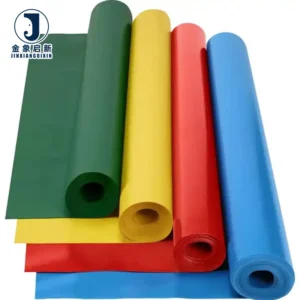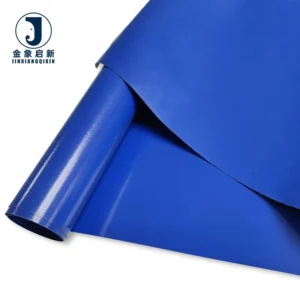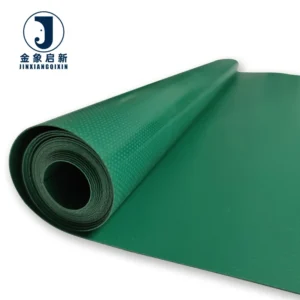
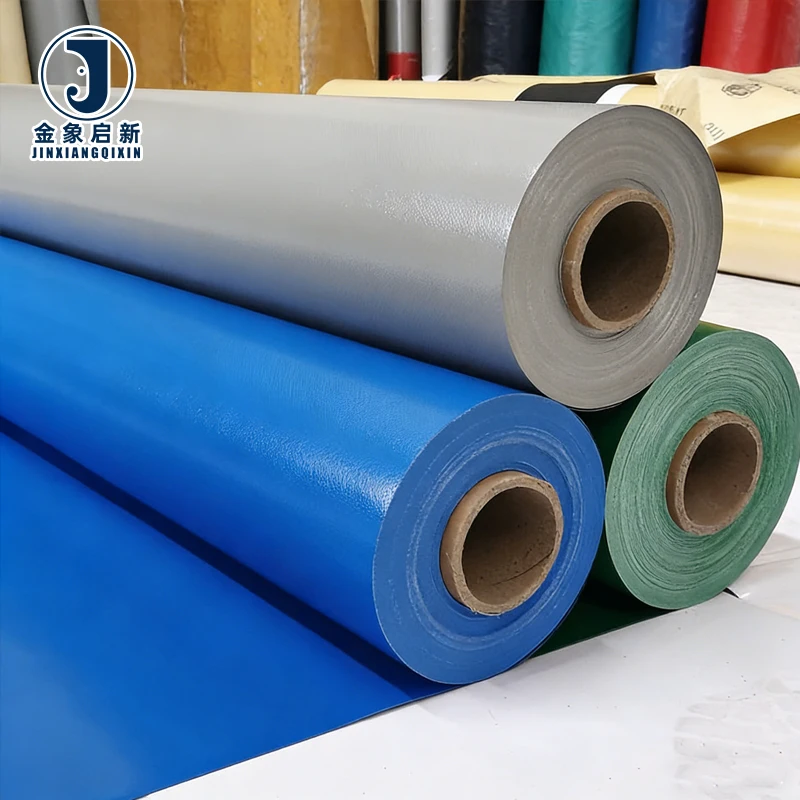
Material-Level Procurement — Every roll of 610gsm 650gsm 800gsm PVC coated tarpaulin ships with documented base fabric denier, coating weight, and verified GSM for specification-driven sourcing decisions.
Technical Specifications
| Parameter | Value |
|---|---|
| Product Type | PVC Tarpaulin Roll |
| Weight (GSM) | 610gsm, 650gsm, 800gsm |
| Coating Material | PVC |
| Coating Method | Knife Coated |
| Water Resistance | Water Resistant |
| Flame Retardant Grade | Fire Retardant (grade not stated in source) |
| UV Treatment | Anti-UV (test basis not stated in source) |
| Tensile Strength | High Tensile Strength (standard not stated in source) |
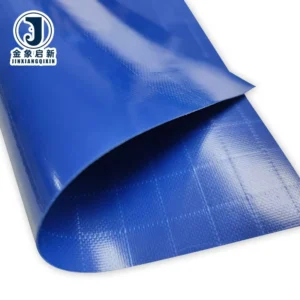
| Finish | Ripstop Woven Pattern (available in glossy or matte finish) |
| Form | Roll |
| Certification | ISO, CE |
Application Suitability
| Application | Exposure & Requirement |
|---|---|
| Tent and awning fabrication | Extended UV exposure, repeated folding and tensioning, seam integrity under wind load |
| Inflatable product manufacturing | Consistent coating adhesion for heat-welded seams, air-holding reliability, flex fatigue resistance |
| Technical fabric covers | Mechanical abrasion, weather cycling, tensile load at anchor points |
| Truck and trailer side curtains | Road debris impact, constant flex at fold points, UV and moisture exposure |
| Industrial outdoor covers | Prolonged weathering, puncture risk from underlying equipment geometry |
Why the GSM Number on Your Quotation May Not Reflect Real Fabric Performance
A 650gsm PVC coated tarpaulin roll from one supplier can behave completely differently from another at the same stated weight.
The problem is that GSM alone measures total mass per square metre, combining base fabric and PVC coating into a single number. A roll can hit the target GSM by applying a heavier coating over a lighter, less dense base fabric — or by using a tighter weave with a thinner coat. The mechanical behaviour under load, the tear propagation resistance, and the heat welding performance all depend on how that weight is distributed between yarn and polymer. When buyers specify on GSM without requesting the base fabric denier and weave density, they leave the most performance-critical variables to the supplier’s discretion [NEED_CITE: tensile and tear test methods for coated fabrics per ISO 1421].
Base Fabric Construction Determines What the Coating Cannot Fix
The ripstop woven pattern in this PVC coated tarpaulin roll family is designed to limit tear propagation by using thicker reinforcement yarns at regular intervals in the weave. When a puncture or cut occurs, the ripstop grid contains the damage within a single cell rather than allowing it to run across the full panel. This structural feature is built into the base fabric before any PVC coating is applied, meaning it cannot be compensated for by adding more coating weight after the fact.
Coating Method and Its Effect on Fabrication
Knife coating applies a controlled layer of PVC onto the woven base, producing a consistent film thickness across the roll width. This method directly influences how the material behaves during heat welding — a uniform coating thickness means the weld temperature and dwell time remain stable across the entire seam. Inconsistent coating, which can occur with less controlled application methods, leads to welds that are either under-fused in thin spots or degraded in thick spots, creating failure points at the exact locations where structural integrity matters most.
Reading the GSM-to-Strength Relationship Correctly
The 610gsm, 650gsm, and 800gsm grades in this range represent different balances of base fabric density and coating weight. A higher GSM does not automatically deliver proportionally higher tensile or tear strength — those metrics depend primarily on the denier of the polyester yarn and the ends-per-centimetre in the weave. The 800gsm grade carries additional coating mass that improves puncture resistance and abrasion tolerance, but the base fabric construction is what determines how the panel behaves under sustained tensile load. Technical buyers should request the full material specification sheet to compare these three grades on the properties relevant to their fabrication process [NEED_CITE: relationship between denier, weave density, and tensile performance in coated fabrics].
Surface Finish and Its Practical Consequences
Glossy and matte finish options affect more than appearance. A glossy surface sheds dirt and water more readily, reducing maintenance for exposed applications like awnings and truck side curtains. A matte surface offers better ink adhesion for printed branding and reduces glare in applications where light reflection is undesirable. The finish also influences how release liners behave during lamination and how stacked rolls interact during transport and storage.
The Hidden Cost of Specifying on Weight Without Material Data
When a PVC coated tarpaulin roll arrives with the correct GSM but an undocumented base fabric, the first sign of a mismatch usually appears at the fabrication stage. Heat welding parameters set for an expected coating thickness may produce weak seams if the actual coating is thinner and the base fabric heavier than assumed. Tear resistance may fall short of design requirements if the supplier achieved the stated GSM by loading coating weight onto a low-denier base. These failures are not manufacturing defects — they are the result of incomplete specification. The roll passes the weight check, but fails in the field at the flex points and seam lines where the material is under the greatest stress [NEED_CITE: coating adhesion and seam failure analysis in PVC coated fabrics].
Why Material-Level Documentation Matters at This Facility
This production facility operates three full coating lines with 36 sets of professional equipment dedicated to PVC coated fabric manufacturing. A 10-person R&D team handles material selection and specification matching, providing technical buyers with base fabric denier data, coating weight breakdowns, and GSM-to-strength comparisons across the 610gsm, 650gsm, and 800gsm grades. Dedicated QA/QC runs at every production stage, with 100% pre-shipment inspection verifying that actual roll weight matches the specification sheet before dispatch. Custom widths, colours, and surface finishes are developed as samples within days for buyer approval before bulk production begins.
Documentation & Verification
- Material specification sheet stating exact GSM, base fabric denier, and PVC coating weight per roll
- UV and flame retardant test reports provided where applicable, citing standard and measured result
- ISO and CE certificates available for compliance and customs documentation
- Pre-shipment inspection record confirming roll weight against quotation before dispatch
- Certificate of origin and full roll packing list included with every shipment
Fabrication, Handling & Storage
- Heat welding parameters should be adjusted for each GSM grade — 610gsm and 800gsm require different dwell times
- Store rolls horizontally on a flat surface to prevent permanent creasing of the PVC coating layer
- Allow cold-stored rolls to reach ambient temperature before unrolling to avoid coating micro-cracking
- Ripstop weave pattern provides natural tear containment — align reinforcement patches with the grid direction
- Matte finish surfaces accept solvent-based inks more readily than glossy variants for printed applications
- Cut panels with sealed edges or welded hems to prevent moisture ingress into the base fabric at raw edges
How to Specify Your Requirement
Provide your target GSM grade, the intended fabrication method (heat welding, sewing, or both), and the exposure conditions the finished product will face. If your market requires a specific flame retardant certification, state the standard your end customer references. Confirm whether you need roll stock only or finished cut panels, and indicate your required widths and colour references so that sample development can begin before production scheduling.
Frequently Asked Questions
Q: How is GSM verified on arrival and what tolerance applies to the stated weight?
A: Each roll undergoes 100% pre-shipment inspection where GSM is measured and recorded against the quotation value. The pre-shipment inspection document ships with your order, showing the measured weight per roll. If a specific tolerance range is required for your application, raise this during the sample approval stage so that production parameters are adjusted accordingly.
Q: What test standard supports the flame retardant claim?
A: Fire retardant grades are available for this PVC coated tarpaulin roll range — confirm the specific grade required for your market (such as M2, B1, or NFPA 701) during the inquiry stage. Test reports citing the applicable standard and measured result are provided with orders where a certified grade has been specified and produced.
Q: What is the anti-UV test basis and how does it relate to outdoor exposure?
A: Anti-UV treatment is incorporated into the PVC coating formulation. The specific test basis and exposure rating depend on the grade selected. Request the UV test report during specification review to confirm that the treatment level matches the expected outdoor service duration for your application and regional climate conditions.
Q: How does base fabric denier affect tensile strength at a given GSM?
A: Two rolls at the same GSM can carry different tensile ratings if one uses a heavier coating over a lighter base fabric and the other uses a tighter weave with less coating. Requesting the material specification sheet showing base fabric denier and ends-per-centimetre allows you to compare grades on structural performance, not just total weight.
Q: What coating method is used and how does it influence heat welding?
A: Knife coating is used across this roll range, producing a uniform PVC film thickness. This consistency allows heat welding temperature and dwell time to remain stable across the full seam length, reducing the risk of under-fused or degraded weld zones that can occur with less controlled coating application methods.