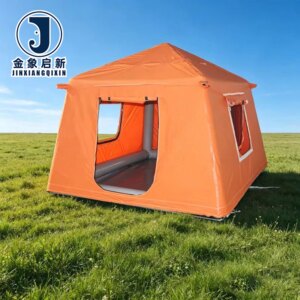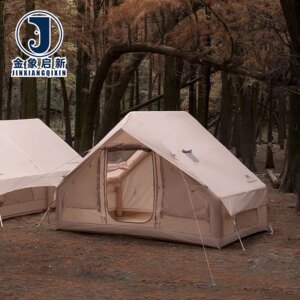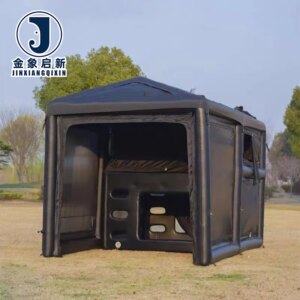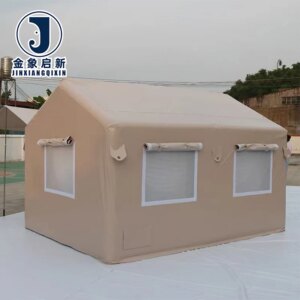
Consistent coating adhesion — verified by in-house test protocols applied to every production batch before release.
Technical Specifications
| Parameter | Value |
|---|---|
| Product Type | Inflatable Fabric |
| Core Material | PVC tarpaulin |
| Coating Material | PVC |
| Construction | Single layer PVC tarpaulin |
| Waterproof Rating | ≥2000mm water column (source value — verify against manufacturer catalog) |
| Tear Strength | ≥300N (test basis not stated in source) |
| UV Treatment | 500 hours exposure (test basis not stated in source) |
| Flame Retardant | Available in flame retardant grades — confirm the grade required for your market |
| Anti-Static | Available in anti-static grades — confirm the surface resistance or standard required |
| Customization | OEM & ODM including sample customization, pattern printing, material selection, and product design |
| Standards | ISO9001, ISO14001, ISO45001, CE |
Application Suitability
| Application | Exposure & Requirement |
|---|---|
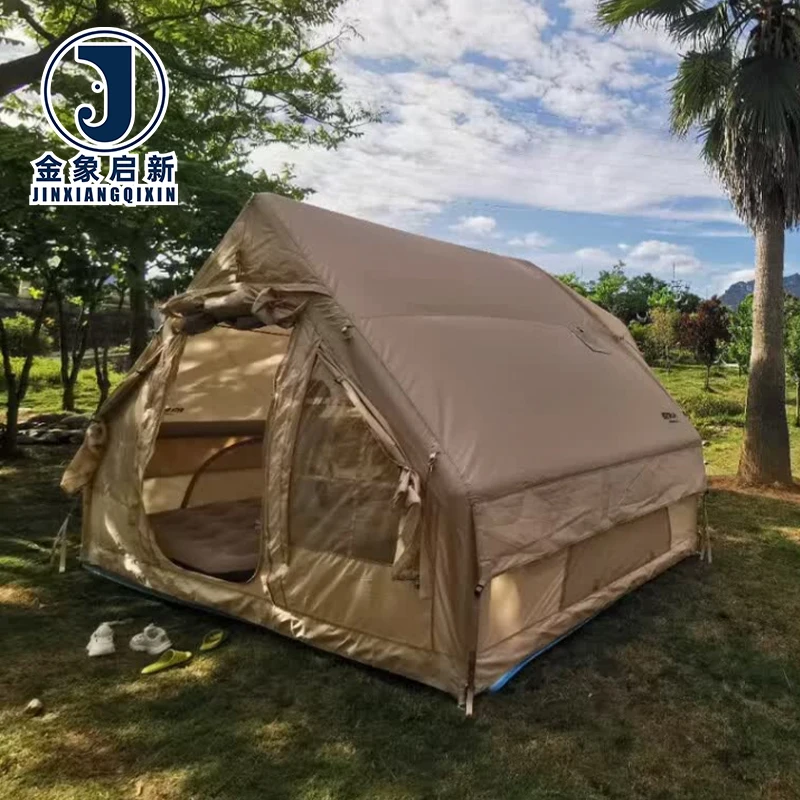
| Commercial-grade inflatable camping tents | Repeated inflation cycles, joint stress at air-beam junctions, outdoor weathering |
| Family-sized camping shelters | Prolonged UV exposure, ground moisture contact, abrasion from folding and transport |
| Professional outdoor equipment product lines | Batch-to-batch colour consistency, weldable seams for airtight chambers, regulatory compliance documentation |
| Wholesale distribution of inflatable structures | Efficient roll packing for shipping, reliable shelf life in storage, verified material specifications |
Why Coating Formulation Matters More Than Base Fabric Weight for Inflatable Tent Fabric
The air-holding performance of inflatable tent fabric depends on coating integrity, not just base fabric thickness.
Outdoor gear manufacturers often specify material by GSM alone, assuming heavier weight translates to better airtightness and structural durability. This approach misses the critical variable: how well the PVC coating bonds to the base fabric and whether that bond survives the flex cycles of inflation and deflation. I have seen coated fabrics delaminate at the air-beam seams while the base fabric itself remained intact — a failure that traces directly to coating adhesion rather than tensile weight [NEED_CITE: coating adhesion test methods for PVC tarpaulin]. When selecting inflatable tent fabric for commercial production, the coating formulation and its compatibility with heat-welding parameters determine whether finished units hold pressure reliably across seasons of use.
How PVC Coating Supports Airtight Chamber Construction
Inflatable camping tent structures rely on sealed air-beam chambers that must maintain pressure under varying temperature and load conditions. The single layer PVC tarpaulin construction used here provides a uniform coating surface that responds predictably to heat-welding at seam junctions. Consistent coating weight across the roll width means welding temperature and dwell time can be standardised, reducing the reject rate during production runs.
Material Selection for Extended Outdoor Deployment
Tent shells deployed in exposed environments face UV degradation that embrittles the coating and accelerates crack propagation at fold lines. The UV treatment applied to this inflatable tent fabric is tested at 500 hours exposure, though the specific test basis should be confirmed for your target climate zone. Manufacturers producing tents for high-altitude or desert markets should request batch-specific UV stability data to match material lots with expected service conditions [NEED_CITE: UV exposure testing standards for coated fabrics].
Understanding What the Specification Sheet Does and Does Not Guarantee
The tear strength value of ≥300N indicates resistance to tear propagation once initiated, but the test method used to generate that figure determines its relevance to your design. Different test standards produce different absolute values for the same fabric. The waterproof rating of ≥2000mm water column addresses hydrostatic pressure resistance, which matters for groundsheet contact and rain exposure but does not address seam integrity under inflation pressure. Procurement teams should map these values to their own acceptance criteria rather than treating them as universal pass/fail thresholds.
What Happens When Inflatable Tent Fabric Specifications Are Misread
A common procurement error is treating a general-purpose PVC tarpaulin specification as suitable for inflatable chamber fabrication without verifying weld behaviour. Fabrics designed for static covers may have coating formulations that soften unevenly under heat-welding, producing seams that leak or separate under internal pressure. I have encountered production lines where seam failure rates climbed sharply after a material switch, not because the new fabric was weaker in isolation, but because its coating chemistry required different welding parameters than the equipment was set to deliver [NEED_CITE: heat-welding compatibility of PVC coating formulations]. Batch-to-batch variations in coating thickness compound this problem, forcing manufacturers to recalibrate welding equipment between orders.
What This Supply Chain Delivers to Inflatable Tent Manufacturers
Production runs are supported by three full lines and 36 sets of equipment, which means volume orders for inflatable tent fabric can be fulfilled without extended queue times. The 10-person R&D team handles material selection and sample development, allowing manufacturers to test coating variants and colour matches before committing to bulk. Every roll undergoes 100% inspection before shipment, catching coating defects and dimensional deviations that would otherwise surface on the production floor. Sample development is completed within days rather than weeks, shortening the validation cycle for new tent designs. Documentation packages accompany each dispatch, providing the traceability records that regulated markets require.
Documentation & Verification
- Material specification sheet stating base fabric denier, coating method, and coating weight per order
- Batch-specific test reports covering waterproof rating, tear strength, and UV stability results
- ISO9001, ISO14001, ISO45001, and CE certificates supplied for regulated market compliance
- Pre-shipment inspection records with airtightness and structural integrity findings documented
- Certificate of origin and customs support documentation included with each shipment
Fabrication, Handling & Storage
- Heat-weld air-beam seams using parameters validated against the specific PVC coating batch received
- Store rolls upright on cores to prevent flat-spot deformation of the single layer PVC tarpaulin surface
- Allow cold-stored rolls to acclimatise before unrolling to avoid coating crack damage at low temperatures
- Use compatible PVC adhesive for field repairs on the coated surface rather than solvent-based alternatives
- Plan cutting layouts to minimise off-cuts given the custom width options available for this material
- Avoid stacking heavy objects on stored rolls to prevent permanent creasing of the PVC coating layer
What to Include in Your Material Inquiry
Specify the inflation pressure your tent design operates at and the seam construction method you use, so the coating formulation can be matched to your welding equipment. Indicate the regulatory markets you sell into and any fire-retardant or anti-static grades those markets require, as available grades vary by jurisdiction. Provide your target colour references and whether pattern printing is needed for brand differentiation across your product SKUs.
Frequently Asked Questions
Q: How is batch-to-batch coating consistency verified before shipment?
A: Each production batch undergoes in-process quality checks covering coating weight, adhesion strength, and visual surface uniformity. Pre-shipment inspection records document these findings and accompany the delivery, allowing manufacturers to confirm the inflatable tent fabric received matches the specification agreed at order placement.
Q: What test standards support the waterproof, tear, and UV performance claims?
A: Test reports are generated for each batch and reference the methods applied. Buyers should confirm which specific standards — such as ISO test protocols for coated fabrics — are relevant to their market requirements and request that those methods be used for verification testing.
Q: How does the PVC coating formulation affect heat-welding behaviour at air-beam seams?
A: The coating chemistry determines the temperature window and dwell time required for reliable seam formation. Manufacturers should conduct welding trials with sample material before production commitment to establish optimal machine settings for the specific inflatable tent fabric batch supplied.
Q: What customization options are available for thickness, colour, and pattern printing?
A: OEM and ODM services cover material selection, custom colour matching, pattern printing for brand differentiation, and sample development. The R&D team prepares samples within days, enabling design validation before bulk production orders are placed.
Q: Which fire-retardant grades are available, and how do they align with target market regulations?
A: Flame retardant grades are available across a range of standards. Buyers should specify the regulatory framework applicable to their destination market — such as regional building or camping equipment codes — so the correct grade is selected and documented for compliance verification.