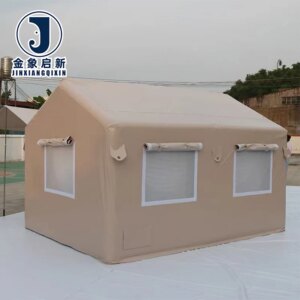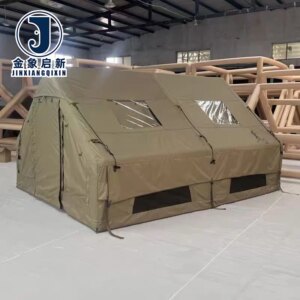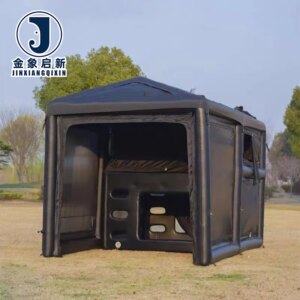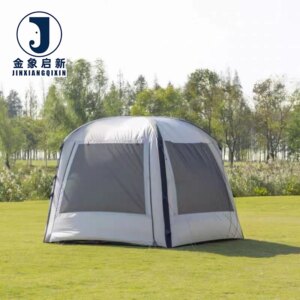
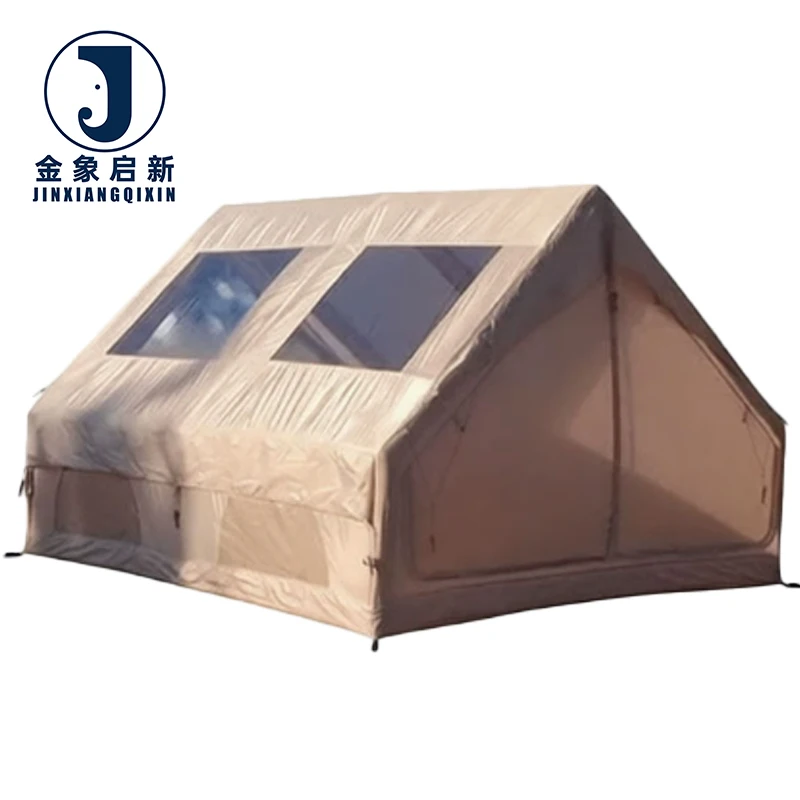
Coating Adhesion Control — three production lines applying knife-over-edge coating with verified bond strength between PVC layers and polyester base fabric, ensuring inflatable tent shells withstand repeated inflation cycles without delamination.
Technical Specifications
| Parameter | Value |
|---|---|
| Product Type | Inflatable Tent Fabric |
| Core Material | PVC Coated Polyester Tarpaulin |
| Key Performance | Waterproof, UV-resistant, Tear-resistant, Flame-retardant, Anti-static |
| Flame Retardancy | Available in flame retardant grades — confirm the grade required for your market |
| UV Resistance | Available with anti-UV treatment — request test report for your exposure zone |
| Anti-static | Available in anti-static grades — confirm the standard required for your application |
| Coating Method | Knife coated |
| Customization Service | OEM & ODM (sample customization, pattern printing) |
| Production Facility Area | 9180 m² |
| Production Lines | 3 |
| Processing Equipment | 36 sets |
| R&D Team Scale | 10 technicians |
| Quality Control System | Dedicated QA & QC on-site full-process inspection |
| Standards | ISO 9001, ISO 14001, ISO 45001, CE |
Application Suitability
| Application | Exposure & Requirement |
|---|---|
| Commercial glamping inflatable tents | Continuous outdoor UV exposure, seasonal temperature swings, guest safety demanding verified flame retardancy |
| Festival and event temporary shelters | Rapid inflation and deflation cycles, crowd proximity requiring fire compliance, wind load stress on welded seams |
| Tourism resort inflatable structures | Long-term weathering in coastal or highland environments, aesthetic consistency across multiple units |
| Hospitality pop-up dining enclosures | Repeated setup and breakdown, interior climate control, branding via pattern printing |
What "Flame Retardant" Means Without a Grade Behind It
Inflatable tent fabric specified as flame retardant must carry a test report matching the fire code of the installation jurisdiction — a claim without documentation is a liability.
I have reviewed purchase orders where inflatable tent fabric was quoted with flame retardant treatment, only for the receiving site to discover no certificate accompanied the shipment. The fabric sat in a bonded warehouse while the buyer scrambled to commission independent lab testing. In commercial glamping and event hosting, fire marshals do not accept verbal assurances — they read test reports. [NEED_CITE: local fire code enforcement for temporary inflatable structures varies by jurisdiction]
Base Fabric and Coating Architecture
The structural behaviour of an inflatable tent under internal pressure depends on how the base fabric handles biaxial stress. Denier and weave density determine tensile capacity in both warp and weft directions, while the PVC coating adds tear propagation resistance. As an Inflatable Tent Fabric manufacturer, we match base fabric construction to the inflation pressure profile of the intended structure, so the material does not stretch unevenly when pressurised.
Coating Weight and Seam Weld Integrity
Coating weight directly influences how the material responds to high-frequency or hot-air welding at seam joints. Inflatable tent shells concentrate stress at inflation port cutouts and panel junctions. If the coating layer is too thin relative to the base fabric, the weld line fractures before the body fabric shows fatigue. Our ten-person R&D team runs weld peel tests on sample panels before bulk production begins, confirming that the seam outlasts the surrounding Inflatable Tent Fabric under cyclic inflation pressure. [NEED_CITE: weld peel strength testing methods for PVC coated fabrics]
Interpreting GSM in Relation to Structural Performance
GSM alone does not predict how an inflatable tent shell will behave under wind load or repeated inflation. A tightly woven base fabric at moderate GSM can outperform a loosely woven heavier fabric in tear resistance. Coating adhesion — measured as bond strength between PVC and polyester — determines whether layers separate at flex points near valve ports. Knife coating deposits a uniform layer that penetrates the weave, producing higher bond values than lamination. Surface finish, whether glossy or matte, affects both UV reflection behaviour and ink adhesion for printed branding panels.
The Cost of Overlooking Batch Traceability
Inflatable tent operators who order multiple rolls for a resort project and discover colour variation upon unrolling face a painful choice: deploy mismatched panels or delay opening. A fabric batch with inconsistent coating weight also produces uneven weld behaviour, where some seams hold and others peel during initial inflation testing. [NEED_CITE: coating weight tolerance impact on weld consistency across rolls] These are not cosmetic complaints — they halt deployment and trigger contract penalties with resort operators awaiting guest arrival.
Why Technical Buyers Source From This Line
Nearly 30 years of coated fabric production means our team has encountered the failure modes specific to inflatable structures, from valve port delamination to seam creep under sustained pressure. Three full production lines give us capacity to hold delivery schedules for multi-roll resort orders without splitting batches across machines. The 36 sets of processing equipment support slitting, welding sample preparation, and pattern printing under one roof. Dedicated QA and QC personnel inspect every roll before dispatch, checking GSM, coating adhesion, and colour against the order specification. ISO 9001, ISO 14001, ISO 45001 and CE certifications underpin the documentation package accompanying each shipment.
Documentation & Verification
- Material specification sheet stating GSM, base fabric denier, coating weight and colour reference per roll
- UV and flame retardant test reports issued by recognised laboratories, matched to batch numbers
- Pre-shipment inspection record covering GSM verification, coating adhesion spot checks and colour consistency
- Roll packing list with individual roll IDs traceable to production batch and machine
- Certificate of origin and customs documentation aligned with destination country requirements
Fabrication, Handling & Storage
- Hot-air welding temperature and speed must be calibrated to the PVC coating thickness before seam production
- High-frequency welding suits this knife coated fabric, producing consistent seam strength at inflation port junctions
- Store rolls upright on pallets in a dry warehouse to prevent flat-spotting and coating compression marks
- Unroll in temperatures above the coating’s cold-flex threshold to avoid surface cracking during fabrication
- Pattern printing requires surface tension testing to confirm ink adhesion before full-run production
Requesting a Quotation With the Right Detail
To receive an accurate specification recommendation, share the intended inflation pressure range, the fire classification required by the installation site, and whether the order calls for stock rolls or custom widths and colours. If your project involves printed branding panels, provide artwork dimensions so we can confirm print method suitability and sample development timelines. Specify whether you need raw roll stock or pre-cut panels with welded seam allowances.
Frequently Asked Questions
Q: How does GSM relate to tensile and tear strength for inflatable tent fabric?
A: GSM combines base fabric weight and coating weight. Tensile strength depends primarily on yarn denier and weave density, while tear resistance is influenced by coating adhesion and thread interlock. A moderate GSM fabric with tight weave can exceed a heavier loosely woven alternative in both parameters.
Q: What coating weight is needed for four-season outdoor exposure?
A: Four-season inflatable tent shells face thermal cycling, UV exposure and moisture. Coating weight must be balanced with base fabric denier to prevent stiffening in cold weather and softening in heat. Request a sample panel tested across your site’s temperature range before committing to bulk production.
Q: Can you provide UV and flame retardant test reports with the shipment?
A: Yes. UV test reports state the irradiation exposure duration and retained tensile percentage. Flame retardant reports cite the classification standard and test method. Both are matched to production batch numbers for traceability. Confirm your destination market’s required standards at inquiry stage.
Q: How do you ensure colour consistency across multiple rolls in one order?
A: All rolls in a single order are coated in the same production run where possible. QA personnel compare each roll against the approved colour swatch under standardised lighting. Any roll falling outside tolerance is flagged and excluded from the shipment packing list.
Q: What weld strength can be expected at seam joints under inflation pressure?
A: Weld peel strength depends on coating weight, welding temperature and dwell time. We produce welded sample panels from your order batch and run peel tests before bulk cutting. The target is weld failure load exceeding the design inflation pressure by the safety factor specified in your engineering brief.