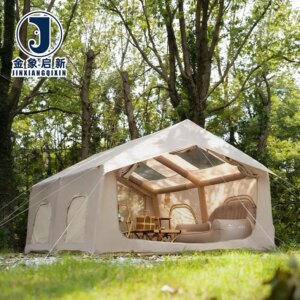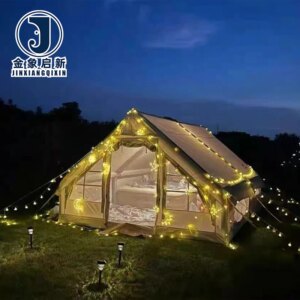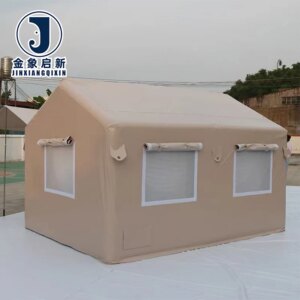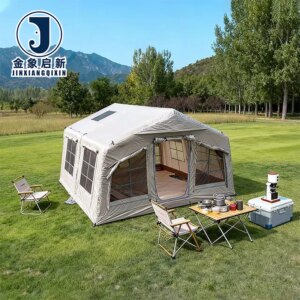
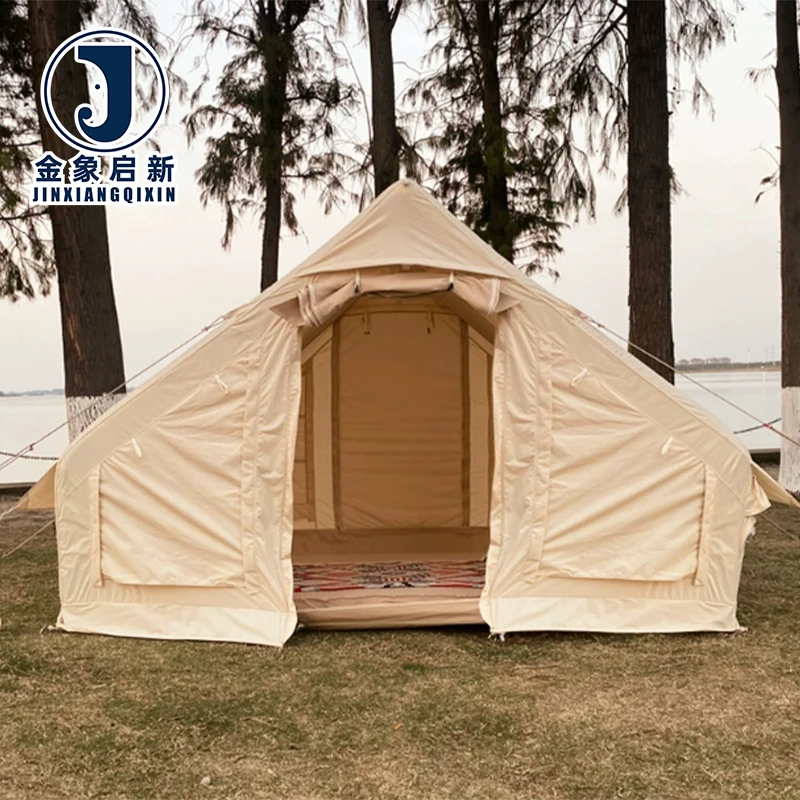
Technical Coating Expertise — Our PVC inflatable tent fabric material is engineered with precision coating weight control and adhesion consistency, supporting OEM & ODM inflatable structure manufacturers who require verifiable performance grades across production batches.
Technical Specifications
| Parameter | Value |
|---|---|
| Product Type | Inflatable Tent Fabric / Inflatable Structure Material |
| Core Material | PVC Tarpaulin |
| Waterproof | Fully waterproof coated construction |
| Flame Retardant | Available in flame retardant grades — confirm the grade required for your market¹ |
| Anti-Static | Available in anti-static grades — confirm the standard required for your application¹ |
| UV Resistance | UV-resistant formulation — test basis available upon request¹ |
| Tear Resistance | Tear-resistant construction — test standard available upon request¹ |
| Product Form | Inflatable structure with automatic opening mechanism |
| Design Classification | 4-season |
| Customization Options | OEM & ODM: sample customization, pattern printing, material selection, product design |
| Production Facility | 9,180 m² with 3 full production lines |
| Processing Equipment | 36 sets of professional processing equipment |
| R&D Support | 10 technicians |
| Compliance Certifications | ISO9001, ISO14001, ISO45001, CE |
¹ Grade and test documentation available upon request. Specify your target market requirements for verification.
Application Suitability
| Application | Exposure & Requirement |
|---|---|
| Commercial camping operations | Repeated inflation/deflation cycles, UV exposure, ground abrasion, seasonal weather variation |
| Industrial field accommodations | Fire safety compliance, anti-static requirements, rapid deployment, extended outdoor siting |
| Specialized outdoor work shelters | 4-season climatic stress, wind load on membrane, chemical exposure at industrial sites |
| Outdoor gear manufacturing | Batch-to-batch material consistency, weld seam integrity, custom color and print requirements |
Why "Fire Retardant" Without a Test Report Is a Compliance Risk for Inflatable Tent Fabric
Every fire-retardant grade must be matched to the specific test standard your destination market enforces — generic claims create liability.
When sourcing PVC inflatable tent fabric for commercial tent production, a supplier statement that reads "flame retardant treated" tells you nothing about whether the material will pass the fire inspection at a campsite in Germany, a mining accommodation site in Australia, or a glamping operation in California. Different jurisdictions reference different standards, and the treatment chemistry that satisfies one will not necessarily satisfy another [NEED_CITE: fire classification test methods for textile membrane structures].
Manufacturers who commit to bulk production based on unverified fire-retardant claims face two outcomes: either the material fails third-party testing after the fabric has already been cut and welded into finished inflatable structures, or the installation is denied occupancy approval on site. Both scenarios generate waste, rework, and contractual penalties that far exceed the cost of requesting documentation up front.
As a PVC inflatable tent fabric manufacturer, we provide test reports matched to batch numbers so you can verify the grade before your production run begins.
Coating Adhesion and Flex Cycle Endurance
Inflatable tents undergo repeated pressurization and depressurization, placing cyclic stress on every welded seam and coated surface. The PVC tarpaulin core used in this material is engineered with controlled coating adhesion that resists delamination through these flex cycles. For inflatable tent manufacturers, this means the fabric maintains structural integrity at air-beam junctions where stress concentrates during setup and teardown. The knife-coating process produces a uniform layer that bonds consistently to the base fabric, supporting reliable heat-welding parameters across the production run.
Treatment Grades and Documentation for Industrial Buyers
Commercial inflatable structures deployed at industrial sites — particularly mining camps and construction field accommodations — often require documented fire-retardant and anti-static performance as a condition of site approval. We supply material specification sheets stating the exact treatment applied, alongside test reports referenced to the production batch [NEED_CITE: anti-static testing protocols for industrial membrane fabrics]. This documentation chain allows your compliance team to trace every roll back to its test data, eliminating ambiguity during safety audits.
How Base Fabric Construction Governs Inflatable Structure Performance
The relationship between base fabric denier, weave density, and coating weight determines how an inflatable tent fabric responds to the internal pressure loads and external wind forces it encounters in service. A heavier coating does not automatically produce a stronger membrane — if the base fabric lacks sufficient yarn density, the coating bridges gaps without structural contribution, and tear propagation follows the weave rather than the coating. Knife-coated PVC tarpaulin addresses this by penetrating the base fabric interstices, creating a mechanical bond that distributes load across multiple yarns simultaneously. This construction matters for inflatable tent designers because the air-beam geometry creates localized stress concentrations that the fabric must resist without initiating a tear. Understanding this interaction helps manufacturers specify the correct base fabric and coating combination rather than selecting on total weight alone.
The Hidden Cost of Specification Mismatches in Inflatable Production
When inflatable tent manufacturers source material without verifying batch-to-batch consistency, the consequences surface after production is underway. Colour variation between rolls becomes visible only when panels from different rolls are welded side by side on the factory floor — at which point the entire batch may need sorting or rejection [NEED_CITE: colour consistency measurement standards for coated fabrics]. Fire-retardant treatment that lacks supporting test documentation creates a different problem: the finished inflatable structures ship to the customer, but the compliance file remains incomplete, delaying site installation and triggering penalty clauses. Weld seam failure represents a third failure mode, occurring when coating formulation varies between batches and the established welding parameters no longer produce a consistent bond. Each of these outcomes traces back to insufficient specification verification at the procurement stage.
Why Technical Buyers Source This PVC Inflatable Tent Fabric Here
Nearly 30 years of focused coated fabric production provides the process control necessary to maintain coating weight and adhesion consistency across high-volume PVC inflatable tent fabric orders. Three full production lines and 36 sets of professional equipment support bulk capacity with reliable on-time delivery for manufacturers operating on production schedules. The 10-technician R&D team handles material selection, sample development, and custom specification work, producing development samples within days rather than weeks. Dedicated QA/QC at every production stage means every roll undergoes inspection before shipment, with 100% pre-shipment inspection recorded against your purchase order specifications. ISO9001, ISO14001, ISO45001 and CE certifications are maintained and available for your compliance documentation requirements.
Documentation & Verification
- Material specification sheet stating PVC coating type, base fabric construction, and treatment grades per roll
- Fire-retardant and anti-static test reports referenced to production batch number
- ISO9001, ISO14001, ISO45001 and CE certificates for compliance file submission
- Pre-shipment inspection record verifying weight, colour, and coating integrity per roll
- Roll packing list with net weight, gross weight, and roll dimensions for logistics planning
- Certificate of origin and customs documentation for international shipment clearance
Fabrication, Handling & Storage
- Heat-weld parameters should be established through test samples before production welding begins on PVC tarpaulin rolls
- Store rolls upright on pallets to prevent flat-spot deformation of the coated surface under self-weight
- Allow cold-transported PVC inflatable tent fabric to acclimate to workshop temperature before unrolling for cutting
- Use PVC-compatible welding equipment with adjustable temperature and speed settings matched to coating thickness
- Clean fabricated inflatable structures with neutral pH detergent to preserve UV-resistant surface treatment
- Repair minor field damage using PVC patch material heat-welded to the same coating chemistry as the base fabric
Specification Inquiry Guidelines
To provide an accurate material recommendation and quotation for your inflatable tent production, we need your target application environment and the compliance standards enforced in your destination market. Specify the required roll width, annual volume, and whether you need stock colours or custom Pantone matching. Confirm whether you require raw roll stock for in-house fabrication or finished cut-to-pattern panels with welded seams. If your inflatable structures carry fire-retardant or anti-static certification requirements, identify the specific test standard and grade so we can match the appropriate treatment formulation and supporting documentation.
Frequently Asked Questions
Q: What fire-retardant grades can you supply for inflatable tent fabric, and how are they documented?
A: We offer PVC inflatable tent fabric in flame retardant grades matched to specific test standards. Each grade is documented with a test report referenced to the production batch. Specify your destination market and the applicable fire classification standard, and we will confirm which grades meet that requirement with supporting documentation before production begins.
Q: How do you ensure colour consistency across multiple rolls in a single production order?
A: Every roll in your PVC inflatable tent fabric order is produced from the same coating batch and inspected against your approved colour reference during pre-shipment QA. Rolls from different coating batches are never mixed within a single order without prior notification. Colour deviation records are maintained and available for your review upon request.
Q: What OEM and ODM customisation options are available beyond standard roll stock?
A: Our PVC inflatable tent fabric programme supports sample customisation, pattern printing, material selection, and structural design consultation. The 10-technician R&D team develops custom samples within days. We work from your specifications or collaborate on material selection to match your inflatable structure design requirements and target market compliance standards.
Q: What documentation accompanies each shipment for compliance and customs purposes?
A: Each PVC inflatable tent fabric shipment includes a material specification sheet, test reports for applicable treatments, ISO and CE certificates, pre-shipment inspection records, roll packing lists, and certificates of origin. Additional compliance documentation can be prepared to match the regulatory requirements of your destination market upon request during the quotation stage.