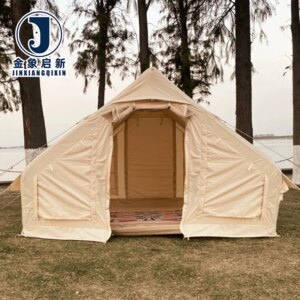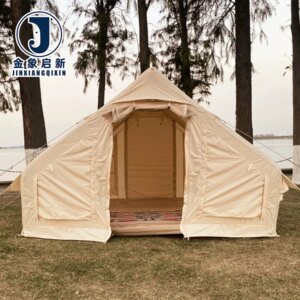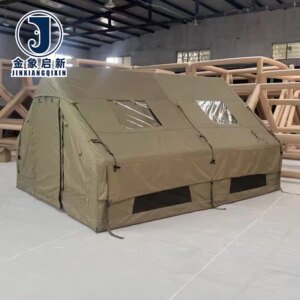
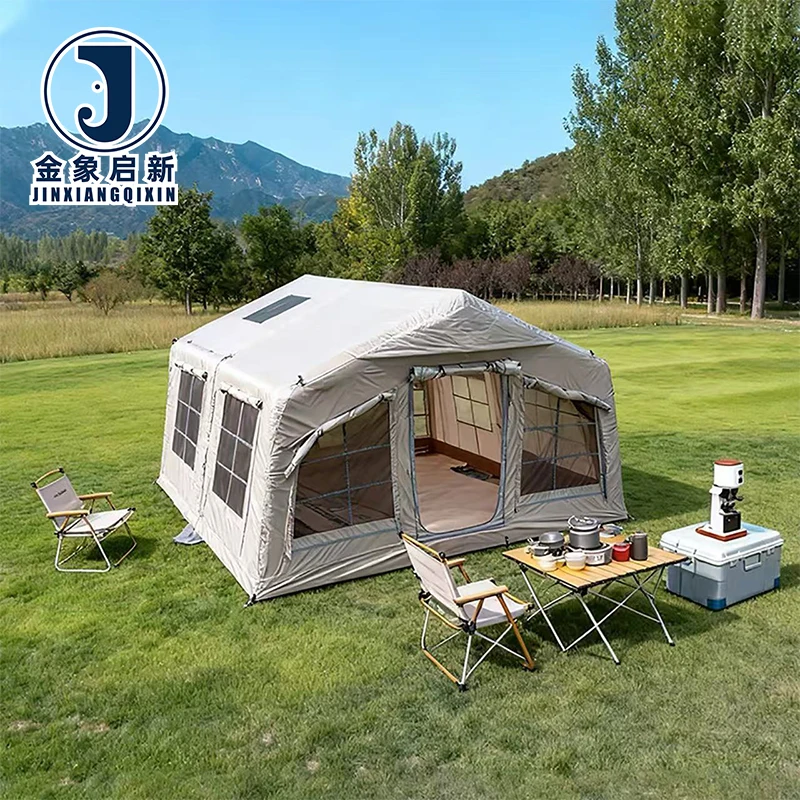
Coated Fabric Process Control — Every roll of inflatable tent fabric material and coating is traced from base fabric weave through to final coating weight, verified at each of the 36 processing stations before the next stage begins.
Technical Specifications
| Parameter | Value |
|---|---|
| Product Type | Inflatable tent |
| Core Material | PVC tarpaulin |
| Waterproof Performance | Fully waterproof coated construction |
| UV Resistance | UV-resistant additives integrated (confirm test basis required for your market) |
| Fire-Retardant Treatment | Available in flame-retardant grades — confirm the grade required for your market |
| Anti-Static Treatment | Anti-static additives available (confirm surface resistance standard required for your market) |
| Tear Resistance | Tear-resistant PVC-coated construction |
| Production Facility | 9,180 m² with 3 full production lines |
| Processing Equipment | 36 sets of professional processing equipment |
| R&D Capability | 10 technicians handling material selection and sample development |
| Quality Control | Full-process inspection with dedicated QA & QC staff; 24-hour pressure testing before shipment |
| Certifications | ISO9001, ISO14001, ISO45001, CE |
| Customization | OEM & ODM services including sample customization and pattern printing |
Application Suitability
| Application | Exposure & Requirement |
|---|---|
| Commercial glamping resorts | Year-round weather exposure, repeated inflation and deflation cycles, guest-facing aesthetic consistency across structures |
| Outdoor event venues | Rapid deployment and teardown, variable wind loading on membrane surfaces, UV exposure during extended seasonal use |
| Temporary hospitality facilities | Frequent relocation, abrasion from ground contact during setup, waterproof integrity under sustained rainfall |
| 4-season outdoor operations | Thermal cycling across seasons, structural air-holding performance under temperature fluctuations, fire-safety compliance for public occupancy |
Why Coating Adhesion Matters More Than GSM for Inflatable Tent Fabric Material and Coating
The seam holds the air; the coating holds the seam.
When inflatable tent membrane fabric is joined by hot-air welding or high-frequency sealing, the weld line depends entirely on how well the PVC coating bonds to the base fabric underneath. A heavy-coated roll with poor adhesion will delaminate at the weld before the base fabric reaches its tensile limit. [NEED_CITE: coating adhesion test methods per ISO 2411 for coated fabrics]. Buyers reviewing inflatable tent fabric material and coating specifications often focus on GSM alone, missing the fact that two rolls at the same weight can behave completely differently under welding heat and inflation pressure. This is why our in-process QA checkpoints test coating adhesion at the production stage — not just on the finished roll.
How the Coating Formulation Supports Air-Holding Performance
The waterproof PVC coating applied to this inflatable tent fabric material and coating is formulated to maintain flexibility across thermal cycling conditions encountered in 4-season glamping operations. A rigid or brittle coating will crack at fold lines during deflation and storage, creating leak paths that compromise structural inflation. The coating weight and viscosity are controlled across all three production lines to ensure that every metre of fabric leaving the facility carries a consistent layer thickness. Consistency here directly affects how predictably the fabric behaves during fabrication — weld temperature, dwell time, and pressure settings remain stable across rolls within the same batch.
Fire-Retardant and Anti-Static Additive Integration for Commercial Compliance
Commercial inflatable tents used in glamping resorts and public event venues face fire-safety scrutiny from local building and occupancy authorities. Fire-retardant and anti-static additives are integrated into the PVC coating formulation during production, rather than applied as a surface treatment after coating. This means the functional chemistry is distributed throughout the coating layer and will not wash off or degrade with surface abrasion. [NEED_CITE: fire classification standards applicable to temporary membrane structures]. Buyers should confirm the specific fire-retardant grade and anti-static surface resistance standard their destination market requires before placing the order, so the correct additive package is selected at the compounding stage.
Base Fabric Construction and Its Role in Structural Inflation
The tensile and tear performance of inflatable tent membrane fabric depends on the base fabric denier and weave density working together with the PVC coating weight. A high-denier yarn in a loose weave will resist tensile pull but allow tear propagation between yarns; a tight weave with lower denier resists tear spread but may lack ultimate tensile capacity. The base fabric selected for this product is matched to the coating formulation to balance these two failure modes, giving inflatable tent manufacturers a material that performs predictably under both static inflation pressure and dynamic wind loading. GSM alone does not reveal this balance — the specification sheet provides base fabric denier and weave data alongside coating weight so fabricators can assess the full construction.
What Specification Mismatches Cost After Fabrication
A batch of inflatable tent fabric that varies in coating weight from roll to roll will produce inconsistent weld seams during fabrication — some joints pass pressure testing, others fail during the 24-hour hold test. [NEED_CITE: weld seam failure causes in hot-air welded PVC coated fabrics]. Fire-retardant grade mismatches discovered at site inspection can halt a glamping resort launch entirely, with the finished structures standing but legally unoccupiable. Colour variation between rolls delivered in the same shipment becomes visible once two panels are inflated side by side under sunlight, forcing the fabricator to either accept the mismatch or re-cut from matching rolls. These downstream costs far exceed the upfront effort of specifying coating weight, fire grade, and colour reference precisely at the inquiry stage.
Why Technical Buyers Source Inflatable Tent Fabric Material and Coating Here
Coating weight and adhesion are verified at each of the 36 processing stations during production, not sampled only at final inspection — this catches deviations before they propagate through an entire roll. The 10-person R&D team develops sample swatches within days when a buyer needs to validate weld parameters or colour matching before committing to bulk production. Every roll undergoes full QA inspection against the material specification sheet before dispatch, with GSM, coating weight, and base fabric denier checked against agreed values. Batch traceability runs from raw PVC resin lot through to finished roll, so any performance question in the field can be traced back to the specific production run. The 24-hour pressure testing protocol on finished inflatable products provides an additional validation layer that confirms the fabric performs as a sealed structure, not just as a flat sheet.
Documentation & Verification
- Material specification sheet stating base fabric denier, coating method, coating weight, and GSM for each roll
- Test reports for UV resistance and flame-retardant grades citing applicable standards where specified
- Batch-specific quality inspection records with full traceability from PVC resin to finished roll
- Pre-shipment inspection documentation confirming roll count, weight verification, and visual assessment
- ISO9001, ISO14001, ISO45001, and CE certificates included with every shipment
- Certificate of origin and customs support documentation for export clearance
Fabrication, Handling & Storage
- Set hot-air weld temperature based on coating weight stated on the specification sheet — verify with test seams before full production
- Store rolls horizontally on padded racks to prevent permanent creasing in the PVC coating layer
- Allow cold-stored rolls to reach ambient temperature before unrolling to avoid coating surface cracking
- Use compatible PVC-based adhesives for field repairs to ensure chemical bonding with the coating formulation
- Plan panel cutting layout to minimize weld seams across high-stress inflation zones of the membrane
- Clean coated surfaces with neutral pH detergent only — solvents may attack the PVC coating plasticizer system
What to Include in Your Inquiry
Specify the fire-retardant grade and anti-static standard your destination market requires, along with the end-use environment and expected inflation cycle frequency. Confirm whether you need rolls at a specific width for your production line or finished panels cut to your pattern dimensions. Indicate your annual volume and colour reference so batch consistency can be planned across multiple shipments.
Frequently Asked Questions
Q: How is the GSM and coating weight of the inflatable tent fabric verified on delivery?
A: Each roll is weighed and measured against the stated GSM on the material specification sheet before dispatch. Coating weight is verified through sectional sampling during production. The pre-shipment inspection record documents these measurements, and buyers may request roll-level weight data with their shipment documentation.
Q: What test standards support the fire-retardant and anti-static claims for inflatable structures?
A: Fire-retardant and anti-static additives are integrated into the PVC coating during compounding. The specific test standard applied depends on the grade requested — buyers should state the fire classification and surface resistance standard required by their local authority. Test reports citing the applicable standard are provided with the shipment.
Q: How does the base fabric denier and weave affect tensile and tear strength of the inflatable membrane?
A: Higher denier yarns increase ultimate tensile capacity, while tighter weave density limits tear propagation between yarns. The base fabric specification on the material sheet provides both denier and weave data alongside coating weight, allowing fabricators to assess how the complete construction will behave under inflation pressure and wind loading.
Q: What is the coating method and how does it affect seam welding behaviour?
A: The coating method — whether knife coated, laminated, or calendered — determines coating adhesion to the base fabric and the thermal response during hot-air or high-frequency welding. The material specification sheet states the coating method used, enabling fabricators to set weld temperature and dwell time parameters correctly for consistent seam integrity.
Q: How is batch-to-batch colour consistency maintained across rolls for large inflatable tent orders?
A: Colour reference is locked at the sample approval stage, and each production batch is matched against this reference under controlled lighting during inspection. Rolls within the same shipment are produced from the same PVC compounding batch where possible. Buyers with multi-shipment annual contracts should request colour tolerance documentation at inquiry stage.