Coating Weight Control — Every roll of PVC tarpaulin undergoes in-process adhesion and weight verification to ensure the coated layer matches the stated specification before it leaves the line.
Technical Specifications
| Parameter | Value |
|---|---|
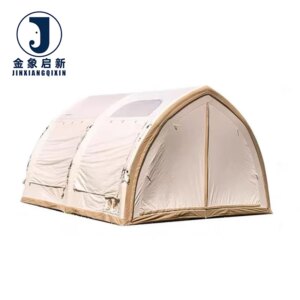
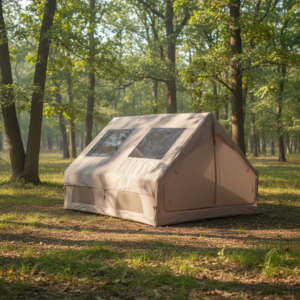
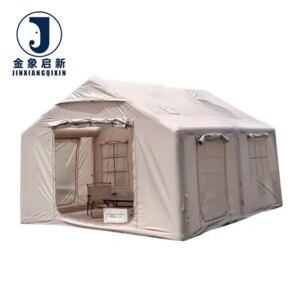
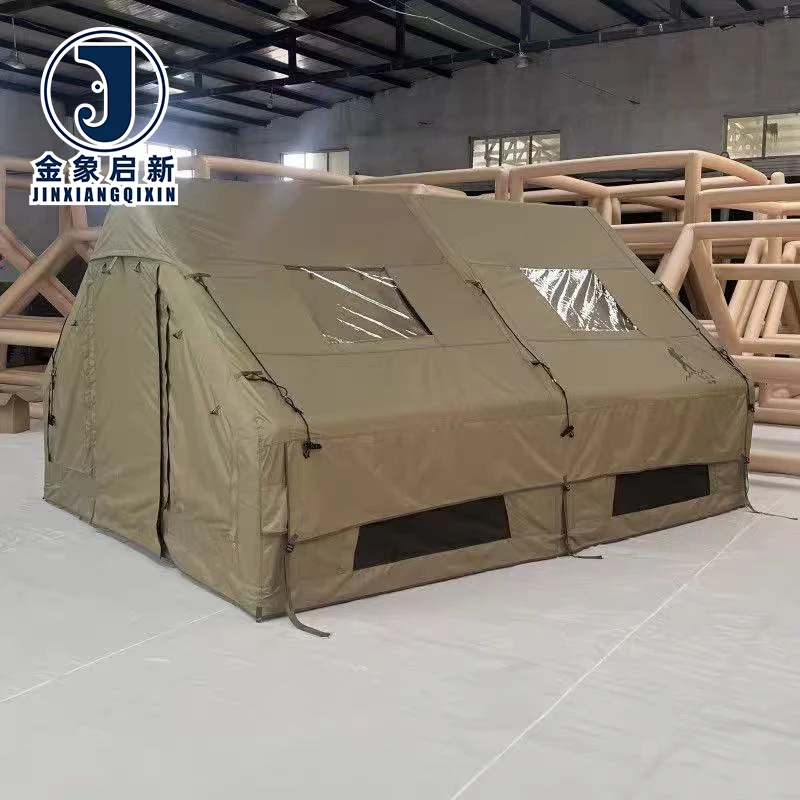
| Product Type | PVC Tent |
| Core Material | PVC Tarpaulin |
| Capacity | 4-6 Person |
| Construction | Single layer |
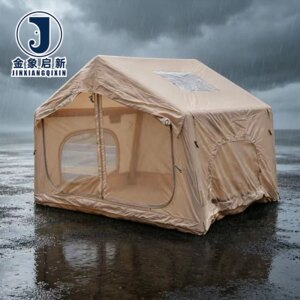
| Key Performance | Waterproof, UV-resistant (test basis not stated), Tear-resistant |
| Opening Mechanism | Quick Automatic Opening |
| Application Season | Summer |
| Customization | OEM & ODM — sample customization, pattern printing |
| Certifications | ISO 9001, ISO 14001, ISO 45001, CE |
Application Suitability
| Application | Exposure & Requirement |
|---|---|
| Commercial outdoor gear manufacturing | Repeated inflation cycles, welded seam integrity, surface abrasion from ground contact |
| Adventure tourism equipment | Extended UV exposure, rainfall and humidity, frequent packing and unpacking stress |
| Industrial event organizer tents | High foot traffic, wind loading on inflatable beams, rapid deployment requirements |
| Equipment rental inventory | Heavy handling, cleaning chemical exposure, multi-season storage and redeployment |
Why Coated Fabric Selection Determines Inflatable Tent Lifespan
The weld line fails before the fabric does — because the material was never chosen for thermal compatibility in the first place.
When an Inflatable Tent Fabric manufacturer supplies roll stock without disclosing the coating method or base fabric denier, fabricators discover the weakness only after the first inflation test. The beam joint peels apart under internal pressure while the body fabric remains intact. This is not a fabrication defect. It is a material mismatch. Sourcing teams that specify only by colour and price end up absorbing the rework cost on every unit that leaves the factory [NEED_CITE: tensile and tear test methods for coated fabrics per ISO 1421].
Base Fabric Denier and Its Role in Air-Holding Beam Integrity
The structural beams of an inflatable tent carry the entire load — internal air pressure, wind shear, and the weight of the canopy above. The base fabric denier and weave density determine how well those beams resist deformation under sustained pressure. A loosely woven scrim allows the PVC coating to flex independently from the yarn structure, creating micro-delamination points that grow with each inflation cycle. When sourcing from an Inflatable Tent Fabric manufacturer, request the base fabric specification alongside the coating weight to confirm the two are engineered as a system.
Coating Method and Thermal Welding Compatibility
The way PVC is applied to the base fabric — knife-coated, laminated, or calendered — directly affects how the material behaves under hot-air or high-frequency welding. Knife-coated fabrics typically deliver stronger peel resistance at the weld because the coating penetrates the scrim rather than sitting on top of it. For inflatable structures where every beam junction is a welded seam, this distinction separates a tent that holds pressure through a storm from one that develops slow leaks within the first season [NEED_CITE: peel strength testing for coated fabric welds per ISO 2411]. Fabricators running high-frequency welders should confirm the coating formulation is compatible with their equipment settings before committing to a full production run.
Reading the Specification Sheet Beyond GSM
Grams per square metre tells you the total weight of the finished fabric, but it does not reveal how that weight is distributed between base yarn and coating layer. Two fabrics rated at the same GSM can behave very differently: one may carry a heavier coating on a lighter scrim, offering good surface waterproofing but poor tear propagation resistance; the other may use a denser base fabric with a thinner coat, delivering higher structural strength with less surface protection. For inflatable tent applications, both the base fabric density and the coating weight must be evaluated together. A balanced construction ensures the inflatable beams resist puncture and the welded seams maintain peel strength through repeated pressurisation cycles.
The Hidden Cost of Specifying on Colour Alone
Buyers who approve samples based on colour match and surface finish — without verifying the underlying construction — often face failures that appear months into field use. Rolls that look identical on the outside can carry different base fabric densities or coating adhesion levels. When a batch of inflatable tents returns from a rental season with split seams and delaminated beam joints, the cost of replacement units, shipping, and lost rental revenue far exceeds what a thorough pre-production material audit would have required [NEED_CITE: coating adhesion failure modes in inflatable structures]. Batch-to-batch consistency in both colour and construction must be confirmed through pre-shipment inspection, not assumed from the initial sample approval.
What This Supply Chain Delivers to Fabricators
Three full production lines and 36 sets of processing equipment run PVC tarpaulin grades in volume, maintaining coating weight consistency from the first roll to the last in a production run. A 10-person R&D team handles material selection, sample development, and pattern printing alignment — critical when inflatable tent panels carry branded graphics that must register across multiple welded panels. Dedicated QA at every production stage means the roll you receive matches the specification sheet you approved, with 100% inspection before dispatch rather than spot-check sampling. Samples for custom width, colour, or print are developed within days, allowing fabricators to run weld tests and confirm thermal compatibility before placing a bulk order.
Documentation & Verification
- Material specification sheet stating GSM, base fabric denier, and PVC coating weight per roll
- UV resistance test report provided where applicable grades are specified
- ISO 9001, ISO 14001, ISO 45001, and CE certificates included with shipment
- Pre-shipment inspection record confirming weight and visual consistency across all rolls
- Certificate of origin and customs documentation prepared for international dispatch
Fabrication, Handling & Storage
- High-frequency welding parameters should be adjusted to the specific PVC coating thickness before full production
- Store rolls upright on pallets to prevent flat-spot deformation of the coated surface
- Allow cold-stored rolls to reach ambient temperature before unrolling to avoid coating crack
- Use PVC-compatible adhesives for field repair patches on single-layer inflatable beam sections
- Plan panel cutting layout to place welded seams along low-stress zones of the inflatable structure
- Clean fabricated units with mild detergent only — solvents degrade the PVC coating surface
What We Need to Quote Your Project
Provide the intended application environment, including expected UV exposure duration and temperature range, so we can recommend the appropriate coating formulation. Confirm whether you require roll stock in standard widths or custom-cut panels with pattern printing registered to your panel layout. Let us know your target market’s fire safety or compliance requirements — we will advise which certified grades are available and supply the corresponding test documentation with your samples.
Frequently Asked Questions
Q: How does GSM affect the strength and weight of inflatable tent fabric?
A: GSM reflects total fabric weight including both the PVC coating and base fabric. A higher GSM does not automatically mean higher tear resistance — the base fabric denier and weave density carry the structural load while the coating provides waterproofing and weld compatibility. We supply a full specification sheet showing both values so you can assess the balance for your inflatable beam design.
Q: What outdoor exposure duration can UV-treated PVC tarpaulin withstand?
A: UV treatment levels vary by grade. We supply UV resistance test reports for grades that have been formally evaluated. For inflatable tents deployed in high-sun environments through summer seasons, confirm the UV grade required for your market and we will match the specification and provide the supporting documentation.
Q: Are welded seams or sewn seams better for inflatable tent structures?
A: Welded seams are standard for inflatable beam construction because they create an airtight bond that resists internal pressure. Our PVC tarpaulin is engineered for thermal compatibility with both high-frequency and hot-air welding. The coating method and weight influence optimal welder settings — request a sample roll to calibrate your equipment before production.
Q: Can you supply pre-production samples for material and colour confirmation?
A: Yes. Samples are developed within days, including custom colour, width, and pattern printing options. Fabricators use these samples to run weld tests, confirm seam peel strength, and verify colour consistency before approving bulk production. This step prevents batch mismatch issues on the finished inflatable tent.
Q: Does the fabric meet fire safety standards for commercial tent use?
A: Fire-retardant treatment is available in specific grades. Confirm the fire safety classification required by your target market — such as local building code or event permit requirements — and we will advise which grades carry the corresponding certification and supply the test report with your shipment documentation.