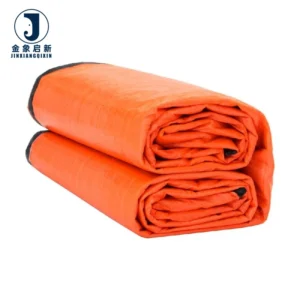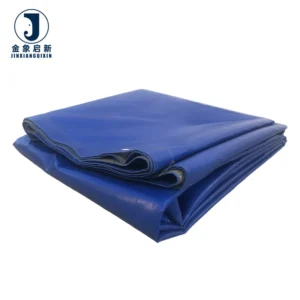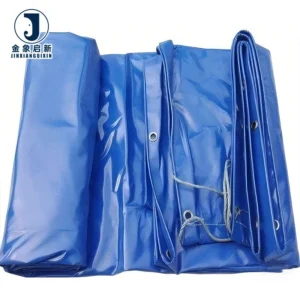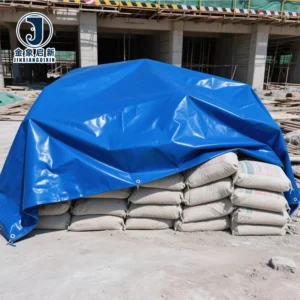
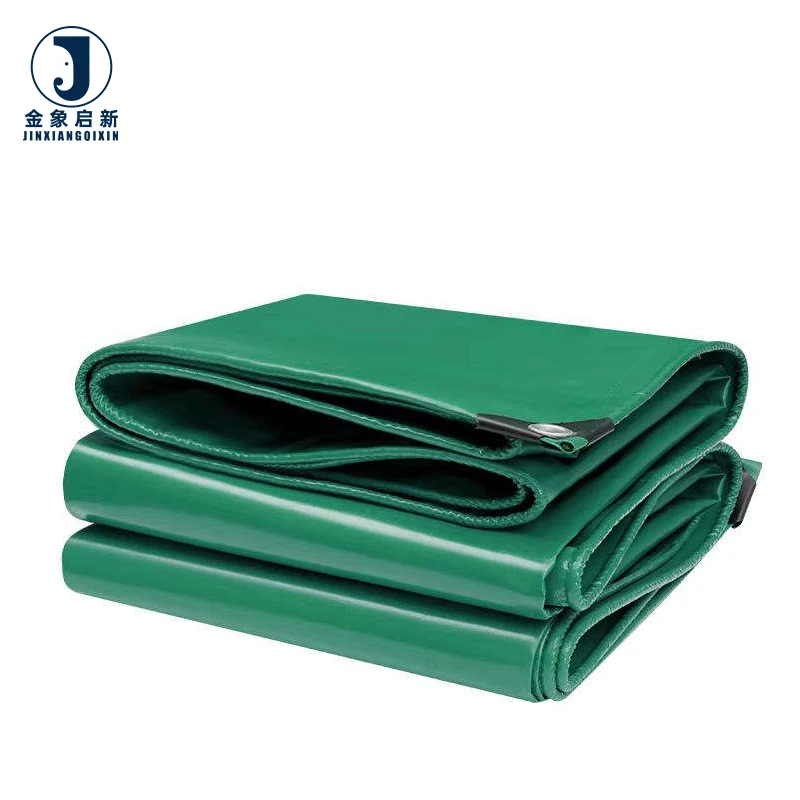
Process-Controlled Coating — nearly 30 years of coated fabric production focused on measurable coating weight and base fabric adhesion, verified through stage-by-stage QA and 100% pre-shipment inspection on every roll of 450gsm PVC coated tarpaulin.
Technical Specifications
| Parameter | Value |
|---|---|
| Product Type | PVC Coated Tarpaulin |
| Specification | 450gsm Green Heavy-duty Waterproof Tarps & Groundsheets Pvc Tarpaulin |
| Weight | 450 gsm |
| Construction | Double-Faced |
| Color | Green (multiple colors available) |
| Coating Material | PVC |
| Water Resistance | Yes — water and mildew resistant |
| Anti-UV | Available — confirm the UV treatment grade and test standard required for your application |
| Flame Retardant | Available in flame retardant grades — confirm the grade required for your market (e.g. B1 per DIN 4102, M2, NFPA 701) |
| Anti-Mildew | Yes |
| Key Features | Waterproof, mildew resistant, double-faced PVC coating |
Application Suitability
| Application | Exposure & Requirement |
|---|---|
| Groundsheets for construction and site use | Direct ground contact, standing water, abrasion from equipment and materials — demands waterproof integrity and puncture resistance at the coating-to-fabric interface |
| Heavy-duty outdoor equipment covers | Continuous UV and weather exposure, wind loading, repeated handling and folding — requires stable coating adhesion and mildew resistance for long-term deployment |
| Agricultural and aquaculture covers | Prolonged moisture contact, organic matter exposure, soil chemistry — calls for water-resistant and anti-mildew coating that does not degrade under biological load |
| General-purpose waterproof tarpaulin protection | Varied outdoor conditions, mechanical stress from tie-downs and load shifting — relies on balanced tensile performance from double-faced construction |
Why Quoted GSM Is Only Half the Story for 450gsm PVC Coated Tarpaulin
Total weight means little when coating adhesion and base fabric density are unknown variables.
I have reviewed material data sheets where a 450 gsm PVC coated tarpaulin was listed with no breakdown of how that weight was distributed between base fabric and coating layers. The result is predictable: a roll that meets the scale weight but fails at the weld seam or tears under load because the coating is thick while the base fabric is thin. [NEED_CITE: tensile and tear test methods for coated fabrics per ISO 1421] Technical buyers who specify by GSM alone leave coating method, denier count, and adhesion strength to the supplier’s discretion — and that gap is where most field failures originate.
How Coating Weight Distribution Defines Real Strength
The 450 gsm total weight of this PVC coated tarpaulin is achieved through PVC coating applied to both faces of the base fabric. Double-faced coating distributes load more evenly across the fabric structure compared to single-sided constructions, reducing the risk that one surface delaminates under flex stress. For technical buyers evaluating material options, the relevant question is not whether the roll weighs 450 gsm but whether the coating weight ratio on each face is controlled and repeatable from roll to roll.
Base Fabric Density and the Tear Propagation Problem
Tear resistance in a coated fabric does not come from the PVC layer — it comes from the woven base fabric beneath it. A high-density weave with sufficient denier count stops a tear from propagating once it starts, while a loose weave allows damage to spread rapidly across the panel. [NEED_CITE: relationship between base fabric denier and tear propagation in coated textiles] When specifying this 450gsm PVC coated tarpaulin for applications where puncture or cut damage is likely, the base fabric construction matters as much as the coating weight above it.
Coating Method and Weld Line Behaviour
The method used to apply the PVC coating — whether knife-over-roll, calendering, or lamination — directly determines how the material behaves at heat-welded seams. Poor coating adhesion causes the PVC layer to peel away from the base fabric at the weld line, leaving a joint that fails before the surrounding fabric does. For fabricators producing custom assemblies from this 450gsm PVC coated tarpaulin, weld parameter testing on sample stock before bulk cutting prevents seam failures that are expensive to repair in the field.
Specifying 450 gsm Without Verifying Coating Adhesion
When coating weight is stated on the quotation but adhesion to the base fabric is not tested, the delivered material may pass the scale but fail at flex points where the coating separates from the weave. This is the most common root cause of premature tarpaulin failure in heavy-duty applications — the fabric itself remains intact while the coating lifts, exposing the base yarn to water ingress and UV degradation. [NEED_CITE: coating delamination failure modes in heavy-duty tarpaulin field reports] Buyers who do not request adhesion test data alongside GSM confirmation take on this risk unknowingly, and the consequence is typically visible only after the material has been installed and exposed to load cycling.
Sourcing 450gsm PVC Coated Tarpaulin with Verifiable Process Control
Material specification sheets are issued before production begins, stating the exact GSM, base fabric denier, coating method, and colour reference for your order — not a generic product family range. Coating adhesion is monitored at every production stage through dedicated QA/QC checkpoints, not sampled only at the end. The 10-person R&D team develops samples within days when custom colour, width, or treatment requirements are specified, allowing you to verify material properties before committing to bulk. UV and flame retardant test documentation is available on request, tied to recognised standards rather than marketing claims. 100% pre-shipment inspection ensures that every roll leaving the facility matches the agreed specification for weight, colour consistency, and coating integrity — verified and documented, not assumed.
Documentation & Verification
- Material specification sheet stating 450 gsm, base fabric denier, and PVC coating method per order
- UV and flame retardant test reports issued against recognised standards when treatment is specified
- Pre-shipment inspection record confirming GSM, colour reference, and coating adhesion per roll
- ISO and CE certificates covering the production facility and coating process
- Roll packing list with individual roll weights for receiving verification
Fabrication, Handling & Storage
- Heat-weld 450 gsm double-faced PVC using temperature and dwell time confirmed on sample stock before production runs
- Store rolls horizontally on pallets in shaded areas to prevent surface compression marks on the PVC coating
- Allow cold-stored rolls to reach ambient temperature before unrolling to avoid cracking the PVC coating layer
- Cut panels with allowance for seam overlap — double-faced 450 gsm stock supports heat-welded joins without exposed raw edges
- Clean with mild detergent and soft brush; avoid solvents that attack the PVC coating surface
- Inspect weld seams after fabrication by peel-testing sample joints to confirm adhesion exceeds base fabric tear strength
What to Include in Your Material Enquiry
Provide the specific exposure conditions your application will subject the fabric to — direct UV, continuous moisture, chemical contact, or mechanical abrasion — so the correct treatment package can be confirmed. State the target market and any fire classification requirements that apply at the installation site, as flame retardant grades vary by regional regulation. Indicate whether you require fabric by the roll or finished cut-and-welded panels, and specify the roll width and colour reference needed for consistency across your order volume.
Frequently Asked Questions
Q: How is 450 gsm verified before shipment and what inspection records are provided?
A: Every roll is weighed and inspected during pre-shipment QC. The inspection record documents actual GSM per roll against the stated specification, along with colour reference and coating adhesion checks. This record accompanies the dispatch documentation so you can verify compliance on arrival without relying solely on the quotation claim.
Q: What UV test standards and exposure data support the anti-UV treatment?
A: Anti-UV treatment is available in grades matched to different exposure durations and climates. Request the specific test standard and exposure classification required for your application — results are documented in test reports issued before bulk production, not stated as generic performance claims.
Q: Which flame retardant grades are available for this 450 gsm PVC construction?
A: Flame retardant grades including B1 per DIN 4102, M2, and NFPA 701 are available depending on your market’s fire safety regulations. Specify the grade required for your installation site during enquiry so the correct formulation is applied and tested with documentation provided.
Q: What are the recommended heat-welding parameters for double-faced 450 gsm PVC?
A: Welding temperature, pressure, and dwell time depend on the specific coating formulation. We recommend testing parameters on sample stock first. The double-faced construction supports strong welds when coating adhesion to the base fabric is confirmed — sample panels allow you to peel-test joints before committing to production cutting.
Q: How is colour consistency maintained across rolls in a bulk order?
A: Colour reference is locked to a specific formulation documented on the material specification sheet before production. In-process QC checks coating colour against the reference at multiple stages. For critical applications, side-by-side roll comparison at dispatch ensures no visible variation between panels installed adjacent to each other.