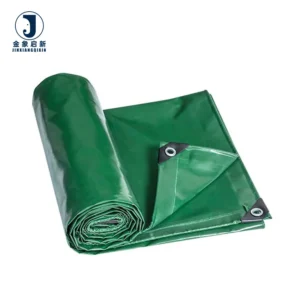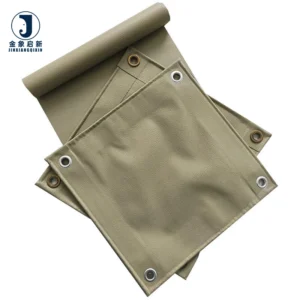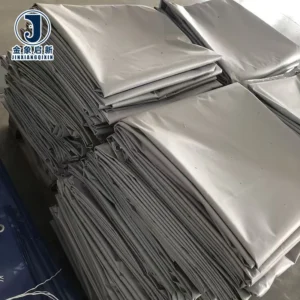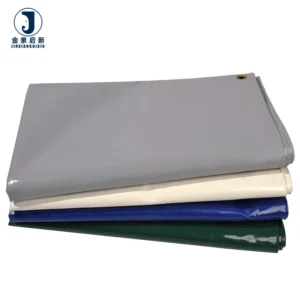
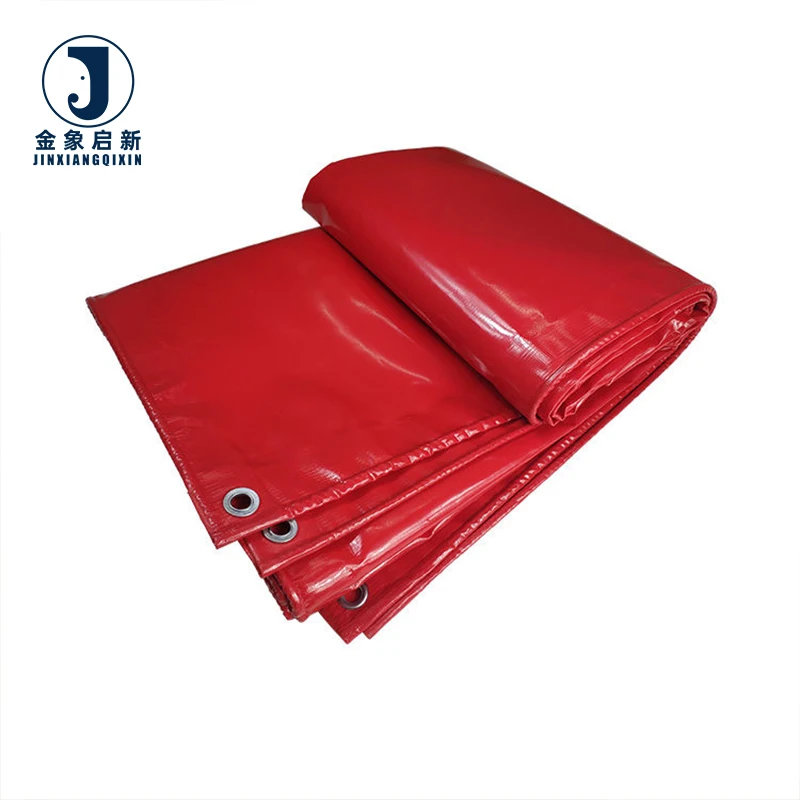
Verified Coating Technology — three full production lines and 36 sets of equipment support consistent PVC coating weight across every roll of farming tarpaulin we dispatch.
Technical Specifications
| Parameter | Value |
|---|---|
| Product Type | PVC Coated Tarpaulin |
| Base Material | Polyester base fabric with double-sided PVC coating |
| Weight Range | 350gsm – 900gsm (multiple grades available) |
| Thickness Range | 0.29mm – 0.65mm |
| Yarn Count Options | 500D×840D / 500D×1000D / 1000D×1000D / 1000D×1300D / 1300D×1300D / 1000D×2000D |
| Mesh Density Options | 30×19 / 20×20 / 30×15 |
| Warp Tensile Strength | 1650N – 3900N (test basis not stated in source) |
| Weft Tensile Strength | 1600N – 3500N (test basis not stated in source) |
| PVC Density | 1.15–2.00 g/cm³ |
| PVC Tensile Strength | 50–80 MPa |
| Brittle Temperature | ≤ -50°C to -60°C |
| Softening Temperature | ≥ 80°C |
| Melting Point | 212°C |
| Joining Methods | High frequency hot melt / Hot air welding / Sewing |
| Eyelet Specification | 3cm enlarged aluminum alloy buttonhole, 1-meter spacing |
| Edge Reinforcement | 5mm thick rope without splicing, heat-sealed seamless edge wrapping |
| Corner Reinforcement | Reinforced corners on all sides |
| Flame Retardant | Available in flame retardant grades — confirm the grade required for your market |
| UV Treatment | Anti-UV treatment available — confirm test standard for your region |
| Additional Features | Waterproof, Anti-Mildew, Heavy Metal Free, Flexible, Self-Clean, Printable |
Application Suitability
| Application | Exposure & Requirement |
|---|---|
| Farming and agricultural cover | Prolonged sun and rain exposure, mechanical abrasion from equipment, wind uplift on stockpiles |
| Truck and trailer side curtain | Constant flexing at load points, road spray, tie-down strap abrasion at eyelets |
| Outdoor event tent and awning | UV saturation, wind gusts on tensioned panels, repeated setup and teardown folding |
| Garden and plant rainproof cover | Permanent moisture contact, soil-borne mildew, low-light environments requiring light blockage |
| Balcony and window rain shield | Vertical water runoff, wind-driven rain, UV exposure on outward-facing surface |
| Inflatable and membrane structure | Air pressure stress on seams, weld integrity under continuous tension, flexible repeated inflation |
Why Coating Density Matters More Than GSM Alone
The PVC density range of 1.15–2.00 g/cm³ determines how effectively the coating seals the base fabric weave against water ingress and abrasion.
Buyers frequently receive PVC coated tarpaulin that matches the quoted GSM on paper but feels lighter or thinner when unrolled on site. [NEED_CITE: GSM verification challenges in coated fabric procurement] This happens when coating formulation uses lower-density PVC compound to reach the target weight — the material weighs the same on a scale but the coating layer is physically thinner, leaving the polyester yarns more exposed to moisture and mechanical wear. For farming applications where the tarpaulin drapes over irregular stockpiles or stretches across greenhouse frames, a thinner coating film cracks at fold lines far sooner than a denser compound at the same stated weight. Technical buyers evaluating PVC coated tarpaulin material coating technology should request the coating density parameter alongside GSM to understand what they are actually receiving.
How Base Fabric Denier Drives Tear Propagation Resistance
The yarn count options spanning 500D×840D to 1000D×2000D define the individual filament thickness in both warp and weft directions of the polyester base fabric. Higher denier yarns create a coarser weave with fewer intersection points, which allows tear energy to dissipate across a longer yarn path before the next crossover arrests the tear. When selecting PVC coated tarpaulin material coating technology for applications involving point loads — such as tie-down straps pressing against a truck cover or equipment resting on a farming stockpile cover — the base fabric denier determines whether a puncture stays localised or propagates across the panel.
Coating Adhesion and Weld Behaviour at Flex Points
The double-sided PVC coating bonds to the polyester base through high-frequency hot melt or hot air welding compatible processes. The PVC softening point of ≥80°C and melting point of 212°C define the thermal window available for seam joining. [NEED_CITE: hot air and high frequency welding parameters for PVC coated polyester] When fabricators heat-seal panels together for tent roofs or side curtains, the coating must melt and re-bond across the seam without degrading the polyester yarns underneath. A coating density in the upper range of 1.15–2.00 g/cm³ provides more material at the weld interface, producing a stronger bond that resists peeling when the joined panel flexes under wind load or during transport.
Reading the Specification Sheet Beyond the Weight Number
Mesh density options of 30×19, 20×20, and 30×15 represent the yarn count per 10cm in warp and weft, and this figure works together with denier to define the actual fabric architecture. A 1000D×1000D yarn at 20×20 density produces a different mechanical behaviour than 500D×840D at 30×19 density, even when both are coated to the same GSM. The first offers fewer but thicker yarns carrying more load per filament, while the second distributes load across more intersection points with lighter individual yarns. Thickness values ranging from 0.29mm to 0.65mm across the product range reflect these combined variables — base fabric weight, mesh density, and coating weight on each side — and no single parameter tells the complete performance story.
When Unverified Specifications Lead to Field Failures
Receiving PVC coated tarpaulin with coating weight below the quoted specification causes failures that appear unrelated to material quality. A farming cover that cracks along fold lines after one season, a truck side curtain whose welded seam peels open at the bottom corner, or a tent panel that develops mildew underneath the coating — these field issues trace back to the coating compound, density, and adhesion values that were not verified before shipment. [NEED_CITE: common failure modes in PVC coated tarpaulin at flex and weld points] When flame retardant or anti-UV treatment is claimed without a supporting test report, the material may pass initial inspection but fail compliance checks at the installation site or degrade visibly within months. Batch colour variation between rolls in the same shipment becomes apparent only after installation, when panels mounted side by side show visible tone differences across a building facade or truck fleet.
What Consistent Production Control Delivers
Three full production lines with 36 sets of professional equipment allow parallel processing of multiple coating grades without cross-contamination between runs. A dedicated 10-person R&D team handles material selection and sample development, producing custom width and colour samples within days for buyer approval before bulk production begins. Every production stage includes QA/QC checkpoints, with 100% inspection conducted before any roll leaves the facility — this covers GSM verification, colour consistency across the batch, and dimensional accuracy against the order specification. Coating weight and adhesion are controlled through process parameters calibrated across nearly 30 years of coated fabric production, reducing the gap between the material specification sheet and the roll that arrives on your loading dock.
Documentation & Verification
- Material specification sheet stating exact GSM, base fabric denier, mesh count and coating weight for each grade ordered
- Test report for flame retardant and anti-UV grades specifying the standard applied — request documentation matching your market requirement
- Pre-shipment inspection record confirming roll weight, colour consistency and dimensional accuracy before dispatch
- Certificate of origin and customs documentation for international shipment of coated fabric rolls
- Roll packing list with individual roll weight and dimensions for receiving verification at destination
Fabrication, Handling & Storage
- High frequency welding suits the PVC coating melting point of 212°C — calibrate dwell time to coating density between 1.15–2.00 g/cm³
- Store rolls horizontally on racking to prevent flat spots on the coating surface that become visible after unrolling and tensioning
- Heat-sealed edge wrapping with 5mm rope reinforcement distributes load at eyelet points spaced every 1 meter along the hem
- Clean with mild detergent — the self-clean coating surface tolerates standard cleaning agents without degrading the PVC film
- Cut panels with allowance for weld overlap — hot air welding at ≥80°C softening temperature requires adequate seam width for bond strength
Request a Specification Review
Provide the exposure conditions for your farming or agricultural application, including expected wind loads, chemical contact from fertilisers or animal waste, and the temperature range your covers will experience. Specify whether you require roll stock for your own fabrication or finished panels with custom eyelet spacing, edge reinforcement and corner patches. If your project requires flame retardant or anti-UV certification, state the standard applicable in your installation jurisdiction so we can confirm grade availability with supporting test documentation.
Frequently Asked Questions
Q: How is GSM verified on delivery to match the quoted specification?
A: Each roll undergoes weight sampling at the 100% pre-shipment inspection stage, where actual GSM is measured against the material specification sheet values. The inspection record accompanies the shipment so you can cross-check receiving weight against the documented result. If any roll falls outside tolerance, it is held for review before dispatch.
Q: Can you supply flame retardant grades with a test report?
A: Flame retardant grades are available across the PVC coated tarpaulin range. The specific grade and supporting test standard depend on your market requirements — confirm the applicable standard such as DIN 4102, NFPA 701 or your local building code, and we will provide the corresponding test report with your shipment documentation.
Q: How do base fabric denier and mesh count determine actual tensile strength?
A: Denier defines individual yarn thickness while mesh count defines yarns per unit area. Together they determine how load distributes across the fabric structure. The specification sheet lists the denier and density for each grade alongside the corresponding tensile strength range, allowing you to match the base fabric architecture to your mechanical requirements.
Q: Which welding method suits different PVC tarpaulin applications?
A: High frequency hot melt welding produces strong bonds for panels under continuous tension such as inflatable structures. Hot air welding suits general fabrication including truck covers and tent panels. Sewing with sealed needle holes is used where mechanical joining is preferred. The PVC softening temperature of ≥80°C supports both thermal methods.
Q: What documentation ships with each consignment?
A: Every shipment includes a material specification sheet, pre-shipment inspection record, roll packing list with individual weights and dimensions, certificate of origin and customs support documents. Test reports for UV and flame retardant grades are included where applicable to the ordered specification.