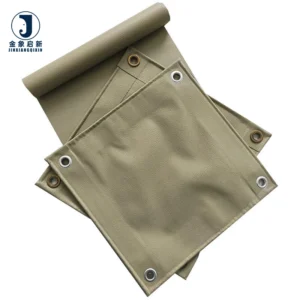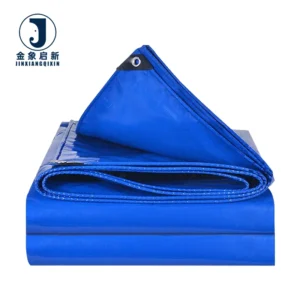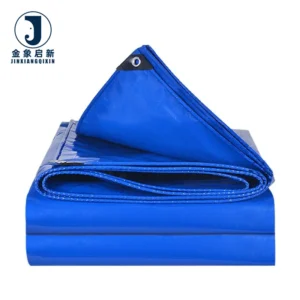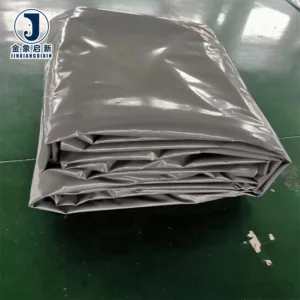
Coating Adhesion Control — Hot melt and lamination processes applied across three weight tiers of B1 flame retardant PVC coated tarpaulin, with 100% pre-shipment inspection on coating bond integrity and fabric adhesion for warehouse and construction cover applications.
Technical Specifications
| Parameter | Value |
|---|---|
| Product Type | PVC Coated Tarpaulin Fabric |
| Base Fabric | 100% high toughness polyester yarn |
| Coating Material | PVC |
| Coating Method | Lamination technology and hot melt coating technology |
| Weight (Medium-duty) | 400–500 g/m² |
| Thickness (Medium-duty) | 0.35–0.45 mm |
| Base Fabric Denier (Medium-duty) | 500D |
| Tensile Strength (Medium-duty) | Warp 1500–2000 / Weft 1200–1800 N/5cm (test basis not stated) |
| Weight (Heavy-duty) | 700–1000 g/m² |
| Thickness (Heavy-duty) | 0.70–1.0 mm |
| Base Fabric Denier (Heavy-duty) | 1000D |
| Tensile Strength (Heavy-duty) | Warp 2000–2500 / Weft 1800–2200 N/5cm (test basis not stated) |
| Weight (Super heavy-duty) | 1100–1500 g/m² |
| Thickness (Super heavy-duty) | 1.2–1.5 mm |
| Base Fabric Denier (Super heavy-duty) | 500D–2000D |
| Tensile Strength (Super heavy-duty) | Warp 2500–3000 / Weft 2200–2800 N/5cm (test basis not stated) |
| Flame Retardant Grade | B1 (per DIN 4102) |
| Additional Treatments Available | Anti-static, cold resistant, mold proof, UV treatment — confirm the grade required for your market |
| Welding Tear Strength | Excellent (source value — verify against manufacturer catalog) |
| Color Fastness | Best (source value — verify against manufacturer catalog) |
| Outdoor Weather Resistance | 3–5 years (source value — verify against manufacturer catalog) |
| Standards & Certification | B1 (DIN 4102), ISO, CE |
Application Suitability
| Application | Exposure & Requirement |
|---|---|
| Warehouse cover | Rain ingress, wind uplift, fire safety compliance — B1 flame retardant grade required for indoor storage of combustible goods |
| Construction site protection | Scaffolding wrap, debris containment, temporary enclosure — puncture resistance and weather exposure across multi-month projects |
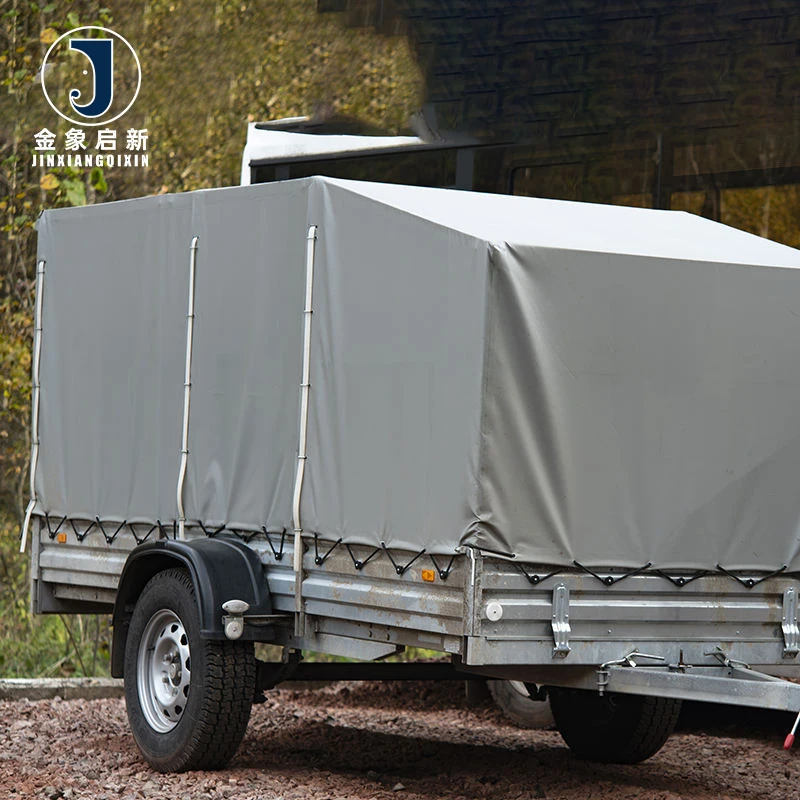
| Heavy-duty truck tarpaulin | Road abrasion, constant flexing at tie-down points, UV exposure — high denier base fabric needed at 1000D or above |
| Industrial pipe canopy | Chemical splash, sustained load, thermal cycling — coating adhesion and weld seam integrity critical |
| Tensioned structural fabric | Permanent tensile load, wind shear, architectural UV exposure — super heavy-duty grades with 1100–1500 g/m² for long-span membrane applications |
What "B1 Flame Retardant" Actually Means for Your PVC Coated Tarpaulin Specification
A B1 classification under DIN 4102 confirms limited flame spread and self-extinguishing behaviour — but only a batch-specific test report proves the roll you receive matches the certificate on file.
PVC coated tarpaulin B1 fire retardant fabric is frequently specified for warehouse and construction enclosures where local fire codes demand documented compliance. The problem arises when the flame retardant treatment is claimed at the quotation stage but no corresponding test report accompanies the shipment. Technical buyers and fabricators then face delays at site inspection or fail the compliance audit altogether. The gap between a stated grade and a verified grade is where project risk concentrates [NEED_CITE: DIN 4102 fire classification for building materials].
Coating Method Determines Weld Behaviour at the Seam
Hot melt coating and lamination technology produce different bond characteristics between the PVC layer and the polyester base fabric. On this PVC coated tarpaulin fabric, both methods are applied depending on the weight class and end-use requirement. Hot melt coating forces PVC into the weave interstices, creating a mechanical bond that supports high-frequency welding at seams. Lamination bonds a pre-formed PVC film to the base fabric, which can yield a cleaner surface finish but demands precise temperature control during fabrication to avoid delamination at the weld line.
How Denier Selection Maps to Real-World Tensile Demand
The base fabric denier directly governs how the material responds to sustained load and point stress. A 500D polyester base in the medium-duty tier serves lighter truck covers and temporary site enclosures where flexibility matters more than ultimate strength. Moving to 1000D in the heavy-duty tier increases warp and weft tensile capacity substantially, which matters for side curtains that flex with every load shift. The super heavy-duty tier reaches 2000D, providing the structural reserve needed for tensioned membranes and industrial pipe canopies where the fabric carries permanent tensile load. Selecting the wrong denier for the exposure condition leads to premature failure at stress concentration points [NEED_CITE: tensile and tear test methods for coated fabrics per ISO 1421].
Reading GSM, Thickness and Tensile Together
GSM alone does not predict fabric strength — it is the combination of coating weight, base fabric denier and weave density that determines performance. A 700 g/m² fabric built on 1000D polyester with tight weave density will outperform a 700 g/m² fabric on 500D yarn with heavy coating compensating for a loose weave. Coating method further influences the result: hot melt coating adds adhesive strength at the yarn-coating interface, while lamination adds surface thickness without necessarily improving interlaminar bond. For technical specifiers, requesting the full construction breakdown — base fabric specification, coating weight separate from total GSM, and coating method — prevents surprises when the material is cut, welded and put under load.
The Hidden Cost of Specifying on Price Per Square Metre Alone
When PVC coated tarpaulin fabric is purchased on unit cost without verifying coating weight and base fabric construction, failures tend to surface in predictable patterns. Rolls arrive lighter than the quoted GSM, and the coating peels at the weld line within weeks of installation. Flame retardant treatment is declared on the purchase order but absent from the coating formulation, leaving the fabric vulnerable at the first compliance check. Batch-to-batch colour variation becomes visible once panels are installed side by side on a warehouse facade, forcing partial replacement and project delays [NEED_CITE: common causes of coated fabric field failures].
Why Source This PVC Coated Tarpaulin Fabric Here
Three full production lines and 36 sets of professional equipment handle bulk roll orders with consistent coating weight control across the run. A dedicated 10-person R&D team develops custom GSM, colour and treatment combinations, producing samples within days rather than weeks. Every production stage carries in-process QA, with 100% pre-shipment inspection confirming GSM, coating adhesion and colour reference before any roll leaves the facility. Material specification sheets, test reports for B1 flame retardant and UV grades, and full customs documentation ship with every order, giving technical buyers the paper trail their compliance audits require.
Documentation & Verification
- Material specification sheet stating exact GSM, base fabric denier and coating weight for each roll
- Batch-specific test report for B1 flame retardant grade per DIN 4102 included with shipment
- Pre-shipment inspection record with weight verification per roll against stated GSM
- ISO and CE certificates available for compliance documentation
- Certificate of origin and customs support documents provided per destination market
Fabrication, Handling & Storage
- Hot weld at temperatures matched to the lamination or hot melt coating method to prevent delamination at seams
- Reinforce eyelet and tie-down zones with additional PVC patches on medium-duty 400–500 g/m² grades to prevent tear propagation
- Store rolls upright on pallets to avoid flat-spot creasing on the 0.70–1.0 mm heavy-duty grades
- Allow cold-resistant treated rolls to acclimatise before unrolling in sub-zero site conditions
- Use PVC-compatible solvent cleaners on glossy surfaces to preserve coating integrity and colour fastness
Requesting a Specification Match
Provide the application environment, expected mechanical load and any fire safety or anti-static compliance requirements for your market. Specify the target GSM range, base fabric denier preference and whether you need rolls at standard width or custom cut sizes. If colour consistency across multiple rolls is critical, include your colour reference and request batch samples for side-by-side approval before full production runs.
Frequently Asked Questions
Q: How is the B1 flame retardant grade verified and which markets accept it?
A: B1 is classified under DIN 4102, widely recognised across European and Middle Eastern construction markets. Each production batch can be accompanied by a test report confirming the flame retardant grade. Confirm with your local authority whether DIN 4102 B1 satisfies your specific project fire code or whether an alternative standard such as NFPA 701 is required.
Q: What GSM and denier should I specify for my application?
A: Medium-duty 400–500 g/m² on 500D base suits temporary covers and light truck tarps. Heavy-duty 700–1000 g/m² on 1000D fits side curtains and construction enclosures under sustained flex. Super heavy-duty 1100–1500 g/m² on up to 2000D is specified for tensioned membranes and permanent industrial canopies. Share your load and exposure data for a grade recommendation.
Q: How is batch-to-batch colour consistency controlled across rolls?
A: Colour reference is locked at the sample approval stage and monitored through in-process QA during coating. Pre-shipment inspection includes visual comparison against the approved swatch. For large orders spanning multiple production runs, batch samples can be sent for side-by-side approval before the full quantity ships.
Q: What welding and seam fabrication guidelines apply to this PVC coated fabric?
A: Welding parameters depend on whether the coating was applied by hot melt or lamination. Hot melt coated fabric generally tolerates a wider temperature window at the weld. Request the specific welding temperature and pressure recommendation for your chosen grade and coating method to avoid delamination or insufficient bond at seam lines.
Q: Which additional treatments can be combined on one fabric?
A: Anti-static, cold-resistant, mold-proof and UV treatments are available in combination with the B1 flame retardant grade. Confirm which treatments your application requires at the inquiry stage, as each additive modifies the coating formulation. Batch-specific test reports can be issued for each treatment claim included in your order.