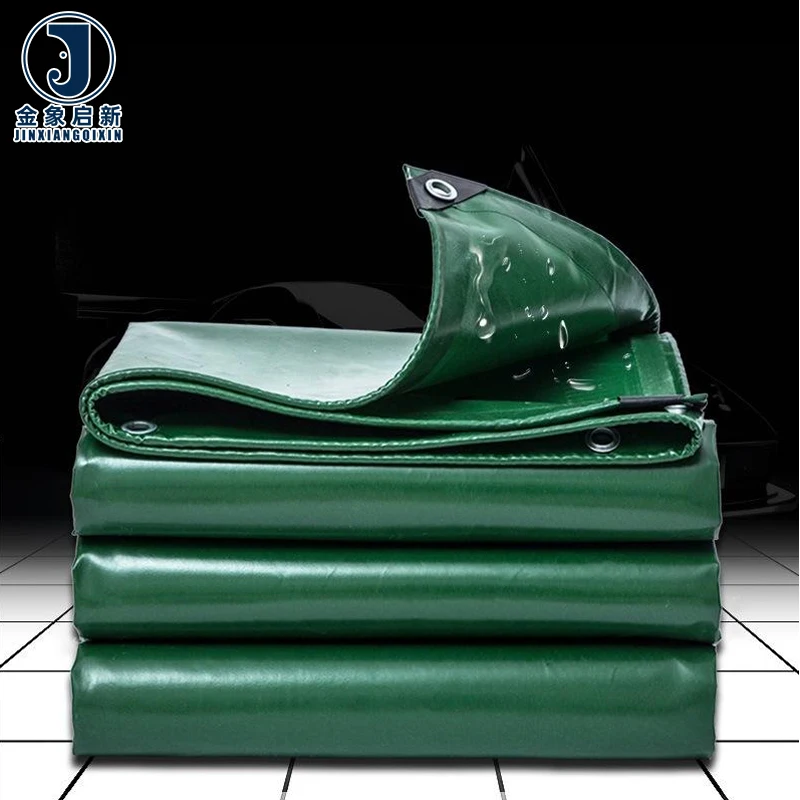
Coating Adhesion Control — Nearly 30 years of PVC coating process refinement ensures the bond between base fabric and coating layer holds under thermal welding and field stress, verified per roll before dispatch.
Technical Specifications
| Parameter | Value |
|---|---|
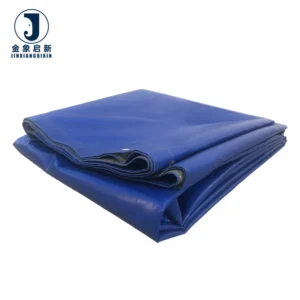
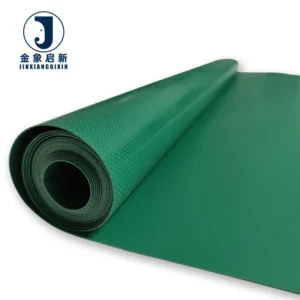
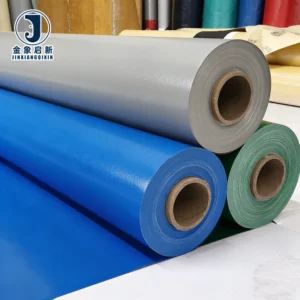
| Product Type | PVC Coated Tarpaulin Roll |
| Coating Material | PVC |
| Waterproof Rating | Waterproof (test basis not stated in source) |
| Breathability | Breathable (test basis not stated in source) |
| Duty Grade | Heavy duty (grade not stated in source) |
| Finish Options | Available in glossy or matte finish |
| Application Environment | Outdoor use |
| UV Treatment | Available in UV-treated grades — confirm the grade required for your market |
| Flame Retardancy | Available in flame retardant grades — confirm the grade required for your market |
Application Suitability
| Application | Exposure & Requirement |
|---|---|
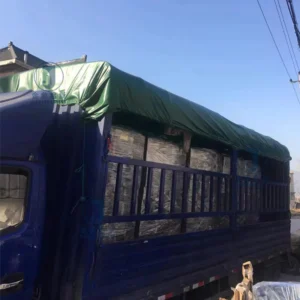
| Truck and trailer side curtains | Constant flexing at load points, road spray, abrasion from tie-down straps |
| Construction site enclosures | Wind loading, UV exposure, repeated installation and removal cycles |
| Agricultural stock covers | Prolonged sun exposure, moisture ingress prevention, wind uplift resistance |
| Tent and awning fabrication | Thermal welding along seam lines, colour consistency across panels |
| Industrial equipment wraps | Contact with oils and solvents, puncture risk from sharp edges |
Why the PVC Tarpaulin Material Coating Technology Behind the Roll Matters More Than the Label
A roll that reads 650 GSM on the label but arrives lighter at the warehouse door is not a specification deviation — it is a structural deficit built into every linear metre.
Technical buyers who source PVC tarpaulin material coating technology by data sheet alone face a recurring problem: the GSM quoted at inquiry stage drifts once the container arrives. Coating weight and base fabric denier together define tensile and tear behaviour, yet many suppliers quote only the combined figure without disclosing how that weight is distributed. A roll that is base-heavy but coating-light will tear at the weld; one that is coating-heavy but base-light will delaminate under flex. [NEED_CITE: relationship between coating adhesion and tensile performance per ISO 1421]
Base Fabric Construction and Its Role in Tear Propagation
The structural backbone of any PVC tarpaulin material coating technology is the base fabric — its denier and weave density determine how a puncture or cut propagates under load. A tighter mesh count restricts tear spread, while a higher denier yarn absorbs more energy before fibre failure. When evaluating roll stock, request the base fabric specification separately from the total GSM to understand where the weight actually sits.
Coating Method and Its Influence on Weld Behaviour
The PVC coating method — whether knife-over-roll, dip, or calender — directly affects how the material responds to thermal welding at fabrication stage. Knife-coated fabrics typically produce cleaner weld lines with higher peel strength because the coating penetrates the weave more uniformly. For fabricators running hot-air or wedge welders, consistent coating thickness across the roll width is critical; variation causes weak spots where the weld fails before the fabric itself. [NEED_CITE: coating method effect on thermal weld peel strength in coated fabrics]
Reading GSM in Context: Density, Denier, and Real-World Load
GSM alone does not predict field performance. A 650 GSM roll built on a low-denier, open-weave base with heavy coating will behave very differently under tension than a 650 GSM roll on a high-denier, tight-weave base with moderate coating. The former may show excellent water resistance but poor tear resistance; the latter offers structural rigidity but may require additional coating passes for full waterproof integrity. Technical buyers specifying PVC tarpaulin material coating technology should request the base fabric weight and coating weight as separate line items. Surface finish — glossy or matte — also plays a functional role: glossy surfaces shed water and dirt more readily, while matte finishes reduce glare and improve ink adhesion for printed branding.
What Happens When Coating Weight Drifts Below Specification
When coating adhesion falls short of the stated specification, the failure sequence is predictable. Welded seams on truck side curtains begin to peel at flex points within the first season. Tent panels delaminate along heat-welded ridges after repeated packing and deployment. Importers who receive rolls with inconsistent GSM across the same batch face visible colour shift once the material is installed panel-to-panel, triggering rejection and rework costs that far exceed the original material savings. [NEED_CITE: coating weight variance and seam failure correlation in PVC tarpaulin field reports]
Why Fabricators and Importers Source This PVC Tarpaulin Material Coating Technology Here
Deep process control over coating weight and adhesion means the GSM on the quotation is the GSM on the arrival inspection — each roll is checked individually before dispatch. Three full production lines and 36 sets of professional equipment support bulk roll output without sacrificing batch-to-batch consistency, so colour and finish remain stable across a full container load. A 10-person R&D team handles material selection, custom width development, and sample runs within days, allowing buyers to validate weld behaviour and coating adhesion before committing to volume. Dedicated QA/QC at every production stage — from base fabric incoming inspection through coating, winding, and packing — ensures the roll stock meets the specification sheet that accompanies it.
Documentation & Verification
- Material specification sheet confirming GSM, base fabric denier, and PVC coating type per roll
- UV and flame retardant test reports provided where the specified grade requires certification
- Pre-shipment inspection record with individual roll weight verification against stated GSM
- Roll packing list with batch number for traceability across the shipment
- Certificate of origin and customs documentation included with dispatch
Fabrication, Handling & Storage
- Set hot-air welder temperature to match the PVC coating thickness; heavier grades need higher heat and slower feed
- Store rolls upright on pallets to prevent flat-spotting and permanent creasing across the coating surface
- Allow cold-stored rolls to acclimatise to workshop temperature before unrolling to avoid coating crack at low flex
- Use PVC-compatible solvent cleaners on glossy finish surfaces to avoid dulling or coating softening
- Plan cutting layout to minimise cross-grain seams where tear load concentrates at panel junctions
- Reinforce eyelet and tie-down zones with additional PVC patches bonded over the base fabric weave
What We Need to Move Your Inquiry Forward
Share your end-use application and the environmental exposure the fabric will face — UV intensity, temperature range, chemical contact, and mechanical load type. Specify your target market’s fire classification or compliance requirements so we can confirm the correct treatment grade. Provide your required roll width, annual volume, and whether you need stock colour or custom colour with batch consistency across multiple shipments.
Frequently Asked Questions
Q: How is GSM verified from lab sample to arrival inspection?
A: Each roll is weighed individually during pre-shipment inspection and compared against the GSM stated on the material specification sheet. The inspection record accompanies the shipment so you can cross-check on receipt. We do not rely on batch-average sampling — every roll in your order is verified.
Q: What base fabric denier and mesh count options are available?
A: Base fabric construction is matched to your application’s tensile and tear requirements. We provide the denier and mesh count as separate line items on the specification sheet so you can evaluate the structural backbone independently of the total coating weight. Request a sample roll to test weld behaviour on your equipment.
Q: How does the PVC coating method affect weld and seam strength?
A: Coating penetration into the base fabric weave determines peel strength at thermal weld lines. Uniform coating thickness across the roll width prevents weak spots where the weld fails before the fabric. We recommend sending a sample roll through your hot-air or high-frequency welder to validate settings before bulk production.
Q: Can UV or flame retardant treatment be added, and what documentation comes with it?
A: UV and flame retardant treatments are available in various grades depending on your market’s regulatory requirements. Where a specific grade is specified, the corresponding test report is included in the shipment documentation. Confirm the classification standard your end market requires — such as DIN, NFPA, or local building code — so we match the correct formulation.
Q: How is batch-to-batch colour consistency controlled across rolls?
A: Colour is matched against a confirmed reference sample at the start of each production run. Rolls within the same batch are inspected side-by-side before winding to detect any visible shift. The roll packing list records batch numbers so you can trace each roll back to its coating run and verify consistency across your installation.