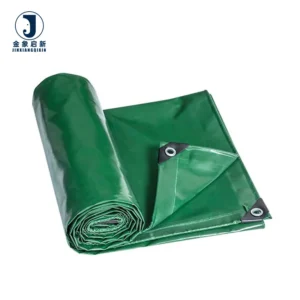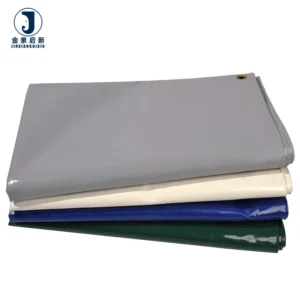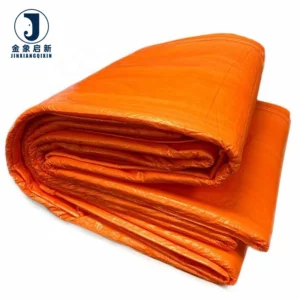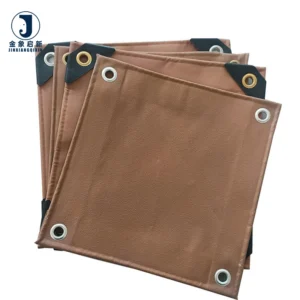
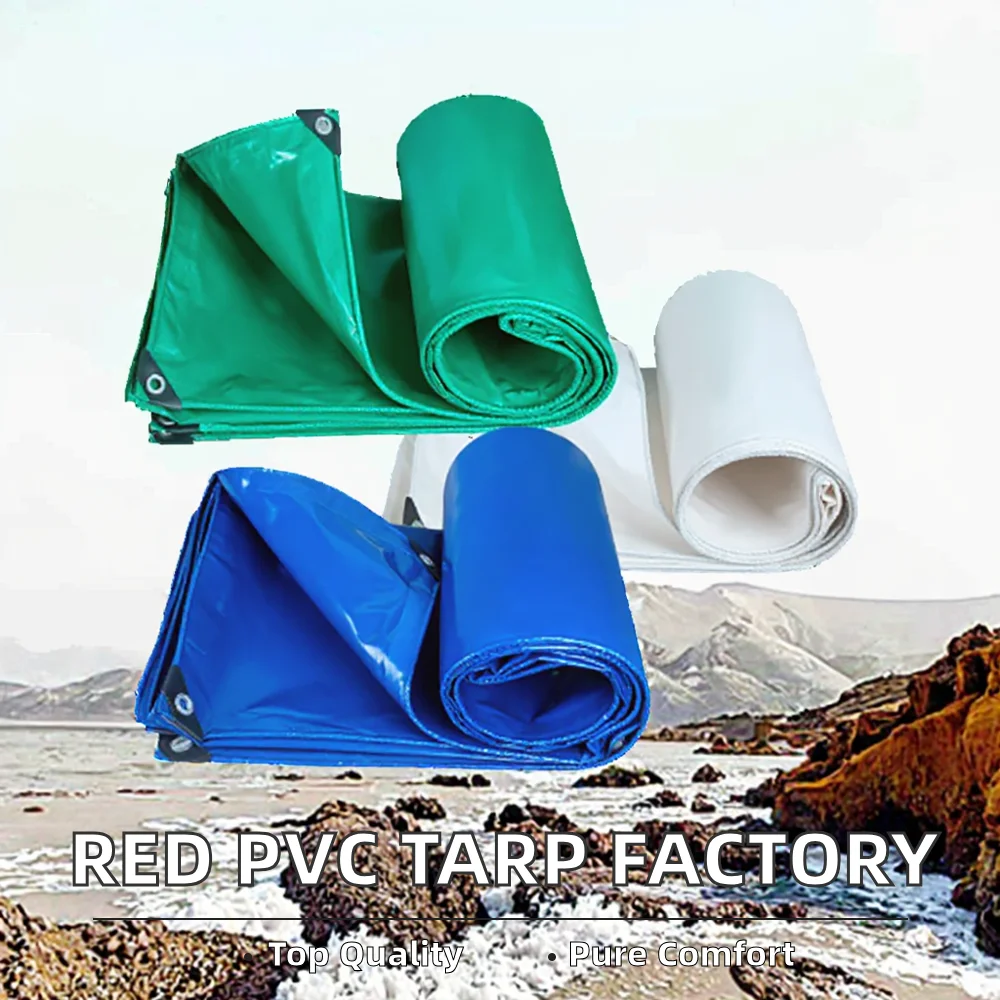
Deep Process Control Over Coating — Knife coated construction on 1000D×1000D base fabric, where coating weight and adhesion are managed at every production stage to ensure the GSM stated on the specification sheet matches what arrives on your cutting table.
Technical Specifications
| Parameter | Value |
|---|---|
| Product Type | PVC Coated Tarpaulin |
| Base Fabric Denier | 1000D×1000D |
| Coating Method | Knife coated |
| Coating Material | PVC |
| Flame Retardant | Available in flame retardant grades — confirm the grade required for your market |
| Anti-Static | Anti-static treatment available — confirm the standard required for your application |
| Anti-UV | Anti-UV treatment available — test basis to be confirmed per order |
| Anti-Mildew | Anti-mildew treatment available |
| Waterproof Rating | Fully waterproof coated construction |
| Finish | Available in glossy or matte finish |
| Outdoor Durability | 3-5 years (source value — verify against manufacturer catalog) |
| Custom Sizing | Custom width and length available |
Application Suitability
| Application | Exposure & Requirement |
|---|---|
| Tent and awning fabrication | Prolonged UV exposure, wind loading on seams, fire safety compliance in public assembly areas |
| Truck cover and trailer curtain | Constant flexing at load points, road abrasion, weather exposure across climate zones |
| Temporary event structures | Fire retardant requirements for indoor or enclosed public spaces, repeated installation and teardown |
| General outdoor heavy-duty covering | Rain and moisture ingress, mildew in humid storage, UV degradation over extended deployment |
What "Flame Retardant" Means Without a Grade Behind It
A flame retardant claim without a named standard is a liability, not a specification.
Technical buyers sourcing PVC coated tarpaulin fabric for temporary structures or transport applications often receive material described simply as "flame retardant" — only to discover at site inspection that the test standard does not match the local authority’s requirement. The gap between a generic claim and a verifiable grade such as B1 per DIN 4102, M2, or NFPA 701 can halt a project at the compliance stage. When the coating formulation and the base fabric denier interact differently under flame exposure, the test result depends on the exact construction supplied — not the product family brochure. [NEED_CITE: DIN 4102 fire classification for building materials]
How Knife Coating Defines the PVC Coated Tarpaulin Fabric Performance Envelope
Knife coated PVC construction forces the coating compound directly into the 1000D×1000D base fabric under controlled pressure, creating a mechanical bond that laminated alternatives cannot replicate. This coating method produces a continuous film on both faces of the fabric, eliminating the delamination risk that arises when a pre-formed PVC film is adhesive-bonded to a base cloth. For fabricators who weld seams on truck curtains or tent panels, the coating-to-yarn adhesion determines whether the joint fails at the weld line or the fabric body.
Coating Weight, Base Fabric Denier, and the GSM Question
The relationship between coating weight and base fabric denier is where PVC coated tarpaulin fabric specifications either hold up or fall apart. A 1000D×1000D base fabric provides the tensile skeleton, but the coating mass filling the weave interstices contributes directly to tear propagation resistance and waterproof integrity. When a supplier quotes a GSM figure, that number represents the combined weight of base fabric and coating — not coating thickness alone. Two fabrics at the same GSM can have entirely different base-to-coating ratios, producing different flex behaviour and weld performance. [NEED_CITE: tensile and tear test methods for coated fabrics per ISO 1421]
Reading the Specification Sheet Beyond the Headline Numbers
The base fabric denier of 1000D×1000D indicates the yarn count in both warp and weft directions, which governs how load distributes across the fabric plane when a point force is applied — such as a tie-down strap pulling against an eyelet or a sharp edge pressing against a pallet cover. Knife coating on this construction ensures the PVC penetrates the yarn bundle rather than sitting on the surface, which is critical for peel strength during heat welding. The available glossy or matte finish affects more than appearance: a glossy surface sheds water and dirt more readily, while a matte surface reduces glare and can improve ink adhesion for printed branding. Flame retardant and anti-static treatments modify the coating chemistry itself, meaning they must be specified at the formulation stage rather than applied as a topical after-treatment.
The Cost of Specifying on Price per Kilogram Instead of Coating Integrity
When buyers select PVC coated tarpaulin fabric based on the lowest cost per kilogram, the savings often vanish at the fabrication stage. A coating that is under-weight to hit a price point will show reduced adhesion at heat-welded seams, meaning the joint peels apart under flex stress before the fabric body reaches its tensile limit. Flame retardant formulations that are diluted to reduce cost may pass a lab test on a small sample but fail when tested on production-roll material with real-world thickness variation. Batch-to-batch colour drift across rolls from the same order forces fabricators to sort and match panels manually, adding labour cost and delaying shipment to the end customer. [NEED_CITE: coating adhesion failure modes in PVC coated technical textiles]
Why Technical Buyers Source This PVC Coated Tarpaulin Fabric Here
Three full production lines with 36 sets of professional equipment allow this facility to run knife coated PVC fabric in volume while maintaining coating weight consistency from the first roll to the last in your order. The 10-person R&D team handles material selection, custom sizing, and sample development — meaning a change in finish, treatment combination, or roll width can be sampled within days rather than weeks. Dedicated QA/QC at every production stage with 100% inspection before shipment catches GSM deviation, colour drift, and coating defects before the material leaves the factory. Nearly 30 years of focused coated fabric production provides the process knowledge to balance coating weight against base fabric denier for your specific application. ISO and CE certified operations support the documentation requirements for import into regulated markets across North America, Europe, and Asia.
Documentation & Verification
- Material specification sheet stating exact GSM, 1000D×1000D base fabric denier, and knife coating method per roll
- Test reports for flame retardant grade provided with applicable orders — grade confirmed before production
- Anti-UV and anti-static test documentation available where treatment is specified and validated
- Pre-shipment inspection record covering coating weight, colour consistency, and surface defect check
- Certificate of origin and customs documentation prepared for destination market requirements
- Roll packing list with batch identification for traceability across your order
Fabrication, Handling & Storage
- Heat weld knife coated PVC fabric at temperatures matched to coating thickness — test weld parameters on a roll-end sample before production runs
- Store rolls horizontally on padded racks to prevent permanent creasing in the 1000D×1000D base fabric structure
- Allow cold-stored rolls to acclimate to workshop temperature before unrolling to avoid coating crack at low flex
- Clean glossy finish surfaces with mild detergent only — solvent-based cleaners can soften the PVC coating layer
- Cut panels with allowance for fabric stretch direction to maintain dimensional stability in tensioned structures
- Match thread type and stitch density to the knife coated construction to prevent needle-hole tearing under load
Before You Request a Quote
Provide the specific application and the environmental exposure conditions your end product will face — including any fire safety or anti-static compliance standards required in your destination market. Specify whether you need roll stock in standard widths or custom dimensions, and confirm whether glossy or matte finish is required for your fabrication process. If flame retardant or anti-static treatment is needed, state the exact standard your local authority or end customer requires so the formulation can be matched and documented.
Frequently Asked Questions
Q: What flame retardant grades are available, and how do I confirm the right one for my market?
A: Flame retardant treatment is available in multiple grades, but the correct standard depends on your destination market and application — common requirements include B1 per DIN 4102, M2, or NFPA 701. State the specific standard in your inquiry so the formulation can be matched and a test report provided with your shipment.
Q: How is the anti-UV treatment validated for this knife coated PVC fabric?
A: Anti-UV treatment is incorporated into the PVC coating formulation during production. The validation method and test duration depend on the grade specified — request the test basis for your order so you can confirm it meets your end product’s outdoor durability requirement rather than relying on a generic claim.
Q: How do GSM, base fabric denier, and tear strength relate in this construction?
A: The 1000D×1000D base fabric provides the tensile skeleton, while the knife coating mass filling the weave interstices contributes to tear propagation resistance. GSM represents the combined weight of both — two fabrics at the same GSM can have different base-to-coating ratios, producing different flex and weld behaviour. Request the material specification sheet for the full breakdown.
Q: Can anti-static and flame retardant treatments be combined on the same fabric?
A: Yes, both treatments can be incorporated into the PVC coating formulation simultaneously. However, each treatment modifies the coating chemistry, so the combined result must be tested to the specific standards you require. Confirm both standards in your inquiry so the formulation and test documentation are aligned before production.
Q: How is coating adhesion tested to ensure welded seams perform under load?
A: Knife coated construction creates a mechanical bond between the PVC and the 1000D×1000D base yarns, which is critical for weld integrity. Coating adhesion is managed through process control during production. Request a roll-end sample to validate your heat welding parameters against the specific coating weight and finish of your ordered material.