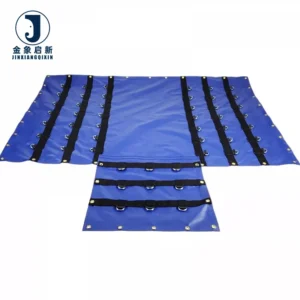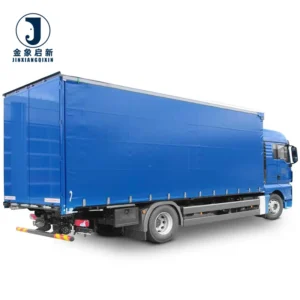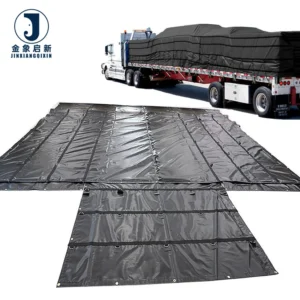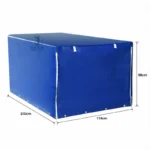
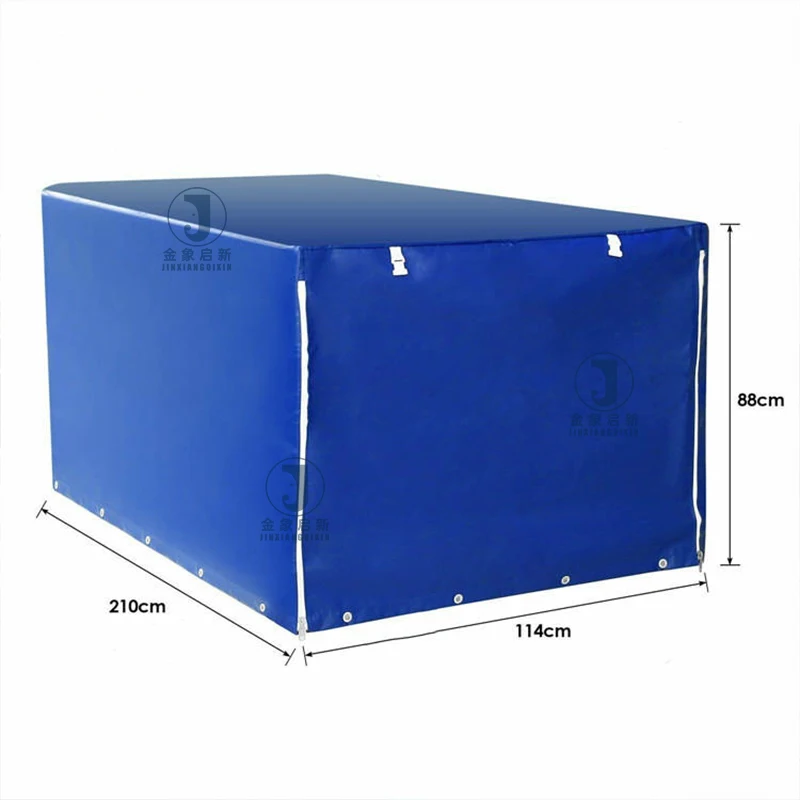
Coating Adhesion Mastery — Laminated and hot-melt double-sided PVC coating on high-tenacity polyester mesh, engineered for consistent bond strength that survives hot-air welding at stress points.
Technical Specifications
| Parameter | Value |
|---|---|
| Product Type | PVC Truck Cover |
| Material | PVC + High-strength polyester mesh fabric |
| Coating Method | Laminated technology & Hot-melt Coating technology (Double-sided PVC coating) |
| Weight (GSM) | 350gsm, 420gsm, 500gsm, 550gsm, 600gsm, 750gsm (product family range — confirm grade) |
| Total Thickness | 0.32mm, 0.35mm, 0.4mm, 0.45mm, 0.5mm, 0.65mm (product family range — confirm grade) |
| Color Options | Blue, Red, Yellow, Light blue, Grey (Customizable) |
| Tarpaulin Features | High tenacity, good flexibility, adhesion strength, tearing strength for welding, cold crack resistance, anti-mildew |
| UV Treatment | UV treated material (test basis not stated in source) |
| Anti-Static | Anti-static treatment (test basis not stated in source) |
| Flame Retardant | Flame-retardant type customizable (grade not stated in source) |
| Trailer Cover Features | Hot welded hem at bottom, rainproof, dust proof, sun protection |
| Accessory Options | Eyelets, Zipper, Velcro (optional) |
| Waterproof | Excellent waterproof performance, overall coating sealing |
| Standards | ISO, CE |
Application Suitability
| Application | Exposure & Requirement |
|---|---|
| Open trailer cargo cover | Road debris impact, constant UV exposure, wind flap fatigue, water ingress at flex zones |
| Truck side curtain | Repeated sliding friction, daily tension cycling, abrasion at roller contact points |
| Flatbed equipment cover | Prolonged sun exposure, mechanical puncture risk from sharp cargo edges |
| Cargo ship deck cover | Salt spray corrosion, sustained heavy rain, high humidity promoting mildew |
| Tent and awning fabric roll | Structural tension loads, seasonal UV degradation, batch colour matching across panels |
Why Coating Weight Alone Fails the PVC Truck Cover Buyer
A heavier GSM does not guarantee a stronger weld or longer service life if the base fabric and coating adhesion were never engineered as a system.
Fleet operators routinely specify covers by weight, assuming 750gsm outperforms 550gsm in every respect. The reality is more nuanced. When coating adhesion to the polyester mesh is weak, the PVC layer delaminates at hot-welded seams long before the base fabric reaches its tensile limit. The cover fails at the hem — exactly where road vibration concentrates stress — while the field of the fabric remains intact. I have seen heavy-grade coated rolls fail at the weld line because the coating formulation was incompatible with standard hot-air welding temperatures, leaving fabricators to guess at the right heat and speed settings [NEED_CITE: tensile and tear test methods for coated fabrics per ISO 1421].
How Double-Sided PVC Coating on Polyester Mesh Actually Works
The laminated and hot-melt coating process bonds PVC to both faces of the high-tenacity polyester mesh simultaneously. This dual-face encapsulation means the yarns are fully sealed within the coating matrix rather than sitting against a single coated surface. The result is a PVC truck cover material where peel strength between coating and yarn remains stable even after repeated flex cycles, because the mechanical interlock exists on both sides of the weave.
What Hot-Melt Coating Means for Weld Integrity at the Hem
Hot-melt coating technology produces a homogeneous PVC layer without the solvent pockets that can form during paste coating. When a fabricator runs a hot-air welder along the bottom hem of a trailer cover, the coating re-melts uniformly and fuses to itself without trapped volatiles creating pinholes. This matters because the hot welded hem at the bottom of every PVC truck cover is the primary water barrier and the structural anchor point for eyelets and tie-downs. Inconsistent coating composition means inconsistent weld strength roll to roll [NEED_CITE: welding parameters for PVC coated polyester fabrics].
Reading GSM, Thickness, and Base Fabric as a System
GSM tells you total mass per square metre — coating plus yarn — but not how that mass is distributed. A 550gsm fabric with a dense, high-denier base yarn and thin coating will tear differently than a 550gsm fabric with light yarn and thick coating. The high-tenacity polyester mesh in this material carries the tensile and tear loads, while the PVC coating provides waterproofing, UV screening, and the weldable surface. Thickness values from 0.32mm to 0.65mm correlate to the total composite build-up. Selecting the right grade means matching base fabric denier to the mechanical demands of your trailer configuration — a flatbed cover enduring cargo abrasion needs a different balance than a side curtain undergoing constant sliding contact.
Coating Adhesion and the Hidden Cost of Wrong Material Selection
When coating adhesion is insufficient for the intended welding method, the failure sequence is predictable. The weld appears sound at the fabrication bench, but after weeks of road vibration and thermal cycling, the PVC separates from the polyester at the seam edge. Water enters through the resulting channel, and mildew colonises the exposed yarn. The cover is then condemned not because the fabric wore out, but because the coating-to-yarn bond was never validated against the specific weld temperature and dwell time the fabricator used. This failure mode is entirely preventable with proper sample testing before committing a full order to production [NEED_CITE: PVC coating adhesion test methods for industrial fabrics].
What the PVC Truck Cover Manufacturer Actually Controls
Nearly 30 years of coated fabric production translates to process parameters held within tight bands — coating weight per face, oven temperature profiles, and lamination pressure are all logged per roll. Three full production lines with 36 sets of equipment mean your PVC truck cover order runs on dedicated capacity rather than shared lines competing for scheduling slots. A 10-person R&D team develops material samples in days, allowing you to confirm GSM, colour, and treatment combination before bulk commitment. Dedicated QA/QC at every production stage means 100% inspection before shipment, catching colour drift or coating defects that would otherwise surface only when rolls are unrolled side by side at your facility.
Documentation & Verification
- Material specification sheet stating exact GSM, base fabric denier, and coating weight for the supplied grade
- Test reports for UV and flame-retardant treatment provided where applicable to your market requirements
- Pre-shipment inspection record confirming roll weight, colour consistency, and coating adhesion
- Roll packing list with individual roll identifiers for full traceability back to production batch
- Certificate of origin and customs documentation supporting your import compliance
Fabrication, Handling & Storage
- Hot-air weld at hem zones using temperature settings validated against the specific PVC coating formulation of your chosen GSM grade
- Eyelet placement should align with reinforced hem areas where double-sided coating provides maximum pull-through resistance
- Store rolls upright on end caps to prevent flat-spot deformation that affects downstream cutting accuracy
- Allow cold-stored rolls to reach ambient temperature before unrolling to avoid coating micro-cracking
- Clean PVC surfaces with mild detergent only — solvent-based cleaners may attack the coating plasticiser system
- Cut panels using a template matching your specific trailer model dimensions to minimise offcut waste
What to Include in Your PVC Truck Cover Enquiry
To receive a precise specification recommendation, provide the trailer model dimensions, the operating climate, and whether the cover will be a fixed installation or a frequently deployed and stowed unit. If your market requires flame-retardant or anti-static compliance, state the applicable standard so the correct treatment grade can be matched. Indicate whether you need finished covers with eyelets and closures installed, or roll stock for in-house fabrication, along with your annual volume estimate and colour requirements.
Frequently Asked Questions
Q: How is the GSM of my PVC truck cover verified before it ships?
A: Every roll undergoes weight measurement as part of the 100% pre-shipment inspection process. The material specification sheet provided with your order states the exact GSM, base fabric denier, and coating weight for the grade supplied. This record allows you to cross-check the quoted weight against what arrives at your receiving dock.
Q: Can the cover be cut to my exact trailer model dimensions?
A: Yes. Covers are patterned to specific vehicle model specifications rather than generic sizes. Provide your trailer make, model, and any non-standard modifications. The R&D team develops a cutting template and sample for your approval before bulk production begins, ensuring fit accuracy across the entire order.
Q: What UV and flame-retardant documentation is supplied with the material?
A: UV treated and flame-retardant options are available with test reports supporting the treatment grade applied. State your regional compliance requirements at enquiry stage so the correct grade is specified. Documentation accompanies the shipment rather than being offered as a generic claim on a data sheet.
Q: How are welded seams validated to hold at high-stress flex zones?
A: The hot-melt coating technology produces a homogeneous PVC layer that re-melts uniformly under hot-air welding. Pre-shipment inspection includes weld seam evaluation at hem and joint areas. Request sample panels with welded seams to validate compatibility with your fabricator’s equipment and temperature settings before committing to full production.
Q: What closure and reinforcement options are available for different trailer types?
A: Eyelets, zippers, and velcro closures are all configurable based on your trailer access requirements. Eyelet spacing and hem reinforcement are designed around the specific load and tie-down pattern of your fleet. Specify your preferred closure type and spacing at enquiry stage for inclusion in the production template.