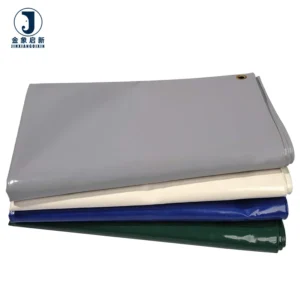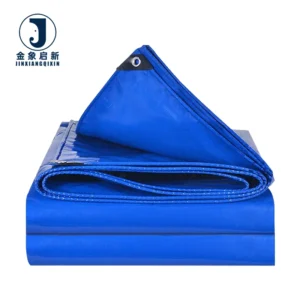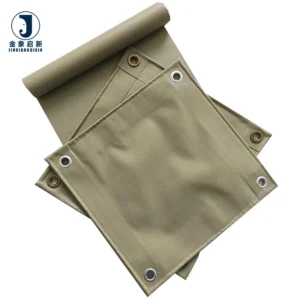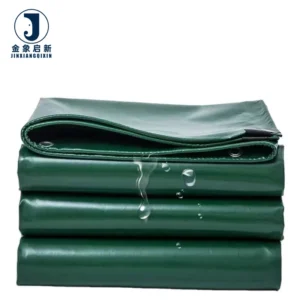
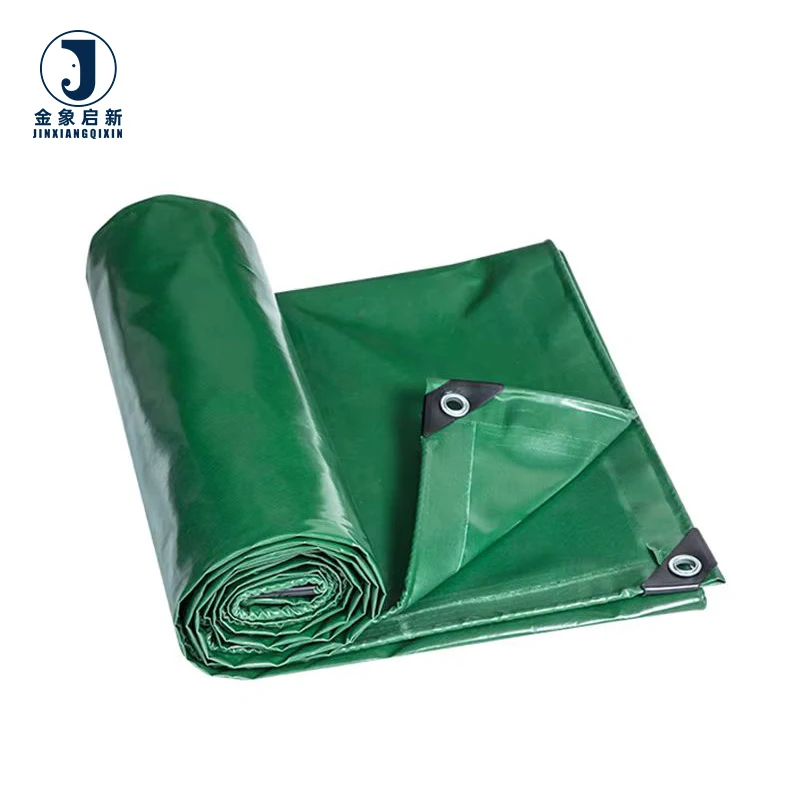
Coating Weight Verification — Every roll of PVC coated tarpaulin ships with a material specification sheet stating exact GSM and coating weight, allowing independent verification upon arrival.
Technical Specifications
| Parameter | Value |
|---|---|
| Product Type | PVC Coated Tarpaulin |
| Weight Options | 500gsm / 600gsm |
| Coating Material | PVC |
| Base Fabric | High-tenacity polyester (denier and weave matched to grade) |
| Flame Retardant | Fireproof (grade not stated — confirm required standard) |
| Waterproof | Yes |
| Anti-Static | Available as special treatment (test basis not stated) |
| Anti-Mildew | Available as special treatment |
| Anti-Cold | Available as special treatment |
| UV Treatment | Not stated in source — confirm requirement |
| Outdoor Life Assurance | 1–3 years (source value — verify against manufacturer catalog) |
| Certifications | ISO, CE |
Application Suitability
| Application | Exposure & Requirement |
|---|---|
| Truck cargo cover | Constant flexing at load points, road debris abrasion, UV and rain exposure, tie-down tension |
| Trailer side curtain | Repeated rolling and folding, wind load stress, weld seam integrity under dynamic movement |
| Industrial transport covering | Heavy equipment contact, chemical splash resistance, secure lashing under highway conditions |
| Outdoor equipment protection | Standing water, prolonged sun exposure, wind uplift, mildew in humid storage |
Why Quoted GSM Alone Cannot Guarantee Fabric Performance
GSM tells you mass per square metre, not how that mass is distributed between base fabric and coating.
A roll marked 600gsm can contain a heavy coating on a thin, low-density base fabric, delivering high weight but poor tear strength at stress points. Conversely, a well-balanced construction allocates more weight to the polyester scrim, producing better dimensional stability under tension. I have seen coated fabric lots where the GSM measured within tolerance, yet the material tore along the warp during first installation because the base denier was insufficient for the application. [NEED_CITE: tensile and tear test methods for coated fabrics per ISO 1421]
How Coating Weight and Base Fabric Denier Interact
The tensile strength of PVC coated tarpaulin 500gsm 600gsm depends primarily on the polyester base fabric denier and weave density, not on the total GSM figure. A 500gsm grade with a tightly woven 500-denier scrim will outperform a 600gsm grade built on a loose 300-denier base in both warp and weft tensile tests. The PVC coating contributes to abrasion resistance and waterproofing but adds relatively little to structural load-bearing capacity. This is why material specification sheets must state base fabric denier and weave count alongside overall weight.
Coating Adhesion and Delamination Behaviour
The bond between the PVC layer and the polyester base determines whether the coating peels away under repeated flexing or remains integral through years of folding and deployment. Knife-over-edge coating penetrates the scrim interstices more deeply than lamination, producing higher peel strength at the weld line. [NEED_CITE: peel strength test methods for PVC coated polyester per DIN 53354] When adhesion is poor, the first visible failure is not a tear in the fabric but a separation of the coating from the base along high-flex zones — typically at the hem where tie-down straps concentrate the load.
Reading the Specification Sheet Beyond the GSM Number
A meaningful material specification sheet lists at least four values: overall GSM, base fabric denier, weave density in threads per 10 cm, and coating weight per side. The ratio of base weight to coating weight reveals where the manufacturer has invested mass. A PVC coated tarpaulin with a high coating-to-base ratio will feel stiff and may crack at low temperatures, while one with a heavier base scrim remains flexible and resists tear propagation. The anti-cold and anti-mildew treatments modify surface behaviour without altering the structural balance, making them complementary additions rather than substitutes for a correctly specified base construction.
What Happens When the Weld Outlasts the Fabric — or the Other Way Around
When the base fabric specification is too light for the load dynamics of a truck cover application, the welded seams typically fail first because the heat-affected zone concentrates stress in an already thin scrim. The PVC coating melts and re-bonds during welding, but if the underlying threads are sparse, the joint tears under cargo flex before the un-welded body of the fabric shows any sign of distress. Correcting this after delivery means re-specifying the base denier and re-running sample welds, adding weeks to project timelines and creating material waste that could have been avoided with a single pre-production peel test. [NEED_CITE: DIN 4102 fire classification for building materials and flexible covers]
Why Material-Level Verification Protects Your Specification
Each roll from Jinan Jinxiang is supported by a documented production chain rather than a single certificate at the end. The process begins with raw material selection matched to your stated GSM and treatment requirements, proceeds through in-process QA at coating and lamination stages, and concludes with a 100% pre-shipment inspection that checks weight, colour, and coating integrity roll by roll. The R&D team handles formulation adjustments when special treatments such as flame retardant or anti-static grades are required, developing samples within days so you can validate the material before committing to volume. Coating weight and adhesion are controlled through calibrated application equipment across all three production lines, maintaining consistency whether you order ten rolls or a full container.
Documentation & Verification
- Material specification sheet listing exact GSM, base fabric denier, and coating weight per roll
- Test reports for flame retardant grades with stated standard references where applicable
- Pre-shipment inspection record covering weight verification, colour check, and coating adhesion
- Roll packing list with individual roll identifiers traceable to production batch
- Certificate of origin and customs documentation for international shipment
Fabrication, Handling & Storage
- Hot-air weld temperature must match the 500gsm or 600gsm PVC coating thickness to avoid under-cure or scorch
- Reinforce hem and eyelet zones with additional PVC strip to distribute tie-down tension across the base scrim
- Store rolls upright on pallets in a shaded, ventilated area to prevent flat-spot deformation of the coated surface
- Allow cold-weather rolls to reach ambient temperature before unrolling to prevent coating crack at the core
- Clean with mild detergent only; avoid solvents that degrade the PVC plasticiser layer and reduce flexibility
What We Need From Your Inquiry
Provide the end-use application and the specific exposure conditions the PVC coated tarpaulin will face — whether this is a truck side curtain subject to daily rolling, a static equipment cover, or a transport sheet exposed to highway-speed wind load. State the fire-retardant or anti-static certification your local regulations require so we can match the treatment grade before sampling. Confirm whether you need roll stock in standard widths or custom cut-to-size panels, and include the target order volume to establish lead time and production scheduling.
Frequently Asked Questions
Q: How is the GSM verified on each roll before shipment?
A: Every roll undergoes weight measurement during the pre-shipment inspection. A material specification sheet accompanies the shipment stating the exact GSM, base fabric denier, and coating weight, allowing you to cross-check against the quoted specification independently upon arrival.
Q: Which flame retardant grades can be supplied for this material?
A: Flame retardant treatment is available, but the specific grade — such as M2, B1 per DIN 4102, or NFPA 701 — must be confirmed against your local regulatory requirements. Request the test report for the applicable standard before approving the sample for production.
Q: How does the base fabric denier affect tensile and tear strength at 500gsm versus 600gsm?
A: The polyester scrim denier and weave density determine structural strength. A higher denier base in the 600gsm grade delivers greater tear resistance than a lower denier base at the same weight. Always compare base fabric specifications alongside overall GSM.
Q: Can special treatments be combined on the same roll?
A: Yes, anti-static, anti-mildew, anti-cold, and flame retardant treatments can be combined depending on application requirements. Confirm the combination during sample development so coating formulation adjustments are locked in before bulk production.
Q: What documentation supports UV and weathering claims?
A: UV treatment status and outdoor life assurance are documented on the material specification sheet. Where UV resistance is critical, request the test report stating the exposure standard and duration before finalising the order.