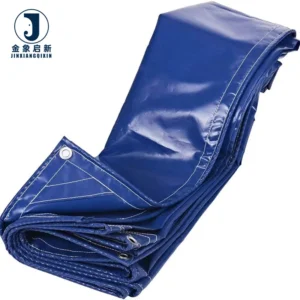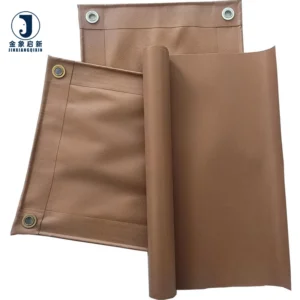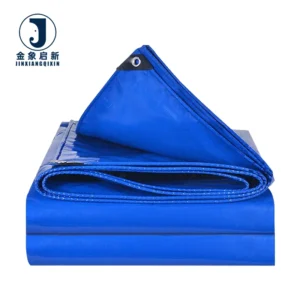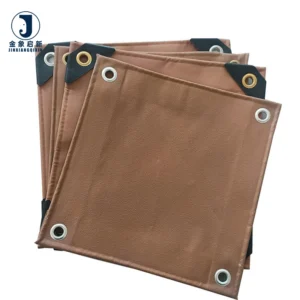
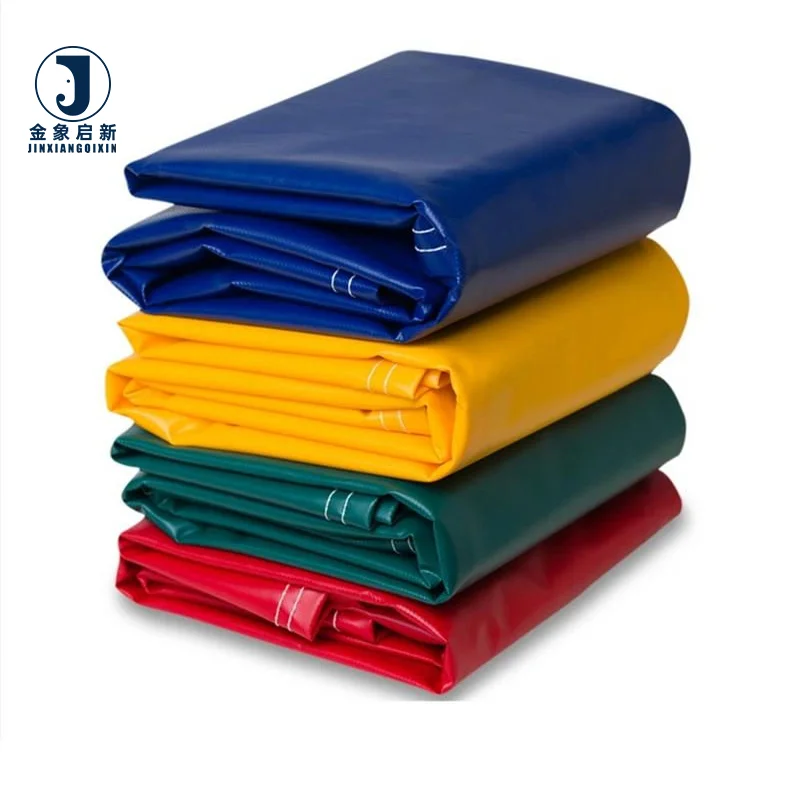
Deep Coating Process Control — Every roll of knife coated PVC tarpaulin is traceable to exact coating weight, base yarn denier, and tensile data, verified through dedicated QA at each production stage.
Technical Specifications
| Parameter | Value |
|---|---|
| Product Type | PVC Coated Tarpaulin |
| Material Composition | Polyester Base Fabric + Double-Sided PVC Coating |
| Base Fabric Denier | 500D×840D / 500D×1000D / 1000D×1000D / 1000D×1300D / 1300D×1300D / 1000D×2000D |
| Mesh Count | 30×19 / 20×20 / 30×15 |
| Weight Range | 350 gsm – 900 gsm |
| Total Thickness | 0.29 mm – 0.65 mm |
| Tensile Strength (Warp) | 1650 N – 3900 N (test basis not stated in source) |
| Tensile Strength (Weft) | 1600 N – 3500 N (test basis not stated in source) |
| Coating Method | Knife Coated |
| Welding Methods | High frequency hot melt / Hot air / Sewing |
| Density Parameter | 1.15 – 2.00 g/cm³ |
| Brittle Temperature | ≤ -50 ℃ to -60 ℃ |
| Softening Temperature | ≥ 80 ℃ |
| Melting Point | 212 ℃ |
| Key Features | Waterproof, Fire Retardant (grade not stated — confirm required grade for your market), Anti UV (test basis not stated), Heavy Metal Free, Anti Mildew, Flexible, Self Clean |
| Surface Finish | Printable, Customized |
| Edge Finishing | 5 mm thick rope, heat sealed seamless edge wrapping, reinforced corners |
| Eyelet Options | 3 cm enlarged aluminum alloy buttonhole |
| Standards | ISO, CE |
Application Suitability
| Application | Exposure & Requirement |
|---|---|
| Truck side curtains and trailer top roofs | Constant flexing, road abrasion, UV exposure, wind load — demands high warp/weft tensile and weld integrity |
| Outdoor event tents and awnings | Sun and rain exposure, repeated assembly and teardown — requires UV stabilisation and flex durability |
| Inflatable and membrane structures | Internal air pressure, seam stress, weather load — needs consistent coating adhesion and airtight welds |
| Construction site and equipment covers | Debris impact, soil contact, standing water — calls for puncture resistance and waterproof coating |
| Army and carriage tents | Field deployment, extreme temperature swings — requires low brittle temperature and flame retardancy compliance |
Why Coating Weight Alone Cannot Predict Fabric Behaviour
Quoted GSM does not guarantee the tensile performance a structural cover demands. The real strength comes from how the base yarn denier, mesh density, and PVC coating mass work together as a composite system.
Material buyers often receive rolls that match the stated gsm but underperform under load. A lighter denier base with heavier coating can hit the target weight yet tear easily at the weld line. The PVC coated tarpaulin 1000D denier base fabric addresses this by pairing high-tenacity polyester yarn with controlled coating application, so the weight reading reflects structural substance, not just filler. [NEED_CITE: tensile and tear test methods for coated fabrics per ISO 1421]
How Base Yarn and Mesh Density Define Structural Capacity
The base fabric is where load-bearing capacity originates. Denier options from 500D×840D through 1000D×2000D let specifiers match yarn thickness to the mechanical demands of the end use. A 1000D×2000D weave with a 20×20 mesh count provides a heavier yarn cross-section that resists tear propagation across the weft direction. PVC coated tarpaulin 1000D denier base fabric configurations give fabricators a predictable relationship between the yarn they see on the cut edge and the tensile figures on the data sheet.
Coating Weight, Thickness, and the Weld Line
Coating thickness from 0.29 mm to 0.65 mm correlates directly with how the material behaves during fabrication. Thinner grades heat-seal quickly and suit lighter awning applications. Heavier grades demand more energy at the weld head but deliver a bond that can exceed the base fabric tear strength. The knife coating process embeds PVC into the yarn interstices, which supports consistent adhesion across the full 350 gsm – 900 gsm range. [NEED_CITE: coating adhesion and peel strength test methods for PVC tarpaulin]
Reading the Specification Sheet Beyond GSM
Four parameters determine whether a coated fabric survives its intended service life. First, base denier and mesh count define the skeleton — they govern tear extension and how the fabric handles point loads from tie-down straps. Second, total coating thickness affects stiffness and low-temperature flex; the brittle temperature of ≤ -50 ℃ to -60 ℃ means the PVC compound remains pliable in winter deployment. Third, the softening point at ≥ 80 ℃ sets the upper thermal boundary for hot-air welding parameters. Fourth, treatment additives — UV stabiliser, flame retardant, anti-mildew — are applied at the coating stage and should be matched to the deployment environment. Specifiers comparing PVC coated tarpaulin 1000D denier base fabric grades should request the full parameter set rather than relying on weight alone.
When Specification Gaps Become Field Failures
A roll that arrives at the quoted weight but with a lower denier base than specified will show its weakness at the first stress point — typically where a strap or eyelet concentrates load. Flame retardant grades claimed on paper without a matching test report can halt a building inspection or event permit approval. Colour drift across rolls in a multi-roll order becomes visible the moment panels are installed side by side on a truck fleet or tent structure. PVC coated tarpaulin 1000D denier base fabric orders must include roll-level verification of yarn count, coating mass, and colour to prevent these downstream costs. [NEED_CITE: fire classification requirements for temporary structures and event tents]
Why Technical Buyers Source This Fabric Here
Coating weight and adhesion are controlled through three full production lines with dedicated process monitoring, so GSM and thickness stay within tolerance across the entire roll. A 10-person R&D team handles material selection, custom sizing, and sample development, delivering samples within days for custom requirements. Each production stage has dedicated QA/QC checkpoints, with 100 percent inspection before shipment — no roll leaves without its thickness, weight, and visual check documented. PVC coated tarpaulin 1000D denier base fabric is produced with full lot traceability back to coating batch and base fabric roll.
Documentation & Verification
- Material specification sheet stating GSM, base denier, mesh count, and coating thickness for each roll
- UV and flame retardant test reports matched to the specific treatment grade ordered
- Pre-shipment inspection record covering roll-to-roll thickness and colour consistency
- ISO and CE certificates included with shipment documentation
- Roll packing list with net weight and dimensional data for customs clearance
- Certificate of origin available for preferential tariff treatment
Fabrication, Handling & Storage
- Hot-air welding temperature should be calibrated to the specific coating thickness, starting lower on 0.29 mm grades and increasing for 0.65 mm material
- High-frequency welding suits the heavier denier options, producing airtight seams for inflatable and membrane applications
- Edge wrapping with 5 mm rope and heat-sealed seams distributes tie-down load across the reinforced hem
- Store rolls upright on pallets in a shaded area to prevent compression marks on the PVC surface
- Avoid unrolling in temperatures near the brittle point; allow material to acclimatise before field deployment
- Clean with mild detergent only — solvent-based cleaners can degrade the self-clean surface treatment
Requesting the Right Grade for Your Project
Share the end-use application, expected mechanical loads, and environmental exposure so the correct denier and coating weight can be recommended. Specify your market’s fire safety classification if flame retardant grades are needed, along with any colour or print requirements. Confirm whether you need rolls in stock widths or custom cut-to-size panels with finished edges and eyelets.
Frequently Asked Questions
Q: How is GSM verified on each roll before shipment?
A: Every roll undergoes weight sampling at multiple points along its length during pre-shipment inspection. The measured coating weight is recorded against the quoted GSM on the inspection report. Buyers receive this documentation with the packing list, so any deviation is caught before the roll enters transit rather than discovered at the receiving dock.
Q: Which denier and mesh count suit high-load side curtains?
A: Side curtains endure constant flexing and strap tension, so heavier denier options such as 1000D×1000D or 1000D×1300D with a tighter mesh count provide better tear propagation resistance. The warp tensile figures in the specification sheet help match the grade to the expected wind and tie-down loads. Request sample welds to confirm seam behaviour before full-order commitment.
Q: Do flame retardant and UV treatments come with test documentation?
A: Available in flame retardant and anti-UV grades — confirm the specific grade required for your market and application. Test reports are matched to the treatment grade on your order and included in the shipment documentation. Third-party test standards vary by region, so specify your local compliance requirement at the inquiry stage.
Q: What welding method works best for each thickness grade?
A: Thinner grades around 0.29 mm respond well to hot-air welding with moderate temperature settings. Heavier grades approaching 0.65 mm typically benefit from high-frequency welding, which penetrates the thicker PVC layer more effectively. The softening point of ≥ 80 ℃ guides the minimum heat input, while the 212 ℃ melting point sets the upper boundary.
Q: Can colour consistency be maintained across multiple roll batches?
A: Colour matching is controlled at the coating stage using reference standards. For orders spanning multiple production runs, buyers should request roll-to-roll colour verification at pre-shipment inspection. This ensures panels installed side by side on a fleet or structure show no visible variation under daylight conditions.