Hot-Melt Coating Control — verified GSM-to-thickness correlation across every roll, supported by a 10-person R&D team managing coating adhesion for high-frequency welding.
Technical Specifications
| Parameter | Value |
|---|---|
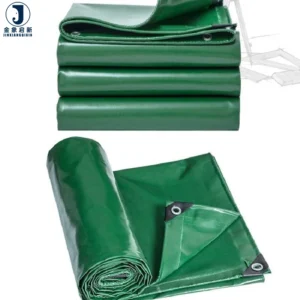
| Product Type | PVC Coated Tarpaulin Roll |
| Base Fabric | High-strength polyester mesh fabric |
| Coating Material | PVC |
| Coating Technology | Laminated & Hot-melt Coating |
| Weight Options | 350 gsm, 420 gsm, 500 gsm, 550 gsm, 600 gsm, 750 gsm |
| Thickness Options | 0.32 mm, 0.35 mm, 0.4 mm, 0.45 mm, 0.5 mm, 0.65 mm |
| Width Options | 2 m (× 75 m roll length), 2.1 m (× 50 m roll length) |
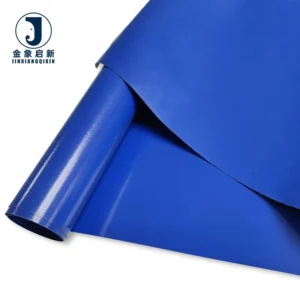
| Surface Finish | Glossy or Matte |
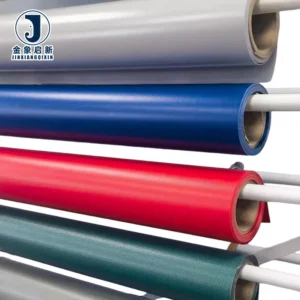
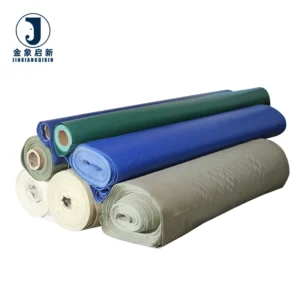
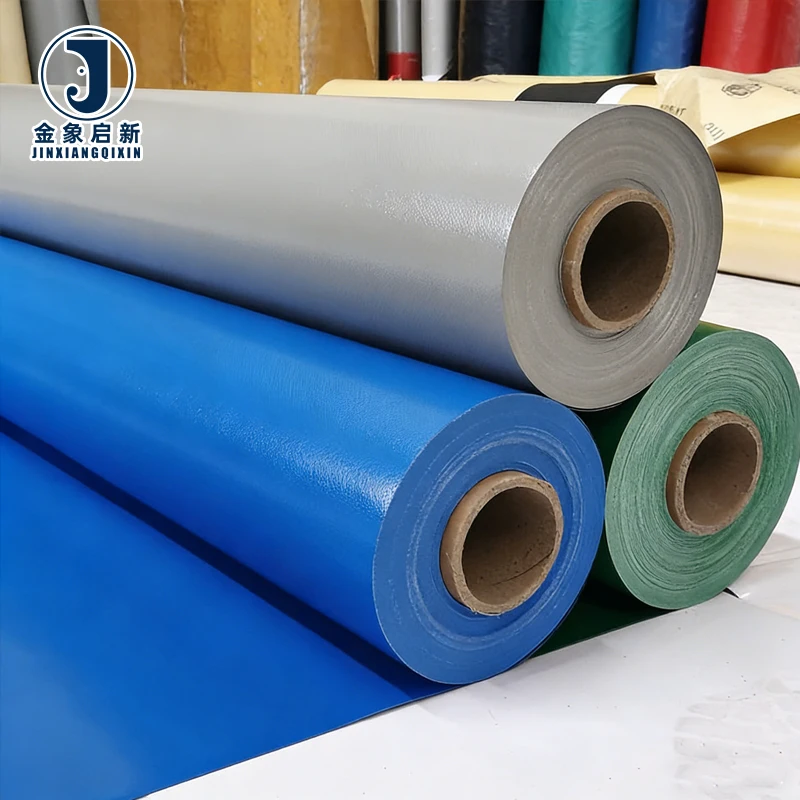
| Color Options | Blue, Red, Yellow, Light Blue, Grey (customizable) |
| Waterproof | Double-sided 100% waterproof |
| Flame Retardant | Available in flame retardant grades — confirm the grade required for your market |
| Anti-Static | Anti-static treatment available — surface resistance standard to be confirmed |
| UV Treatment | UV resistant treatment applied — test basis available on request |
| Cold Crack Resistance | Yes |
| Anti-Mildew | Yes |
| Weldability | Suitable for hot-air and high-frequency welding |
| Service Life | 3–7 years under normal conditions |
| Certification | ISO, CE |
Application Suitability
| Application | Exposure & Requirement |
|---|---|
| Truck awning and side curtain | Continuous flexing at hinge points, road debris abrasion, prolonged UV exposure, rain ingress prevention |
| Cargo ship cover | Salt spray, high wind load, deck abrasion, requirement for waterproof integrity over long voyages |
| Fish tank and pool liner | Permanent water immersion, chemical contact from water treatment agents, puncture risk from substrate |
| Tent and awning structure | Tension stress at pole contact points, weather cycling, UV degradation, colour fastness under direct sun |
| General cargo and equipment protection | Forklift contact abrasion, stacking pressure, outdoor weather exposure during transit or yard storage |
Why a Quoted GSM Figure Alone Cannot Predict Weld Seam Integrity
Coating weight and base fabric density must be verified as separate values, not assumed from a total GSM stamp.
A PVC tarpaulin roll marked 550 gsm tells you nothing about how that weight is distributed between the polyester mesh and the PVC coating on each face. When a technical buyer specifies material for truck side curtains or structural awnings, the weld seam at the flex point is the first location to fail — and that failure almost always traces back to coating adhesion rather than base fabric tensile capacity. I have seen coated rolls pass a total weight check yet delaminate at the weld line because the coating-to-substrate bond was insufficient for the thermal cycling the joint endures [NEED_CITE: tensile and tear test methods for coated fabrics per ISO 1421].
How Hot-Melt and Laminated Coating Technologies Shape Weld Performance
The PVC coated tarpaulin roll range offered here is produced through two distinct coating routes. Hot-melt coating drives PVC paste into the interstices of the polyester mesh under heat and pressure, creating a mechanical lock that raises peel strength and supports consistent high-frequency welding. Laminated technology bonds pre-formed PVC film to the mesh, yielding a smoother surface at competitive cost — a route often specified for tent covers and general-purpose applications where extreme flex cycling is not the primary concern.
Matching Surface Finish to End-Use Processing Requirements
Glossy and matte finishes are available across the weight range. A glossy surface sheds dirt more readily and supports solvent-based ink adhesion for printed branding on awnings and event tents. Matte surfaces reduce glare — important for cargo ship covers photographed for inspection documentation — and provide better grip for adhesives used in field-repair patching. Technical buyers selecting PVC tarpaulin roll material should confirm the finish against both the fabrication method and the visual requirements of the finished installation.
Reading the GSM-to-Thickness Relationship for Specification Accuracy
The available grades span from 350 gsm at 0.32 mm through to 750 gsm at 0.65 mm. This correlation matters because thickness alone does not determine tear propagation resistance; the denier of the polyester yarn and the weave density of the mesh are the governing factors. A 500 gsm roll built on a high-denier base will resist tear initiation better than a 550 gsm roll on a lighter mesh with heavier coating. The hot-melt coating route further influences this relationship by filling the weave more completely, which increases stiffness and can reduce drape in lighter grades [NEED_CITE: relationship between base fabric denier and tear strength in coated technical textiles]. Specifiers should therefore request the base fabric construction detail alongside the total GSM when comparing roll options for structural or high-stress applications.
The Cost of Specifying on Total Weight Without Coating Breakdown
When a procurement team accepts a quotation based only on total GSM, the arriving roll may pass a simple scale check yet still underperform. The coating may be thinner than required for adequate weld adhesion, causing seams on truck side curtains to separate within months of service. Colour can drift between rolls in the same shipment when coating thickness varies — a problem visible only after panels are installed side by side on an awning or tent structure. Flame retardant or anti-static treatments, if claimed without a supporting test report, leave the buyer exposed at site inspection [NEED_CITE: fire classification standards for flexible membrane structures]. These failures are not material defects in isolation; they are specification gaps that could have been closed with a proper material data sheet.
Why Technical Buyers Source This PVC Coated Tarpaulin Roll Range Here
Coating weight and adhesion are controlled at every production stage across three full lines and 36 sets of professional equipment, ensuring that the GSM stated on the specification sheet is the GSM measured at pre-shipment inspection. The 10-person R&D team develops custom samples — including width, colour and printing requirements — within days rather than weeks, allowing fabricators to validate weld parameters before committing to bulk. A dedicated QA/QC protocol runs 100 percent inspection before dispatch, with roll dimensions, weight and colour reference verified against the purchase order. Material specification sheets break out base fabric construction, coating weight and total GSM separately, so technical buyers can compare on engineering merit. ISO and CE certification underpin the documentation package, supporting compliance in export markets across multiple regulatory jurisdictions.
Documentation & Verification
- Material specification sheet stating total GSM, base fabric construction and coating weight per face
- Test report for flame retardant grade where applicable, matched to target market classification
- UV resistance test data available on request for grades specified for extended outdoor service
- Pre-shipment inspection record covering weight, colour reference and roll dimensions per batch
- Certificate of origin and customs documentation prepared for export shipment
Fabrication, Handling & Storage
- Set hot-air weld temperature and speed based on the coating technology specified — hot-melt grades tolerate higher thermal input without blistering
- Allow rolls to acclimatise to workshop temperature before unrolling to prevent cold-crack stress at the core
- Store 2 m and 2.1 m rolls horizontally on racking to avoid permanent creasing across the full width
- Use a polyester-compatible PVC adhesive for field patches on matte finish rolls to maintain surface uniformity
- Plan cutting layouts to minimise offcuts on 75 m and 50 m roll lengths, nesting panels by width and colour batch
What to Include in Your Material Enquiry
Provide the end-use application and the environmental exposure conditions the finished product will face — wind load, flex frequency, UV intensity and any fire classification your local authority requires. State the preferred surface finish and whether the roll will be printed or welded, as this determines the coating route and surface treatment. Confirm the required width, colour reference and estimated annual volume so that batch consistency and lead time can be planned against production capacity.
Frequently Asked Questions
Q: How is GSM verified on each roll before shipment?
A: Every roll is weighed and measured during the 100 percent pre-shipment inspection. The result is recorded against the material specification sheet and compared to the quoted GSM. Any roll falling outside the agreed tolerance is held for rework or replacement before dispatch.
Q: Can I obtain a test report for UV resistance with my order?
A: UV resistance test data is available on request. Specify the test standard required by your target market when placing the enquiry so the correct report is prepared and included with the shipment documentation.
Q: What is the difference between hot-melt coating and laminated technology for weld strength?
A: Hot-melt coating forces PVC into the mesh structure under heat, creating a mechanical bond that supports higher peel strength at weld seams. Laminated technology bonds pre-formed film to the mesh and is cost-effective for applications where extreme flex cycling is not the primary design driver.
Q: How is colour consistency maintained across multiple rolls in one order?
A: Rolls within a single production batch are coated from the same mixed compound and inspected side by side for colour reference. The pre-shipment inspection record documents the colour check, and any roll showing visible variation is segregated before packing.
Q: What flame retardant grades are available for this PVC tarpaulin roll?
A: Flame retardant grades are available — confirm the classification required for your market and application when submitting your enquiry. A test report corresponding to the specified grade will be supplied with the shipment where applicable.