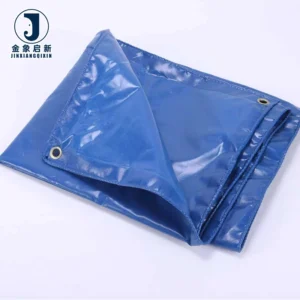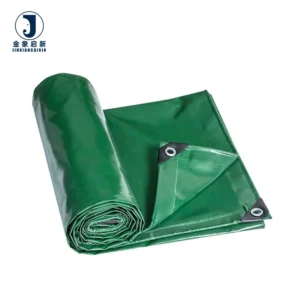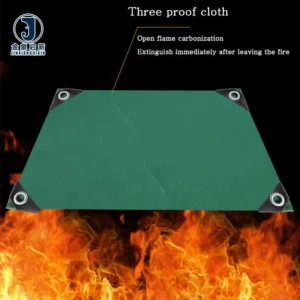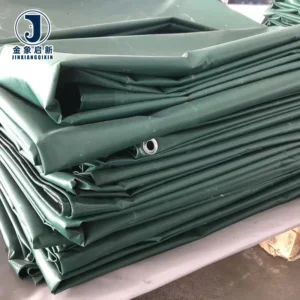
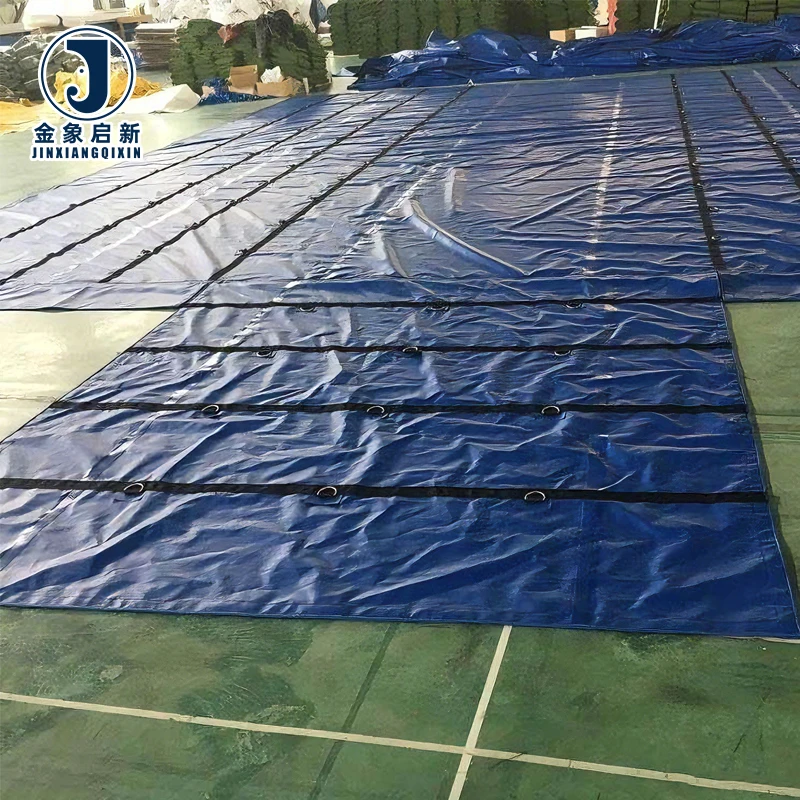
Coating Weight Control — In-house knife coating and adhesion monitoring keep PVC Tarpaulin Waterproof Fireproof Truck Cargo Cover GSM within stated tolerance across every roll, verified before dispatch.
Technical Specifications
| Parameter | Value |
|---|---|
| Product Type | PVC Tarpaulin Waterproof Fireproof Truck Cargo Cover |
| Coating Material | PVC |
| Flame Retardant Grade | (grade not stated in source) |
| UV Treatment | (test basis not stated in source) |
| Anti-Static | (standard not confirmed) |
| Anti-Mildew | available |
| Anti-Cold Treatment | available |
| Waterproof | yes |
| Weather Resistance | 1-3 years outdoor life assurance (source value — verify against manufacturer catalog) |
Application Suitability
| Application | Exposure & Requirement |
|---|---|
| Truck and trailer cargo protection | Continuous road vibration, load flex at tie-down points, UV and precipitation exposure |
| Outdoor weather-exposed transport covering | Prolonged sunlight, temperature fluctuation, moisture ingress risk at seams |
| Logistics and fleet load securement | Abrasion against cargo edges, wind flap fatigue, repeated folding and deployment |
Why Coating Adhesion Matters More Than GSM on the Quotation
Fabric weight alone does not prevent weld-line failure under load flex.
Specifying PVC coated fabric for truck cargo cover by GSM only addresses half the equation. When a cover tears at the heat-welded seam before the body fabric shows wear, the root cause is usually inadequate adhesion between the PVC layer and the base fabric, not insufficient weight [NEED_CITE: adhesion strength test methods for coated fabrics]. Fleet operators who have received rolls testing lighter than the quoted specification often discover that the coating weight was adjusted downward without notice, leaving the base fabric under-protected at high-stress points. The material-level verification must happen during production, not after the roll arrives at the fabrication floor.
Base Fabric Denier and Weave Under Load Stress
The tensile behaviour of PVC coated fabric for truck cargo cover depends on the base fabric denier and mesh count working together with the coating mass. A higher denier yarn in the warp direction resists the longitudinal pull experienced when a trailer cover is tensioned over a load, while the weft density controls lateral tear propagation at flex points where the fabric bends around cargo edges.
Coating Method and Its Influence on Seam Integrity
Knife coating allows controlled PVC deposition on the base fabric, producing a uniform layer that bonds into the weave rather than sitting on the surface. This penetration depth directly affects how well heat-welded seams hold when the cover flexes repeatedly during transit. A poorly bonded coating will delaminate at the weld line long before the fabric itself reaches its tensile limit, creating the most common failure pattern in truck cargo covers [NEED_CITE: heat welding behaviour of PVC coated polyester fabrics].
Reading the Specification Sheet Beyond Total Weight
Total GSM combines base fabric weight and coating weight, and the ratio between them determines the fabric’s character. A high coating-to-yarn ratio produces a stiff, heavily filled fabric that may crack at low temperatures or under repeated folding. A lower coating weight on a dense base fabric yields a more flexible material that drapes better over irregular loads but requires careful weld parameter adjustment. Anti-mildew and anti-cold treatments extend the service envelope, but the base specification must suit the primary operating climate before treatments add value. Available in flame retardant grades — confirm the grade required for your market before specifying, as standards vary between M2, B1, NFPA 701, and DIN 4102 depending on regional transport regulations.
The Hidden Cost of Under-Specifying Truck Cover Fabric
When colour varies between rolls in the same shipment, the mismatch becomes visible once panels are installed side by side on adjacent trailers, forcing a full replacement rather than a simple panel swap [NEED_CITE: batch colour consistency standards in coated fabric production]. Rolls that arrive below the quoted GSM may pass a quick visual check but fail prematurely at high-wear zones like the rear curtain hem or the side curtain track interface. Specifying PVC coated fabric without requiring a test report for flame retardant or UV treatment leaves compliance to chance — a cover that fails a roadside inspection or a depot fire audit creates liability far beyond the material cost difference.
Why Procurement Verification Starts Before Production
Three full production lines and 36 sets of professional equipment support consistent output across bulk orders, reducing the batch variation that plagues smaller coating operations. A dedicated 10-person R&D team handles material selection and sample development, producing custom GSM and treatment samples within days rather than weeks. Every production stage includes QA checkpoints, with 100% inspection before shipment catching coating weight deviations and colour drift before rolls leave the facility. ISO and CE certification underpins the quality management system without substituting for roll-level verification. Documentation travels with every shipment, giving buyers the traceability needed for fleet compliance audits.
Documentation & Verification
- Material specification sheet confirming GSM, base fabric denier, coating type, and colour reference per roll
- Test report for flame retardant grade supplied with shipment where applicable to the order
- Weight verification per roll against the stated GSM tolerance before dispatch
- Pre-shipment inspection record included in the documentation package for traceability
- Certificate of origin and customs support documentation for cross-border shipment
Fabrication, Handling & Storage
- Heat-weld seam parameters must match the specific PVC coating weight to achieve full adhesion at flex points
- Anti-cold treated rolls should be acclimatised before unfolding in low temperatures to avoid surface cracking
- Store rolls vertically on end caps to prevent flat-spot deformation across the PVC coating layer
- Anti-mildew treatment reduces storage-related degradation but does not replace dry, ventilated warehousing
- Cut edges on PVC coated fabric should be sealed by heat welding to prevent moisture ingress into the base fabric
What to Include in Your Inquiry
Provide the specific truck or trailer models the covers must fit, along with the operating climate and any fire safety compliance standards required in your target market. Specify whether you need rolls in stock widths for your own fabrication line or finished covers cut to vehicle dimensions with reinforcement at stress points. State your annual volume and any colour or branding requirements so that batch consistency can be planned across production runs.
Frequently Asked Questions
Q: How is GSM verified on arrival and what coating weight tolerance should be specified?
A: Total fabric GSM is measured by cutting a standard-area sample and weighing it, but the more critical figure is the coating weight versus base fabric weight split. Request a specification sheet that breaks down both values, and require roll-by-roll weight verification records before shipment to catch deviations early.
Q: Which flame retardant standard applies to my target market for truck covers?
A: Transport fire regulations differ by region — M2 is common in France, B1 under DIN 4102 in Germany, and NFPA 701 in North America. Confirm the applicable standard with your local transport authority before ordering, and request a test report matching that specific grade with every shipment.
Q: What base fabric denier and mesh count deliver the best balance of tensile strength and weldability?
A: Higher denier yarns improve tear resistance but can make heat welding more difficult if the coating cannot penetrate the thicker yarn bundle fully. A balanced mesh count allows sufficient PVC flow into the weave during coating, producing a fabric that welds reliably while maintaining the required tensile properties.
Q: How does coating adhesion strength affect heat-welded seam durability at flex points?
A: Poor adhesion means the PVC layer separates from the base fabric at the weld line when the cover flexes under load movement. Knife-coated fabrics with controlled penetration depth maintain adhesion through repeated flex cycles, preventing the premature seam failures that account for most truck cover warranty claims.