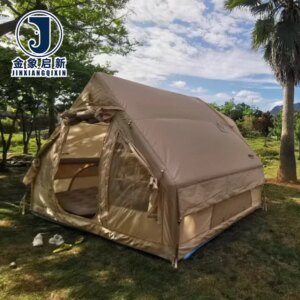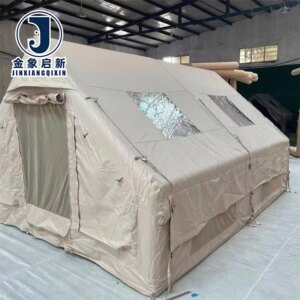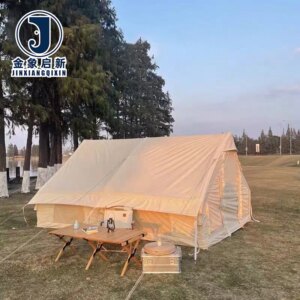
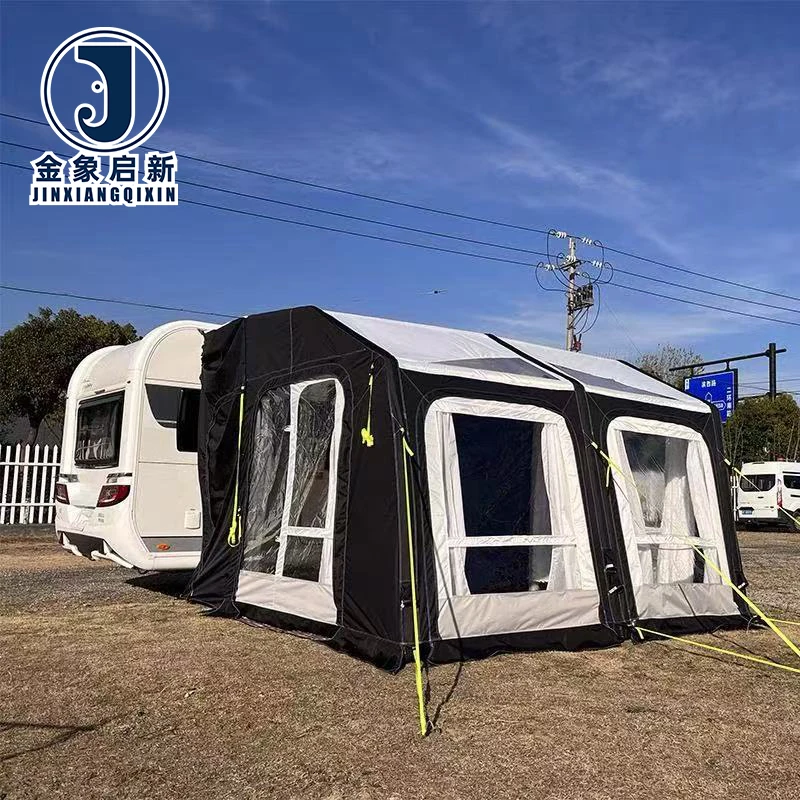
Coating Process Control — Every roll of PVC inflatable tent fabric undergoes 100% pre-shipment inspection against stated GSM and coating weight, preventing the lightweight material surprises that delay emergency shelter deployments.
Technical Specifications
| Parameter | Value |
|---|---|
| Product Type | Inflatable Tent |
| Core Material | PVC Tarpaulin |
| Key Performance | Waterproof, UV-resistant, Tear-resistant |
| Product Forms | Extended Type, Single Layer Construction |
| Customization Service | OEM & ODM (sample customization, pattern printing) |
| Season Design | Four-season |
| Standards | ISO9001, ISO14001, ISO45001, CE |
Application Suitability
| Application | Exposure & Requirement |
|---|---|
| Emergency response centers and disaster relief shelters | Rapid deployment cycles, frequent transport, exposure to rain and wind across varied climates |
| Temporary storage facilities during disaster recovery | Prolonged outdoor UV exposure, wind loading, requirement for reliable waterproof seal |
| Mobile command posts for engineering projects | Four-season temperature variation, repeated inflation and deflation, crew ingress abrasion |
| Auxiliary workspace for outdoor industrial operations | Chemical dust, UV degradation, mechanical contact with tools and equipment |
| Construction sites, logistics hubs, and remote installations | High wind events, ground moisture, need for rapid setup without specialized tools |
Why "Waterproof and UV-Resistant" Is Not Enough Without Test Documentation
PVC inflatable tent fabric must carry verifiable treatment data, not just marketing adjectives, when shelter failure in the field is not an option.
Procurement teams sourcing material for emergency shelters frequently receive rolls that claim UV resistance and flame retardancy but arrive without test reports to back those claims. When disaster response timelines compress to days, discovering that the PVC inflatable tent fabric lacks the required certification after arrival creates costly delays and forces emergency re-sourcing. Batch-to-batch variation in coating weight further compounds the risk — a roll testing at one GSM during sampling may arrive lighter in production [NEED_CITE: tensile and tear test methods for coated fabrics per ISO 1421].
Coating Weight and Tensile Performance
The PVC tarpaulin base used for inflatable tent structures relies on consistent coating application to deliver waterproof performance across every production run. Single layer construction reduces overall weight for transport while maintaining the tensile integrity needed to withstand inflation pressure and wind loading. The coating process must achieve uniform adhesion between the PVC layer and the base fabric, because delamination at stress points compromises the air-holding capability of the entire structure. Manufacturers producing PVC inflatable tent fabric for emergency applications must control coating weight within tight tolerances roll after roll, not just on the sample submitted for approval.
Four-Season Exposure and Material Response
Emergency shelters deployed across different climate zones face temperature extremes that test PVC flexibility and coating adhesion. In cold conditions, the material must resist embrittlement at fold lines and welded seams, while high ambient temperatures can soften the coating and reduce tear resistance at inflation stress points. Four-season design requires the PVC inflatable tent fabric to maintain structural coherence across this range without cracking or excessive sagging. UV-resistant treatment — available in grades that should be confirmed for your target market’s exposure duration — protects against surface degradation that accelerates seam failure over repeated deployment cycles [NEED_CITE: UV degradation test methods for PVC coated polyester fabrics].
Reading the Specification Sheet Beyond GSM
GSM alone tells only part of the story for inflatable tent fabric. Base fabric denier and weave density determine how the material resists tear propagation once a puncture occurs, while coating thickness governs waterproof integrity and weldability. A heavier GSM achieved through thicker coating but lower-density base fabric may resist abrasion well yet tear easily under inflation stress. Conversely, a tight weave with moderate coating weight delivers superior tear resistance but may require careful heat-welding parameter adjustment to achieve consistent seam strength. The relationship between these variables defines whether the PVC tarpaulin performs reliably when the inflatable structure flexes under wind load or crew contact.
The Cost of Specifying on Price Alone
Shelters procured without verifying coating weight and treatment documentation frequently fail at the welded seams first — the exact point where inflation pressure concentrates and the fabric flexes repeatedly. Rolls arriving lighter than the quoted GSM produce thinner welded joints that delaminate under stress, forcing field repairs or full replacement during active emergency operations. Missing flame retardant certificates halt site inspections and delay occupancy, while unverified UV treatment leads to surface chalking and accelerated degradation that shortens usable life across multiple deployments. These failures trace back to procurement decisions made on quoted specifications that were never validated before shipment [NEED_CITE: coated fabric weld seam failure analysis per ISO standards].
Why Technical Buyers Source This Fabric Here
Nearly 30 years of focused coated fabric production means process control over PVC adhesion and coating weight is embedded in every production stage, not bolted on as a final inspection step. Three full production lines and 36 sets of professional equipment support bulk roll output with consistent lead times, critical when emergency preparedness orders cannot wait. The 10-person R&D team handles material selection, pattern printing, and custom sizing with sample development completed within days — allowing technical buyers to validate weld parameters and seam performance before committing to production volume. Dedicated QA/QC at every stage, with 100% inspection before shipment, catches coating weight deviation and colour variation roll by roll rather than after the container is sealed.
Documentation & Verification
- Material specification sheet stating GSM, base fabric denier, coating type, and colour reference for each batch
- Test reports for UV-resistant and flame retardant treatment — available in grades to confirm for your market
- ISO9001, ISO14001, ISO45001, and CE certification documentation included with each shipment
- Pre-shipment inspection record covering coating weight, colour consistency, and weld seam integrity per roll
- Certificate of origin and customs documentation supporting international emergency procurement channels
Fabrication, Handling & Storage
- Heat-weld seam parameters must be calibrated to single layer PVC tarpaulin thickness to avoid burn-through or weak joints
- Store rolls upright on pallets in climate-controlled space to prevent flat-spot creasing that weakens inflation stress points
- Unfold material at ambient temperature before inflation to reduce cold-crack risk at fold lines and welded seams
- Cut patterns should account for PVC tarpaulin stretch under inflation pressure to maintain structural geometry
- Field repair kits should include compatible PVC adhesive and patch material matching the coating weight
What We Need to Quote Accurately
Provide the target deployment climate and expected UV exposure duration so we can recommend the appropriate treatment grade and confirm test documentation availability. Specify whether you require rolls for in-house fabrication or finished panels with welded seams, along with any pattern printing or branding requirements for the inflatable structure surface. Indicate your annual volume and preferred roll width to align production scheduling with your procurement timeline.
Frequently Asked Questions
Q: How is GSM verified on each roll before shipment?
A: Every roll undergoes coating weight measurement against the stated GSM during our 100% pre-shipment inspection. The inspection record documents actual values per roll, ensuring the PVC inflatable tent fabric you receive matches the material specification sheet. This prevents the lightweight delivery surprises that compromise shelter durability in emergency deployments.
Q: What flame retardant grades are available for site compliance?
A: Flame retardant treatment is available in multiple grades — confirm the specific grade required for your target market’s fire safety regulations before ordering. Test reports documenting the achieved grade accompany each batch where applicable. This ensures your inflatable shelter material passes site inspections without compliance delays.
Q: Can you produce custom sizes and pattern printing for inflatable shelters?
A: OEM and ODM customization covers size, material thickness, and pattern printing for inflatable tent applications. Sample development is completed within days, allowing you to validate material performance, weld seam integrity, and print quality before mass production commitment. Minimum order quantities apply based on customization scope.
Q: How do you maintain batch consistency across large emergency preparedness orders?
A: Three full production lines with in-process QA at every stage ensure roll-to-roll consistency in coating weight, colour, and treatment application. The pre-shipment inspection record documents each roll individually. This level of traceability is essential when emergency shelter procurement spans multiple production batches over extended preparedness cycles.