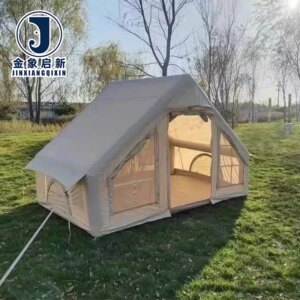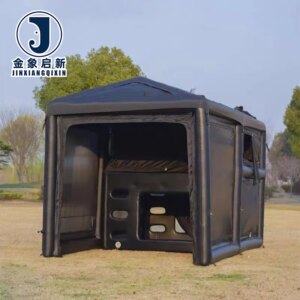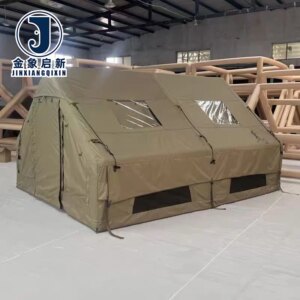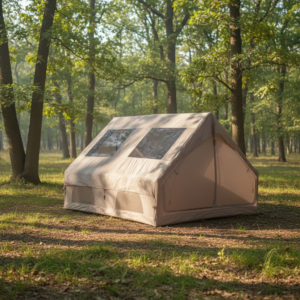
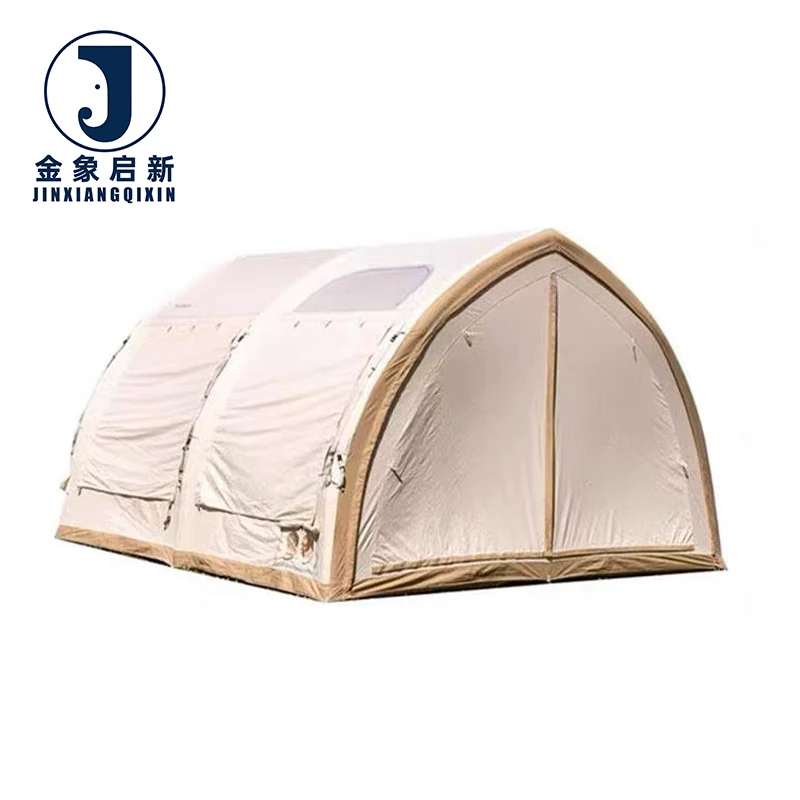
Deep Coating Process Control — every roll of PVC inflatable tent fabric is monitored for coating weight and adhesion uniformity across all three production lines, ensuring consistent structural inflation performance batch after batch.
Technical Specifications
| Parameter | Value |
|---|---|
| Product Type | Inflatable Tent |
| Core Material | PVC Tarpaulin |
| Product Forms | Single Layer Construction, Extended Type |
| Key Performance | Waterproof, Tear-resistant |
| Fire-retardant Treatment | Available in fire-retardant grades — confirm the grade required for your market |
| Anti-static Treatment | Available with anti-static treatment — confirm surface resistance standard for your application |
| UV Resistance | UV treatment available — verify test basis and outdoor exposure requirements |
| Customization | OEM & ODM, sample customization, pattern printing |
| Quality System | ISO 9001, ISO 14001, ISO 45001, CE |
Application Suitability
| Application | Exposure & Requirement |
|---|---|
| Temporary construction site shelters | Wind loading, rain exposure, rapid deployment and takedown cycles |
| Emergency disaster relief stations | Immediate inflation, harsh weather, repeated transport and storage |
| Mobile logistics storage facilities | Abrasion from ground contact, UV exposure, structural inflation pressure |
| Outdoor industrial event workspaces | High foot traffic, sun exposure, fire safety compliance at venue |
| Mining and tunnelling inflatable shelters | Underground ventilation requirements, fire-retardant compliance, dust exposure |
What "Fire-Retardant" Means Without a Documented Grade Behind Inflatable Tent Fabric
A fire-retardant claim on inflatable tent fabric is only as reliable as the test report that backs it up.
Technical buyers specifying membrane and inflatable structures for industrial sites know the frustration: the quotation states fire-retardant treatment, yet no test certificate accompanies the roll. Mining and tunnelling contractors in particular face site audits where the safety officer demands documentation matching the specific standard enforced in that jurisdiction. PVC inflatable tent fabric ordered without grade verification can lead to failed inspections, work stoppages, or worse — a structure that does not perform when exposed to an ignition source. The gap between a supplier’s claim and a buyer’s compliance obligation is where project risk hides [NEED_CITE: fire classification standards for temporary structures in industrial settings].
Coating Weight and Adhesion for Structural Inflation
The PVC coating applied to inflatable tent fabric must achieve uniform thickness across the full roll width. Inconsistent coating weight creates weak zones where inflation pressure concentrates stress, leading to premature failure at the seam or mid-panel. Our coating lines maintain controlled application parameters so that the relationship between base fabric denier and coating mass delivers predictable tensile and tear behaviour. PVC inflatable tent fabric destined for structural inflation demands this consistency because every square metre carries load when the structure is pressurised.
Base Fabric Denier and Weave Under Inflation Pressure
The base fabric is the structural skeleton of any inflatable tent fabric. Denier selection and weave density determine how the material resists tear propagation when a puncture occurs under inflation pressure. A tighter weave with higher denier yarns restricts tear growth, keeping a small puncture from becoming a catastrophic panel failure. For inflatable emergency shelters and membrane structures, the base fabric specification directly governs the safety margin between operating pressure and burst threshold [NEED_CITE: tensile and tear test methods for coated fabrics per ISO 1421].
Single Layer Construction and Deployment Weight Trade-Off
Single layer PVC inflatable tent fabric balances durability against the practical realities of transport and deployment. A lighter construction reduces the packed weight and volume, which matters when shelters must be air-freighted to disaster zones or carried into remote mining camps. Yet the single layer must still deliver waterproof protection, UV treatment performance, and sufficient tear resistance for repeated inflation cycles. The specification challenge is selecting a base fabric and coating combination that meets structural requirements without adding unnecessary mass.
Fire-Retardant and Anti-static Compliance for Inflatable Structures
Inflatable structures used on industrial sites, at mining operations, or in aviation environments often fall under fire safety regulations that demand documented flame performance. The PVC inflatable tent fabric must be matched to the specific standard enforced at the project location — whether that is a national building code classification or an industry-specific mining safety directive. Anti-static treatment adds another compliance layer where the structure operates near combustible dust or flammable vapours. Confirming the required grade before production avoids costly roll rejection at the site gate [NEED_CITE: anti-static surface resistance standards for inflatable structures in hazardous areas].
The Hidden Cost of Specifying Inflatable Tent Fabric on Price Alone
When PVC inflatable tent fabric is selected primarily on quoted price, the shortcuts surface after deployment. Coating weight may fall below what is needed for reliable heat welding, causing seams to peel apart at inflation pressure. Base fabric denier may be reduced to cut material cost, resulting in tear propagation that compromises the entire structure within the first season. Fire-retardant treatment applied at insufficient concentration passes the quotation review but fails the site inspection. These failures are not visible on the sample card — they appear only when the structure is inflated, loaded, and exposed to real conditions.
Why Source Inflatable Tent Fabric Through This Facility
Deep process control over coating weight and adhesion ensures that PVC inflatable tent fabric meets structural inflation demands without mid-roll variation. Three full production lines and 36 sets of professional processing equipment provide the capacity to deliver bulk roll orders on schedule. A 10-technician R&D team handles material selection, sample development, and custom pattern printing for project-specific branding. Dedicated QA and QC staff inspect every production stage, with full pre-shipment verification before any roll leaves the facility. Samples for custom inflatable tent fabric requirements are developed within days, allowing technical buyers to validate material properties before committing to full production runs.
Documentation & Verification
- Material specification sheet stating base fabric denier, coating type, and available GSM options
- Fire-retardant test report provided against the grade specified for your target market
- Anti-static surface resistance documentation where applicable to site compliance requirements
- Pre-shipment inspection record confirming coating uniformity across every roll in the order
- ISO 9001, ISO 14001, ISO 45001, and CE certificates included with dispatch documentation
Fabrication, Handling & Storage
- Heat welding parameters must match the PVC coating type and weight to achieve full seam adhesion on inflatable panels
- Store rolls on core supports in a dry environment to prevent creasing that weakens the coating layer
- Use compatible PVC adhesive for field repairs on single layer inflatable tent fabric panels
- Avoid dragging rolls across abrasive surfaces to protect the coating finish before fabrication
- Cut patterns should account for inflation stretch to prevent seam stress concentration at panel junctions
Request a Material Proposal for Your Inflatable Structure Project
Provide the inflation pressure range and structural span your design requires, along with the fire safety or anti-static standard enforced at the installation site. Specify whether you need rolls in a standard width or a custom dimension to reduce fabrication waste, and indicate annual volume to support pricing discussions. If pattern printing or colour matching is part of the project branding, share the artwork or Pantone references so that samples can be prepared for your approval before production.
Frequently Asked Questions
Q: What fire-retardant grades are available for PVC inflatable tent fabric?
A: Fire-retardant treatment can be applied to meet various market requirements, but the specific grade must be confirmed against the standard enforced at your project location. Share the applicable fire classification code with your inquiry so that the correct formulation is selected and a matching test report is provided with the shipment.
Q: How is anti-static performance verified on inflatable structure fabric?
A: Anti-static treatment is available for inflatable tent fabric used in environments where static discharge poses a risk. The surface resistance value must align with the safety standard specified by the site operator. Request a test report referencing the applicable standard when placing your order.
Q: What base fabric denier should I specify for inflatable emergency shelters?
A: Denier selection depends on the inflation pressure, structural span, and deployment conditions of your shelter design. Higher denier yarns improve tear resistance under pressure but add weight. Our R&D team can recommend a base fabric specification once you share your design parameters and performance targets.
Q: How is batch quality verified before inflatable tent fabric ships?
A: Every roll undergoes inspection by dedicated QA and QC staff at each production stage, with a full pre-shipment check before dispatch. An inspection record accompanies the shipment documenting coating uniformity and material conformity against the agreed specification.
Q: Can I order custom widths and pattern printing for inflatable tent projects?
A: Yes. Custom widths, pattern printing, and OEM or ODM configurations are supported through our R&D and production teams. Samples are developed within days for material and print approval before mass production begins. Share your dimension and artwork requirements with your inquiry.