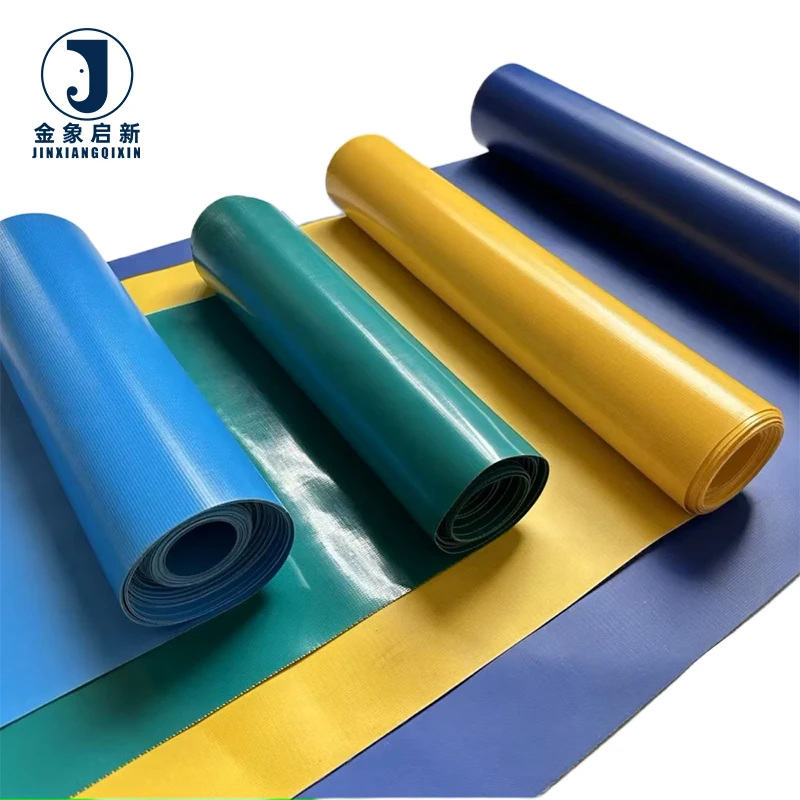
Precision Coating Control — Our 10-person R&D team engineers every PVC coated tarpaulin roll to exact GSM and denier specifications, with documented adhesion and treatment verification before dispatch.
Technical Specifications
| Parameter | Value |
|---|---|
| Product Type | PVC Coated Tarpaulin Roll |
| Base Fabric Denier | 200D×300D / 500D×500D / 840D×840D / 1000D×1000D |
| Weight Range | 250gsm–1500gsm |
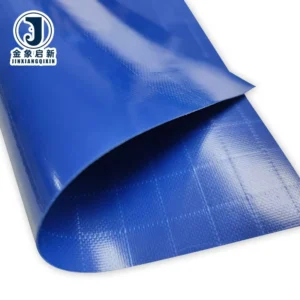
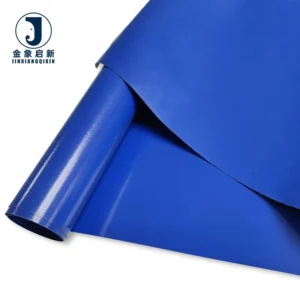
| Surface Finish | Glossy or matte (available in both options) |
| Temperature Range | -15°C to 70°C |
| Waterproof | Yes |
| UV Treatment | Available in UV-treated grades — confirm the UV test basis required for your application |
| Flame Retardant | Available in flame retardant grades — confirm the grade required for your market |
| Anti-Fungal | Treated |
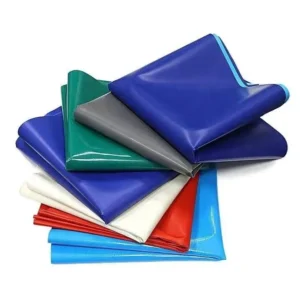
| Color Options | Blue, yellow, black, green, white, or custom |
| Standard Sizes | 3×4m, 6×8m, 8×10m, 10×12m or custom made |
| OEM/ODM | Accepted |
| Certifications | ISO, CE |
Application Suitability
| Application | Exposure & Requirement |
|---|---|
| Truck side curtains and trailer covers | Constant flexing, road debris abrasion, UV and weather cycling, weld seam integrity under load movement |
| Temporary and semi-permanent tent structures | Wind load tension, rain pooling, UV degradation over extended outdoor deployment |
| Construction site enclosures | Dust containment, weather barrier, puncture risk from site activity, fire safety compliance |
| Logistics and freight protection | Repeated folding and unfolding, strap abrasion, temperature fluctuation during transit |
| Inflatable and membrane structures | Air-holding integrity, coating adhesion under continuous stress, fire code compliance |
Why Denier and GSM Together Define PVC Coated Tarpaulin Strength
Neither number alone predicts how the fabric performs in the field.
A common failure in tarpaulin procurement is specifying by GSM only, assuming heavier always means stronger. In reality, a 650gsm roll built on a 500D×500D base fabric will behave very differently from one built on 1000D×1000D — even at identical weight. The denier determines how the load distributes across individual yarns at stress points, while the coating weight governs flexibility, weld behaviour and surface protection. When these two parameters are mismatched, the fabric may pass a static tensile test yet fail at the first welded seam under dynamic load. [NEED_CITE: relationship between base fabric denier and tensile performance per ISO 1421]
How Base Fabric Denier Drives Weld Seam Performance
The base fabric denier directly controls what happens at the most vulnerable point in any fabricated PVC coated tarpaulin product — the welded seam. Higher denier yarns distribute stress across a broader cross-section, reducing the concentration of force where heat welding softens the coating layer. When fabricators specify material for truck side curtains or tent panels, choosing the correct denier ensures the weld line does not become the failure point under flexing or wind load.
Coating Weight, Adhesion and Long-Term Behaviour
Coating weight governs more than surface protection — it determines how well the PVC layer bonds to the base fabric through the manufacturing process. Adequate coating penetration into the weave structure creates mechanical interlock that resists delamination during folding, welding and thermal cycling. A PVC coated tarpaulin with insufficient coating relative to its base fabric density will show edge lifting and adhesion loss at cut lines long before the base fabric itself reaches its mechanical limit. [NEED_CITE: coating adhesion test methods for PVC coated fabrics]
Reading the Specifications That Actually Matter
Base fabric denier and GSM must be evaluated as a system. A lighter denier with higher coating weight produces a flexible, weld-friendly fabric suited to applications requiring repeated folding. A heavier denier with moderate coating delivers the tensile backbone needed for structural tension applications like membrane roofs or large-span tents. Surface finish — glossy or matte — affects both heat-weld parameters and long-term dirt retention; glossy surfaces generally allow more consistent weld temperature control, while matte finishes reduce glare and improve print adhesion for branded applications. The stated temperature range of -15°C to 70°C defines the boundaries within which the PVC coating maintains flexibility; outside this range, cold cracking or heat softening can compromise performance. Flame retardant grades are available for markets requiring fire code compliance — buyers should specify the test standard applicable to their region before production.
What Happens When Specifications Are Misaligned
When coating weight is too light for the base fabric denier, the PVC layer fails to fully penetrate the weave, leaving dry yarn bundles that become initiation points for tearing. Conversely, excessive coating on a light denier base creates a stiff, board-like roll that cracks along fold lines during transport and installation. Colour inconsistency across rolls in a single order compounds the problem — visible banding appears when panels are installed side by side, forcing costly replacement. Welded seams fail first when the heat input appropriate for the stated GSM does not match the actual coating thickness on arrival. [NEED_CITE: common failure modes in coated fabric seam construction]
Procurement Advantages for Technical Buyers
Three full production lines and 36 sets of professional equipment support consistent PVC coated tarpaulin roll output with documented batch-to-batch uniformity. A dedicated 10-person R&D team handles material selection, denier-to-GSM matching and sample development within days rather than weeks. Every roll undergoes 100% inspection at the factory before dispatch, catching GSM deviation and coating defects before they reach your receiving dock. Samples are developed against your exact specification — including denier, weight, colour and surface finish — so fabrication parameters can be validated before volume commitment. ISO and CE certification documentation accompanies each shipment for regulatory and audit requirements.
Documentation & Verification
- Material specification sheet listing exact GSM, base fabric denier, weave type and coating method per roll
- UV and flame retardant test reports matched to the treatment grade specified on your purchase order
- Pre-shipment inspection record confirming GSM and colour consistency across all rolls in the batch
- ISO and CE certificates provided with dispatch documentation for compliance verification
- Roll packing list with individual roll weights and dimensions for receiving inspection
Fabrication, Handling & Storage
- Heat-weld parameters must be adjusted to the specific GSM and surface finish — glossy and matte coatings respond differently to hot air temperature
- Store rolls horizontally on pallets to prevent permanent creasing through the coating layer
- Allow cold-stored rolls to reach ambient temperature before unrolling to avoid cracking at -15°C boundary conditions
- Use compatible PVC-based repair adhesives matched to the coating weight for on-site seam or puncture repair
- Plan cutting layout to maximise yield from standard roll widths and minimise welded joints in high-stress zones
Requesting the Right Specification for Your Project
Provide the end-use application and the environmental conditions the fabric will face — including expected UV exposure duration, temperature extremes and any fire code requirements for your market. Specify whether you need rolls in standard widths or custom dimensions, and indicate your annual volume so production scheduling can be aligned. If colour matching or surface finish is critical to your project, request a physical sample with full specification documentation before confirming the bulk order.
Frequently Asked Questions
Q: How is GSM verified and what is its relationship to base fabric denier and coating weight?
A: Total GSM combines the base fabric weight and the coating weight applied to both sides. We verify GSM per roll using calibrated measurement before dispatch and provide the breakdown on the material specification sheet. Denier determines the base fabric contribution; coating weight fills the remaining GSM. Both must align to achieve the target tensile and flexibility performance.
Q: What flame retardant standards are available and how do I specify the right one?
A: Flame retardant treatment is applied during coating and available in multiple grades. The correct standard depends on your target market — building codes, transport regulations and temporary structure rules each reference different test methods. Specify the exact standard or classification your project requires so we match the treatment and supply the corresponding test report.
Q: How does denier choice affect heat welding and seam strength?
A: Higher denier yarns create a thicker base fabric that absorbs more heat energy before the coating layer reaches welding temperature. This means weld speed and air temperature must be calibrated to the specific denier. Under-welding leaves weak seams; over-welding damages the yarn structure. We recommend running weld trials on sample material before production.
Q: How is batch colour consistency controlled across multiple rolls?
A: Colour consistency is managed through controlled pigment dosing and in-process visual checks against the approved reference standard during production. A 100% pre-shipment inspection compares rolls side by side before packing. For large orders, we can provide batch samples for your approval before the full run is released.
Q: What documentation accompanies each shipment?
A: Each shipment includes a material specification sheet with GSM, denier and coating details, test reports for any specified UV or flame retardant treatment, a roll packing list with individual weights, ISO and CE certificates, and a certificate of origin. Additional customs documentation is provided on request to support your import process.