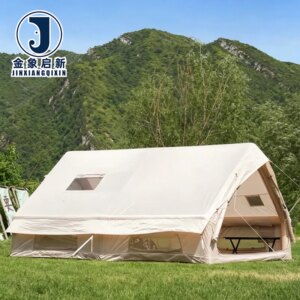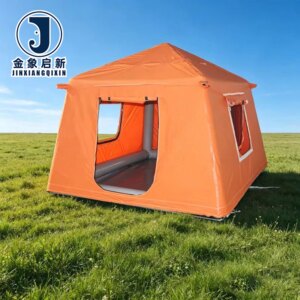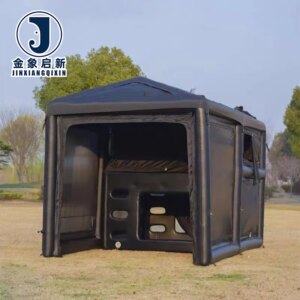

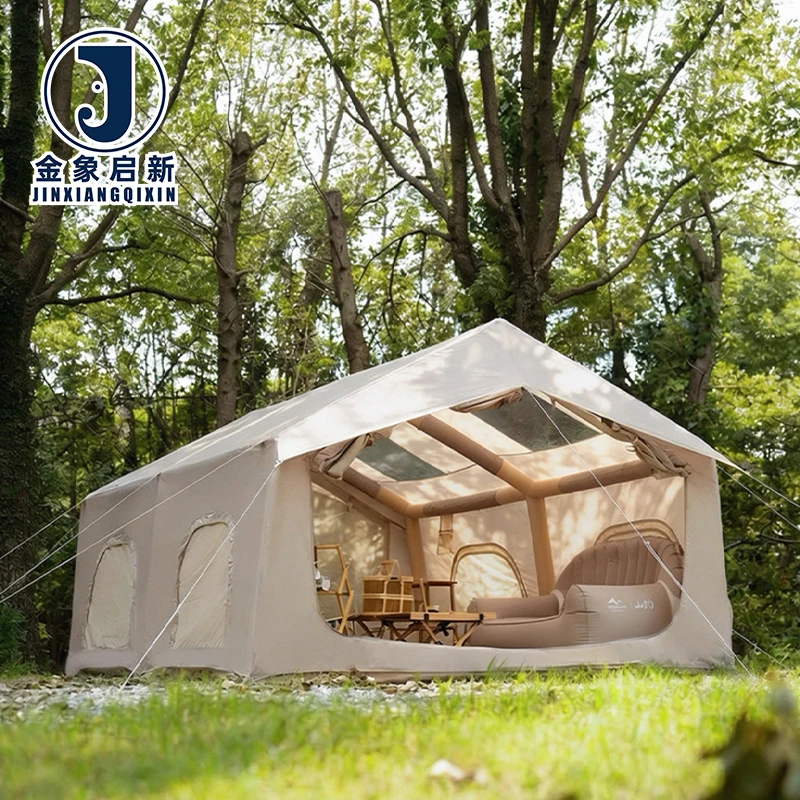
Coating Process Mastery — Three dedicated production lines control PVC coating weight and adhesion uniformity across every roll of inflatable tent fabric we produce.
Technical Specifications
| Parameter | Value |
|---|---|
| Product Type | Inflatable Tent |
| Core Material | PVC tarpaulin |
| Key Performance | Waterproof, tear-resistant, UV-resistant (test basis not stated in source) |
| Construction | Single layer |
| Configuration | Extended Type |
| Capacity | 2-8 Person |
| Season Rating | 4-Season |
| Opening Mechanism | Quick Automatic Opening (Inflatable) |
| Customization | OEM & ODM (sample customization, pattern printing) |
| Certifications | ISO9001, ISO14001, ISO45001, CE |
Application Suitability
| Application | Exposure & Requirement |
|---|---|
| Industrial emergency preparedness | Rapid deployment, variable weather, frequent inflation-deflation cycles demanding tear-resistant air-beam channels |
| Commercial disaster relief operations | Continuous outdoor exposure, waterproof performance across rain and wind, UV-resistant exterior for extended staging |
| Temporary site command centers | Heavy foot traffic at entry points, single-layer durability balancing transport weight with structural rigidity |
| Equipment storage during infrastructure recovery | Waterproof seal against ground moisture, tear resistance when dragged across uneven terrain |
| Temporary logistics staging | Repeated setup and teardown, coating adhesion holding under flex stress at fold lines |
What "UV-Resistant" Actually Means When No Test Report Follows the Claim
Material traceability and verifiable test documentation separate a specification from a marketing statement.
Procurement teams sourcing Inflatable Tent Fabric for disaster relief and temporary site operations frequently encounter a frustrating pattern: the quotation states UV resistance, but the shipment arrives without any test report to substantiate the claim. When a 4-season inflatable structure degrades prematurely under sun exposure, the operational cost extends far beyond replacement — it includes downtime, redeployment logistics, and loss of confidence from the end user [NEED_CITE: UV degradation mechanisms in PVC coated polyester fabrics]. Our approach is straightforward: UV-resistant treatment is available for this Inflatable Tent Fabric, and we provide the corresponding test documentation upon request so you can verify the performance level matches your deployment environment. This applies equally to flame retardant grades — confirm the grade required for your target market and we supply the matching certification.
Coating Adhesion and Air-Beam Integrity
The inflatable structure depends entirely on the coated fabric maintaining its seal under internal air pressure. Our PVC tarpaulin production controls the coating weight and bonding to the base fabric at each stage, ensuring the single-layer construction holds pressure across the air-beam channels without delamination. For disaster relief applications where the tent may remain inflated for extended periods, consistent coating adhesion prevents the slow air loss that forces constant compressor operation.
Single-Layer Efficiency for Emergency Logistics
A single-layer PVC tarpaulin construction reduces packed weight and volume compared to multi-layer alternatives, which matters when transport capacity is limited during disaster response. The Inflatable Tent Fabric must still deliver waterproof performance and tear resistance in one layer, which demands precise control over coating thickness and base fabric density. Our R&D team of 10 technicians can adjust material thickness through OEM and ODM customization to balance these transport and performance requirements for your specific deployment scenario [NEED_CITE: material weight versus structural performance in inflatable membrane structures].
Reading the Specification Sheet Beyond GSM
GSM alone tells you the weight per square metre but nothing about how that weight is distributed between base fabric and coating. A heavy coating on a low-denier base fabric may show a respectable GSM yet tear easily along the warp or weft. Conversely, a high-density base fabric with a lighter coating delivers strong tensile and tear performance while maintaining flexibility for inflation and folding. For Inflatable Tent Fabric used in 4-season conditions, the balance between base fabric denier, weave density, and PVC coating weight determines whether the material resists tearing at stress points like air-beam junctions and door openings, or whether it fails at the first significant wind load. Coating method — whether knife-over-roll, lamination, or calendering — further influences peel strength and heat-welding behaviour during fabrication.
The Hidden Cost of Unverified Material Claims
When Inflatable Tent Fabric arrives on site and the coating weight does not match the quoted specification, the consequences compound quickly. A lighter-than-agreed coating may pass initial visual inspection but fail to hold air pressure over sustained inflation cycles, leading to structural sag and eventual collapse during adverse weather. Batch-to-batch colour variation becomes visible when multiple tents from the same procurement are erected side by side at a relief staging area, undermining the professional appearance expected by coordinating agencies. Welded seams failing before the fabric itself — typically at the flex points where the air beam bends under load — point to a mismatch between the coating formulation and the heat-welding parameters used during fabrication [NEED_CITE: weld strength versus parent material strength in coated fabric structures]. These are not rare edge cases; they represent documented failure modes that trace back to insufficient process control at the coating stage.
Why Technical Buyers Source Inflatable Tent Fabric Here
Our 9,180 square metre facility runs three full production lines with 36 sets of professional processing equipment, giving us the capacity to fulfil bulk orders for disaster relief procurement programmes without sacrificing coating consistency across rolls. A dedicated QA and QC team inspects every production stage, culminating in 100% pre-shipment inspection so the material you receive matches the specification you approved. The 10-technician R&D team handles material thickness adjustments, pattern printing, and sample development, typically producing custom samples within days rather than weeks. ISO 9001, ISO 14001, ISO 45001, and CE certifications underpin our manufacturing system and support cross-border compliance documentation. With nearly 30 years focused on PVC coated fabric, our process control over coating weight and adhesion is built on accumulated production data, not marketing claims.
Documentation & Verification
- Material specification sheet stating base fabric, coating type, and weight for your Inflatable Tent Fabric order
- UV and treatment test reports provided with batch traceability matching your shipment
- ISO 9001, ISO 14001, ISO 45001, and CE certificates included for cross-border customs clearance
- Pre-shipment inspection record confirming coating adhesion and visual quality per roll
- Certificate of origin and roll packing list supporting procurement audit requirements
Fabrication, Handling & Storage
- Heat-weld parameters must match the specific PVC coating formulation — request our welding guide for this single-layer tarpaulin before fabrication
- Store rolls horizontally on pallets to prevent creasing the PVC coating, which can cause permanent mark-through on inflatable panels
- Allow cold-transported rolls to reach ambient temperature before unrolling to avoid cracking the PVC coating at fold lines
- Use compatible PVC adhesive for field repairs on the single-layer construction, testing bond strength on an offcut first
- Pattern printing should be confirmed on a sample panel before full-run application to verify ink adhesion to the coated surface
What We Need to Move Your Inquiry Forward
Provide the deployment environment and expected duration of continuous inflation so we can recommend the appropriate coating weight and treatment level. If your target market mandates specific fire classification or UV performance standards, share the regulation reference so we match the correct grade. Let us know whether you require roll stock for your own fabrication or finished panels cut to your air-beam pattern, and whether sample approval is required before bulk production.
Frequently Asked Questions
Q: How can I verify the GSM and coating weight of the PVC tarpaulin when the shipment arrives?
A: We supply a material specification sheet and pre-shipment inspection record with every order, documenting the measured weight per roll. You can cross-check by cutting a measured sample from the roll edge and weighing it on a calibrated scale. If any discrepancy appears, our batch traceability system allows us to investigate the specific production run immediately.
Q: What test basis supports the UV-resistant claim for this Inflatable Tent Fabric?
A: UV-resistant treatment is available and the specific test basis depends on the grade selected for your market requirements. We provide the corresponding test report with batch traceability when you confirm which UV performance standard your procurement specification requires, ensuring the documentation matches your compliance obligations.
Q: How are tear and tensile strength documented for inflatable structure applications?
A: Tear and tensile values are generated through standardised test methods applicable to coated fabrics. We supply the test results relevant to the specific material grade you order, and our R&D team can adjust base fabric density and coating weight through OEM customisation to meet the structural demands of your inflatable design.
Q: What material thickness options are available for OEM and ODM inflatable tent orders?
A: Our 10-technician R&D team develops custom samples with adjusted material thickness, coating weight, and pattern printing based on your specifications. Provide your target performance parameters and deployment conditions, and we produce samples within days for your evaluation before committing to full production volume.
Q: How is batch-to-batch colour and coating consistency controlled across a multi-roll order?
A: Every production stage includes dedicated QA and QC inspection, with coating weight and colour checked against the approved reference before rolls are packed. Our 100% pre-shipment inspection protocol ensures all rolls in your order match the specification, and we maintain batch records for traceability after delivery.