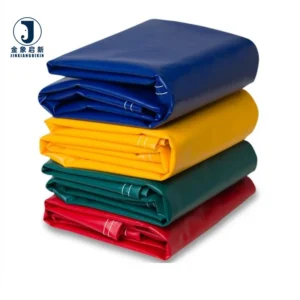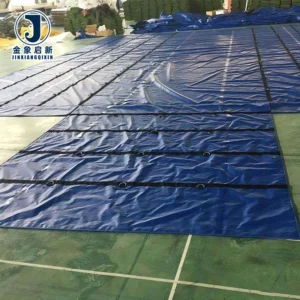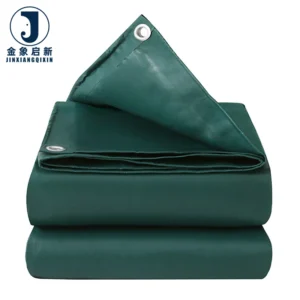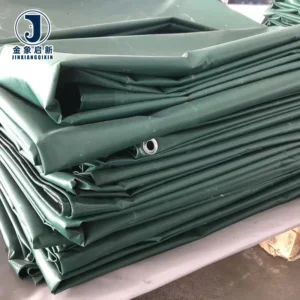
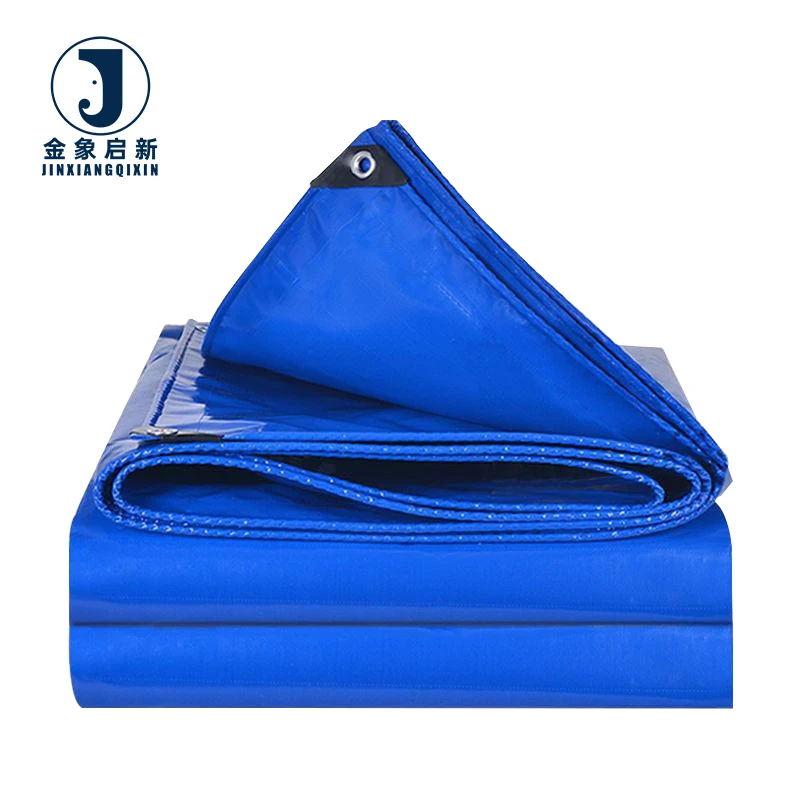
Coating Weight Control — Process monitoring from base fabric to finished roll keeps GSM consistent across every production run, verified before dispatch.
Technical Specifications
| Parameter | Value |
|---|---|
| Product Type | PVC Coated Tarpaulin |
| Weight Range | 700gsm / 850gsm / 900gsm |
| Coating Material | PVC |
| Waterproof | Yes |
| Flame Retardant | Available (grade not stated — confirm required standard) |
| Anti-Static | Available (standard not stated — confirm compliance requirement) |
| Anti-Cold Treatment | Available |
| Anti-Mildew Treatment | Available |
| Outdoor Life Assurance | 1–3 years (source value — verify against current batch data) |
| Base Fabric Denier | Available on request |
| Coating Method | Available on request |
Application Suitability
| Application | Exposure & Requirement |
|---|---|
| Truck cargo cover | Road weather, mechanical abrasion, tie-down stress at corners, UV exposure |
| Transport fleet side curtain | Repeated flexing at roller tracks, wind load, seam adhesion under tension |
| Outdoor equipment cover | Prolonged weather exposure, mildew risk in humid storage, surface cleaning |
| Flatbed load protection | High-speed airflow, rain ingress prevention, load-shift abrasion |
Why the Stated GSM Does Not Always Match the Roll That Arrives
Coating weight and base fabric construction must be verified together — a quoted number without supporting documentation is just a marketing claim.
Technical buyers specifying PVC coated tarpaulin fabric for truck cargo covers frequently encounter a gap between the quotation and the delivered material. The GSM stated on paper does not always correspond to what lands on the receiving dock. In some cases, the base fabric is substituted with a lighter denier weave, and additional coating is applied to compensate for weight, masking a reduction in tensile and tear performance [NEED_CITE: tensile and tear test methods for coated fabrics per ISO 1421]. Without a material specification sheet and pre-shipment weight verification, there is no reliable way to confirm the fabric matches the agreed standard. This is especially critical when flame retardant or anti-static treatments are specified — those treatments add weight, and if the base GSM is lower than quoted, the finished product may fall short of both weight and performance requirements.
Coating Weight and Its Role in Long-Term Performance
The coating applied to a PVC tarpaulin does more than add mass. It fills the weave structure, binds the yarns, and provides the barrier against water, UV, and chemical exposure. When PVC coated tarpaulin fabric is produced, the coating weight must be controlled independently of the base fabric weight to ensure each GSM grade — whether 700gsm, 850gsm, or 900gsm — delivers the intended balance of flexibility and strength. Insufficient coating leaves the base yarns exposed at flex points, accelerating abrasion damage on truck side curtains that fold and unfold repeatedly [NEED_CITE: coating adhesion and peel strength testing for PVC fabrics].
Base Fabric Construction and Tear Propagation
The denier of the base yarns and the density of the weave determine how the material behaves when punctured or torn. A high-GSM fabric built on a low-density weave may feel heavy but will allow tears to propagate quickly once initiated. For transport applications where cargo shifts against the cover during transit, the mesh count and yarn count per centimetre in both warp and weft directions are as important as the total weight. Requesting this data before production allows you to compare options on structural merit rather than GSM alone.
Treatment Verification: What Documentation Should Accompany Your Order
Flame retardant and anti-static treatments are frequently listed on quotations for PVC coated tarpaulin base fabric denier coating weight specifications, but the supporting test reports do not always follow. Different markets require different standards — a grade accepted in one jurisdiction may not satisfy regulations in another. Before confirming an order, specify the exact fire classification or anti-static standard your project requires and request the corresponding test certificate. Treatments such as anti-cold and anti-mildew also vary in formulation, and their effectiveness depends on correct application during the coating process.
The Cost of Specification Mismatches in the Field
When a truck cargo cover fails prematurely, the cause often traces back to a specification that was not fully verified at the point of purchase. A cover made from lighter base fabric than specified may show acceptable weight on the roll but will fail at welded seams where the load flexes most. Flame retardant claims without a grade or standard attached create compliance risk at the job site — inspectors requesting documentation will not accept a supplier statement in place of a recognised test report [NEED_CITE: DIN 4102 fire classification for building materials]. Colour variation between rolls in the same shipment becomes visible once the covers are installed side by side on adjacent vehicles, forcing replacement of the entire batch.
Why Source This PVC Coated Tarpaulin From Jinxiang
Nearly 30 years of focused production in coated fabric provides the process depth needed to control coating weight and adhesion consistently across large orders. Three full production lines with 36 sets of professional equipment support bulk volume with dependable scheduling for transport fleet contracts. A 10-person R&D team handles material selection, custom GSM matching, and treatment formulation to align with your target market requirements. Every roll undergoes dedicated QA/QC inspection at each production stage, with 100% pre-shipment verification against the quoted specification. ISO and CE certified production ensures documentation standards meet export compliance across North American, European, and Asian markets.
Documentation & Verification
- Material specification sheet stating exact GSM, base fabric denier, and coating weight per roll
- Flame retardant and anti-static test reports with grade and standard clearly identified
- Pre-shipment weight verification record confirming coating matches the quoted specification
- UV resistance test data where anti-UV treatment is specified in the order
- ISO and CE certification documentation available for compliance review
- Roll packing list with colour reference and batch traceability for each shipment
Fabrication, Handling & Storage
- Heat welding parameters must be adjusted for 700gsm through 900gsm grades to ensure seam adhesion
- Store rolls vertically on pallets to prevent permanent creasing in the PVC coating layer
- Anti-cold treatment grades remain flexible in low temperatures — avoid sharp folding during winter transport
- Cut patterns should account for weld seam allowance to maintain coverage at stress points
- Clean with mild detergent only; solvents may degrade flame retardant and anti-static surface treatments
- Reinforce high-stress zones with additional PVC patches before installing tie-down hardware
What to Include in Your Enquiry
Provide the specific application environment and the mechanical stresses the cover will face — road speed, load type, and climate conditions all affect GSM selection. State the fire classification or anti-static standard required in your target market so the correct treatment grade can be matched. Indicate the roll widths and annual volume needed, and whether you require finished cut-to-size covers or raw roll stock for your own fabrication line. Sample approval before bulk production is recommended to confirm weldability, colour, and surface finish.
Frequently Asked Questions
Q: How is the stated GSM verified on delivery?
A: Each roll is weighed and measured during pre-shipment inspection, and the result is recorded against the quoted GSM. A weight verification document is included with the shipment. If you require independent third-party testing, this can be arranged before dispatch. Tolerances are stated on the material specification sheet.
Q: Which flame retardant grade applies to my market?
A: Flame retardant grades vary by jurisdiction — European, North American, and Asian markets each reference different standards. Specify the standard your project requires, and the corresponding test report will be supplied. If you are unsure which grade applies, provide your end-use location and the material can be matched accordingly.
Q: What test basis is provided for anti-UV treatment claims?
A: Anti-UV treatment is verified through accelerated weathering tests. Request the specific UV test report for the GSM grade you are ordering. The report will state the test method, exposure duration, and measured retention of tensile strength and colour after testing.
Q: How does base fabric denier affect tear strength?
A: Higher denier yarns in the base fabric resist tear propagation more effectively, particularly at weld seams and tie-down points. The denier and weave density together determine tear performance — request the base fabric construction data alongside the GSM to evaluate the material on structural merit rather than weight alone.
Q: How do you ensure colour consistency across multiple rolls?
A: Colour reference standards are established during sample approval, and each production batch is checked against this reference before dispatch. Pre-shipment inspection includes visual comparison of rolls side by side. For large orders spanning multiple production runs, batch matching protocols are applied to maintain consistency.