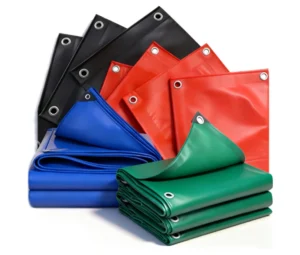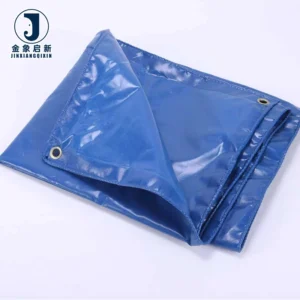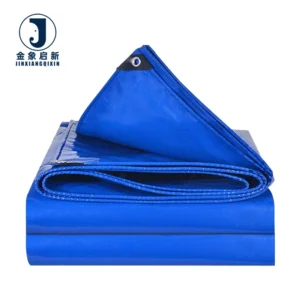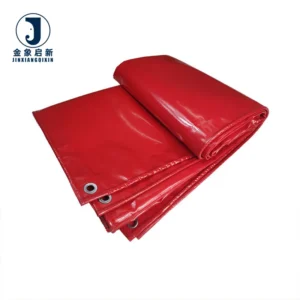
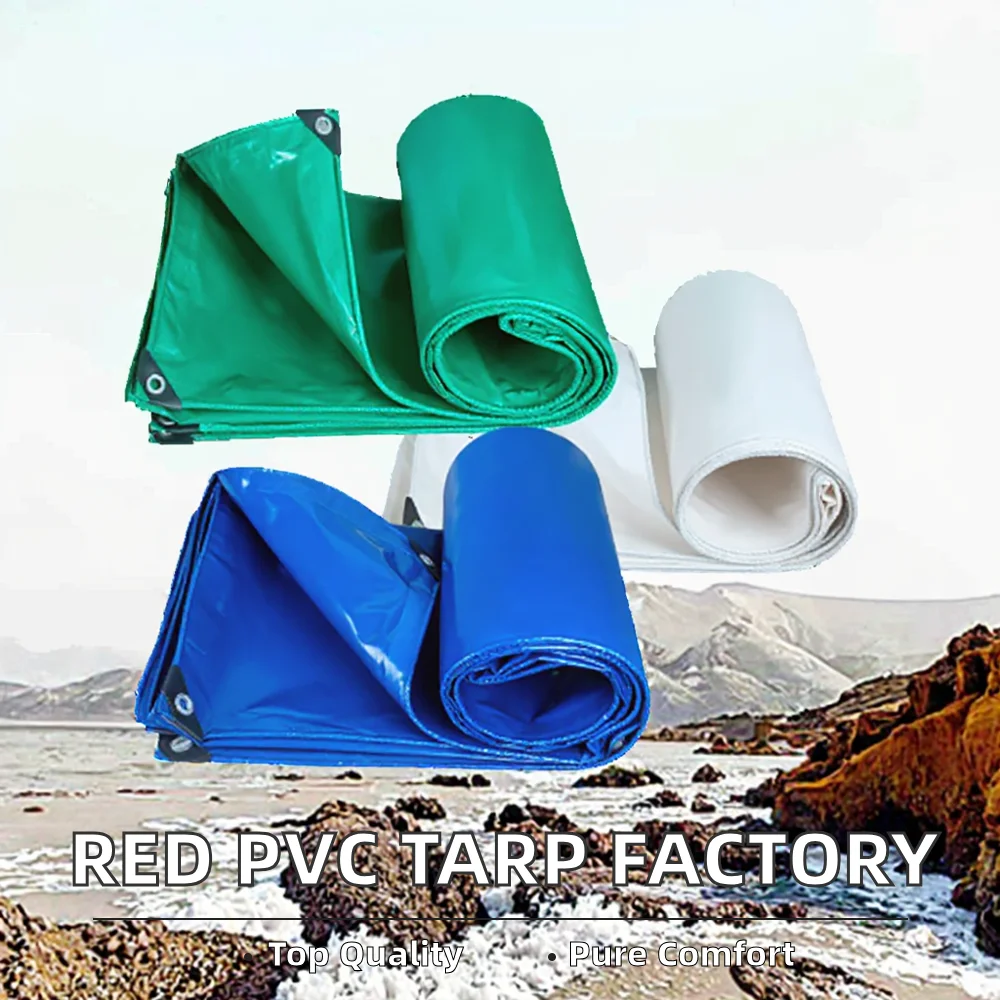
Process-Controlled Coating — Knife coated PVC tarpaulin production with in-stage weight checks and adhesion testing, ensuring roll-to-roll consistency for fabricators welding technical structures.
Technical Specifications
| Parameter | Value |
|---|---|
| Product Type | PVC Coated Tarpaulin |
| Coating Material | PVC |
| Coating Method | Knife Coated |
| Base Fabric Reference | 1000×1000 |
| Weight Reference | 420 g |
| Waterproof | Yes |
| Flame Retardant | Available (grade to be confirmed per market requirement) |
| Anti-Static | Available (surface resistance to be confirmed) |
| Anti-Cold | Available |
| Anti-Mildew | Available |
| Anti-UV | Available (test basis to be confirmed) |
| Outdoor Life Assurance | 3-5 years |
| Product Form | Roll; Custom cut size |
| Standards | ISO; CE |
Application Suitability
| Application | Exposure & Requirement |
|---|---|
| Truck and trailer side curtains | Continuous flexing at load points, road debris abrasion, sustained UV and weather exposure |
| Outdoor tent and awning structures | Tension loading at frame joints, prolonged sun and rain exposure, weld seam integrity under wind load |
| Industrial equipment covers | Contact with oils and site chemicals, repeated installation and removal, puncture risk from sharp edges |
| Inflatable and membrane structures | Air pressure stress, UV degradation at seams, requirement for certified flame retardant or anti-static grades |
Why the Test Report Matters More Than the Quotation Claim
Requesting the test document before production prevents site rejection and rework.
Flame retardant and anti-static specifications appear on countless supplier quotations, yet the certificate matching the target market standard is often missing from the shipment box. Technical buyers and fabricators who specify PVC coated tarpaulin for mining ventilation, event structures or transport fleets regularly face the situation where the site inspector asks for a DIN or NFPA report and the roll label offers no traceable reference. This gap stalls installation, triggers third-party testing at the buyer’s cost, and delays project handover. [NEED_CITE: DIN 4102 fire classification for building materials]
How Knife Coating Builds Coating-to-Fabric Adhesion
Knife coated construction forces the PVC compound into the interstices of the 1000×1000 base fabric under controlled blade pressure and oven temperature. This mechanical lock between coating and yarn is what gives PVC coated tarpaulin its peel strength at the weld line — the exact zone where laminated alternatives tend to delaminate under flex load. Fabricators who heat-weld panels into truck side curtains or inflatable structures depend on this adhesion to prevent seam failure before the fabric body reaches its service limit.
Treatment Chemistry and What the Buyer Must Confirm
Flame retardant, anti-static, anti-cold and anti-mildew treatments are compounded into the PVC paste or applied as a topcoat, depending on the grade required. A mining contractor specifying anti-static ventilation duct needs a surface resistance value, not a generic claim; a tent fabricator exporting to the EU needs a fire classification report tied to a named standard. Confirming the test basis and grade at the quotation stage ensures the PVC coated tarpaulin arriving at the dock matches the compliance document the site safety officer will inspect. [NEED_CITE: tensile and tear test methods for coated fabrics per ISO 1421]
Reading Base Fabric and Coating Weight Together
The 1000×1000 base fabric reference describes the warp and weft yarn count per unit area, which governs how load distributes across the weave before a tear propagates. Coating weight, expressed as GSM, adds mass and environmental protection but does not compensate for a low-density base when tensile demand is high. A technical buyer evaluating knife coated PVC coated tarpaulin for a high-tension membrane roof must read both values in combination — a heavy coat on a sparse weave yields stiffness without proportional tear resistance, while a dense base with moderate coating delivers balanced performance and better weld seam integrity.
What Happens When the Specification Is Taken on Trust
A roll that arrives lighter than the quoted GSM costs the fabricator material yield and structural margin; panels cut to drawing end up undersized, and the shortfall is only discovered after welding. Batch colour variation between rolls in a single order becomes visible the moment two panels are installed side by side on a truck curtain or tent wall, forcing selective cutting and wasted linear metres. Heat-welded seams that part under load trace back to inconsistent coating adhesion, a variable that 100-percent pre-shipment inspection is designed to catch before the container is sealed. [NEED_CITE: pre-shipment inspection protocols for coated fabric rolls]
Procurement Advantages Rooted in Process Control
Nearly thirty years of focused coated fabric production translates to established knife coating parameters for each base construction, reducing trial-and-error on new specifications. Three full production lines with 36 sets of professional equipment support bulk roll output while maintaining coating weight consistency across the order. A 10-person R&D team handles material selection, custom sizing and sample development, delivering trial rolls within days rather than weeks. Dedicated QA and QC checkpoints at every stage — from base fabric intake through coating, curing and winding — produce a pre-shipment inspection record the buyer can review before authorising dispatch. ISO and CE certification accompanies the documentation package, supporting customs clearance and site compliance audits.
Documentation & Verification
- Material specification sheet stating GSM, base fabric reference, coating method and colour code per roll
- Test report for flame retardant or anti-static grade matching the stated order requirement
- Pre-shipment inspection record confirming coating weight and visual consistency roll by roll
- Roll packing list with net weight, linear metres and batch number for traceability
- Certificate of origin and customs documentation included with every export shipment
Fabrication, Handling & Storage
- Set heat-weld temperature and dwell time to match knife coated PVC layer thickness for full seam fusion
- Store rolls upright on pallets in a shaded area to prevent flat-spotting on the outer coating layer
- Unroll in temperatures above the anti-cold treatment threshold to avoid surface micro-cracking
- Use PVC-compatible cleaners only; solvents can soften the knife coated surface and reduce adhesion
- Plan panel nesting from roll width to minimise off-cuts and cross-grain weld seams
What to Include with Your Enquiry
Provide the application scenario and the environmental exposure the finished product will face — sustained UV, chemical contact, flex frequency or air pressure load. State the fire classification or anti-static standard your target market requires, along with the annual roll volume and any custom width or colour needs. Specify whether you require roll stock only or finished panels cut to drawing with welded hems.
Frequently Asked Questions
Q: How do I verify the GSM and coating weight match what was quoted?
A: Request the pre-shipment inspection record that documents weight per roll before dispatch. On receipt, cut a measured sample from the outer wrap of a randomly selected roll, weigh it on a calibrated scale, and compare the result against the material specification sheet supplied with the shipment. Any variance beyond the agreed tolerance should be reported before fabrication begins.
Q: Which flame retardant standard applies to my market?
A: The applicable standard depends on the country and the end use — building interiors, temporary event structures and transport all carry different classifications. Provide the target market and application at the enquiry stage so the correct test report, such as DIN 4102, NFPA 701 or a local equivalent, is compiled and shipped with the roll documentation.
Q: Can custom widths and colours be produced in a single order?
A: Custom widths and Pantone-matched colours are available on the knife coating lines. State the required width, colour references and total linear metres at the quotation stage. The R&D team prepares a sample roll for approval before full production begins, ensuring colour and coating weight consistency across the entire batch.
Q: How is colour consistency maintained across multiple rolls in one batch?
A: All rolls within a single order are coated from the same compounded PVC batch under identical oven and blade settings. The QC team checks colour against the approved reference at the winding stage, and the pre-shipment inspection record notes any roll that falls outside the agreed tolerance, preventing mixed shades from reaching the container.
Q: What is the sample development lead time for a new specification?
A: Once the base fabric, coating weight and treatment grade are confirmed, a sample roll is typically produced and dispatched within a short turnaround. This allows the fabricator to test weld parameters, drape and colour before committing to the full production run.