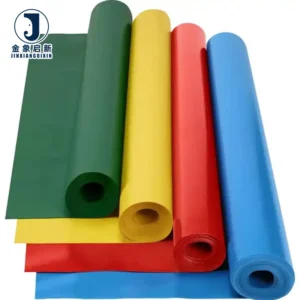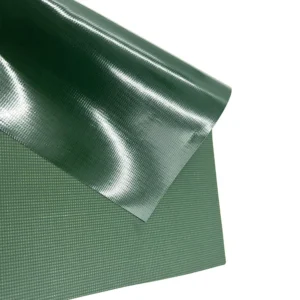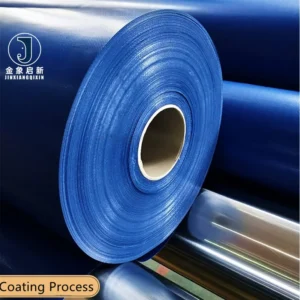
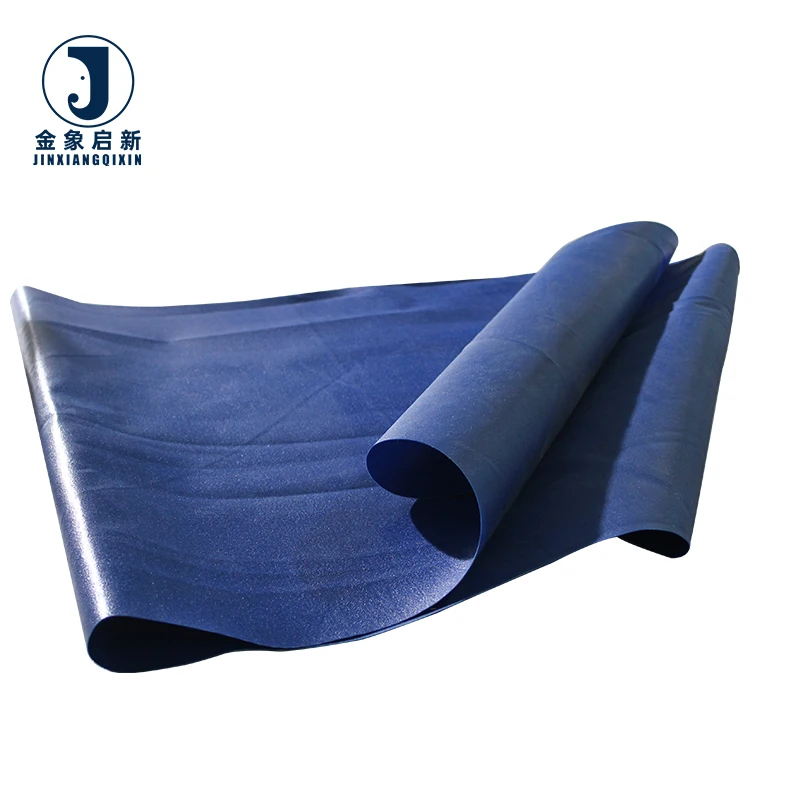
Coating Weight Integrity — PVC coated tarpaulin roll stock held to verified GSM through process-controlled lamination and 100% pre-shipment weight inspection per roll.
Technical Specifications
| Parameter | Value |
|---|---|
| Product Type | PVC Coated Tarpaulin Roll |
| Specification | 550g 600g 650g 900 GSM PVC Coated Fabric Tarpaulin |
| Coating Material | PVC coated polyester fabric |
| Weight (GSM) | 550 GSM / 600 GSM / 650 GSM / 900 GSM |
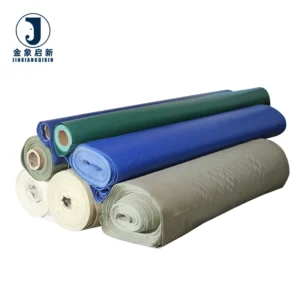
| Color Options | Blue, Blue/Orange, Green, Grey, Black, Clear, Grey/Green, Orange, or custom color |
| Waterproof | Yes |
| UV Treatment | Available (confirm the UV grade required for your market) |
| Anti-Mildew | Yes |
| Flame Retardant | Available in flame retardant grades — confirm the grade required for your market |
| Customization | Custom width, length, color, and printing available |
| Certifications | ISO, CE |
Application Suitability
| Application | Exposure & Requirement |
|---|---|
| Truck side curtains and load covers | Constant flexing at hinge points, road debris abrasion, prolonged UV and rain exposure |
| Roof tents and awning structures | Repeated folding and unfolding, sustained sun exposure, wind-driven rain ingress |
| Transport fleet tarpaulin systems | High-speed airflow loading, tie-down tension at edges, daily handling wear |
| Construction site enclosures | Scaffold abrasion, dust and chemical splash, long-term weather exposure on static installations |
| Tent and inflatable structure manufacturing | Weld seam integrity under internal pressure, colour consistency across panels |
Why the Stated PVC Coated Tarpaulin Roll GSM Is Not Enough to Guarantee Performance
A roll that meets the quoted GSM at the factory gate can still fail in service if coating adhesion and base fabric construction are uncontrolled.
Technical buyers who specify fabric by weight alone often discover that two rolls at the same GSM behave very differently once fabricated. One tears cleanly along a weld line under load; the other holds because its base fabric denier and weave carry the tensile stress the coating cannot. The PVC coated tarpaulin roll gsm number tells you how much material is on the roll — it does not tell you how that mass is distributed between coating and yarn, or how well the two are bonded. [NEED_CITE: tensile and tear test methods for coated fabrics per ISO 1421]
How Base Fabric Denier Shapes Real-World Tear Behaviour
The polyester base fabric inside each PVC coated tarpaulin roll determines how a puncture or cut propagates under tension. A higher denier yarn resists tear spread, while a tighter weave limits the distance a single broken yarn can transfer load to its neighbours. When the base fabric is undersized relative to the coating weight, the roll may hit its target GSM on a scale but lack the structural backbone to survive flexing on a truck curtain or tensioned awning frame. Specifying base fabric denier alongside GSM gives fabricators a reliable predictor of how the material will behave during welding and in service.
Coating Weight Control and What It Means for Weld Integrity
The PVC coating applied to each roll must bond to the base fabric with enough adhesion to survive repeated flex cycles without delaminating at the seam. Coating weight and method directly affect how the material responds to hot-air or wedge welding: too little coating and the weld starves; too much and excess PVC flows into the seam creating a stiff, brittle line that cracks before the fabric does. [NEED_CITE: hot-air welding parameters for PVC coated polyester] Process control over coating application ensures the stated GSM is achieved consistently from the first roll to the last in a production run, giving fabricators predictable weld settings across an entire order.
Reading the GSM, Denier, and Coating Relationship
A 650 GSM roll built on a high-denier, tightly woven base with a balanced coating allocation will outperform a 650 GSM roll padded to weight with excess coating on a lighter base. The coating provides waterproofing and surface durability, but tensile and tear resistance come primarily from the polyester yarn. Technical buyers evaluating PVC coated tarpaulin roll gsm should request the base fabric specification — denier count, warp and weft density, and weave pattern — to confirm the roll will meet the mechanical demands of the end application, not just the weight line on the quotation.
What Happens When GSM Is the Only Specification on the Purchase Order
Fabricators who accept rolls on weight alone face downstream consequences that surface only after the material is cut, welded, and installed. Seams that fail at the weld point before the body fabric tears are a common symptom of insufficient coating adhesion or a base fabric too light for the application. Colour variation between rolls in a single delivery becomes visible only after panels are hung side by side on a structure. Rolls that arrive below the quoted GSM may pass initial inspection but thin out prematurely under sustained UV and mechanical stress. [NEED_CITE: field failure modes of coated fabric at flex points]
Why Sourcing PVC Coated Tarpaulin Roll Stock from Jinan Jinxiang
Nearly 30 years of focused coated fabric production gives the process team deep control over coating weight allocation and base fabric selection for each GSM grade in the range. Three full production lines and 36 sets of professional equipment support bulk roll output while maintaining batch-to-batch consistency in weight, colour, and coating adhesion. A dedicated 10-person R&D team develops custom width, colour, and printing specifications, producing samples within days for buyer approval before production begins. Quality assurance covers every production stage with 100% inspection before dispatch, so each roll ships with verified weight and documented coating specification. ISO and CE certified processes underpin the documentation package that accompanies every export shipment.
Documentation & Verification
- Material specification sheet confirming GSM, base fabric denier, and coating composition for the exact roll grade supplied
- UV and flame retardant test reports included with shipment where treatment is specified on the purchase order
- Pre-shipment inspection record showing per-roll weight verification against the stated GSM before container loading
- Roll packing list with certificate of origin and customs documentation for each export consignment
- Colour reference standard recorded at sample approval stage and matched at final inspection
Fabrication, Handling & Storage
- Set hot-air weld temperature and speed according to the specific GSM grade — 900 GSM rolls require higher heat input than 550 GSM rolls for full seam penetration
- Store rolls upright on pallets in a shaded, ventilated area to prevent pressure flattening of the PVC coating surface
- Allow cold-transported rolls to reach ambient temperature before unrolling to avoid coating cracking at low-flex points
- Use compatible PVC-based repair adhesive and matching base fabric patches for on-site field repairs
- Plan cutting layouts to minimise off-cuts when working with custom-width rolls, reducing waste and weld seam count
What to Include in Your Inquiry
Provide the end-use application, expected mechanical and environmental exposure, and the target market so the correct GSM grade and treatment package can be recommended. Specify required roll width, annual volume, and whether you need raw roll stock or pre-cut panels. Confirm any fire classification or UV stability standard your market requires, along with colour and printing requirements if applicable.
Frequently Asked Questions
Q: How is GSM verified before shipment and what documentation is provided?
A: Each roll is weighed during 100% pre-shipment inspection and recorded against the stated GSM on the material specification sheet. The inspection record, packing list, and coating composition details ship with the consignment so you can verify weight and specification match on arrival.
Q: Can colour be kept consistent across multiple rolls in one order?
A: Colour is locked to a reference standard approved at the sample stage. Production batches are checked against this standard at final inspection to minimise visible variation when rolls are fabricated into adjacent panels.
Q: What UV and flame retardant test reports come with the material?
A: Where UV or flame retardant treatment is specified, the relevant test report is included with the shipment documentation. Confirm the specific grade or standard your market requires at the inquiry stage so the correct treatment is applied and documented.
Q: What lead times and minimums apply to custom widths or colours?
A: Custom width, colour, and printing requirements typically involve multi-week lead times depending on order volume and specification complexity. Submit your requirements with target dimensions and annual volume for a confirmed production schedule.
Q: How are rolls packed to prevent damage during container transit?
A: Rolls are packed on pallets with protective wrapping to prevent surface abrasion and edge damage during loading and ocean freight. The roll packing list details count, dimensions, and weight per pallet for container planning.