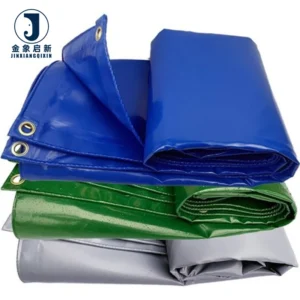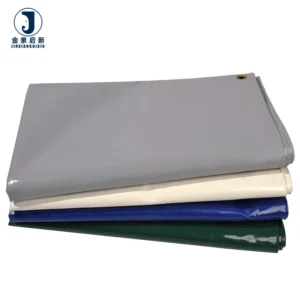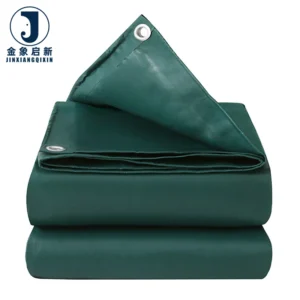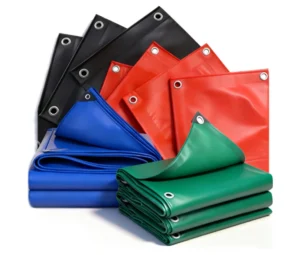
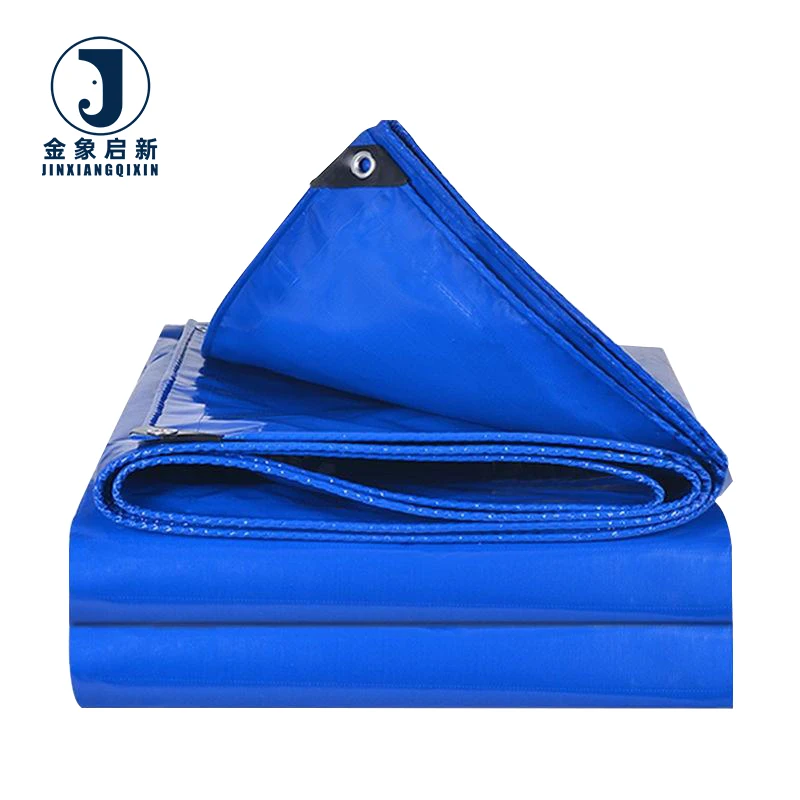
Coating Process Control — Every roll of PVC Coated Tarpaulin is produced under strict coating weight monitoring, ensuring the stated GSM matches the physical material received for truck cargo cover fabrication.
Technical Specifications
| Parameter | Value |
|---|---|
| Product Type | PVC Coated Tarpaulin |
| Coating Material | PVC (Knife Coated) |
| Weight Options | 700gsm / 850gsm / 900gsm |
| Base Fabric | High-tenacity polyester yarn |
| Waterproof | Yes, fully coated construction |
| Flame Retardant | Available (confirm grade required for your market) |
| Anti-Static | Available (test basis not stated) |
| Anti-Cold | Available |
| Anti-Mildew | Available |
| Weather Resistance | Suited for extended outdoor exposure |
Application Suitability
| Application | Exposure & Requirement |
|---|---|
| Truck Cargo Cover | Constant road vibration, UV exposure, wind flap, and tie-down tension at flex points |
| Flatbed Trailer Wrap | Abrasion from load contact, weather cycling, and frequent rolling/unrolling |
| Equipment Weather Shield | Prolonged static outdoor exposure, moisture, and dust ingress prevention |
| Side Curtain Fabric | Repeated flexing at folds, road spray, and lateral tension during transit |
Why Coating Weight Defines PVC Coated Tarpaulin Performance More Than Base Yarn Alone
The adhesion between coating and base fabric determines whether the material holds together at the weld line under load flex.
When technical buyers specify PVC coated tarpaulin for truck cargo covers, the focus often lands on base fabric denier while coating weight and adhesion method receive less scrutiny. In practice, a heavy base yarn with insufficient coating penetration fails at the seam before the fabric body tears. The PVC Coated Tarpaulin gsm coating technology directly governs how well the material resists delamination under repeated stress cycles [NEED_CITE: coating adhesion test methods per ISO 2411]. Without verified coating weight documentation, a quoted specification may arrive with adequate base fabric but insufficient PVC mass to protect the yarn from abrasion and moisture ingress.
How Knife Coating Affects Tensile Behaviour and Weld Integrity
The knife coating method forces PVC paste into the interstices of the polyester base fabric under controlled pressure and temperature. This process creates a mechanical lock between the coating and individual yarns, which directly influences the tensile performance of the finished PVC Coated Tarpaulin. When fabricators heat-weld seams for truck cargo covers, the coating must soften and fuse without exposing the base yarn to air. Consistent coating weight across the roll width ensures that weld parameters set on one section of the material produce the same bond strength on another, eliminating weak spots at panel joins.
Coating Thickness and Its Role in Long-Term Weather Exposure
Thicker PVC coating layers shield the base fabric from UV penetration and moisture that would otherwise degrade polyester yarns over time. The 700gsm, 850gsm, and 900gsm grades differ not only in total weight but in the volume of PVC protecting each yarn intersection. For truck cargo covers exposed to continuous sunlight and road spray, the outer coating layer absorbs and dissipates UV energy before it reaches the structural yarns [NEED_CITE: UV degradation mechanisms in PVC coated polyester]. Anti-UV and anti-mildew treatments are incorporated into the coating compound itself, meaning their effectiveness depends on sufficient coating mass being present to carry the additives through the service life.
Reading GSM in Context: Base Fabric Density and Coating Ratio
A stated GSM value alone does not reveal how much of the weight comes from base yarn versus PVC coating. Two PVC coated tarpaulin rolls at 850gsm can perform very differently if one uses a dense base fabric with thin coating and the other uses a lighter base with heavier coating. For truck cargo cover applications, the ideal balance favours sufficient coating to fully encapsulate the base yarn and support heat-welding, while maintaining a base fabric dense enough to resist tear propagation. Technical buyers should request a material specification sheet that breaks down base fabric denier, weave density, and coating weight separately to verify the construction matches the intended application.
The Hidden Cost of Undocumented Coating Weight
When coating weight is not verified before shipment, the material may arrive lighter than the quotation stated, leading to premature failure at stress points. Truck cargo covers fabricated from under-coated material show cracking along fold lines after repeated rolling, and weld seams separate under load tension [NEED_CITE: common failure modes in PVC coated truck tarps]. Batch-to-batch variation in coating weight also causes colour shifts between rolls, visible when panels are installed side by side on a trailer. These issues force fleet operators to replace covers far earlier than expected, adding unplanned procurement costs and vehicle downtime.
Why Procurement Teams Specify Through This Channel
Production runs on three dedicated coating lines allow consistent output of verified GSM grades across large orders. The ten-person R&D team develops custom treatment formulations for flame retardant and anti-static requirements when the target market demands documented compliance. Every roll undergoes in-process coating weight checks during production, not just a final spot check before dispatch. Sample development within days lets fabricators test weld parameters and confirm colour before committing to a bulk order. Pre-shipment inspection records include measured GSM values, providing traceability from the production line to the receiving warehouse.
Documentation & Verification
- Material specification sheet listing exact GSM, base fabric denier, and PVC coating weight for each roll produced.
- Test reports for flame retardant and anti-static treatments where grades have been confirmed and tested.
- Pre-shipment inspection record with measured weight verification against the quoted specification.
- ISO and CE certificates available to support compliance documentation in the destination market.
- Certificate of origin and customs documentation prepared for international shipment of coated fabric rolls.
Fabrication, Handling & Storage
- Heat-weld temperature and dwell time must match the specific GSM grade — 900gsm requires higher energy input than 700gsm for full seam fusion.
- Store rolls upright on pallets to prevent flat spots that cause visible creasing when the PVC coated tarpaulin is unrolled for fabrication.
- Allow cold-stored rolls to reach ambient temperature before unrolling to avoid cracking the PVC coating at the fold.
- Cut panels with consideration for coating direction to maintain consistent surface appearance across joined sections of the truck cargo cover.
- Use PVC-compatible cleaners only; solvent-based products can dissolve the coating surface and expose base yarn to moisture.
Preparing Your Material Specification Request
To ensure the correct grade is recommended, share the target market and any fire safety or anti-static compliance requirements that apply at the installation site. Specify whether the fabric will be fabricated in-house or if finished truck cargo covers are needed, along with the required roll width and estimated annual volume. Requesting a sample roll or swatch before bulk production allows your team to verify weld behaviour, colour consistency, and surface finish against your production standards.
Frequently Asked Questions
Q: How is the GSM of each roll verified before it ships?
A: Every roll is weighed and measured during pre-shipment inspection. The recorded GSM is compared against the specification stated on your order. A verification record accompanies the shipment so your receiving team can confirm the coating weight matches what was quoted, eliminating surprises at the warehouse.
Q: What documentation supports flame retardant claims?
A: Flame retardant grades are available for this PVC coated tarpaulin. When a specific grade is confirmed for your market, a test report documenting the classification is provided with the shipment. We recommend sharing your destination market requirements early so the correct grade is selected and tested before production begins.
Q: How does coating weight affect heat-welding performance?
A: Heavier coating grades like 900gsm require higher weld temperatures and longer dwell times than 700gsm to achieve full seam fusion. Consistent coating weight across the roll ensures uniform weld strength at every joint. We recommend running a test weld on a sample piece to calibrate your equipment before fabricating the full truck cargo cover.
Q: Can I verify colour consistency across multiple rolls in one order?
A: Yes. Colour variation between rolls is a common issue when coating batches are not controlled. Our production process maintains coating compound consistency within a single order. Requesting a sample before bulk production lets you approve the colour and finish, and pre-shipment inspection confirms that all rolls in the order match the approved reference.