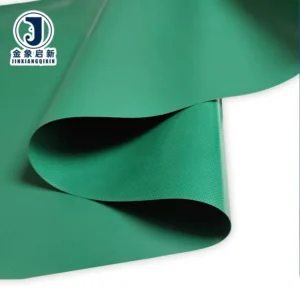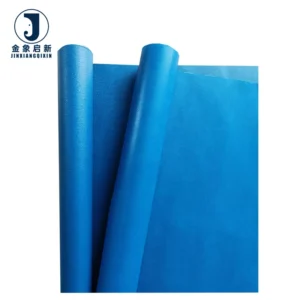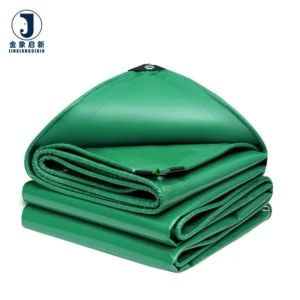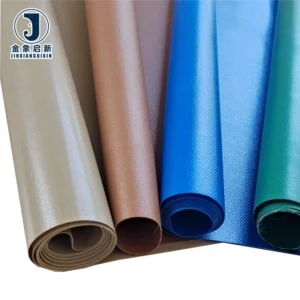
Precision Coating Control — every roll of Heavy Duty Fire Retardant Waterproof PVC Coated Tarpaulin Rolling Tarp Materials for Truck Cover Tents Outdoor Usage ships with a material specification sheet stating exact GSM, base fabric denier and coating weight, verified through 100% pre-shipment inspection.
Technical Specifications
| Parameter | Value |
|---|---|
| Product Type | PVC Coated Tarpaulin Roll |
| Weight (GSM) | 250gsm-1500gsm (range covers product family — confirm the grade for this item) |
| Base Fabric Denier | 200DX300D, 500DX500D, 840DX840D, 1000DX1000D |
| Finish | Glossy or matte |
| Surface Treatment | Waterproof, UV, flame retardant, anti-fungal |
| Flame Retardant Grade | (grade not stated in source — confirm the grade required for your market) |
| UV Treatment | Customized (test basis not stated — request test report for your specification) |
| Temperature Range | -15°C to 70°C |
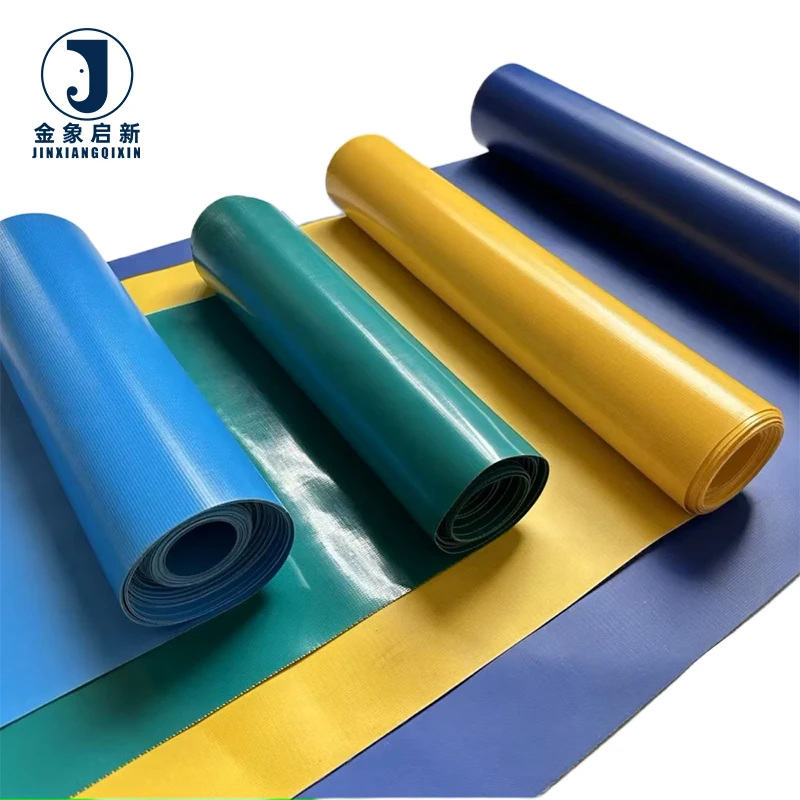
| Color Options | Blue, yellow, black, green, white, or custom colour |
| Size | 3x4m, 6x8m, 8x10m, 10x12m or custom made |
| Environment | Eco-friendly |
| Key Features | Water-proof, rain-resistant, tear resistant, durable, good flexibility, adhesion strength, abrasion resistance |
| Working Life | 3-10 years depending on different usage environment (source value — verify against manufacturer catalog) |
| OEM/ODM | Accepted |
| Certifications | ISO, CE |
Application Suitability
| Application | Exposure & Requirement |
|---|---|
| Truck side curtain and trailer cover | Constant flexing at load-bearing points, road spray, UV exposure, high-speed wind abrasion |
| Tent and awning production | Long-term sun exposure, rain load, repeated folding and unfolding, colour consistency across panels |
| Outdoor equipment and machinery cover | Standing water, dust ingress, UV degradation, physical abrasion from handling |
| Temporary construction enclosure | Wind load, debris impact, UV exposure, fire safety compliance on active sites |
| Pond and reservoir lining | Permanent water contact, soil chemistry, puncture risk from substrate |
What "Flame Retardant" Means Without a Certified Grade Behind It
A flame retardant claim without a stated test standard is a liability on any regulated job site.
Technical buyers specifying PVC coated tarpaulin roll for truck covers or site enclosures face a recurring problem: the quotation states "flame retardant," but the delivered roll arrives without a test report naming the standard or grade. When a site inspector or port authority asks for documentation, the fabricator cannot produce it, and the entire installation stalls. [NEED_CITE: fire safety classification requirements for temporary structures and transport covers]. I have seen projects delayed because the specified PVC coated tarpaulin roll material lacked the paperwork to prove compliance — even though the fabric itself may have been treated. The gap is not in the coating chemistry; it is in the verification chain from coating line to shipping container.
Base Fabric Denier and Coating Weight: How They Work Together
The performance of a PVC coated tarpaulin roll depends on two interlocking variables. The base fabric denier — available here from 200DX300D through 1000DX1000D — determines the tensile backbone and tear propagation resistance. The coating weight, ranging from 250gsm to 1500gsm, determines abrasion protection, waterproof integrity, and weld seam strength. A high denier with insufficient coating will tear at the weave under UV exposure, while a heavy coating over a light base fabric will crack at flex points. Fabricators matching PVC coated tarpaulin roll material to truck curtain or tent panel applications must balance both.
Glossy Versus Matte: More Than a Visual Choice
Surface finish affects downstream fabrication and field performance. A glossy surface sheds water and dirt more readily, making it practical for truck covers exposed to road grime and frequent washing. A matte surface reduces glare and provides better adhesion for printed branding or heat-transfer graphics used by tent manufacturers. Both finishes are available across the denier range, and the choice should align with the end-use environment and any secondary processing the roll will undergo before final installation. [NEED_CITE: effect of surface finish on heat welding parameters for PVC coated fabrics].
Reading the Specification Sheet: What Each Parameter Controls
Understanding the relationship between material parameters prevents specification errors. Base fabric denier and mesh count together determine how force distributes across the weave — a 1000DX1000D base provides substantially higher resistance to tear propagation than a 200DX300D, which matters when a truck side curtain catches crosswind at highway speed. Coating weight and the PVC formulation determine peel strength at welded seams; when a load flexes, the weld is often the first failure point if coating adhesion is inadequate. The stated temperature range of -15°C to 70°C defines the boundary where the PVC coating maintains flexibility without becoming brittle in cold transit or softening under direct summer sun. Anti-fungal treatment matters for rolls destined for tropical storage or agricultural covers where moisture and organic matter combine. Finally, the available glossy or matte finish influences not only cleaning behaviour but also the heat welding temperature window the fabricator must dial in.
The Cost of Skipping Batch-Level Verification
When roll-to-roll consistency is not verified before shipment, the consequences compound downstream. Colour variation between rolls in the same order becomes visible only once panels are installed side by side on a tent or truck curtain — at which point the entire run may need replacement. A GSM shortfall, where the delivered material is lighter than the quotation stated, reduces tensile capacity and shortens service life, but the failure may not appear for months. Flame retardant treatment claimed without a batch-specific test report leaves the fabricator exposed if a site audit demands documentation. [NEED_CITE: common failure modes in coated fabric installations traced to material inconsistency]. Welding parameters set for one coating weight may fail on a roll that arrived underweight, causing seam separation at the exact point where the load flexes most.
Why Technical Buyers Source This PVC Coated Tarpaulin Roll Here
Deep process control over coating weight and base fabric adhesion comes from nearly 30 years focused exclusively on coated fabric, which translates into roll stock where the GSM you specify is the GSM that ships. Three full production lines and 36 sets of professional equipment provide the capacity to run bulk orders while maintaining roll-to-roll consistency — critical when fabricators are cutting and welding multiple rolls into a single truck curtain or tent structure. A 10-person R&D team handles custom width, colour, and sample development, turning around samples within days so you can verify material behaviour before committing to a full container. Dedicated QA/QC at every production stage, with 100% inspection before shipment, catches colour drift and coating weight deviation before rolls are packed. The documentation package — material specification sheets, test reports where applicable, pre-shipment inspection records — accompanies every dispatch so your compliance file is complete on arrival.
Documentation & Verification
- Material specification sheet stating exact GSM, base fabric denier and coating weight per roll
- Test report for UV and flame retardant grades where applicable, naming the standard
- Pre-shipment inspection record confirming roll-to-roll colour and weight consistency
- ISO and CE certificates supporting import customs clearance
- Roll packing list with batch reference for traceability
- Certificate of origin for preferential tariff treatment
Fabrication, Handling & Storage
- Set heat welding temperature to match the specific coating weight and glossy or matte finish
- Allow coated rolls to acclimatise to workshop temperature before unrolling and cutting
- Store rolls upright on pallets to prevent flat-spot creasing on the PVC surface
- Use a compatible PVC adhesive for field repairs on tears or punctured sections
- Plan cutting layout across roll width to minimise off-cuts and welded seam count
- Clean glossy surfaces with mild detergent; avoid solvent-based cleaners that attack the coating
Specifying the Right Roll for Your Application
Tell us the end-use application, the environmental exposure your finished product will face, and any fire safety or regulatory grades required by your local market. Specify the base fabric denier and coating weight you need, along with preferred finish and colour references. If you are buying for a production run, provide your annual volume and whether you require custom width or pre-cut panels — we will confirm lead time and send a sample roll for your fabrication trial before the bulk order proceeds.
Frequently Asked Questions
Q: How is GSM verified on each roll before dispatch, and what documentation accompanies shipment?
A: Each roll undergoes weight verification against the quoted GSM during pre-shipment inspection. A material specification sheet travels with the shipment stating exact GSM, base fabric denier, and coating weight. The inspection record is included in the documentation package so you can cross-reference the delivered material against your purchase order.
Q: What flame retardant grade and test standard can be supplied with this PVC coated tarpaulin roll?
A: Flame retardant treatment is available across the product range. The specific grade and test standard depend on your market requirements — confirm which standard applies to your application, and we will supply the corresponding test report with your shipment documentation.
Q: How do you ensure colour consistency across multiple rolls within a single order?
A: Colour is controlled at the coating stage with reference samples checked under standardised lighting. Pre-shipment inspection compares rolls from the same batch side by side before packing. If your project requires panels installed adjacent to each other, request a colour consistency confirmation in your inspection record.
Q: What is the relationship between base fabric denier, GSM, and tear strength?
A: Base fabric denier determines the yarn thickness and weave density, which governs tear propagation resistance. GSM reflects the total weight including PVC coating. A high denier base with adequate coating weight delivers the highest combined tensile and tear performance. Request a sample to test the specific denier and GSM combination for your application.
Q: Can I receive a sample roll before placing a full production order?
A: Yes. Samples are developed within days for custom width, colour, or coating weight. This allows fabricators to run test welds, check colour match, and verify GSM before committing to bulk production. Include your target specification in your inquiry to accelerate sample turnaround.