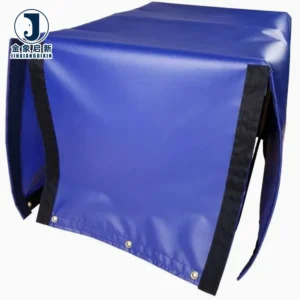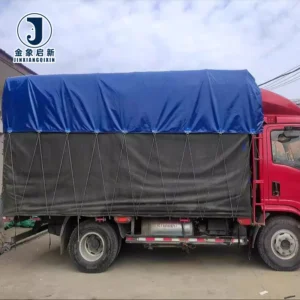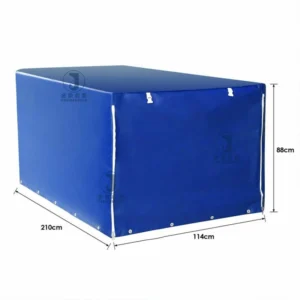
Hot-Melt Coating Precision — three full production lines with 36 sets of equipment controlling PVC adhesion weight to the polyester base at every stage.
Technical Specifications
| Parameter | Value |
|---|---|
| Product Type | PVC Truck Cover |
| Material | PVC + High-strength polyester mesh fabric |
| Coating Method | Laminated technology & Hot-melt Coating technology |
| Coating Material | PVC (double-sided) |
| Weight (GSM) | 350gsm / 420gsm / 500gsm / 550gsm / 600gsm / 750gsm |
| Total Thickness | 0.32mm / 0.35mm / 0.4mm / 0.45mm / 0.5mm / 0.65mm |
| Color Options | Blue / Red / Yellow / Light blue / Grey (Customized) |
| UV Treatment | UV treated material (test basis not stated in source) |
| Anti-Static | Anti-Static treatment (test basis not stated in source) |
| Flame Retardant | Available in flame retardant grades — confirm the grade required for your market |
| Tarpaulin Features | High tenacity polyester yarns, good flexibility, adhesion strength, outstanding tearing strength for welding, cold crack resistance, anti-mildew, waterproof, sunproof, color fastness |
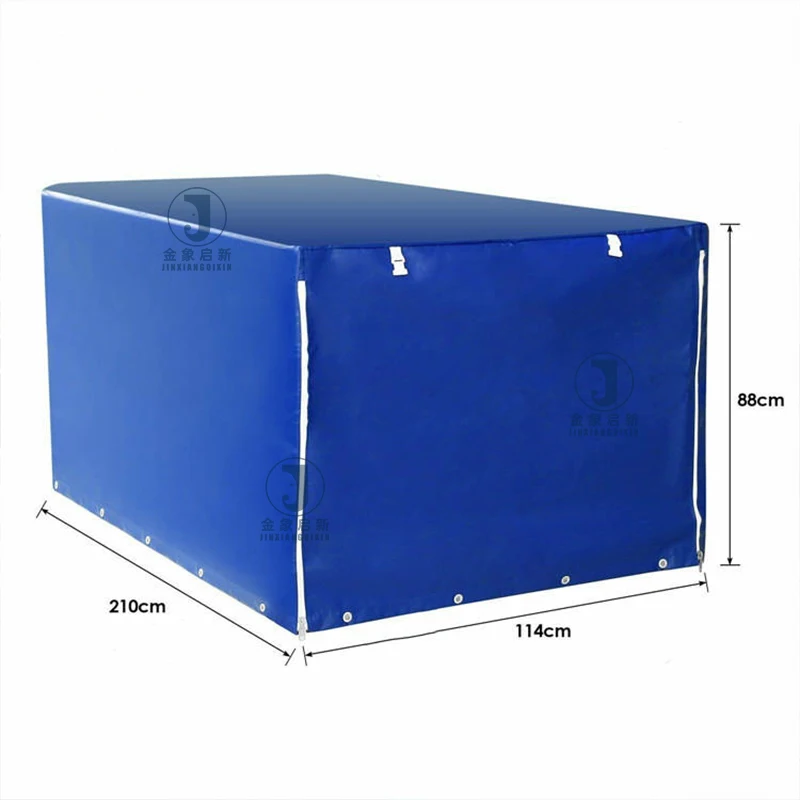
| Cover Construction | Hot welded hem at the bottom, eyelets, zipper, velcro as option |
| Finish Product Size | Custom items as per customer’s needs or sold by inventory |
| Service Life | 5-10 years under normal circumstances (source value — verify against manufacturer catalog) |
| Standards | ISO certified, CE certified |
Application Suitability
| Application | Exposure & Requirement |
|---|---|
| Truck and trailer side curtains | Constant flexing at highway speed, road abrasion, tie-down tension at hem and eyelet points, UV and rain exposure |
| Open-deck cargo covers | Direct sunlight, wind flap fatigue, mechanical abrasion from steel or machinery loads, dust and water ingress prevention |
| Tent and temporary structure fabric | Tension loading on frame joints, repeated fold-unfold cycles, UV degradation over extended outdoor deployment |
| Cargo ship deck covers | Salt spray exposure, heavy rain, wind-driven water pressure, UV and mildew in marine humidity |
| Fish tank and pond lining | Permanent water contact, hydrostatic pressure, biological growth resistance, puncture risk from substrate |
Why Coating Adhesion Matters More Than GSM for PVC Truck Cover Durability
A heavy-grade PVC coated tarpaulin that delaminates at the weld seam fails faster than a lighter fabric with strong coating-to-base adhesion.
Technical buyers often specify PVC Coated Tarpaulin by weight alone, assuming higher GSM guarantees longer service life. In practice, the failure point on most truck and trailer covers is the welded hem or seam junction, where the coating separates from the polyester base under repeated flexing [NEED_CITE: tensile and tear test methods for coated fabrics per ISO 1421]. This is an adhesion problem rooted in coating method and base fabric compatibility, not a weight problem. Hot-melt coating and lamination technology addresses this by bonding both PVC layers to the high-tenacity polyester mesh simultaneously, producing adhesion strength that allows the weld zone to share load with the parent fabric rather than peeling away at the first stress concentration.
Hot-Melt Coating and Lamination: How the Bond Is Built
The PVC Coated Tarpaulin in this range uses a dual-process approach combining laminated technology with hot-melt coating technology. The high-strength polyester mesh fabric is fed through the coating line where both sides receive PVC compound under controlled temperature and pressure. Hot-melt coating ensures the PVC penetrates the mesh structure rather than sitting on the surface, creating a mechanical lock in addition to the chemical bond. This dual adhesion mechanism is what gives the material its outstanding tearing strength for welding — the weld zone can transfer stress into the base fabric without the coating lifting.
Coating Weight Versus Total GSM: What the Specification Really Tells You
When the specification lists a PVC Coated Tarpaulin weight from 350gsm to 750gsm, that figure represents the combined mass of base fabric plus both PVC coating layers. The ratio between coating weight and base fabric denier determines how the material behaves during fabrication [NEED_CITE: relationship between coating weight and base fabric construction in PVC coated polyester]. A higher coating proportion improves waterproofing and surface abrasion resistance but can reduce flexibility at low temperatures. A higher base fabric proportion increases tensile and tear strength but demands more precise hot-air welding parameters to achieve full seam penetration. Selecting the correct grade means matching this ratio to the specific stress profile of the intended application.
Reading the Thickness and Weight Grades Against Your Application
The available grades span from 350gsm at 0.32mm through to 750gsm at 0.65mm. For light-duty trailer covers and temporary tent structures, the lower grades provide adequate waterproofing with the flexibility needed for frequent folding and handling. Mid-range grades around 500gsm to 550gsm suit standard truck side curtains where the fabric undergoes constant flexing and moderate abrasion from load contact. The heavier grades at 600gsm and 750gsm are intended for open-deck cargo protection and environments where mechanical damage from sharp-edged loads is the primary failure risk. Thickness correlates with puncture resistance, while weight reflects the total material investment in both coating and base fabric. Cold crack resistance and anti-mildew treatment are applied across the range, maintaining performance through temperature and humidity variations.
The Hidden Cost of Specifying on Weight Without Checking Adhesion
A PVC Coated Tarpaulin that meets the quoted GSM on arrival can still fail prematurely if the coating-to-base adhesion is insufficient for the welding method used in fabrication. When hot-air welding is applied to a material with weak interlayer bonding, the heat softens the PVC but the weld joint pulls the coating away from the mesh rather than fusing through it [NEED_CITE: weld seam failure modes in PVC coated polyester fabrics]. The result is a cover that passes incoming inspection but develops seam separation within the first months of road service. This failure pattern is often misdiagnosed as a weight or thickness problem, leading buyers to specify heavier grades at higher cost without addressing the underlying adhesion deficiency.
Why Material Buyers Source This PVC Coated Tarpaulin Here
Three full production lines and 36 sets of professional equipment support consistent coating weight control across every roll in a production batch. A 10-person R&D team handles material selection, sample development, and custom specification matching for technical buyers who need to confirm grade suitability before committing to volume. Dedicated QA/QC runs at every production stage with 100% inspection before shipment, so the GSM and thickness stated on the material specification sheet are the values that arrive at your receiving dock. Sample development is completed within days for custom requirements including width, colour, and treatment confirmation. Production capacity supports bulk roll orders with reliable on-time delivery for fleet procurement schedules.
Documentation & Verification
- Material specification sheet stating exact GSM, base fabric construction, and coating method for the selected grade
- Test reports for UV treatment and flame retardant grades where applicable, with stated standards referenced
- Pre-shipment inspection record confirming weight and thickness measurement against the quotation
- Roll packing list with batch reference for colour consistency traceability
- ISO and CE certificates confirming manufacturing management system compliance
- Certificate of origin and customs documentation for international shipment
Fabrication, Handling & Storage
- Hot-air welding temperature must match the PVC coating method — laminated and hot-melt coated grades respond differently to heat input at the weld zone
- Eyelet placement should align with the high-tenacity polyester mesh weave direction to distribute tie-down load through the base fabric rather than the coating layer
- Store rolls upright on end cores to prevent flat-spotting and permanent creasing in the 0.32mm to 0.65mm thickness range
- Allow cold-stored rolls to reach ambient temperature before unrolling to preserve cold crack resistance properties
- Clean with mild detergent only — solvent-based cleaners can attack the double-sided PVC coating surface and degrade color fastness
- Plan cutting layout to minimize transverse welds across the fabric width, concentrating seams along the lower-stress longitudinal direction
How to Structure Your PVC Coated Tarpaulin Inquiry
Specify the application environment and the primary stress factors your covers will face — highway flexing, load abrasion, or static water containment each point to a different grade. Confirm whether your market requires documented flame retardant or anti-static compliance and which standard applies. Indicate the roll width and annual volume you need, along with any colour matching or printed branding requirements across multiple production batches.
Frequently Asked Questions
Q: How is GSM verified on arrival and what tolerance applies to the quoted weight?
A: Each roll is measured during pre-shipment inspection against the material specification sheet. We provide an inspection record documenting the actual GSM reading per roll. If your receiving procedure requires independent verification, we can supply sample swatches from the production batch for your own lab testing against ISO 1421 methods.
Q: What is the relationship between GSM, coating weight, and tensile strength in this PVC coated tarpaulin?
A: Total GSM includes both the high-strength polyester mesh base and the double-sided PVC coating. Tensile and tear strength depend primarily on the base fabric denier and weave density, while coating weight governs surface abrasion resistance and waterproofing. The hot-melt coating and lamination process ensures both layers contribute to structural performance rather than acting independently.
Q: What UV test basis supports the anti-UV claim and how does it relate to outdoor service life?
A: The material is UV treated at the coating stage. The specific test standard and exposure duration depend on the grade selected and the destination market requirements. We recommend confirming the UV test basis applicable to your region before ordering, and we provide test documentation where the grade carries a verified rating.
Q: Hot-air welding versus sewing — which joining method suits this PVC coated tarpaulin at flex points?
A: Hot-air welding is the recommended method for this double-sided PVC coated polyester. The material’s outstanding tearing strength for welding allows the weld zone to carry load through the fused coating layers. Sewing punctures the base fabric and creates needle holes that can propagate tears under repeated flexing, making welding the preferred approach for truck cover stress points.
Q: How is batch colour consistency controlled across multiple rolls in the same order?
A: Colour is set at the coating compounding stage with reference to a confirmed colour standard. Rolls within the same production batch are inspected side by side during 100% pre-shipment inspection for visible variation. For fleet orders where multiple covers are installed adjacent to each other, we recommend specifying all required rolls in a single production run.