Coating Precision — Every roll of PVC coated inflatable tent fabric we ship is backed by batch-specific weight verification against the stated GSM, ensuring the material you spec is the material you receive.
Technical Specifications
| Parameter | Value |
|---|---|
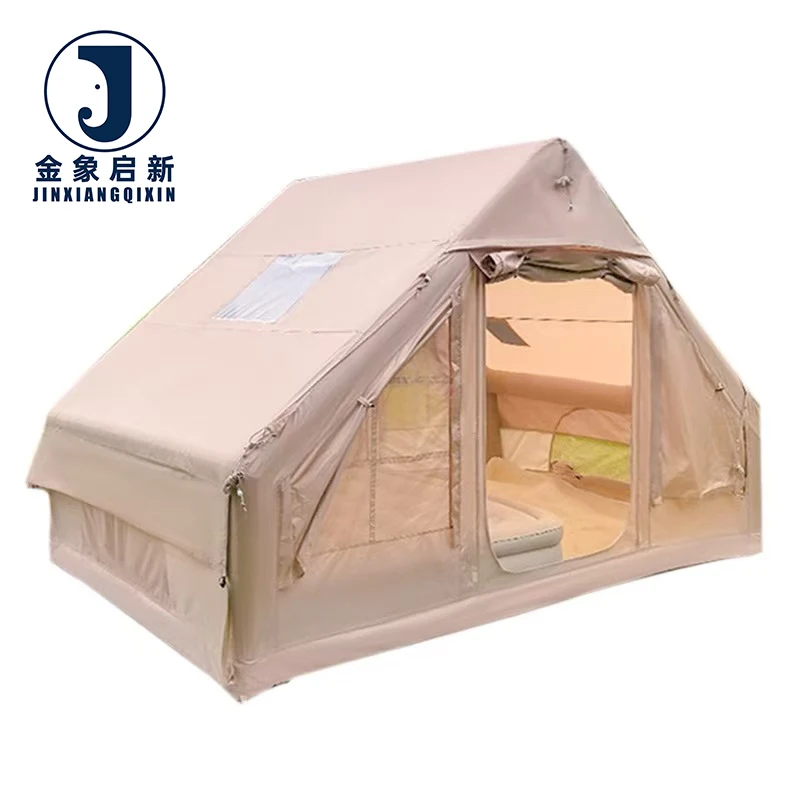
| Product Type | Inflatable Tent |
| Core Material | PVC Coated Fabric |
| Key Performance | Waterproof, UV-resistant, Tear-resistant |
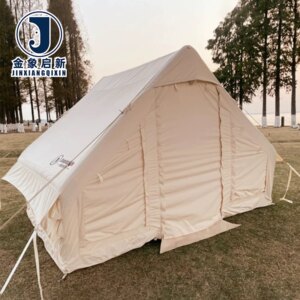
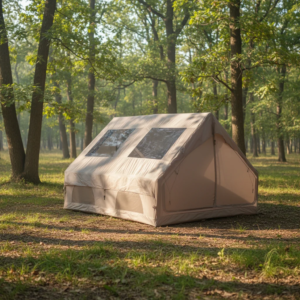
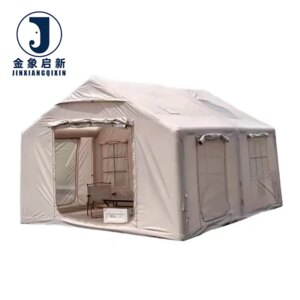
| Product Forms | 1-2 Person Quick Automatic Opening Inflatable Structure |
| Construction | Single layer |
| Waterproof Rating | ≥10,000mm water column (test basis not stated in source) |
| UV Resistance | 4000 hours accelerated aging (source value — verify against manufacturer catalog) |
| Tear Strength | ≥300N (testing standard not stated in source) |
| Automatic Opening Mechanism Durability | 500+ deployment cycles (source value — verify against manufacturer catalog) |
| Customization Options | Custom sizing (up to 5m length), color matching (Pantone codes), logo printing, modified opening mechanisms |
| Standards | ISO9001, ISO14001, ISO45001, CE |
Application Suitability
| Application | Exposure & Requirement |
|---|---|
| Temporary site offices at construction projects | Constant UV exposure, wind loading, daily inflation cycles, dust and debris impact |
| Equipment storage shelters for logistics operations | Rain and ground moisture ingress, forklift proximity abrasion, long-term UV degradation |
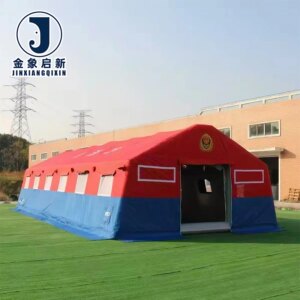
| Mobile command posts for industrial events | Rapid deployment demands, high public visibility requiring clean appearance, repeated setup cycles |
| Emergency outdoor deployment | Unpredictable weather including heavy rain and strong winds, need for immediate structural integrity |
Why "Waterproof" Is Meaningless Without a Test Certificate
Every batch of our Inflatable Tent Fabric ships with documented waterproof and UV performance data, not just a claim on the quotation.
Technical buyers and fabricators often receive inflatable tent fabric that states a waterproof rating but provides no test certificate to back it up. When the material is exposed to sustained rainfall or high internal pressure from air beams, the difference between a verified rating and an unsupported claim becomes a failed seam or a collapsed structure. We see this repeatedly on projects where the fabricator assumed the supplier’s general statement covered the specific batch delivered [NEED_CITE: tensile and tear test methods for coated fabrics per ISO 1421]. Sourcing PVC coated inflatable tent fabric requires confirming that the test results correspond to the rolls in your shipment, not just a generic laboratory sample from years prior.
Coating Weight and Air-Holding Integrity for Inflatable Structures
The PVC coating formulation and its bond to the base fabric are what allow an inflatable tent to maintain internal pressure without micro-leaks developing at the weld lines. Our Inflatable Tent Fabric is coated to achieve consistent weight distribution across the full width, which is critical when the fabric is cut and welded into air beam channels. Any variance in coating thickness creates weak points that manifest as slow deflation under continuous load.
Heat-Welding Compatibility and Seam Strength
Inflatable tent structures place continuous stress on welded seams, especially at junctions where air beams connect to the main canopy. This Inflatable Tent Fabric is engineered for stable heat-welding parameters, allowing fabricators to establish repeatable temperature and dwell time settings across production runs. Consistent weld quality is verified through our 7-stage inspection process, which includes seam integrity testing and pressure retention analysis on fabricated samples [NEED_CITE: welding standards for PVC coated technical textiles].
Interpreting the Specification Data
The waterproof rating of ≥10,000mm water column indicates the fabric can withstand sustained hydrostatic pressure, which matters for inflatable tent floors and lower panels that contact wet ground or pooled water. The tear strength of ≥300N (testing standard not stated in source) reflects resistance to tear propagation once the fabric is punctured or nicked during deployment on rough terrain. UV resistance, cited at 4000 hours accelerated aging, suggests the PVC coating formulation includes stabilisers that slow degradation under direct sunlight — though fabricators should confirm the specific test protocol to correlate this figure with expected service life in their target climate. The four-season design rating means the fabric maintains flexibility and coating adhesion across a broad temperature range, resisting brittle failure in cold conditions and softening in high heat.
The Cost of Specifying on Marketing Claims Alone
When a buyer selects inflatable tent fabric based on a quotation that lists features without test certificates, the financial exposure goes far beyond the material cost. A batch that fails UV testing mid-season forces a fabricator to honour warranty claims on installed units, source replacement fabric on an emergency basis, and absorb the production downtime. Colour variation between rolls in the same order becomes visible only after the fabric is welded and erected side by side, making the entire installation look inconsistent and triggering client rejection [NEED_CITE: ISO 9001 quality management requirements for batch consistency]. These are not theoretical risks — they are documented failure modes that surface on every project where verification was deferred to the supplier’s general reputation rather than batch-specific documentation.
Why Fabricators Source This Inflatable Tent Fabric From Us
Our 10-person R&D team handles material selection and sample development specifically for inflatable structure applications, so you receive a fabric specification matched to your beam pressure and deployment cycle requirements. Three full production lines and 36 sets of professional equipment give us the capacity to deliver consistent Inflatable Tent Fabric across multiple container loads without mid-run coating variances. Every roll passes a 7-stage inspection covering raw material testing, cut precision, seam integrity, pressure retention, hardware function, final dimension, and packaging — meaning fabricated units leave our facility with known, verified properties. We develop custom samples within a typical multi-week timeframe for sized and printed variants, allowing you to validate weld parameters and colour accuracy before committing to production volume. Documentation including material specification sheets, batch-specific test reports, and pre-shipment inspection records ships with every order, giving your QA team the data they need without a separate request cycle.
Documentation & Verification
- Material specification sheet stating GSM, base fabric denier, coating method and coating weight per roll
- Batch-specific quality certificate with waterproof, UV resistance, and tear strength test results
- ISO9001, ISO14001, ISO45001, and CE certificates referenced per shipment for compliance audits
- Pre-shipment inspection record covering all seven QA/QC stages with pass/fail notation
- Certificate of origin and customs support documentation for cross-border freight clearance
Fabrication, Handling & Storage
- Heat-welding temperature and dwell time should be calibrated to the specific PVC coating weight and verified with peel tests on waste pieces from the same roll.
- Store rolls vertically in a climate-controlled warehouse to prevent permanent creasing of the PVC coated surface under sustained horizontal compression.
- Inflate fabricated test units to full operating pressure and hold for minimum 24 hours to confirm weld integrity before releasing the batch to production.
- Use PVC-compatible cleaning agents only; solvent-based products can compromise the coating adhesion and reduce waterproof performance at treated surfaces.
- When cutting panels for custom sizing up to 5m length, nest patterns to maximise yield and minimise offcut waste from the standard roll width.
Requesting a Quotation
To receive an accurate specification and lead time for your Inflatable Tent Fabric requirement, please provide the target inflation pressure of your air beam design, the intended deployment climate and UV exposure expectation, and any Pantone colour references or logo artwork for printing. If your project requires fire-retardant certification for a specific market standard, state the grade and test method so we can confirm availability against your delivery schedule.
Frequently Asked Questions
Q: How does the UV accelerated aging figure translate to real outdoor service life?
A: The 4000-hour accelerated aging value is a laboratory benchmark for comparing coating formulations, not a direct year-for-year outdoor guarantee. Actual service life depends on latitude, altitude, reflective surfaces, and seasonal deployment patterns. Request the specific test protocol used for your batch so your engineering team can model degradation against your target environment.
Q: What is the relationship between coating weight and tear strength for inflatable structures?
A: Coating weight contributes to overall fabric mass and surface protection, but tear strength is primarily governed by the base fabric denier and weave density. Our Inflatable Tent Fabric tear performance of ≥300N reflects the combined specification of base fabric and coating. The material specification sheet we provide lists both parameters independently for your structural calculations.
Q: How do you handle batch-to-batch colour consistency for custom Pantone orders?
A: We match custom colours to Pantone references using controlled spectrophotometer readings at multiple points across each production roll. A batch consistency check is performed during our 7-stage inspection before dispatch. For large orders spanning multiple production runs, we retain sealed reference samples to align subsequent batches with the original approval standard.
Q: What is the typical lead time for custom-sized inflatable tent fabric rolls?
A: Standard orders typically ship within a 15-day turnaround from order confirmation. Customized samples involving non-standard sizing up to 5m length, specific Pantone colours, or logo printing require a longer development and approval cycle, generally around 30 days before bulk production can commence against the approved sample.
Q: Do you supply the fabric only, or can you provide fabricated inflatable tent units?
A: Our core supply is PVC coated fabric in roll form for fabricators and tent manufacturers to cut and weld in their own facilities. We also offer OEM and ODM services including sample customization and finished unit fabrication. Confirm your requirement at inquiry stage so we route your specification to the appropriate production line and documentation package.