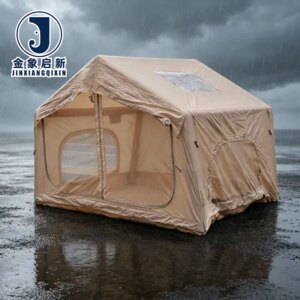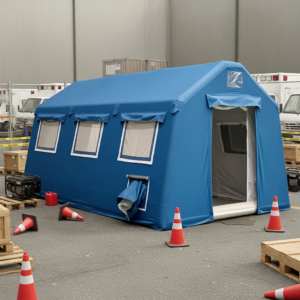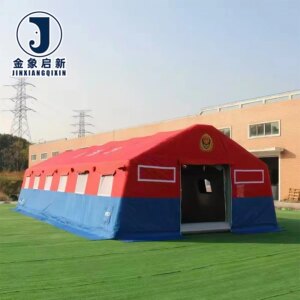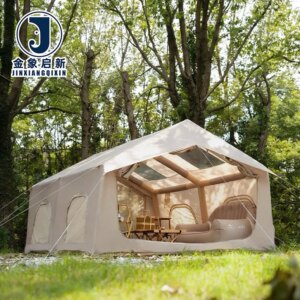
Proven Process Control — Every roll of 420D Oxford fabric undergoes coating weight verification at each stage, ensuring the material you receive matches the specification on your purchase order.
Technical Specifications
| Parameter | Value |
|---|---|
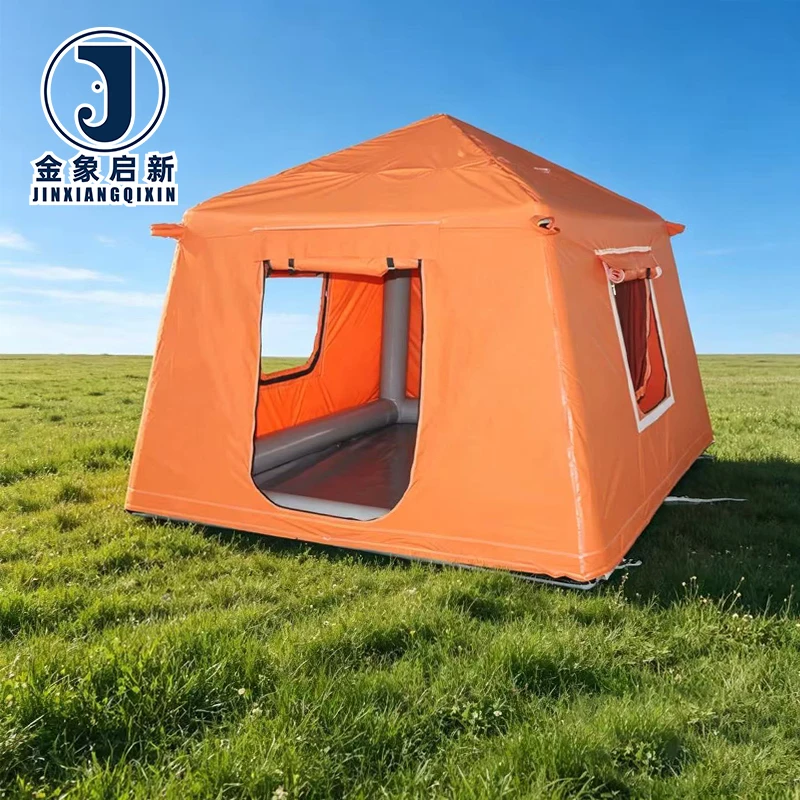
| Product Type | Inflatable Tent |
| Core Material | 420D Oxford |
| Capacity | 5-8 Person |
| Season Suitability | 4-Season |
| Opening Mechanism | Quick Automatic Opening |
| Construction Type | Single Layer |
| Design Type | Extended Type |
| Customization Service | OEM & ODM (Sample customization, pattern printing) |
| Production Facility Area | 9,180 square meters |
| Production Lines | 3 full production lines |
| Processing Equipment | 36 sets of professional processing equipment |
| R&D Team Scale | 10 technicians |
| Quality Control System | Strict full-process quality inspection with dedicated QA & QC staff |
| Certifications | ISO9001, ISO14001, ISO45001, CE |
Application Suitability
| Application | Exposure & Requirement |
|---|---|
| Emergency disaster relief temporary shelters | Rapid deployment under unpredictable weather, structural stability during inflation cycles, resistance to repeated packing and unfolding |
| Construction site mobile facilities | Abrasive particulate contact, prolonged sun exposure, mechanical stress from wind loading on inflatable frames |
| Industrial logistics temporary storage structures | Heavy equipment proximity, ground moisture exposure, frequent relocation and re-inflation demands |
Why Denier Specification Alone Misleads Inflatable Tent Fabric Buyers
A 420D rating tells you the yarn weight per 9,000 meters, not the finished fabric strength.
Procurement teams regularly specify inflatable tent fabric by denier alone, then discover the material tears at the seam under inflation pressure or degrades after a single season of UV exposure. Denier describes the base yarn thickness, but the coating formulation, weave density, and lamination process collectively determine how the fabric performs when pressurized air pushes outward on every welded joint [NEED_CITE: relationship between denier, weave density and tensile strength in coated technical textiles]. Without reviewing the full material specification sheet, buyers risk deploying shelters that fail precisely when conditions demand reliability.
Base Fabric Construction and Air-Frame Compatibility
The 420D Oxford base fabric used in this inflatable tent provides a balance between portability and puncture resistance. Inflatable tent fabric must maintain dimensional stability when internal air pressure stretches the material across structural beams. A single-layer construction keeps overall weight manageable for rapid deployment scenarios where response teams carry equipment over distance. The extended type design adds internal volume without increasing the number of inflation points, reducing potential leak paths.
Coating Adhesion and Weld Integrity Under Pressure
When inflatable tent fabric is heat-welded at seam intersections, the coating must bond to itself without delaminating under cyclic pressure changes. The single-layer construction means every weld carries the full inflation load with no backup fabric sharing the stress. Material selection for inflatable structures therefore prioritizes coating-to-coating adhesion strength alongside base fabric tear resistance [NEED_CITE: heat welding performance criteria for single-layer inflatable structure fabrics]. Quick automatic opening mechanisms place sudden peak loads on weld points during initial inflation.
Understanding How 420D Oxford Translates to Field Performance
The 420D specification refers to the mass in grams of 9,000 meters of the base yarn. In Oxford weave constructions, this denier typically pairs with a basket weave pattern that distributes load across multiple warp and weft intersections. For inflatable tent applications, this weave structure helps resist tear propagation when the fabric is punctured or abraded at ground contact points. The single-layer approach avoids the delamination risk present in multi-layer laminates, though it also means thermal insulation depends entirely on the air gap within the inflatable frame rather than fabric thickness. Season suitability rated to 4-season indicates the material maintains flexibility across a broad temperature range without becoming brittle in cold conditions or excessively soft in heat [NEED_CITE: temperature-dependent flexibility thresholds for coated Oxford fabrics].
The Hidden Cost of Underspecified Inflatable Structure Fabric
When inflatable tent fabric is sourced without verifying coating adhesion values or tear test results, failures concentrate at predictable locations: welded corners where inflation stress peaks, ground-contact zones where abrasion wears through the coating, and fold lines where repeated packing creates micro-cracks. Emergency relief organizations discover these weaknesses during actual deployment rather than pre-purchase testing, because batch-level variation in coating weight can shift fabric behavior even when the denier specification remains constant [NEED_CITE: common failure modes in inflatable emergency shelter fabrics during field deployment]. Construction crews face similar issues when temporary site shelters deflate unexpectedly due to seam separation under wind load.
Why Technical Buyers Source Inflatable Tent Fabric Here
Three full production lines and 36 sets of processing equipment allow batch-to-batch consistency that field deployment demands. The 10-technician R&D team develops custom sample runs so buyers can validate inflation performance before committing to volume orders. Full-process quality inspection with dedicated QA and QC staff catches coating weight deviations before rolls ship. OEM and ODM customization includes sample production and pattern printing, so branding or identification markings integrate into the fabric rather than being applied as secondary labels. ISO9001, ISO14001, ISO45001, and CE certifications document the management systems behind production control.
Documentation & Verification
- Material specification sheet confirming 420D Oxford composition and coating type per batch
- Batch-specific mechanical property test reports validating tensile and tear values
- Pre-shipment inspection record verifying roll dimensions and visual quality
- ISO9001, ISO14001, ISO45001, and CE compliance certificates included with shipment
- Certificate of origin and customs documentation for cross-border procurement
Fabrication, Handling & Storage
- Heat-weld single-layer 420D Oxford using temperature profiles matched to the coating formulation to prevent delamination at inflation stress points
- Reinforce ground-contact edges with additional fabric strips to distribute abrasion load beyond the single-layer construction
- Store rolled inflatable tent fabric upright on core tubes to prevent permanent creasing that weakens coating adhesion
- Avoid folding at identical points across packing cycles to distribute flex fatigue across the 420D Oxford weave
- Clean with neutral pH solutions to preserve coating integrity without degrading the Oxford base fabric surface
What We Need to Prepare Your Quotation
Provide the deployment environment details including expected temperature range, wind loading conditions, and ground surface type. Confirm whether your market requires specific fire classification or UV treatment test documentation for regulatory compliance. Specify the quantity range and whether you need raw fabric rolls or finished inflatable tent units with custom dimensions and printing.
Frequently Asked Questions
Q: How do you verify the 420D denier specification and tensile strength of each production batch?
A: Each batch of 420D Oxford undergoes base fabric sampling before coating begins. We test yarn count per unit length to confirm denier compliance and run tensile strength checks on finished coated fabric. Results are documented in a batch-specific test report that accompanies your shipment, allowing your receiving team to cross-reference performance values against your project requirements.
Q: What is the difference between single-layer and multi-layer construction for inflatable tent structures?
A: Single-layer inflatable tent fabric eliminates the delamination risk inherent in bonded multi-layer constructions, because there is no adhesive interface between fabric plies to separate under cyclic inflation pressure. The trade-off is that thermal performance relies on the air-frame design rather than fabric insulation. Single-layer construction also reduces packed weight, which matters for emergency response teams carrying shelters to deployment sites.
Q: Is UV treatment applied to the 420D Oxford fabric, and what test basis supports outdoor exposure claims?
A: UV treatment is available for 420D Oxford inflatable tent fabric — confirm the specific UV stabilizer grade and test standard required for your deployment region. Different markets reference different exposure test protocols, and we provide test reports matched to the standard your project specifies. Request a sample with the intended UV treatment level to validate color retention and tensile retention after exposure.
Q: How do welded seams perform at inflation stress points on single-layer 420D Oxford?
A: Weld integrity on single-layer inflatable tent fabric depends on coating compatibility with heat-welding parameters. We test seam peel strength on production samples to confirm the weld holds under inflation pressure without the coating separating from the base fabric. Buyers specifying inflatable structures should request weld test data alongside material specifications to verify performance at corners and beam junctions where stress concentrates.
Q: How do you maintain batch-to-batch consistency across large-scale inflatable tent deployments?
A: Consistency starts with controlled raw material sourcing for 420D Oxford base fabric and extends through coating weight verification at each production stage. Our dedicated QA and QC staff inspect every roll before shipment, comparing measured values against your approved sample specifications. For large deployment projects requiring multiple production runs, we retain reference samples from the initial approved batch to ensure subsequent deliveries match in weight, color, and mechanical performance.