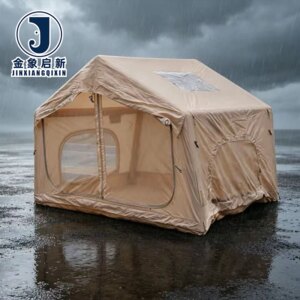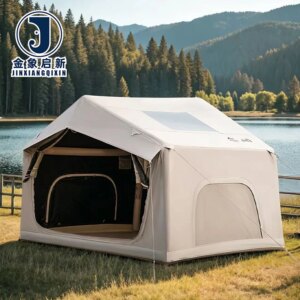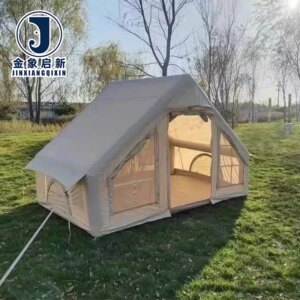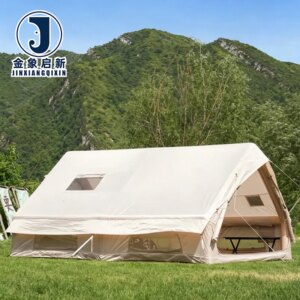
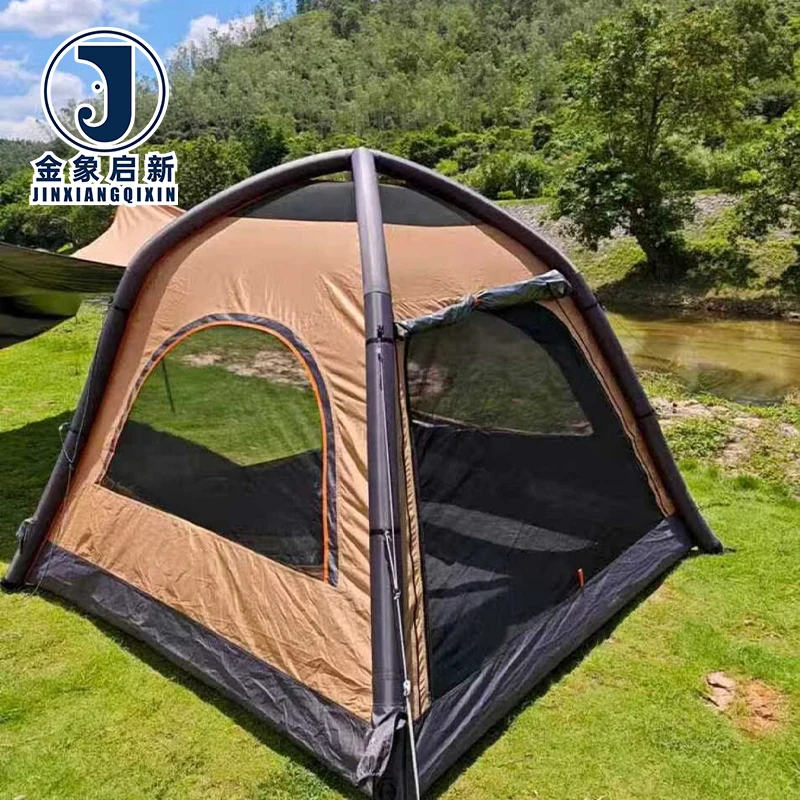
Proven Coating Expertise — Nearly three decades focused on PVC formulation and adhesion control delivers verified waterproof and fire-retardant performance for inflatable emergency shelter fabrics.
Technical Specifications
| Parameter | Value |
|---|---|
| Product Type | PVC Tent |
| Core Material | PVC Tarpaulin |
| Capacity | 8-10 Person |
| Season Rating | 4 Season |
| Waterproof Rating | Hydrostatic head ≥ 5000mm |
| Tensile Strength | ≥ 3000N/5cm |
| Fire-Retardant Standard | EN 13501-1 |
| Anti-Static | Stated (surface resistance to be confirmed per batch) |
| UV Treatment | UV-resistant (test basis available on request) |
| Tear Resistance | Stated (test method available on request) |
| Fabric Thickness Tolerance | ±0.1mm |
| Customization | OEM & ODM, sample customization, pattern printing |
Application Suitability
| Application | Exposure & Requirement |
|---|---|
| Disaster relief emergency shelters | Rapid deployment, continuous weather exposure, need for certified fire-retardant materials in populated encampments |
| Temporary industrial command centers | High foot traffic, equipment movement, requirement for structural airtightness and interior climate separation |
| Mobile logistics coordination hubs | Frequent inflation/deflation cycles, transport abrasion, demand for consistent fabric tension under air pressure |
| Equipment storage during infrastructure projects | Prolonged UV and rain exposure, puncture risk from stored machinery, need for flame-retardant compliance on active sites |
| Temporary personnel accommodation | Four-season thermal variation, occupant safety regulations, sustained internal pressure requiring reliable seam integrity |
Why "Flame Retardant" Claims Fail Site Inspection Without EN 13501-1 Documentation
Every batch ships with test reports confirming EN 13501-1 classification, not just a marketing claim.
Purchasing PVC inflatable tent fabric with an unverified fire-retardant statement creates immediate problems when site safety officers demand documentation. Inflatable structures used for disaster relief and industrial command centers fall under temporary building regulations in most jurisdictions, and inspectors reject shelters without traceable test data. A missing certificate can stall an entire relief operation or shut down a project site until compliant material arrives [NEED_CITE: EN 13501-1 classification requirements for temporary structures in European and North American markets]. The cost of replacement fabric and delayed deployment far exceeds the initial savings on an undocumented batch.
Coating Formulation Engineered for Sustained Air Pressure
Inflatable tent structures place continuous stress on the PVC inflatable tent fabric as internal air pressure pushes against every seam and panel. The coating must maintain adhesion to the base fabric under this constant load, particularly at welded joints where flexing concentrates during inflation cycles. Our PVC formulation is developed specifically for inflatable structure applications, with coating weight and adhesion parameters set to handle the mechanical demands of pressurized shelters. The 10-person R&D team adjusts formulation variables based on the intended shelter size and operating pressure range.
Waterproof Performance Documented per Production Batch
A hydrostatic head rating of ≥ 5000mm means the fabric resists water penetration under significant pressure, critical for shelters deployed in heavy rain or snow-melt conditions. Rather than relying on a single initial test, waterproof performance is verified through batch-specific inspection protocols before dispatch. This approach catches coating inconsistencies that could allow water ingress at panel seams or around valve mounting points [NEED_CITE: hydrostatic head test methods for coated technical textiles]. Each shipment includes a quality inspection record tying the waterproof data to the specific rolls or finished units in that order.
How Tensile Strength and Thickness Tolerance Affect Shelter Performance
The ≥ 3000N/5cm tensile strength reading reflects the combined contribution of the base fabric weave and the PVC coating weight. A high-tenacity polyester base provides the structural skeleton, while the coating fills the weave interstices and adds surface protection. Fabric thickness held within ±0.1mm tolerance ensures uniform behavior during heat welding — panels of consistent thickness produce welds with even melt depth and predictable peel strength. Thickness variation beyond this tolerance leads to welds that are either under-fused on thinner sections or scorched on thicker ones, creating failure points that emerge when the shelter is pressurized. UV-resistant treatment and flame-retardant additives are incorporated into the coating compound, so their distribution depends on consistent coating application across the full roll width.
The Hidden Cost of Specifying Inflatable Tent Fabric by Price Alone
Shelters built from fabric with inconsistent coating weight develop pinhole leaks within the first deployment season, forcing field repairs that compromise airtightness. Fire-retardant additives that are under-dosed to reduce material cost will not achieve EN 13501-1 classification when tested independently, exposing the buyer to compliance liability. Batch-to-batch colour variation across panels of the same shelter becomes visible once the structure is inflated and sunlight passes through at grazing angles [NEED_CITE: common failure modes in PVC inflatable structures from material inconsistency]. These defects typically surface after the shelter has been shipped to a disaster zone or remote project site, where replacement lead times are measured in weeks rather than days.
Why Technical Buyers Source Inflatable Structure Fabric Here
Three full production lines and 36 sets of professional coating equipment provide capacity for large-volume emergency shelter orders without sacrificing lead time reliability. The 10-person R&D team develops custom fabric formulations and pattern printing prototypes within days, allowing buyers to evaluate material behavior before committing to full production. Dedicated QA/QC stations at each production stage — from base fabric inspection through coating application, curing, and final winding — catch defects before they reach the finished roll. Every unit undergoes a 24-hour airtight pressure test before shipment, verifying that seams and valve interfaces hold under sustained inflation. ISO9001, ISO14001, ISO45001, and CE documentation accompanies each order, providing the traceability that government procurement and international relief agencies require.
Documentation & Verification
- Batch-specific inspection report detailing hydrostatic head, tensile strength, and EN 13501-1 classification results
- Material specification sheet stating PVC coating composition, base fabric construction, and treatment grades
- ISO9001, ISO14001, ISO45001, and CE certificates included with each shipment
- 24-hour airtight pressure test record for every inflatable unit before dispatch
- Pre-shipment inspection record with roll-level traceability for fabric orders
Fabrication, Handling & Storage
- Heat welding temperature must be calibrated to the ±0.1mm thickness tolerance to avoid under-fused or scorched seams on PVC tarpaulin panels
- Store PVC inflatable tent fabric rolls upright on end caps to prevent flat-spot deformation across the coating surface
- Avoid dragging finished shelter panels across abrasive ground during deployment to protect the PVC coating layer
- Clean with mild detergent only — solvents degrade the fire-retardant and UV-resistant additives in the PVC compound
- Allow cold-stored fabric to reach ambient temperature before unfolding to prevent coating micro-cracking at fold lines
What to Include in Your Inquiry
Provide the intended shelter dimensions and operating pressure range so we can recommend the appropriate base fabric denier and coating weight for your PVC inflatable tent fabric requirement. Specify the fire-retardant classification and anti-static performance level mandated by your target market’s regulations for temporary structures. Indicate whether you require finished shelter units with welded seams and valve installations, or roll stock for in-house fabrication, along with estimated annual volume and colour or printing specifications.
Frequently Asked Questions
Q: What fire-retardant grade does the fabric meet and how is it verified per batch?
A: The PVC inflatable tent fabric meets EN 13501-1 fire-retardant classification. Each production batch is tested and ships with a specific inspection report documenting the classification result. Third-party laboratory testing can be arranged for projects requiring additional certification. Confirm the exact grade required by your local building authority for temporary structures.
Q: How is the waterproof rating tested and documented?
A: Hydrostatic head performance of ≥ 5000mm is verified through standardized testing on each production batch. The test result is recorded on the batch-specific quality inspection report that accompanies your shipment. This ensures the waterproof data corresponds to the actual material in your order rather than a historical sample.
Q: What OEM/ODM customization options are available for inflatable tent fabric?
A: Customization includes fabric dimensions, thickness specifications, colour matching, and pattern printing through our OEM and ODM capability. The R&D team develops samples within days for evaluation before full production begins. Provide your shelter design drawings or performance requirements to initiate the sample development process.
Q: How is fabric thickness consistency maintained across large-volume orders?
A: In-line QA/QC monitoring holds fabric thickness within ±0.1mm tolerance throughout production. This consistency is critical for reliable heat welding of inflatable tent panels. Inspection records document thickness measurements per roll, ensuring uniform material behavior during your fabrication process.
Q: What compliance documentation is provided for export to European and North American markets?
A: Each shipment includes ISO9001, ISO14001, ISO45001, and CE certificates along with batch-specific test reports for fire retardancy and waterproof performance. Material specification sheets and certificates of origin are provided for customs clearance. Additional documentation for specific market requirements can be discussed during the inquiry stage.