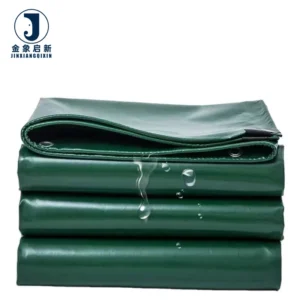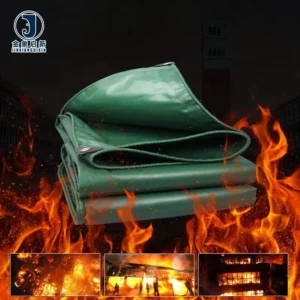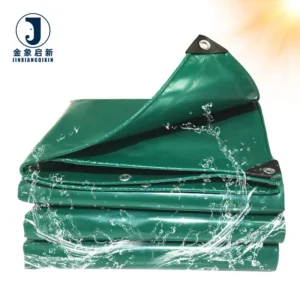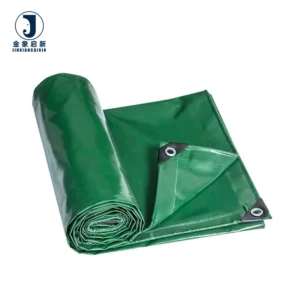
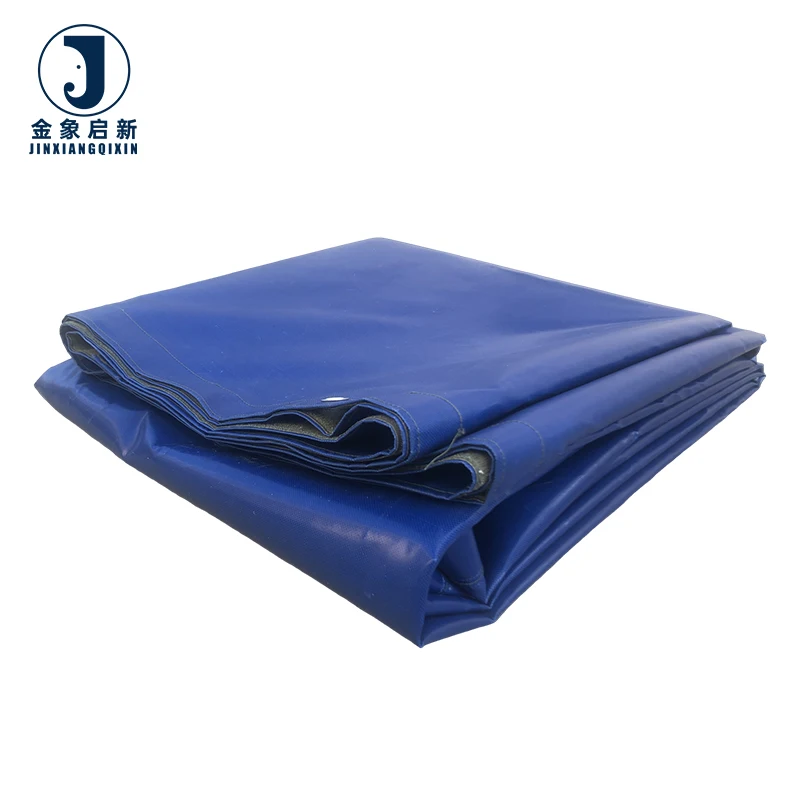
Proven Coating Control — nearly three decades of lamination and hot melt process refinement ensures every roll of PVC coated tarpaulin fabric meets its stated GSM, adhesion and tensile target before it leaves the line.
Technical Specifications
| Parameter | Value |
|---|---|
| Product Type | PVC Coated Tarpaulin |
| Base Fabric | 100% high toughness polyester yarn |
| Coating Material | PVC |
| Coating Method | Lamination technology and hot melt coating technology |
| Thickness (Medium) | 0.35–0.45 mm |
| Weight (Medium) | 400–500 g/m² |
| Base Fabric Denier (Medium) | 500D |
| Tensile Strength (Medium) | Warp 1500–2000 / Weft 1200–1800 N/5cm |
| Thickness (Heavy-duty) | 0.70–1.0 mm |
| Weight (Heavy-duty) | 700–1000 g/m² |
| Base Fabric Denier (Heavy-duty) | 1000D |
| Tensile Strength (Heavy-duty) | Warp 2000–2500 / Weft 1800–2200 N/5cm |
| Thickness (Super Heavy) | 1.2–1.5 mm |
| Weight (Super Heavy) | 1100–1500 g/m² |
| Base Fabric Denier (Super Heavy) | 500D–2000D |
| Tensile Strength (Super Heavy) | Warp 2500–3000 / Weft 2200–2800 N/5cm |
| Color Options | Blue, Blue/Orange, Green, Grey, Black, Clear, Grey/Green, Orange, or custom |
| Flame Retardant | Available as special treatment — confirm the grade required for your market |
| Anti-Static | Available as treatment option — confirm surface resistance standard |
| UV Treatment | Available — confirm weather resistance test basis for your application |
| Anti-Mildew | Mold proof treatment applied |
| Cold Resistance | Cold resistant cracking treatment available |
| Welding Tear Strength | Reported as excellent by manufacturer (test basis not stated) |
| Waterproof | Yes, fully coated construction |
| Color Fastness | Claimed best color fastness (test basis not stated) |
| Standards | ISO, CE (company-level certification) |
Application Suitability
| Application | Exposure & Requirement |
|---|---|
| Truck tarpaulin and side curtains | Constant flexing at load points, road debris abrasion, UV and rain exposure, requires reliable weld strength at seams |
| Construction site and equipment covers | Prolonged outdoor weathering, puncture risk from sharp edges, wind uplift stress on eyelet zones |
| Lightweight engineering fabric | Moderate tensile demand, indoor or semi-sheltered use, fold and drape flexibility required |
| Heavy truck and engineering protective cloth | High abrasion from load movement, sustained UV exposure, frequent handling and tie-down stress |
| Industrial pipe canopy and tensioned structures | Sustained tensile load, wind oscillation, requires high warp strength and dimensional stability |
| Farm and agricultural covers | Moisture, organic acids, fungal exposure, requires mold proof treatment and UV stability |
| Pool and reservoir liners | Permanent water immersion, chemical exposure from treatment agents, puncture resistance from substrate |
Why PVC Coated Tarpaulin Fabric GSM Specification Alone Cannot Predict Field Life
GSM tells you weight per square metre — it does not tell you how that weight is distributed between base fabric and coating, or whether the denier underneath can carry the tensile load your application demands.
A roll quoted at a certain GSM may arrive lighter than stated, or the weight may be padded with excess coating that adds mass without adding tear resistance. Technical buyers who specify only on PVC coated tarpaulin fabric GSM specification often discover the shortfall at the weld line or the eyelet, where flex fatigue concentrates. Denier, weave density and coating adhesion all interact to determine whether a given weight grade survives its intended service life [NEED_CITE: tensile and tear test methods for coated fabrics per ISO 1421].
Coating Method and Its Effect on Weld Integrity
The distinction between lamination and hot melt coating directly shapes how the fabric behaves during fabrication. Hot melt coating penetrates the base yarn more deeply, creating a mechanical bond that resists delamination when the material is heat-welded at seams. Lamination technology produces a smoother surface profile suited to applications demanding a clean visual finish. For fabricators welding truck side curtains or membrane panels, the coating method chosen influences weld temperature, dwell time and the peel strength achieved at each joint — and therefore the long-term durability of every seam in the finished product.
How Base Fabric Denier Governs Tear Propagation
Denier is the linear mass density of the polyester yarn, and it directly controls how a puncture or cut propagates through the fabric under load. A 500D base will resist light handling and moderate wind uplift, but once a nick occurs in a heavy-load tie-down zone, the tear can travel rapidly along the weave. Moving to 1000D or 2000D yarn increases the energy required for a tear to advance through each yarn intersection, which is why super heavy grades are specified for tensioned structures and industrial canopies where a single tear failure would compromise an entire installation [NEED_CITE: relationship between denier and tear propagation in woven coated textiles].
Reading the Tensile Data by Grade
Each grade in this product family reports tensile strength separately in warp and weft directions, measured in N/5cm. The medium grade delivers warp strength of 1500–2000 N/5cm, adequate for covers and light enclosures. The heavy-duty grade raises this to warp 2000–2500 N/5cm, matching the demands of truck curtains subjected to aerodynamic buffeting. The super heavy grade reaches warp 2500–3000 N/5cm with weft values up to 2200–2800 N/5cm, providing the bi-directional strength needed for tensioned architectural fabric and pipe canopies where sustained load is applied across both axes.
The Hidden Cost of Specifying on Weight Without Verification
When a PVC coated tarpaulin fabric GSM specification is accepted at face value without pre-shipment verification, the consequences surface after installation. Rolls that test lighter than quoted shift the real cost from the material budget to the replacement budget — torn covers, failed welds on side curtains, and liner leaks that require full removal and re-installation. Colour variation between rolls in the same batch becomes visible once panels are installed side by side on a truck or structure, triggering complaints from the end user. Welded seams that fail before the fabric itself indicate a coating formulation mismatch rather than a fabrication error, and the cost of re-fabrication falls on whoever approved the material [NEED_CITE: common failure modes in coated fabric installations].
Procurement Built on Material Traceability
Coating weight and adhesion are controlled through process discipline developed across production runs spanning decades, not through marketing claims. Three full production lines with dedicated equipment sets allow batch consistency to be maintained even when custom widths or colours interrupt standard scheduling. A ten-person R&D team handles material selection, sample development and specification matching so that the roll you approve is the roll you receive. Quality control operates at every production stage with full pre-shipment inspection, meaning GSM, thickness and colour reference are verified against your specification sheet before any roll is packed.
Documentation & Verification
- Material specification sheet stating GSM, base fabric denier, coating method and colour reference for each roll
- Test reports for UV resistance and flame retardant grades where applicable, with stated test basis
- Pre-shipment inspection record confirming weight and coating thickness against the agreed specification
- Roll packing list with batch traceability linking each roll to its production run
- Certificate of origin and customs documentation for international shipments
Fabrication, Handling & Storage
- Hot melt coated rolls require weld temperature profiling — confirm dwell time against coating thickness before production runs
- Laminated surface grades produce cleaner visual welds — adjust pressure roller settings to avoid surface marking
- Store rolls upright on pallets to prevent flat-spot creasing across the 0.70–1.0 mm heavy-duty grades
- Unroll super heavy 1100–1500 g/m² grades in ambient temperatures to allow cold-resistant treatment to reach flexibility
- Clean mold-proof treated surfaces with neutral pH agents to preserve the anti-mildew finish
What We Need to Quote Accurately
To match the correct grade and treatment package to your requirement, specify the end-use application and the environmental exposure it will face — sustained UV, chemical contact, or flame retardant compliance for your market. Confirm whether you need roll stock in standard widths or custom cut-to-size panels, along with target colour references and any pattern printing requirements. If flame retardant or anti-static certification is required for site compliance, state the standard your project must meet so the correct test documentation can be prepared with your shipment.
Frequently Asked Questions
Q: How is GSM verified on each roll before shipment?
A: Every roll undergoes pre-shipment inspection where GSM, thickness and coating weight are measured and recorded against the agreed material specification sheet. The inspection record accompanies your shipment so you can cross-reference each roll number with its tested values on arrival, eliminating the gap between quotation and delivery that causes disputes in coated fabric procurement.
Q: What is the relationship between denier, GSM and tensile strength?
A: Denier defines the yarn thickness in the base fabric, GSM captures total weight including coating, and tensile strength is the result of both working together. A higher GSM achieved through extra coating adds weight without proportionally increasing tensile or tear resistance. That is why this product family reports denier and tensile data alongside GSM for each grade.
Q: Which flame retardant or anti-static grades are available?
A: Flame retardant and anti-static treatments are available as add-on specifications. The exact grade and test standard depend on your market compliance requirements — confirm the standard your project must meet so the appropriate treatment chemistry and supporting test documentation can be prepared for your batch.
Q: How does hot melt coating differ from lamination in weldability?
A: Hot melt coating penetrates the polyester base yarn more deeply, producing stronger mechanical adhesion that generally supports more forgiving heat-weld parameters at seams. Lamination technology creates a smoother surface profile with consistent coating thickness. The choice between them affects your fabrication settings and should be confirmed during sample approval.
Q: What UV treatment options are offered and how are they tested?
A: UV stabiliser treatment is available across the grade range to extend outdoor service life. The specific test basis and exposure rating depend on the formulation selected for your order. Request the test documentation applicable to your market so you can verify the weather resistance claim against your project specification before committing to bulk production.