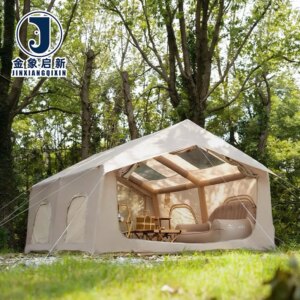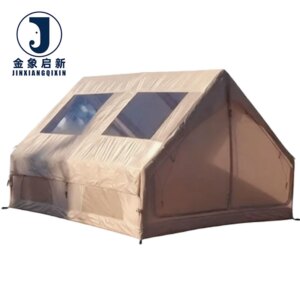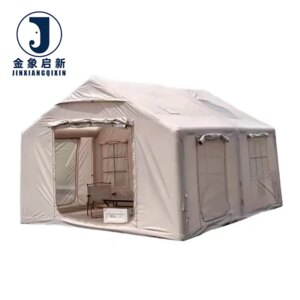
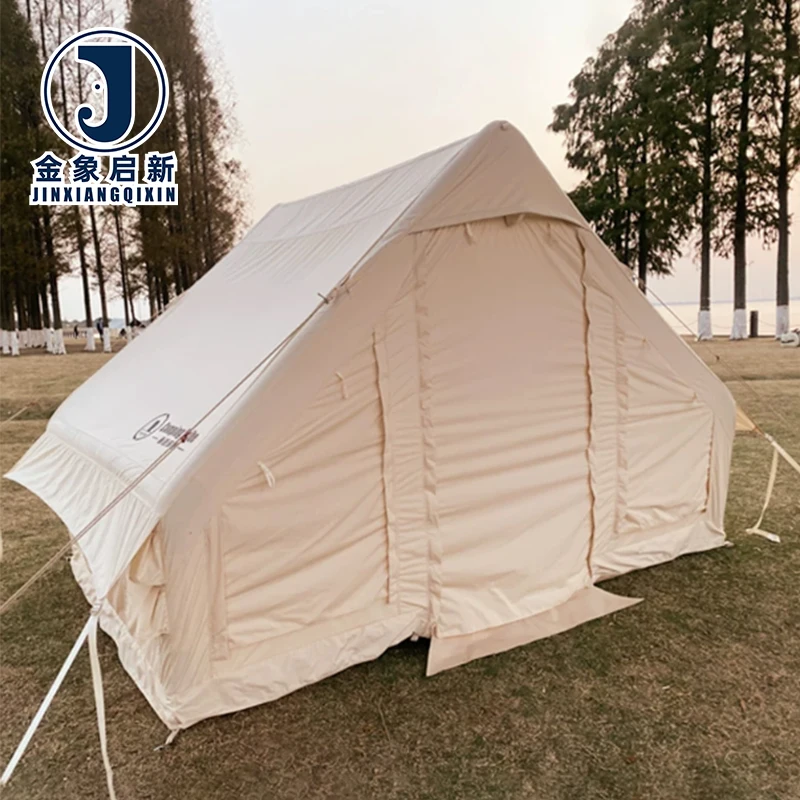
Coating Formulation and Weathering Stability
The PVC coating applied to this inflatable tent fabric incorporates stabilized UV additives designed to maintain protective performance through prolonged outdoor deployment. Unlike generic descriptions of UV resistance, this formulation is verified through accelerated weathering protocols, providing documented evidence of how the material holds up when subjected to continuous solar radiation [NEED_CITE: UV accelerated weathering test methods for coated fabrics per ISO 4892]. For commercial event structures and industrial temporary shelters, this matters because fabric degradation is not simply a surface issue — it affects tensile integrity at the weld seams where the inflatable structure flexes under wind load.
The single-layer inflatable design reduces overall material weight compared to multi-layer alternatives, which directly lowers transport costs and on-site deployment effort. This weight reduction is achieved without sacrificing structural performance because the coating adhesion and base fabric selection are matched specifically for pneumatic structures that must hold internal pressure. Fabric thickness is available from 0.3mm to 0.8mm, allowing buyers to specify based on the wind load and handling demands of their particular deployment environment.
Batch Consistency and Colour Matching Across Orders
Commercial inflatable tent deployments often require multiple units or replacement panels ordered months after the initial purchase. Colour drift between production batches is a common complaint in the coated fabric industry, particularly with neutral tones like khaki where even slight variation becomes visible once structures are erected side by side [NEED_CITE: batch-to-batch colour consistency standards for architectural PVC fabric].
This inflatable tent fabric addresses that issue through full-process QA/QC inspection with a 12-point production check that includes colour reference verification against the stated Pantone match. Custom Pantone colour matches are available, and the specification sheet accompanying each order documents the colour reference so that reorders can be matched against the original batch. This level of traceability is essential for outdoor marketing activations and mobile exhibition spaces where brand colour accuracy is non-negotiable.
How Thickness and Tear Strength Interact in Inflatable Structures
Fabric thickness, measured here from 0.3mm to 0.8mm, directly influences both the structural rigidity of the inflatable form and the material’s resistance to puncture during handling and deployment. Thicker coatings provide greater abrasion resistance at ground contact points and where the structure meets anchoring hardware, but they also increase roll weight and shipping volume.
Tear resistance exceeding 300N in both warp and weft directions indicates that the base fabric denier and weave density have been selected to resist tear propagation once a nick or cut occurs in the coating layer. For inflatable structures, this is particularly important because a tear that propagates along a structural tube compromises airtightness and can lead to sudden deflation. The relationship between coating thickness and base fabric strength is not linear — a thicker coating on a low-denier base fabric may actually reduce tear performance compared to a balanced specification [NEED_CITE: relationship between coating weight and base fabric tear strength in PVC-coated textiles].
The wind load resistance up to 12m/s reflects the combined performance of the fabric specification, the heat-welded seam construction, and the inflatable tube geometry. Airtightness tested to maintain pressure for 72 hours confirms that the seam welding process produces joints that do not leak under sustained internal pressure, which is the primary failure mode for inflatable tent structures.
When Specification Shortcuts Lead to Field Failures
Choosing inflatable tent fabric based on price per square meter without verifying the coating adhesion and seam weld strength leads to predictable field failures. The most common failure point in inflatable PVC structures is not the fabric itself but the heat-welded seam where structural tubes join or where attachment points are welded to the main body. If the coating formulation is not optimized for thermal welding, the seam will delaminate under the repeated flex cycles that occur when the structure responds to wind gusts.
Buyers who accept a generic PVC specification without requesting a material specification sheet stating GSM, base fabric denier, and coating weight have no recourse when the fabric underperforms in the field. The documented UV resistance and tear strength data provided with this inflatable tent fabric allows procurement teams to verify that the material delivered matches what was quoted, eliminating the gap between specification and actual performance [NEED_CITE: common field failure modes in inflatable PVC structures].
Why This PVC Inflatable Tent Fabric for Technical Buyers
Nearly 30 years of focused coated fabric production means the coating formulation and lamination parameters have been refined specifically for PVC applications, rather than adapted from unrelated product lines. Three full production lines and 36 sets of professional equipment support volume orders while maintaining the process control necessary for consistent coating weight and colour matching.
The 10-person R&D team handles material selection and sample development for custom specifications, including structural dimension adjustments and pattern printing requirements specific to inflatable tent applications. Full-process inspection with a 12-point production check catches coating adhesion issues and colour drift before the material reaches the shipping stage. Sample development within days allows buyers to verify fabric hand, weldability, and colour accuracy before committing to bulk production. ISO9001, ISO14001, ISO45001, and CE certification provides the documentation trail required for commercial and industrial procurement compliance.
Documentation & Verification
- Material specification sheet stating GSM, base fabric denier, coating type, and colour reference per order
- UV resistance test report referencing 500-hour accelerated weathering protocol
- Tear strength data showing warp and weft values exceeding 300N
- Pre-shipment inspection record documenting 12-point production check including airtightness test
- ISO9001, ISO14001, ISO45001, and CE certificates for import compliance
- Roll packing list with batch identification for colour and specification traceability
Fabrication, Handling & Storage
- Heat welding parameters must be matched to the selected coating thickness (0.3mm to 0.8mm) to prevent seam delamination
- Single-layer inflatable construction requires reinforced welding at structural tube junctions where stress concentrates
- Store rolls vertically on pallets to prevent permanent creasing that compromises coating adhesion at fold lines
- Allow fabric to reach ambient temperature before unrolling in cold conditions to avoid coating cracking
- Use mild detergent and soft brush for cleaning; avoid solvent-based cleaners that attack PVC plasticizers
- Custom Pantone colour matches require sample approval before bulk production to verify batch consistency
Specifying the Right Fabric for Your Inflatable Application
To provide an accurate quotation for inflatable tent fabric, we need your deployment environment details including expected wind loads and UV exposure duration. Specify the fabric thickness range required and whether you need custom Pantone colour matching or pattern printing for brand applications. Confirm your target market’s compliance requirements so we can include the appropriate test reports and certification documentation with your shipment.
Frequently Asked Questions
Q: What test basis supports the UV resistance claim for this inflatable tent fabric?
A: The UV resistance is documented through 500 hours of accelerated weathering, which maintains 90% protective performance. This test protocol simulates extended solar exposure under controlled conditions. Field performance depends on deployment climate, orientation, and maintenance. Request the test report with your sample to verify the data matches your specification requirements.
Q: How is fabric GSM verified on arrival against the specification sheet?
A: Each order ships with a material specification sheet stating GSM, base fabric denier, and coating weight. Buyers can perform weight verification per roll using a calibrated scale and cutting a measured sample area. The pre-shipment inspection record documents the production batch values. Discrepancies should be reported immediately with photographic evidence and sample cuttings retained for analysis.
Q: What welding and seam considerations apply to inflatable PVC structures?
A: Heat welding temperature, pressure, and dwell time must be calibrated to the specific coating thickness selected from the 0.3mm to 0.8mm range. Inflatable structures experience repeated flex cycles at tube junctions, making seam integrity critical. Request sample material to conduct weld tests using your equipment before bulk production. Airtightness tested to maintain pressure for 72 hours confirms proper seam construction.
Q: What customization options and lead times apply to custom dimensions or colours?
A: Custom structural dimensions, Pantone colour matches, pattern printing, and logo application are available. Fabric thickness ranges from 0.3mm to 0.8mm. Sample development requires 7 business days for custom specifications. Bulk production lead time depends on order volume and customization complexity. Confirm minimum order quantities for custom colours during the quotation stage.
Q: How do you control batch-to-batch colour consistency across multiple orders?
A: The 12-point production inspection includes colour reference verification against the stated Pantone match. Each batch is documented on the specification sheet with colour reference codes. For ongoing projects requiring colour consistency across multiple production runs, we retain reference samples from the original approved batch. Reorders reference these retained samples to match colour and coating formulation.