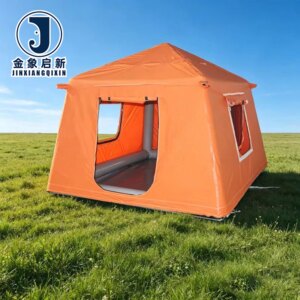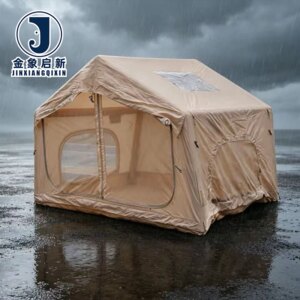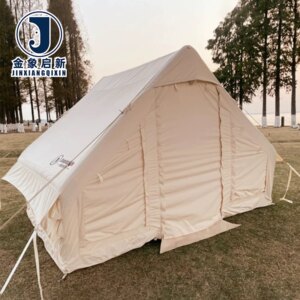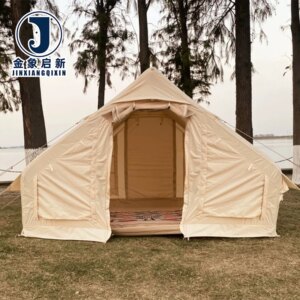
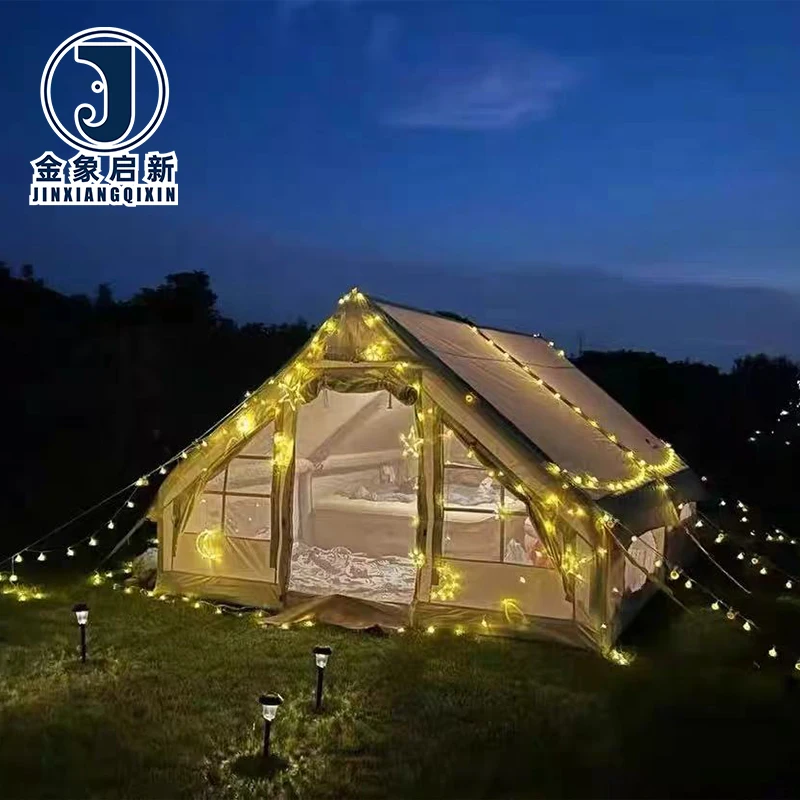
Coating Consistency Control — Every roll of PVC inflatable tent fabric undergoes weight verification on all 3 production lines before leaving the 9,180 m² facility, ensuring the coating you specify is the coating you receive.
Technical Specifications
| Parameter | Value |
|---|---|
| Product Type | Inflatable Tent Fabric |
| Core Material | PVC tarpaulin |
| Key Performance | Waterproof, UV-resistant (test basis not stated in source), tear-resistant, fire-retardant (grade not stated in source), anti-static (standard not stated in source) |
| Customization | OEM & ODM with sample customization and pattern printing |
| Production Facility | 9,180 square meters |
| Production Lines | 3 full production lines |
| Processing Equipment | 36 sets of professional processing equipment |
| R&D Team | 10 technicians |
| Quality Control | Full-process QA/QC with dedicated on-site staff |
| Certifications | ISO9001, ISO14001, ISO45001, CE |
Application Suitability
| Application | Exposure & Requirement |
|---|---|
| Commercial camping tent production | Repeated inflation cycles, seam stress at air chambers, user abrasion during setup |
| Summer outdoor gear manufacturing | Extended direct sunlight exposure, high ambient temperatures, UV degradation risk |
| Recreational shelter distribution networks | Batch-consistent material across large orders, warehouse storage before assembly |
| Inflatable structure fabricators | Air-tight weld integrity, structural load from internal pressure, wind loading on erected units |
| Branded event and glamping shelters | Custom pattern printing requirements, colour consistency across multiple tent units |
What Happens When UV Claims Have No Test Report Behind Them
Your inflatable tent fabric arrives, the summer season starts, and within weeks the material shows chalking and colour shift on the sun-facing panels. A UV-resistant claim without a documented test basis leaves your brand carrying the warranty cost, not the supplier.
When sourcing PVC inflatable tent fabric for summer product lines, outdoor gear manufacturers frequently accept "UV-treated" at face value during sampling. The problem surfaces months later when end users submit photos of degraded tent walls alongside competitor products that held up under identical conditions. The root cause is often an additive package that was never matched to the expected exposure duration or intensity [NEED_CITE: standard test methods for UV weathering of coated fabrics]. Without a test basis tied to your market’s climate reality, you have no way to compare two suppliers’ UV claims on equal footing.
Coating Formulation and the Base Fabric Relationship
The waterproof and tear-resistant performance of any PVC inflatable tent fabric starts with the interaction between the base fabric weave and the coating compound. A tightly woven polyester or nylon substrate provides the structural skeleton, while the PVC coating fills the interstices and creates the continuous barrier layer. When the coating weight is too thin relative to the base fabric texture, micro-voids form at the weave intersections, creating pathways for moisture infiltration during sustained rain. Our 10-person R&D team selects coating formulations based on the specific inflation pressure and flex cycle requirements of your tent design.
Why Inflatable Tent Manufacturers Ask for Pre-Production Samples
Automated tent assembly lines operate on tight tolerances, and a fabric that behaves differently from the approved sample will cause misalignment at the heat-welding station. Pattern printing registration shifts when the fabric stretches beyond the expected range during the inflation mechanism’s deployment sequence. By running pre-production samples through your actual equipment, you verify that the material’s elongation characteristics match your machine settings [NEED_CITE: elongation and dimensional stability testing for coated technical textiles]. This step eliminates the costly scenario where a full container load arrives and your production team discovers the weld parameters need complete recalibration.
How Coating Weight and Base Fabric Density Interact in Practice
The relationship between GSM and actual field performance in inflatable tent fabric depends entirely on how the coating mass is distributed across the base substrate. A higher GSM figure achieved through excessive coating thickness on a loosely woven base will delaminate under the cyclic stress of inflation and deflation far sooner than a moderate GSM applied to a dense, high-denier weave. The knife-over-roll coating method allows precise control of coating thickness on each side independently, which matters when the inner surface needs a smooth finish for air-tight welds while the outer surface requires abrasion resistance. Fire-retardant grades are available in this product line — confirm the specific grade required for your target market’s safety regulations, as different jurisdictions reference different classification systems [NEED_CITE: fire classification standards for temporary outdoor structures]. Surface finish options include both glossy and matte treatments, with the choice affecting not only visual appearance but also how readily dirt accumulates and how well printed branding adheres over repeated wet-dry cycles.
The Hidden Cost of Welded Seams Failing Before the Fabric Does
Inflatable tents concentrate mechanical stress at the junctions where air chambers meet the main body panels, and these seams carry loads that the flat fabric never experiences in isolation. When the coating composition does not match the heat-welding parameters of your assembly equipment, the bond at the seam degrades through repeated inflation cycles while the surrounding fabric remains intact. We see this failure pattern regularly in field returns where the tent fabric passes every bench test but the product fails at the exact point where the load flexes most during use [NEED_CITE: weld strength testing protocols for PVC coated fabrics]. The cost extends beyond the replacement unit — it includes the logistics of retrieving a deployed tent from a campsite, the reputational damage from a public failure, and the engineering hours spent diagnosing a problem that originated at the material specification stage.
Why Material Buyers Specify From This Facility
Thirty years of continuous coated fabric production has built a process control system where coating weight adhesion is monitored at every stage, not just at final inspection. The 36 sets of processing equipment across 3 full production lines mean that custom width and colour requirements do not force you into extended lead times or prohibitive minimums. Each batch of inflatable tent fabric passes through dedicated QA/QC personnel who verify coating weight, colour consistency, and surface finish before the roll is cleared for packing. The R&D team of 10 technicians handles the translation from your tent design drawings into production-ready material specifications, including pattern printing layout and sample development. ISO9001, ISO14001, ISO45001, and CE certifications provide the documentation framework that international procurement teams require for vendor qualification and customs compliance.
Documentation & Verification
- Material specification sheet detailing base fabric construction, coating compound type, and verified GSM per roll
- UV and flame-retardant test reports where applicable to the specified grade and market requirement
- Pre-shipment inspection record confirming coating weight, colour match, and surface quality
- ISO9001, ISO14001, ISO45001, and CE certificates for B2B vendor qualification
- Certificate of origin and customs documentation for international shipment clearance
- Roll packing list with individual roll identification for traceability
Fabrication, Handling & Storage
- Heat-weld parameters must be matched to the specific PVC coating compound used on your inflatable tent fabric batch
- Store rolls upright on pallets to prevent flat-spot deformation that affects feed tension during automated cutting
- Allow cold-stored rolls to acclimatise to workshop temperature before unrolling to avoid coating micro-cracking
- Use PVC-compatible cleaners only, as solvent-based products will attack the coating surface and compromise waterproofing
- Pattern printing registration requires fabric tension calibration against the specific roll width supplied
What We Need to Quote Your Inflatable Tent Fabric
To move from enquiry to sample development, share your tent’s inflation pressure range, the expected deployment environment including UV exposure duration, and your target market’s fire safety classification requirements. Specify whether you need rolls in stock widths or custom dimensions, and confirm if pattern printing or colour matching to a Pantone reference is part of the project. If your assembly line has specific elongation or weld-strength thresholds, include those values so the R&D team can formulate the coating to match.
Frequently Asked Questions
Q: How is UV resistance verified and what test basis applies to this inflatable tent fabric?
A: UV-resistant treatment is incorporated during the coating process using stabilised additives. The specific test basis and exposure rating depend on the formulation selected for your application. Request the test report applicable to your product variant and confirm the standard referenced, as different markets require different exposure durations and intensity levels for compliance.
Q: What customization options are available for pattern printing and size adjustments?
A: Full OEM and ODM customization is supported, including custom pattern printing, colour matching, and width or length adjustments beyond standard roll dimensions. The 10-person R&D team develops pre-production samples to verify print registration and dimensional accuracy before mass production begins, allowing your engineering team to validate the material on your assembly equipment.
Q: How do you ensure waterproof performance consistency across bulk orders?
A: Every production run undergoes full-process quality inspection with dedicated QA and QC staff present on the factory floor. Pre-shipment inspection includes coating weight verification against the stated specification and visual examination for surface defects. Batch-specific quality inspection reports document the results for each roll shipped.
Q: What documentation is provided for international compliance and customs clearance?
A: Each shipment includes a material specification sheet, applicable test reports, ISO9001, ISO14001, ISO45001, and CE certificates, a pre-shipment inspection record, roll packing list, and certificate of origin. These documents support customs clearance in most international markets and satisfy B2B vendor qualification requirements for procurement departments.
Q: How are fire-retardant and anti-static properties certified for specific market requirements?
A: Fire-retardant and anti-static treatments are available in this product range, but the applicable grade and certification standard vary by destination market. Confirm the specific classification system your project requires — such as regional building material fire ratings or temporary structure safety codes — so the correct formulation and corresponding test documentation can be prepared before production.