Coating Weight Control — every roll of inflatable tent fabric we produce is verified for GSM and coating adhesion against the material specification sheet before it leaves the facility.
Technical Specifications
| Parameter | Value |
|---|---|
| Product Type | Inflatable Tent Fabric |
| Core Material | PVC Tarpaulin |
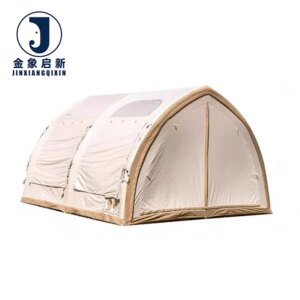
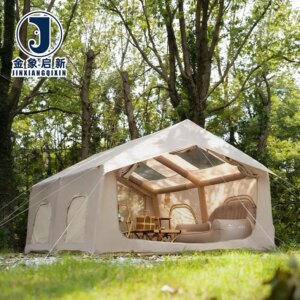
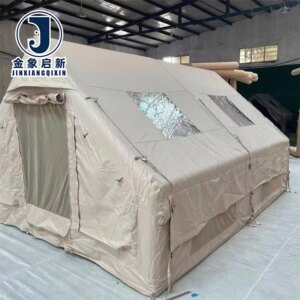
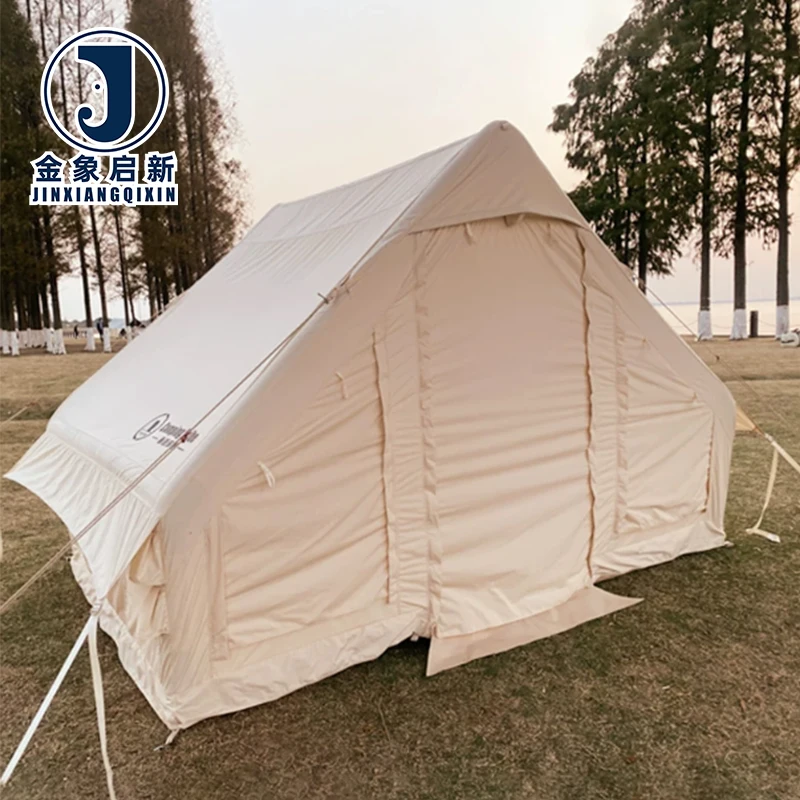
| Product Forms | Inflatable Camping Tent |
| Capacity | 2–8 Person |
| Season Rating | 4-Season |
| Key Performance | Waterproof, Tear-Resistant |
| UV Resistance | UV-resistant treatment available — test basis not stated in source, confirm requirement with our technical team |
| Opening Mechanism | Quick Automatic Opening |
| Construction | Single-layer |
| Customization | OEM & ODM — sample customization, pattern printing, size adjustments, material thickness modifications |
| Certifications | ISO 9001, ISO 14001, ISO 45001, CE |
Application Suitability
| Application | Exposure & Requirement |
|---|---|
| Temporary event shelters | Repeated inflation and deflation cycles, outdoor weather exposure, rapid deployment |
| Industrial site accommodation | Variable temperature ranges, wind loading on membrane surfaces, long-term UV exposure |
| Mobile commercial spaces | Frequent transport and reinstallation, abrasion from ground contact, public safety compliance |
| Commercial camping grounds | Continuous seasonal exposure, guest turnover wear, 4-season thermal fluctuation |
| Outdoor exhibition areas | High visibility requirements, short-term weather resistance, quick setup and teardown |
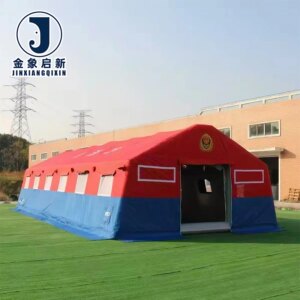
| Emergency response scenarios | Extreme deployment speed, unpredictable environmental conditions, structural reliability under pressure |
Why Coated Fabric Fails at the Weld Line in Inflatable Structures
Seam failure in inflatable tent fabric almost always starts where coating adhesion is weakest, not where the base fabric is thinnest.
When an inflatable structure is pressurised, the highest stress concentrates at welded joints — particularly where air beams meet the main envelope. If the PVC coating does not bond uniformly to the base fabric, heat welding creates a seam that looks intact on the surface but delaminates under repeated inflation cycles. I have reviewed field returns where the base fabric remained sound while the coating peeled away from the weld zone, leaving the seam structurally open [NEED_CITE: tensile and peel test methods for coated fabrics per ISO 1421].
The inflatable tent fabric material coating technology must deliver consistent coating-to-yarn adhesion across the full width of every roll. Without that consistency, fabricators dial in welding parameters on one sample roll, then find those same settings produce weak seams on the next batch.
How Base Fabric Construction Governs Air-Holding Performance
In inflatable tent manufacturing, the base fabric carries the structural load while the coating provides the air barrier. The denier of the yarns and the weave density determine how much tensile force the material can withstand at operating pressure. A higher denier base fabric resists the hoop stress generated inside inflated beams, preventing stretching that would otherwise distort the structure’s geometry over time. Selecting the correct base fabric specification for the intended inflation pressure is the foundation of reliable inflatable tent fabric performance.
Coating Method and Its Effect on Weldability
The PVC coating process directly determines how well the fabric responds to high-frequency or hot-air welding. Knife-over-roll coating produces a thicker, more uniform coating layer that flows consistently under heat, creating strong fused seams. Laminated coatings, by contrast, can trap air between layers, leading to bubbles at weld points that compromise both air-holding and visual quality. For inflatable camping tent fabric, the coating must remain pliable across the stated 4-season temperature range so that welded seams flex with the structure rather than cracking in cold conditions [NEED_CITE: PVC coating adhesion and peel strength testing standards].
Reading GSM in Context With Base Fabric Density
A common specification mistake is treating GSM as a standalone indicator of inflatable tent fabric strength. The total weight includes both the polyester base fabric and the PVC coating on each side. Two fabrics can share the same GSM yet perform very differently: one may carry a heavier coating over a lighter base fabric, resulting in good waterproofing but lower tear resistance, while another distributes more weight into the base fabric for superior structural performance. For inflatable structures that must hold internal pressure, the base fabric denier and weave density matter more than coating thickness alone.
UV-resistant treatment is available for applications involving extended outdoor exposure — confirm the test basis and grade required for your market before specifying. Flame retardant grades are also available on request; verify the classification your destination market mandates, as requirements differ between regions.
The Hidden Cost of Roll-to-Roll Inconsistency in Membrane Production
When inflatable tent fabricators receive rolls with colour variation or coating weight differences within the same order, the consequences extend far beyond aesthetics. A fabricator cutting panels from two different rolls may find that heat welding parameters need adjustment between panels, slowing production and introducing seam quality risk. In finished inflatable shelters installed side by side at a commercial camping ground or exhibition, visible colour mismatch between panels triggers client rejection and warranty claims. Coating thickness variation also means that some panels carry more UV stabiliser than others, leading to uneven weathering across the structure’s surface over time [NEED_CITE: batch consistency requirements for coated technical textiles].
Why Fabricators Source Inflatable Tent Fabric Here
Our 10-person R&D team develops custom material thickness and coating formulations matched to specific inflatable pressure requirements, with sample turnaround measured in days rather than weeks.
Three full production lines and 36 sets of professional processing equipment give us the capacity to deliver volume orders of inflatable tent fabric on schedule, without splitting a single order across facilities with different process controls.
Every roll undergoes dedicated QA and QC inspection at each production stage, and we conduct 100% pre-shipment verification of GSM and coating weight against the agreed specification sheet — not a spot-check sample.
We provide documented test data for performance claims including UV resistance and flame retardancy, so fabricators can present compliance evidence to their own clients without delays.
ISO 9001, ISO 14001, ISO 45001, and CE certification underpin our production systems, supporting compliance documentation for inflatable tent fabric destined for regulated markets.
Documentation & Verification
- Material specification sheet stating GSM, base fabric denier, and coating weight for each production batch
- Test reports for UV resistance and flame retardant grades supplied with shipment when specified
- Pre-shipment inspection record confirming roll count, colour reference, and weight verification
- ISO 9001, ISO 14001, ISO 45001, and CE certificates included in export documentation package
- Certificate of origin and customs documentation supporting international inflatable tent fabric shipments
Fabrication, Handling & Storage
- Set heat welding temperature and dwell time based on the specific PVC coating thickness of your inflatable tent fabric batch
- Allow welded seams to cool fully under pressure before deflating to prevent creep at joint lines
- Store rolls horizontally on padded racks to avoid flat spots that affect coating uniformity during cutting
- Inflate test panels after welding to verify air-holding before committing to full production runs
- Use PVC-compatible cleaners only; solvent-based products can degrade the coating surface on inflatable tent fabric
- Cut panels with the coating facing inward on the table to protect the outer surface during fabrication
What We Need to Quote Your Inflatable Tent Fabric Order
Provide the intended inflation pressure range and operating temperature so we can recommend the appropriate base fabric denier and coating weight. Specify whether you require UV-resistant or flame retardant treatment, along with the test standard your destination market requires. Let us know the roll width and quantity you need, and whether you want sample rolls for welding parameter development before committing to full production volume.
Frequently Asked Questions
Q: How can I verify the GSM and coating weight of inflatable tent fabric when it arrives?
A: We include a material specification sheet with every shipment stating the agreed GSM, base fabric, and coating weight. You can cross-check by cutting a measured sample from the roll and weighing it. Our pre-shipment inspection records also document weight verification per roll before dispatch, giving you a baseline for comparison on arrival.
Q: What UV resistance documentation do you provide for inflatable tent fabric used outdoors?
A: UV-resistant treatment is available for our inflatable tent fabric, and we supply test reports when the treatment is specified in your order. Because UV testing standards and required service durations vary by market, we recommend confirming the specific test basis and performance grade your application demands before production begins.
Q: Can material thickness be customised for different inflatable structure pressure requirements?
A: Yes. Our OEM and ODM service includes material thickness modifications to match the internal pressure and structural load your inflatable design requires. Our R&D team develops sample panels with adjusted coating weight and base fabric specifications so you can validate welding parameters and air-holding performance before bulk production.
Q: How do you ensure colour and coating consistency across multiple rolls in one order?
A: Every production run follows controlled coating formulations and process parameters, with dedicated QA and QC staff inspecting at each stage. We conduct 100% pre-shipment inspection that includes visual colour verification and coating weight checks across all rolls in your order, reducing the risk of panel mismatch during fabrication.
Q: How does the PVC coating affect heat welding behaviour at structural stress points?
A: The coating method and weight directly influence how the fabric responds to high-frequency or hot-air welding. Consistent coating adhesion to the base fabric ensures that welded seams flex with the inflatable structure under pressure rather than delaminating. We recommend ordering sample rolls to establish optimal welding parameters for your specific equipment and seam design.