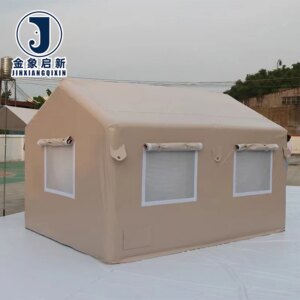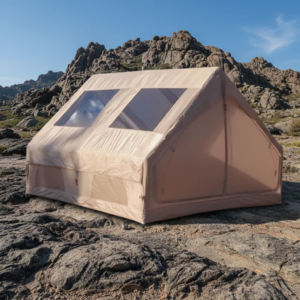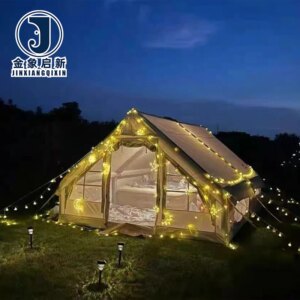
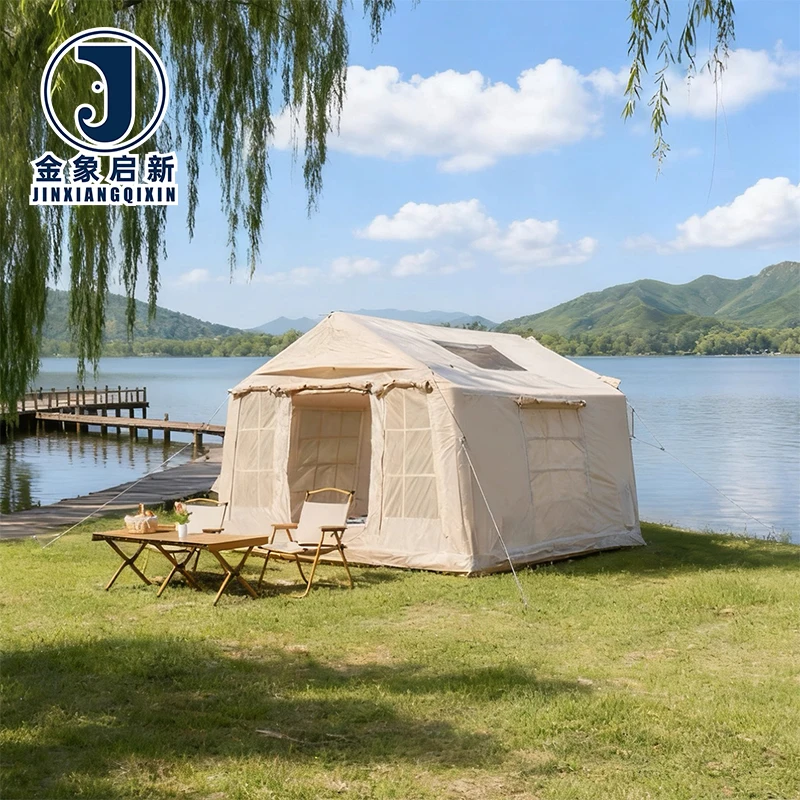
Coated Fabric Process Control — Deep expertise in PVC coating weight and adhesion consistency applied to every roll of inflatable tent fabric we produce.
Technical Specifications
| Parameter | Value |
|---|---|
| Product Type | Inflatable Fabric |
| Core Material | PVC tarpaulin |
| Coating Material | PVC |
| Construction | Single layer |
| Key Performance | Waterproof, tear-resistant |
| Fire-Retardant Treatment | Available in flame retardant grades — confirm the grade required for your market |
| UV Resistance | UV-resistant formulation available — test basis to be confirmed per order |
| Anti-Static Treatment | Anti-static options available — verify the standard applicable to your end market |
| Season Rating | Four-season |
| Customization | OEM & ODM, sample customization, pattern printing |
| Standards | ISO 9001, ISO 14001, ISO 45001, CE |
Application Suitability
| Application | Exposure & Requirement |
|---|---|
| Commercial inflatable tent manufacturing | Repeated inflation cycles, seam stress at air chambers, UV exposure during outdoor display |
| Four-season camping tent assembly | Snow load, freezing temperatures, prolonged moisture contact, abrasion from ground surfaces |
| Wholesale outdoor gear distribution | Batch-to-batch colour consistency for retail shelf appeal, roll uniformity for automated cutting lines |
| Specialized camping equipment production | Fire-retardant compliance for regulated campsites, anti-static requirements in dry or dusty environments |
Why Material Consistency Matters More Than Quoted GSM for Inflatable Tent Fabric
Coating weight deviation between rolls causes unpredictable heat-seal behaviour on the production floor.
When sourcing inflatable tent fabric, buyers often specify a target GSM and assume every roll arriving at their factory will match. In practice, rolls from the same shipment can vary in coating thickness, which shifts the heat-seal temperature window needed for airtight chamber construction. Production teams then spend time recalibrating welding parameters mid-run, generating scrap and delaying output [NEED_CITE: tensile and tear test methods for coated fabrics per ISO 1421]. For an Inflatable Tent Fabric manufacturer, maintaining tight coating control across every batch is the difference between a reliable supply relationship and constant quality disputes.
How Coating Formulation Affects Inflatable Chamber Integrity
The PVC coating applied to inflatable tent fabric must bond to the base fabric with sufficient adhesion strength to withstand repeated pressurization and deflation cycles. Single layer construction keeps the material efficient for large-scale tent assembly while relying on coating quality to deliver waterproof performance. When coating adhesion is inconsistent, delamination can initiate at stress concentration points around valve ports and seam intersections. Our 10-person R&D team works with buyers to match coating formulation to the inflation pressure and cycle frequency their end products will experience.
Fire-Retardant and Anti-Static Options for Regulated Markets
Commercial campsites, festival venues, and mining accommodation sites increasingly require documented fire-retardant performance from inflatable structures. Fire-retardant and anti-static treatments are available for this Inflatable Fabric, but the specific grade and test standard must align with the regulations in your target market. Confirming these requirements at the inquiry stage allows us to formulate the coating compound accordingly and provide traceable test documentation with each shipment [NEED_CITE: DIN 4102 fire classification for building materials].
Reading the Specification Sheet Beyond the Headline Weight
Base fabric denier and weave density interact with coating weight to determine how the material behaves under tension during inflation. A heavier coating on a loosely woven base fabric may achieve the target GSM without delivering proportional tear resistance. The PVC tarpaulin core in this material relies on balanced construction — adequate yarn count in both warp and weft directions combined with controlled coating application — to resist tear propagation when a chamber is under pressure. Glossy and matte finish options are available depending on whether the tent exterior requires printed branding or cleanability in muddy field conditions. UV-resistant treatment extends material service life during prolonged outdoor deployment, though the specific test basis should be confirmed against the climate zone where the tent will be used.
The Hidden Cost of Batch-to-Batch Colour Variation
When a wholesale distributor receives multiple rolls of inflatable tent fabric and the colour shifts visibly between them, the entire production run faces a sorting problem. Panels cut from different rolls end up on the same tent, and the mismatch becomes obvious once the structure is inflated and displayed under sunlight. This forces rework, generates waste, and damages the brand reputation of the outdoor equipment manufacturer downstream. Colour consistency across rolls requires disciplined pigment dosing and mixing protocols at the coating stage — a process variable that separates reliable Inflatable Tent Fabric manufacturers from those who cut corners on formulation control [NEED_CITE: colour fastness testing standards for coated textile products].
Why Procurement Teams Choose This Source
Three full production lines and 36 sets of professional processing equipment provide the capacity to fulfil bulk inflatable tent fabric orders without sacrificing lead time reliability. A dedicated 10-person R&D team handles material selection, custom colour matching, pattern printing, and sample development for OEM and ODM projects. Every production stage includes QA/QC checkpoints, with 100% inspection before shipment to catch coating defects and dimensional deviations early. Sample development for custom specifications is completed within days, allowing buyers to validate material performance before committing to full production volume. Production takes place in a 9,180 m² facility with ISO and CE certified management systems governing quality, environmental, and occupational safety processes.
Documentation & Verification
- Material specification sheet confirming base fabric type, PVC coating, and treatment options per batch
- UV resistance and flame-retardant test reports traceable to individual order numbers
- ISO 9001, ISO 14001, ISO 45001, and CE certificates for international trade compliance
- Pre-shipment inspection record covering coating weight, colour consistency, and dimensional accuracy
- Roll packing list and certificate of origin for customs clearance
Fabrication, Handling & Storage
- Heat-seal temperature parameters should be validated against the specific PVC coating thickness of each roll before full production
- Store rolls upright on pallets in a dry warehouse to prevent compression marks on the single layer PVC tarpaulin surface
- Allow material to acclimatize to workshop temperature before unrolling to avoid condensation affecting weld adhesion
- Use compatible PVC welding tape or adhesive for field repairs on four-season inflatable tent structures
- Plan cutting layouts to maximize roll utilization and minimize seam joints across high-stress inflation chambers
What to Include in Your Inquiry
Provide the inflation pressure range and chamber dimensions of your tent design so we can recommend the appropriate PVC tarpaulin grade. Specify any fire-retardant or anti-static standards required by your end market, along with target colour references and whether pattern printing is needed. Indicate your annual volume and preferred roll width to help us plan production scheduling and batch allocation.
Frequently Asked Questions
Q: How is coating weight and material consistency verified across production batches?
A: Each batch of inflatable tent fabric undergoes in-process QA checks at every production stage. Coating weight is measured against the specification sheet before rolls are cleared for dispatch. Pre-shipment inspection covers dimensional accuracy and surface quality, with results documented and traceable by order number.
Q: What fire-retardant grades and test standards are available for inflatable tent fabric?
A: Fire-retardant treatment options are available, but the applicable grade depends on the regulations in your target market. We recommend specifying the required standard at inquiry stage so the coating formulation can be adjusted accordingly. Test reports are provided with each shipment to support compliance verification.
Q: How are custom colour matching and pattern printing handled for OEM orders?
A: Our R&D team develops colour samples based on your reference swatches or Pantone codes. Once approved, the pigment formulation is locked for the entire production run to maintain roll-to-roll consistency. Pattern printing is available as part of the OEM and ODM customization service.
Q: What documentation is provided for customs clearance and regulatory compliance?
A: Each shipment includes a material specification sheet, certificate of origin, roll packing list, and relevant ISO and CE certificates. Where applicable, test reports for UV resistance and flame-retardant performance are attached and traceable to the specific order number for audit purposes.
Q: What is the sample development process and lead time for custom inflatable tent fabric specifications?
A: Submit your requirements including material thickness, colour, treatment needs, and any printing specifications. Our 10-person R&D team produces samples within days for your evaluation. Once you approve the sample, full production proceeds with the same formulation and process parameters.