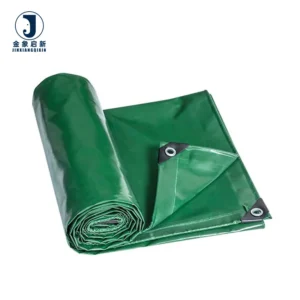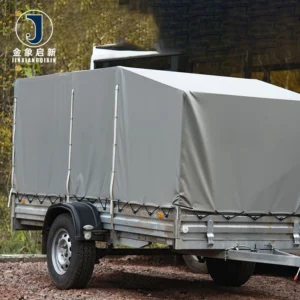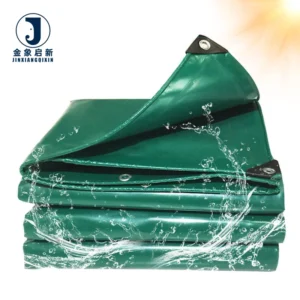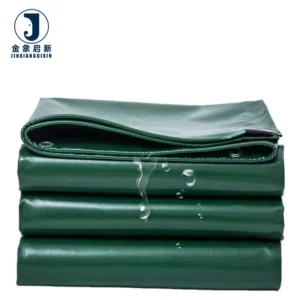
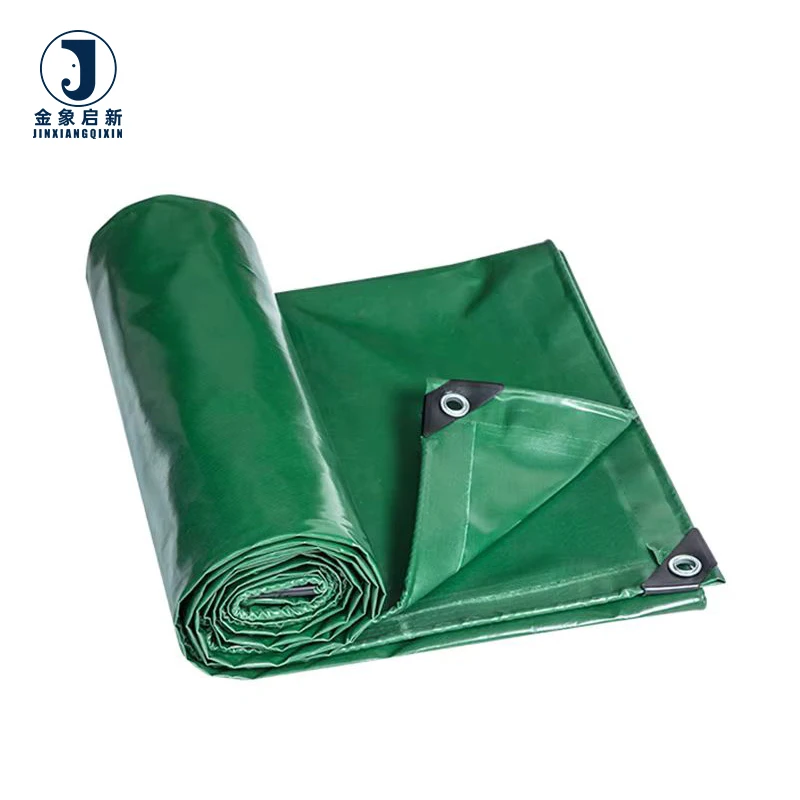
Process-Controlled Coating Weight — nearly 30 years of coated fabric production ensures every roll of PVC Coated Fabric 1000×1000 knife coated ships with verified GSM and adhesion performance matching the material specification sheet.
Technical Specifications
| Parameter | Value |
|---|---|
| Product Type | PVC Coated Fabric |
| Base Fabric Denier | 1000×1000 |
| Coating Method | Knife Coated |
| Coating Material | PVC |
| Weight (GSM) | At least 450 g/m² |
| Waterproof | Yes — fully coated construction |
| UV Treatment | Anti-UV coated (test basis available on request) |
| Flame Retardant | Available in flame retardant grades — confirm the grade required for your market |
| Tear Resistance | Tear-resistant woven construction (test standard available on request) |
| Company Certification | ISO and CE certified facility |
Application Suitability
| Application | Exposure & Requirement |
|---|---|
| Truck cover and side curtain fabrication | Constant flexing at load points, road abrasion, weather exposure, weld seam integrity under tension |
| Large-format banner and print substrate | Dimensional stability during printing, flat lay without curl, ink adhesion on coated surface |
| Tensioned outdoor structures and awnings | Sustained wind load, UV exposure, seam strength at attachment points |
| Tent and temporary shelter manufacturing | Repeated assembly and disassembly, waterproof performance, pack weight considerations |
| Industrial equipment and pallet covers | Abrasion from contact surfaces, chemical splash resistance, tie-down stress at edges |
Why Knife Coated PVC Coated Fabric 1000×1000 Outperforms When the Weld Is Under Load
Weld failure almost always starts where the coating adhesion is weakest — and knife coating delivers the most uniform bond across the full roll width.
Technical buyers specifying PVC Coated Fabric 1000×1000 knife coated know that tensile strength on a data sheet does not predict how the seam will behave after fabrication. The base fabric can be rated for high load while the weld peels apart at a fraction of that force, especially at flex points on truck curtains or tensioned structure membranes. The issue is rarely the yarn — it is the coating consistency and how well it bonds to itself under heat.
When coating weight varies across the roll, the heat required to weld changes from one panel to the next. Fabricators then either under-weld thin spots or scorch heavy spots, both producing joints that fail before the fabric body does. [NEED_CITE: weld peel strength testing methods for coated fabrics per ISO 1421]
The 1000×1000 Denier Base and What It Means for Tensile Behaviour
A 1000×1000 denier base fabric provides a balanced weave where warp and weft carry load symmetrically. This matters when fabricated covers are tensioned unevenly — a truck side curtain stretches more along the length than the height, but both directions must resist tear propagation at grommet and tie-down points. The PVC Coated Fabric 1000×1000 knife coated construction locks these yarns in place, reducing yarn shift under load.
Knife Coating Versus Other Methods — Why It Matters at the Fabrication Bench
Knife coated PVC is applied by dragging a precise blade gap over the moving base fabric, forcing coating material into the weave interstices before a top layer is applied. This produces a coating that penetrates the fabric rather than sitting on the surface, which directly improves peel strength at welded seams. For fabricators running high-frequency or hot-air welding equipment, consistent coating penetration means repeatable weld parameters from the first panel to the last. [NEED_CITE: comparison of knife coating and calendering adhesion performance in PVC technical textiles]
Reading GSM in Context With Denier and Coating Weight
GSM alone tells you how much the fabric weighs, but not why. A 450 g/m² fabric built on a 1000×1000 base with knife coating distributes that weight between a dense woven structure and a penetrating PVC layer. If the same GSM were achieved with a lighter base and a thicker surface coating, the result would feel similar in hand but tear more easily at fabricated edges. The knife coating process also affects how the PVC bonds during welding — deeper penetration produces stronger intermolecular adhesion at the joint. Denier alone does not guarantee tear resistance; it is the combination of yarn thickness, weave density, and coating method that determines how a cut edge behaves when load is applied to a fabricated seam.
What Happens When Coating Weight Varies Across a Roll
Fabricators who have processed multiple rolls in a single production run know the cost of inconsistency. When coating weight shifts even slightly between rolls, the welding temperature that produced a clean seam on roll one may burn through or under-bond on roll two. The result is rework, scrap material, and delayed shipments. For banner printers, uneven coating causes ink adhesion variation visible under close inspection. [NEED_CITE: batch-to-batch coating weight variation and its effect on fabrication yield] Colour consistency also depends on coating uniformity — rolls produced with variable PVC thickness can show visible shade differences when installed side by side on a structure or fleet vehicle.
How This Fabric Reaches Your Workshop in Verified Condition
Every production run of PVC Coated Fabric 1000×1000 knife coated goes through in-process QA checkpoints covering coating weight, adhesion, and colour before it reaches the packing stage. The material specification sheet accompanying your order states the exact GSM, base fabric denier, and coating method so that incoming inspection at your facility can confirm what was quoted. A dedicated R&D team handles custom width and sample development within days, allowing you to verify weld parameters and colour match before committing to a full production order. The 100% pre-shipment inspection covers roll-to-roll consistency, and a roll packing list with batch traceability is included for every dispatch.
Documentation & Verification
- Material specification sheet stating GSM, 1000×1000 base fabric, and knife coating method per order
- Pre-shipment inspection record with roll-by-roll weight and coating verification
- UV treatment test report available on request with stated test basis
- Flame retardant test certification supplied with applicable grade for your market
- Roll packing list with batch numbers for traceability across production runs
- Certificate of origin and customs documentation for international dispatch
Fabrication, Handling & Storage
- Hot-air weld temperature must be calibrated to the knife coated PVC layer — test on a sample piece from each new roll before production welding
- High-frequency welding performs well on this knife coated construction due to deep PVC penetration into the 1000×1000 weave
- Cut edges on 1000×1000 denier base should be sealed or hemmed to prevent yarn fraying at tension points
- Store rolls horizontally on a flat surface to prevent permanent creasing of the coated surface
- Avoid stacking heavy items on stored rolls — concentrated pressure marks the PVC coating and shows through on finished products
- Unroll and allow fabric to relax at ambient temperature before cutting, especially after cold-weather transport
What to Include in Your Enquiry
Specify the application and the exposure conditions the fabricated product will face — this determines whether standard, UV-treated, or flame retardant grades are required. Confirm the roll width and length you need, as custom widths are available for reducing fabrication waste. Provide your target annual volume and whether you require ongoing batch-to-batch colour matching across multiple orders. If your end market demands a specific fire classification, state the standard so the correct test report can be prepared with your samples.
Frequently Asked Questions
Q: How is the GSM verified on arrival and what documentation supports the quoted weight?
A: Each order ships with a material specification sheet stating the exact GSM, base fabric denier, and coating method. A pre-shipment inspection record documents roll-by-roll verification. On arrival, you can cross-check the weight using a standard GSM cutter and scale against the documented value. Any discrepancy is traceable to a specific batch number on the roll packing list.
Q: What is the difference between knife coated and calendered PVC in terms of adhesion and seam welding?
A: Knife coating forces PVC into the weave interstices under a precision blade, producing deeper penetration and higher peel strength at welded seams. Calendered PVC sits more on the surface with a laminated bond. For fabricators welding truck curtains or tensioned structures, knife coated material delivers more repeatable weld parameters and stronger joints at flex points.
Q: How does the 1000×1000 denier base affect tensile and tear strength compared to lighter weaves?
A: The balanced 1000×1000 denier weave distributes load symmetrically across warp and weft, reducing directional weakness. Combined with knife coating that locks the yarns in position, this construction resists tear propagation at fabricated edges and tie-down points more effectively than lighter denier bases with equivalent GSM achieved through heavier surface coating alone.
Q: Can custom widths and roll lengths be produced, and what are the minimums?
A: Custom widths and roll lengths are available. The 10-person R&D team develops samples within days so you can verify weld parameters and fabrication suitability before placing a full order. Minimums depend on the width and treatment specification — provide your requirements during enquiry for a confirmed production schedule and order threshold.
Q: What UV or flame-retardant test reports are available for this fabric grade?
A: Anti-UV treatment is available with test basis documentation supplied on request. Flame retardant grades are produced to market-specific standards — state the classification your end market requires during enquiry so the correct grade and corresponding test report can be prepared and included with your shipment documentation.