Proven Coating Control — Our production lines maintain tight coating weight consistency across every roll of PVC coated tarpaulin, verified at multiple QA checkpoints before dispatch.
Technical Specifications
| Parameter | Value |
|---|---|
| Product Type | PVC Tarpaulin |
| Material | Laminated PVC / Vinyl Canvas |
| Finish | Double-Faced |
| Treatment | Anti-UV, Flame Retardant, Water Resistant |
| Colors | Multiple Colors Available |
| Application Form | Roll and Cut Sizes |
| Standards | ISO, CE |
Application Suitability
| Application | Exposure & Requirement |
|---|---|
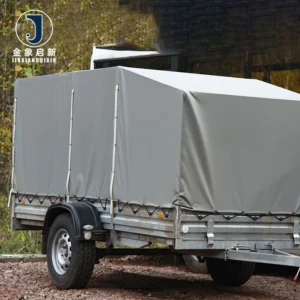
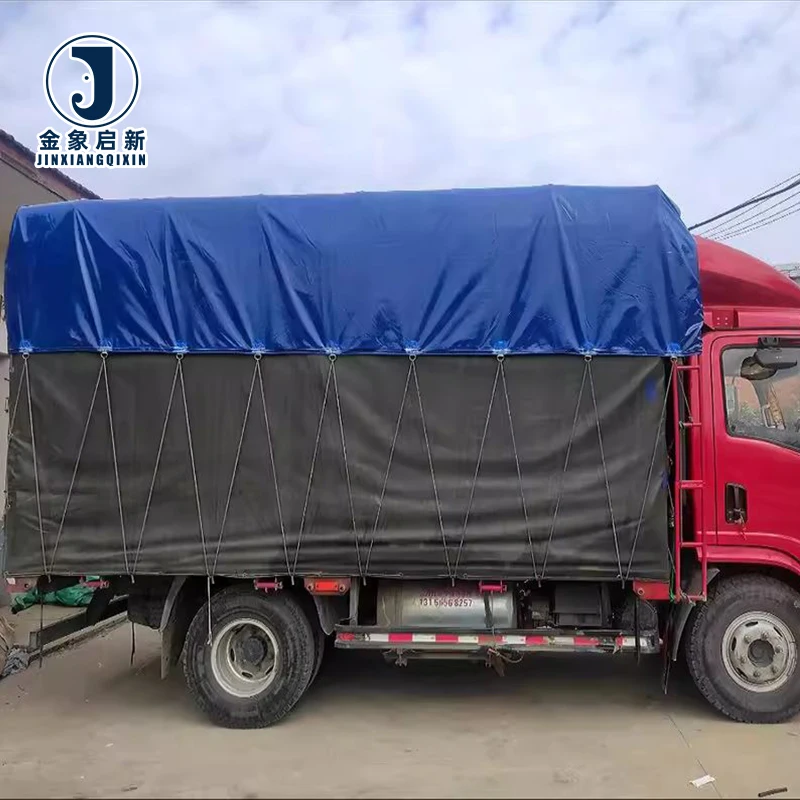
| Truck and trailer side curtain | Constant flexing at load points, road debris abrasion, continuous UV exposure, wind flutter stress on welded seams |
| Trailer top roof cover | Direct rainfall pooling, thermal expansion and contraction, tension from tie-down straps across wide spans |
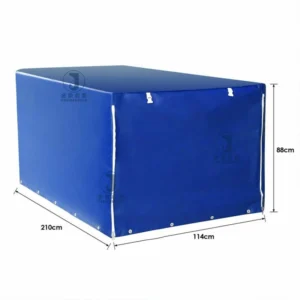
| Pallet and equipment cover | Forklift contact abrasion, outdoor yard stacking compression, moisture ingress prevention during transit |
| Outdoor event block-out tent | Crowd proximity fire safety requirements, repeated setup and teardown folding, sun-facing panel UV load |
| Inflatable structure fabric | Internal air pressure stress on seam welds, repeated inflation-deflation cycles, ground contact abrasion |
| Architecture membrane material | Long-term structural tension loading, wind uplift forces, weathering across large unsupported spans |
| Waterproof construction tent | Site debris impact, heavy rainfall exposure, temporary structure wind loading, equipment contact damage |
Why Coating Weight Matters More Than GSM Alone for PVC Coated Tarpaulin
GSM tells you how heavy the fabric is — coating weight and base fabric construction tell you how it performs.
When a buyer receives a roll that feels lighter than the agreed specification, the issue is rarely a simple measurement error. The PVC coated tarpaulin material properties and coating technology determine whether the base fabric carries the structural load or the coating does. A roll can meet its stated GSM by loading extra plasticiser into the coating while using a thinner, lower-denier base fabric. The result is a material that passes the scale test but tears at the first flex point on a moving truck. [NEED_CITE: tensile and tear test methods for coated fabrics per ISO 1421]
Coating Adhesion and Base Fabric Interaction
The durability of any laminated PVC vinyl canvas depends on how firmly the coating bonds to the woven base. When adhesion is weak, the coating peels away from the fabric at stress concentrations — typically around eyelets, at welded seams, and along fold lines that form during transport use. Double-faced construction distributes this load across both surfaces, reducing the chance of single-side delamination under repeated flexing.
Treatment Verification and Compliance Documentation
Anti-UV treatment is available in multiple grades — confirm the UV stabiliser level required for your target market and exposure duration. Flame retardant grades are available in formulations that meet different regional fire classification systems; always request the test report that corresponds to your local compliance requirement. Water resistant performance comes from the continuous PVC coating layer with no exposed base fabric threads at cut edges or seam lines. [NEED_CITE: fire classification standards for temporary structures and transport covers]
How Base Fabric Denier and Coating Method Shape Real Performance
Base fabric denier and weave density set the foundation for tensile and tear strength. Higher denier yarns resist tear propagation, while tighter weave density distributes load across more intersection points. Coating weight adds mass and surface protection but does not compensate for a weak base fabric. Lamination as a coating method bonds pre-formed PVC films to the woven substrate, creating a uniform thickness that supports predictable heat welding parameters. This matters for fabricators joining panels into truck side curtains or inflatable structures, where inconsistent coating thickness causes weld failures.
Batch Consistency and Colour Matching Across Production Runs
Colour variation between rolls in the same order becomes immediately visible when panels are installed side by side on a trailer or tent structure. Controlling pigment dispersion and coating thickness across the full production run ensures that every roll cut from a batch matches the approved colour reference. Multiple color options are supplied with batch consistency verified before shipment, reducing the risk of panel rejection on site. [NEED_CITE: colour measurement methods for coated fabric quality control]
What Happens When Material Properties Are Assumed but Not Verified
A truck cover fabric that arrives without supporting test documentation leaves the fleet operator unable to prove compliance during roadside inspection or insurance assessment. Rolls specified as flame retardant but lacking the required certification for a construction site or mining operation face immediate rejection, with the entire shipment returned at the buyer’s cost. Welded seams that fail before the fabric itself breaks indicate a mismatch between the coating formulation and the welding parameters used — a problem that surfaces only after the cover is in service and carrying a load.
Why Fabricators and Technical Buyers Source Here
Three full production lines with dedicated equipment for coated fabric ensure that PVC coated tarpaulin rolls maintain consistent coating weight and adhesion across high-volume orders. A ten-person R&D team develops custom material samples within days, allowing fabricators to validate coating behaviour, weld parameters, and colour match before committing to full production. Every roll undergoes inspection at each production stage with full pre-shipment verification, so the material arriving at your facility matches the approved specification. ISO and CE certified production processes provide the documentation trail that compliance-driven markets require.
Documentation & Verification
- Material specification sheet stating GSM, base fabric denier, coating method and weight per roll
- Test report for UV stabiliser and flame retardant grades provided with applicable shipments
- ISO and CE certificates included in the dispatch documentation package
- Pre-shipment inspection record confirming coating weight and colour match against approved reference
- Roll packing list with individual roll identification for traceability on receipt
Fabrication, Handling & Storage
- Heat welding temperature should be matched to the laminated PVC coating thickness to avoid seam delamination
- Double-faced finish allows welding from either panel side for flexible fabrication sequencing
- Store rolls upright on core to prevent flat-spot compression marks on the coating surface
- Cut panels should be sealed at edges to prevent moisture ingress into the base fabric weave
- Clean with mild detergent only to preserve the anti-UV and flame retardant treatment layer
How to Specify Your Material Requirement
Tell us the end-use application, the environmental exposure conditions your covers will face, and any fire classification or compliance standards required in your target market. Specify the roll width, colour reference, and whether you need stock material or custom formulation. Requesting a sample roll early in the process allows your fabrication team to confirm weld settings and handling characteristics before placing a full production order.
Frequently Asked Questions
Q: How is GSM verified on arrival and what tolerance applies?
A: Every roll is weighed and measured during pre-shipment inspection, with the recorded GSM checked against the specification sheet. The inspection record accompanies the shipment so you can verify the figures on receipt. Tolerance ranges depend on the coating formulation and base fabric grade — request the specific tolerance band for your selected material when placing the order.
Q: Can you provide test reports for anti-UV and flame retardant treatments?
A: Test reports are supplied with shipments where UV stabiliser or flame retardant grades are specified. Available flame retardant grades are matched to the compliance system required in your market. Confirm the exact standard your project demands at inquiry stage so the correct formulation and documentation are prepared with your order.
Q: How does base fabric denier affect tensile and tear strength?
A: Higher denier yarns in the base fabric resist tear propagation more effectively, while weave density determines how load spreads across the fabric structure. Coating weight adds surface protection but does not replace base fabric strength. Request the base fabric specification sheet to compare denier and weave options for your application.
Q: What coating method is used and how does it affect welding?
A: The laminated PVC vinyl canvas construction produces a uniform coating thickness that supports consistent heat welding results. Predictable coating behaviour reduces the trial-and-error phase when fabricators set weld temperature and dwell time. Request a sample to validate your welding parameters before full production.
Q: How is colour consistency controlled across rolls in one order?
A: Pigment dispersion and coating thickness are monitored throughout the production run to ensure every roll matches the approved colour reference. Pre-shipment inspection includes a visual and measured colour check across all rolls in the batch. Specify your colour reference at inquiry to allow sample approval before production begins.