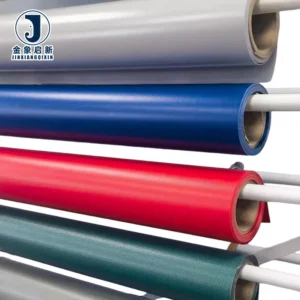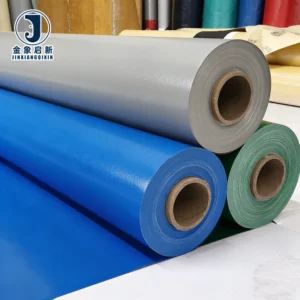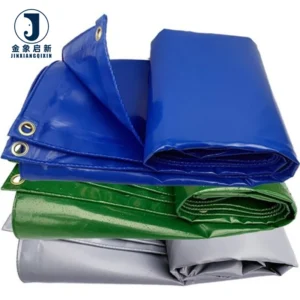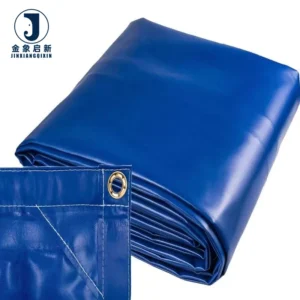
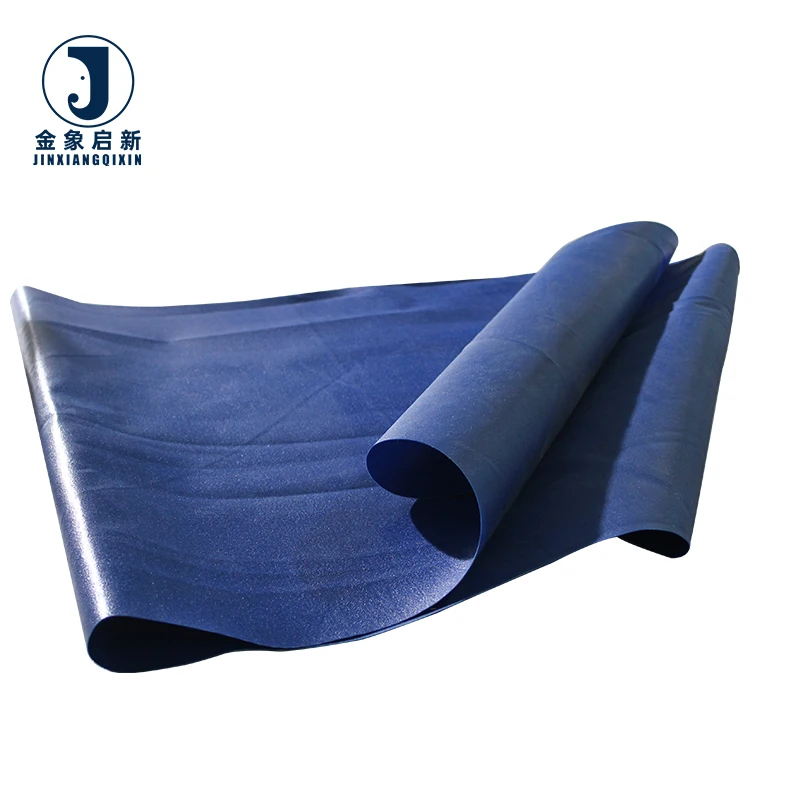
Coating Process Control — Every roll of PVC coated tarpaulin fabric material coating technology GSM is produced with verified coating weight and adhesion, supported by a material specification sheet for independent verification upon arrival.
Technical Specifications
| Parameter | Value |
|---|---|
| Product Type | PVC Coated Tarpaulin Roll |
| Material | PVC coated polyester fabric |
| Weight (GSM) | 550g / 600g / 650g / 900 GSM |
| Thickness | 0.2–0.4 mm / 8–16 mil |
| Color Options | Blue, Orange, Green, Grey, Black, Clear, or custom |
| Finish | Available in glossy or matte finish |
| Key Features | Waterproof, tear resistant, UV resistant (test basis available on request), mildew proof, anti-aging |
| Standards | ISO 9001 / CE |
Application Suitability
| Application | Exposure & Requirement |
|---|---|
| Truck side curtains | Constant flexing at tie-down points, road debris abrasion, prolonged UV exposure, weld seam integrity under load movement |
| Roof tents and awnings | Repeated folding and unfolding, direct sunlight, rain pooling on horizontal surfaces, mildew in humid storage |
| Site equipment covers | Outdoor weathering, dust and moisture ingress, wind uplift on large flat spans, occasional contact with solvents |
| Inflatable and membrane structures | Sustained internal air pressure, seam stress at panel joins, UV degradation on exposed outer surface, fire safety compliance |
| Pond and reservoir liners | Permanent water immersion, soil chemistry contact, puncture risk from substrate, long-term coating adhesion in wet conditions |
Why Quoted GSM and Actual GSM Diverge at the Dock
Verified coating weight starts with base fabric construction, not just the number on the quotation.
Technical buyers specifying PVC coated tarpaulin fabric material coating technology GSM frequently receive rolls that measure lighter than the agreed value. The gap often comes from a thinner base fabric compensated by heavier coating, which inflates the GSM reading without improving tensile or tear performance. When the coating is the primary contributor to weight rather than the woven substrate, the fabric behaves differently under tension and at welded seams [NEED_CITE: tensile and tear test methods for coated fabrics per ISO 1421]. A material specification sheet that breaks out base fabric denier, mesh count, and coating weight separately gives the fabricator a true picture of what is inside the roll before it reaches the cutting table.
Base Fabric Denier and Weave as the Structural Backbone
The woven polyester base fabric carries the mechanical load long before the PVC coating contributes. Higher denier yarns and tighter mesh counts produce a substrate with greater inherent tensile and tear strength. PVC coated tarpaulin fabric material coating technology GSM selection should therefore begin with the base fabric specification, because two rolls at the same nominal weight can perform very differently if one uses a lighter weave padded with extra coating. Fabricators welding panels for truck curtains or inflatable structures need this distinction to predict seam behaviour under flex load.
Coating Method and Its Effect on Adhesion and Weldability
Knife coating, calendering, and dip coating each produce a different bond between the PVC layer and the base fabric. Knife coating typically delivers a thicker, more uniform layer suited to heavy-duty covers, while calendering can achieve tighter thickness control at higher line speeds. The adhesion strength between coating and substrate determines whether a hot-air weld fuses through both layers cleanly or causes delamination at the seam [NEED_CITE: coating adhesion test methods for PVC coated polyester]. Fabricators running high-frequency or hot-air welding equipment should request the coating method detail before setting machine parameters, as the plasticiser content and coating density directly influence the temperature window for a sound weld.
Reading the Specification Sheet Beyond the GSM Number
Weight in GSM is a useful starting point but tells only part of the story. The relationship between base fabric denier and PVC coating thickness governs how the material distributes load across the weave. A 900 GSM roll built on a coarse, low-density weave will tear more easily along the weft than a 650 GSM roll on a tighter substrate. Coating formulation also matters: plasticiser migration over time can stiffen the fabric and reduce low-temperature flexibility, while surface finish — glossy or matte — affects dirt retention, print adhesion, and the ease of cleaning in the field. Specifying by the full parameter set rather than GSM alone prevents the mismatch between expected and actual service performance [NEED_CITE: polymer migration and long-term flexibility in plasticised PVC coatings].
The Hidden Cost of Specifying on GSM Alone
When a fabricator selects material based solely on quoted GSM without verifying base fabric density, the consequences surface at the most stressed points. Welded seams on truck side curtains may peel under repeated flexing because the coating-to-substrate bond is weaker than expected. Rolls that pass a simple weight check can still show inconsistent colour or thickness across a batch, forcing rework on large fabricated covers where panel matching is visible. In projects requiring fire compliance, a generic PVC coated tarpaulin fabric material coating technology GSM order may arrive without the flame retardant grade the site inspector demands, delaying handover and triggering costly replacement [NEED_CITE: DIN 4102 fire classification for building materials]. These failures trace back to an incomplete specification, not to the material itself.
Why Source PVC Coated Fabric Through This Production Line
Nearly three decades of coated fabric production have built process control over coating weight and adhesion that translates into roll-to-roll consistency on every shipment. Three full production lines and dedicated equipment sets handle bulk roll orders with predictable scheduling, while a ten-person R&D team develops samples within days when custom GSM, colour, or treatment is required. QA inspection at every production stage and a full pre-shipment check mean the specification sheet you receive reflects what is actually in the container. This is relevant for technical buyers and fabricators who need PVC coated tarpaulin fabric material coating technology GSM to arrive as specified, without surprise deviations that disrupt fabrication schedules or compromise end-product performance.
Documentation & Verification
- Material specification sheet stating exact GSM, base fabric denier, coating type, and colour reference per roll
- UV treatment test report supplied where applicable, traceable to recognised exposure standards
- Flame retardant grade certificate provided when specified, matching the classification required for your market
- Pre-shipment inspection record confirming weight and visual consistency before container loading
- Roll packing list with batch identification for traceability through fabrication and installation
Fabrication, Handling & Storage
- Hot-air weld temperature must be matched to the specific PVC coating formulation and thickness of the roll grade selected
- High-frequency welding performs best on the glossy finish option; matte surfaces may require adjusted pressure settings
- Store rolls horizontally on pallets to prevent permanent creasing across the full width of the coated fabric
- Allow cold-transported rolls to reach ambient temperature before unrolling to avoid cracking the PVC coating at low flexibility
- Clean gloss-surface panels with mild detergent; avoid solvent-based cleaners that can extract plasticiser from the coating layer
- Plan cutting layouts to minimise off-cuts, especially on the heavier 900 GSM grades where material waste adds cost quickly
Specifying the Right Roll for Your Next Fabrication
Provide the end-use application and the environmental conditions the finished product will face, including UV exposure duration and any fire safety classification your market requires. Confirm whether you need roll stock at a specific width and length, or if finished cut panels with welded hems are preferred. Share your annual volume estimate and colour requirements so that batch consistency can be planned across multiple shipments. Request a sample roll or swatch in your target GSM and finish to validate weld parameters and colour match before committing to full production.
Frequently Asked Questions
Q: How is GSM verified and what tolerance applies between quoted and delivered weight?
A: Each roll is weighed during the pre-shipment inspection and recorded on the material specification sheet. The quoted GSM refers to the combined weight of base fabric and PVC coating. A standard industry tolerance applies, and the specification sheet breaks out base fabric weight and coating weight separately so you can confirm the construction matches your requirement upon arrival.
Q: What is the relationship between base fabric denier and the final tensile and tear strength?
A: Base fabric denier and mesh count determine the structural strength of the coated fabric. A heavier denier with a tighter weave resists tear propagation more effectively than a lighter, looser weave at the same GSM. When specifying PVC coated tarpaulin fabric material coating technology GSM, request the base fabric detail alongside the total weight to assess true mechanical performance for your application.
Q: How does the coating method affect weld strength and seam durability?
A: Knife coating and calendering produce different coating densities and plasticiser distributions within the PVC layer. These differences influence the temperature range for hot-air or high-frequency welding and the resulting peel strength at the seam. Request the coating method detail for your selected grade to set accurate welding parameters on your fabrication equipment.
Q: What UV test basis supports the anti-UV treatment and how does it relate to service life?
A: UV treatment is available for all grades in this range. A test report referencing recognised exposure standards can be supplied on request, detailing the accelerated weathering method used and the results achieved. The report allows you to compare the UV stability of the selected grade against the exposure conditions your end product will face.
Q: How do I specify a flame retardant grade and what certification documentation will I receive?
A: Available in flame retardant grades — confirm the grade required for your market. Once the target classification is identified, the production team matches the coating formulation accordingly and supplies a test certificate referencing the applicable standard. This documentation supports site inspections and compliance submissions in your destination market.