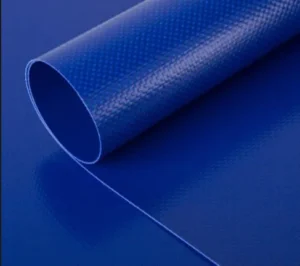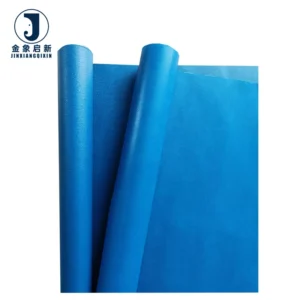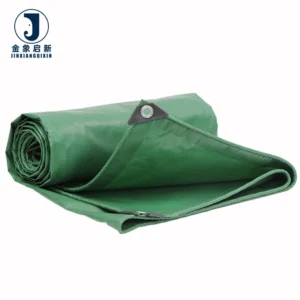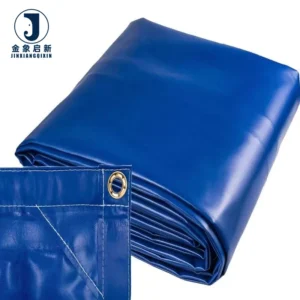
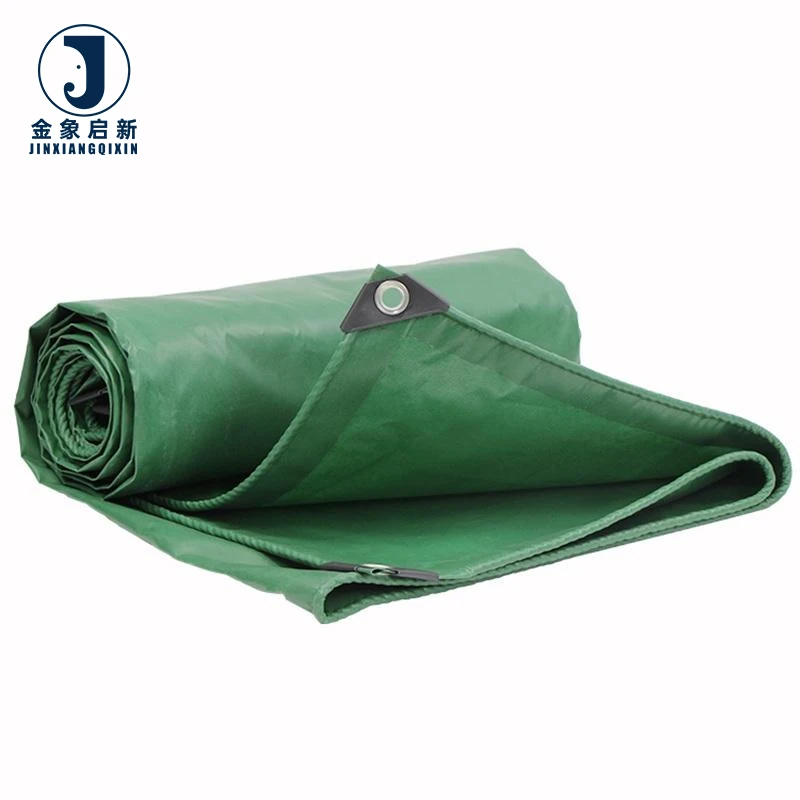
Process Control Over Coating Weight — every roll verified against stated GSM before dispatch, with base fabric and coating weight documented separately.
Technical Specifications
| Parameter | Value |
|---|---|
| Product Type | PVC Coated Tarpaulin Roll |
| Material | PVC + high-strength polyester mesh fabric |
| Coating Method | Laminated technology & hot-melt coating technology |
| Weight Options | 350gsm, 420gsm, 500gsm, 550gsm, 600gsm, 750gsm |
| Total Thickness | 0.32mm, 0.35mm, 0.4mm, 0.45mm, 0.5mm, 0.65mm |
| Standard Roll Size | 2m width × 75m length / 2.1m width × 50m length |
| Surface Finish | Available in glossy or matt surface |
| Color | Blue, red, yellow, light blue, grey (customized options available) |
| Waterproof | Double-sided 100% waterproof |
| Cold Crack Resistance | Stated (test basis not stated in source) |
| Anti-Mildew | Stated |
| Anti-Static | Stated (surface resistance or standard not confirmed) |
| UV Treatment | Sunproof stated (test basis not stated in source) |
| Tensile Strength | High tension strength (test standard not stated in source) |
| Tear Strength | High tear strength (test standard not stated in source) |
| Adhesion Strength | Good adhesion strength (test standard not stated in source) |
| Color Fastness | Best color fastness (test standard not stated in source) |
| Printing Option | Custom printing of brand accepted |
| Custom Sizing | Finished product size as per customer’s needs |
| Standards | ISO and CE certified |
Application Suitability
| Application | Exposure & Requirement |
|---|---|
| Tent and awning fabrication | Sustained UV exposure, wind load, repeated folding and packing |
| Truck and trailer side curtains | Constant flexing at tie-down points, road abrasion, weather cycles |
| Fish tank and pool liners | Permanent water immersion, chemical exposure from treatment agents |
| Cargo ship covers | Salt spray, heavy rain, UV at sea, mechanical abrasion from cargo |
| Construction site covers | Dust, debris impact, weather exposure, temporary to semi-permanent use |
| Pond and reservoir liners | Standing water, soil chemistry, puncture risk from substrate |
Why PVC Coated Tarpaulin GSM Alone Does Not Predict Field Performance
Coating weight without base fabric denier data leaves the tensile and tear specification incomplete.
Technical buyers regularly receive PVC coated tarpaulin roll stock that matches the quoted GSM on a scale test yet fails prematurely in service. The reason: GSM measures total weight per square metre — the combination of base polyester mesh and PVC coating together. A roll can hit its target GSM by carrying a heavier coating on a lighter base fabric, or a lighter coating on a denser mesh. The two constructions behave very differently under tension and at welded seams. [NEED_CITE: tensile and tear test methods for coated fabrics per ISO 1421]
When a fabricator hot-air welds two panels together, the seam strength depends on how deeply the PVC coating penetrates the mesh and how well the coating layers fuse. A thicker coating on an open-weave base may give acceptable peel strength, but the tear resistance at the flex point remains governed by the yarn count and denier of the polyester scrim underneath. Without this data separated on the material specification sheet, you cannot predict where the fabric will fail first — at the weld, in the coating, or through the base fabric. [NEED_CITE: relationship between base fabric construction and coated fabric tear propagation]
Coating Method and Its Effect on Weld Seam Integrity
The PVC coated tarpaulin roll family is produced using both laminated technology and hot-melt coating technology. Laminated construction bonds pre-formed PVC films to the polyester mesh under heat and pressure, producing a uniform coating thickness with consistent surface quality across the roll. Hot-melt coating applies plasticised PVC directly onto the mesh in a liquid sta*e. For fabricators welding panels into truck side curtains or tent structures, the coating method influences the temperature window and dwell time needed for a reliable seam. Hot-melt coated fabric tends to fuse more readily at the weld line because the coating has already bonded into the mesh interstices, while laminated grades may require slightly higher temperatures to achieve equivalent peel strength.
Surface Finish Selection for Print Quality and Dirt Shedding
Available in glossy or matt surface options, each finish serves different end-use requirements. Glossy surfaces shed dirt and water more effectively, making them suited to outdoor covers where cleaning access is limited. The smooth surface also reflects more solar radiation, which can reduce heat buildup under truck covers and awning structures. Matt surfaces provide better ink adhesion for custom brand printing, reducing the risk of graphic flaking after repeated folding. Fabricators producing printed tent panels or branded transport covers typically specify matt finish for the printed side. Both finishes maintain the same waterproof and anti-mildew properties across the PVC coated tarpaulin range.
Reading GSM and Thickness Together for Material Selection
The six weight grades — 350gsm, 420gsm, 500gsm, 550gsm, 600gsm, and 750gsm — correspond to total thickness values of 0.32mm, 0.35mm, 0.4mm, 0.45mm, 0.5mm, and 0.65mm respectively. These paired values reveal how much of the total weight comes from coating versus base fabric. A grade where thickness increases proportionally with GSM indicates additional coating mass, contributing to abrasion resistance and waterproofing. A grade where thickness rises more slowly relative to GSM suggests a denser base mesh, which typically delivers higher tensile and tear values. Technical specifiers selecting material for membrane structures or heavy-duty transport covers should request the base fabric denier and mesh count to complete this picture. The relationship between GSM, thickness, and base fabric density is the basis for comparing PVC coated tarpaulin across different coating technologies and manufacturers.
The Hidden Cost of Specifying on GSM Without Verifying Construction
A roll that meets the quoted GSM on arrival can still produce weld failures if the coating-to-base-fabric ratio differs from what the fabricator’s welding parameters expect. Seams fail before the fabric does at the point the load flexes most — a failure mode traced to adhesion strength between coating layers rather than to total weight. [NEED_CITE: adhesion strength testing for coated fabric weld seams] Colour variation between rolls in the same batch order becomes visible once panels are installed side by side, forcing rework or material replacement. Rolls supplied without documentation of the coating method leave fabricators guessing at weld temperature settings, increasing scrap rates during the first production runs. These issues compound when orders scale from sample rolls to full container loads.
Why Technical Buyers Source This PVC Coated Tarpaulin Range Here
Three full production lines and 36 sets of professional equipment support bulk roll output with consistent coating weight across the batch. The 10-person R&D team handles material selection, custom colour matching, and sample development, delivering sample rolls within days rather than weeks. Dedicated QA/QC runs at every production stage with 100% inspection before shipment, including GSM verification per roll against the purchase order specification. The material specification sheet provided with each order states GSM, base fabric construction, and coating method — not just a single weight figure. Laminated and hot-melt coating options are available within the same product family, allowing fabricators to compare weld behaviour before committing to a production grade. Custom widths, roll lengths, and colour runs are supported with documented batch consistency across the order. [NEED_CITE: coating weight verification methods for PVC tarpaulin rolls]
Documentation & Verification
- Material specification sheet stating GSM, base fabric denier, and coating method per roll
- Test report for UV and flame-retardant grades where applicable, with standard documented
- Pre-shipment inspection record confirming GSM and colour consistency before dispatch
- Roll packing list with batch reference for full traceability
- ISO and CE certificates included with shipment documentation
- Certificate of origin and customs support provided per destination market
Fabrication, Handling & Storage
- Hot-air welding temperature should be adjusted based on whether the roll uses laminated or hot-melt coating construction
- Store rolls upright on pallets to prevent permanent creasing across the 2m or 2.1m width
- Unroll and allow the fabric to relax before cutting to minimise tension distortion in finished panels
- Clean glossy surface grades with mild detergent only — abrasive cleaners damage the PVC top layer
- Matt finish panels accept screen printing ink more reliably when the surface is free of release agents
- When splicing panels from different rolls, confirm colour match under daylight conditions before welding
What to Include in Your Specification Enquiry
To match the correct grade and coating method to your application, provide the end-use environment and any exposure conditions — sustained UV, standing water, chemical contact, or flex cycling. If your market requires specific fire classification or anti-static performance, state the standard or grade needed so the correct treatment level is confirmed before sampling. Specify whether you need roll stock in standard widths or custom dimensions, and whether finished product sizing or raw roll supply is required.
Frequently Asked Questions
Q: How is GSM verified — can I request a coating weight test report with my shipment?
A: Each roll undergoes 100% inspection before dispatch, and the pre-shipment inspection record documents the measured GSM. You can request a material specification sheet that separates base fabric weight from coating weight. For independent verification, we provide test samples from the same production batch so your lab can cross-check before the full shipment arrives.
Q: What is the difference between laminated and hot-melt coating in terms of adhesion and weld behaviour?
A: Laminated technology bonds pre-formed PVC films to the mesh, giving uniform surface quality and predictable thickness. Hot-melt coating penetrates deeper into the mesh weave, which can improve adhesion strength and fusion at the weld line. Fabricators often test both methods on sample rolls to confirm which suits their welding equipment and seam strength requirements.
Q: Does the sunproof or anti-UV treatment come with a test result and exposure rating?
A: UV treatment is available on this PVC coated tarpaulin range — confirm the specific test standard and exposure rating required for your market. Where a grade is specified, the corresponding test report is provided with shipment documentation. Contact the technical team with your local compliance requirement so the correct treatment level is matched.
Q: How does base fabric denier and mesh count relate to the stated GSM and tensile strength?
A: GSM reflects the combined weight of polyester mesh and PVC coating. The base fabric denier and weave density determine tensile and tear performance, while the coating contributes abrasion resistance and waterproofing. Two rolls at the same GSM can have very different strength profiles depending on how the weight is distributed between mesh and coating.
Q: Can I order sample rolls in different GSM grades to test weld seam strength before committing?
A: Sample rolls are developed within days for custom requirements, and you can request multiple GSM grades from the range to compare weld behaviour. This allows your fabrication team to establish optimal welding parameters before placing a full production order. Samples ship with the same documentation as bulk rolls for direct comparison.