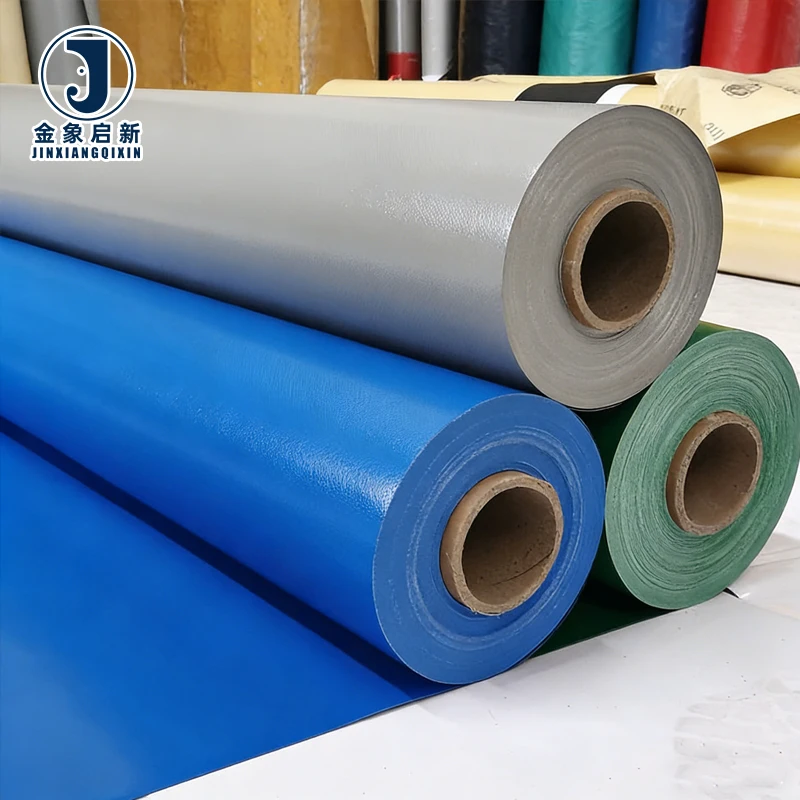
Coating Weight Traceability — every roll is weighed and recorded at the coating line, so the GSM you specify is the GSM you receive.
Technical Specifications
| Parameter | Value |
|---|---|
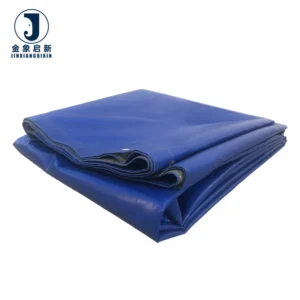
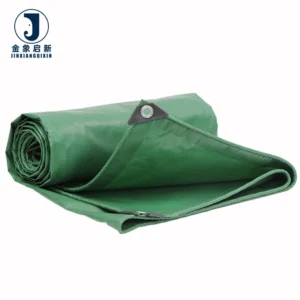
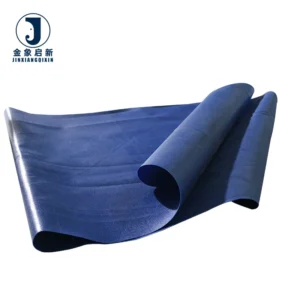
| Specification | PVC Tarpaulin Roll 610gsm 650gsm 800gsm |
| Product Type | PVC Coated Tarpaulin Roll |
| Coating Material | PVC |
| Coating Method | Knife Coated |
| Water Resistance | Yes |
| Flame Retardant | Available in flame retardant grades — confirm the grade required for your market |
| UV Treatment | Available with anti-UV treatment — request test basis for specific grade |
| Surface Finish | Glossy / Matte options available |
| Color | Blue (680G variant referenced — confirm colour match for your order) |
| Roll Width | Custom widths available |
| Roll Length | Custom lengths available |
| Reinforcement Options | Eyelets and reinforced hems available |
| Printing Option | Pattern printing and branding available |
Application Suitability
| Application | Exposure & Requirement |
|---|---|
| Tent and awning fabrication | Extended UV exposure, repeated tension cycles, need for consistent colour across multiple rolls |
| Truck and trailer side curtains | Constant flexing, road abrasion, thermal cycling, high-frequency weld seams |
| Inflatable and membrane structures | Sustained internal pressure, coating adhesion under biaxial stress, airtight seam integrity |
| Outdoor equipment covers | Permanent weather contact, abrasion from wind-driven debris, UV degradation |
Why the Stated GSM Is Only Half the Material Story
GSM tells you how much fabric exists per square metre, but it does not tell you how that weight is distributed between base yarn and coating.
A PVC coated tarpaulin 610gsm 650gsm 800gsm material can share the same weight label while performing very differently in tensile or tear resistance, depending on whether the mass comes from a dense polyester base fabric or simply a heavier coating layer. Technical buyers who specify on weight alone often discover at the fabrication stage that the fabric does not hold a weld seam, or that tear propagation starts at a lower load than expected. [NEED_CITE: relationship between base fabric denier and tensile performance per ISO 1421] The only reliable way to evaluate a PVC coated tarpaulin 610gsm 650gsm 800gsm material is to read the GSM alongside the base fabric denier, weave density, and coating weight as separate data points.
Knife Coating and Its Effect on Layer Integrity
Knife coating forces liquid PVC into the base fabric under pressure, filling the interstices between yarns before the coating is cured. This produces a mechanical lock between coating and substrate that directly determines adhesion strength — the property that governs whether a weld seam delaminates before the fabric itself tears. Across the available GSM grades, the knife coating process ensures consistent penetration depth, which is why weld performance remains predictable even when fabricators adjust heat or dwell time for different thicknesses.
Batch-to-Batch Consistency Across a Container-Load Order
Roll-to-roll variation in coating weight and colour is a common source of rework when a fabricator installs panels side by side. In-process quality checks at the coating line track weight per linear metre and colour reference against the approved sample, flagging any drift before the roll is wound. This level of control is critical for tent and awning manufacturers who cut dozens of panels from a single batch and need every seam to match visually once the structure is erected. [NEED_CITE: colour consistency verification methods for coated textiles]
Reading the GSM, Denier and Weave Together
GSM alone is a poor predictor of mechanical performance because it conflates base fabric mass with coating mass. A roll with a high-denier, tightly woven polyester base and a thinner coating can outperform a heavier roll that relies on coating bulk for its weight. Tensile strength follows the yarn count and weave density, while tear resistance is governed by how the yarns redirect crack propagation through the fabric plane. Coating weight matters most for abrasion resistance and weld adhesion. When evaluating the PVC coated tarpaulin 610gsm 650gsm 800gsm range, request the base fabric denier and mesh count alongside the total GSM to make an informed comparison between grades.
The Hidden Cost of Specifying on Weight Alone
Choosing a roll only by its GSM label creates downstream failures that are expensive to diagnose. A fabricator welding truck side curtains may find that the seam peels at a load well below the fabric’s tear rating because the coating layer is too thin to bond properly, even though the total GSM was verified on arrival. Similarly, a membrane structure builder who selects a grade for its weight may discover under sustained inflation pressure that the base fabric lacks the denier needed to resist creep, leading to gradual panel deformation. These failures are not material defects — they are specification errors that a full data sheet would have prevented. [NEED_CITE: coated fabric weld adhesion failure modes in transport covers]
Process Control That Protects Your Specification
Deep process expertise in knife coating ensures that coating weight and adhesion are controlled at the line, not verified only after the roll is wound. Three full production lines and dedicated equipment sets support bulk orders without sacrificing roll-to-roll consistency on the PVC coated tarpaulin 610gsm 650gsm 800gsm range. A technical team handles material selection and sample development so that fabricators can trial weld parameters before committing to a container-load order. Every production stage includes in-process quality checks, with a full pre-shipment inspection before documentation is released. Sample development is completed within days for custom GSM, width, or colour requirements, allowing buyers to confirm material behaviour against their own fabrication process before the order enters production.
Documentation & Verification
- Material specification sheet stating exact GSM, base fabric denier, coating weight, and coating method per grade
- Test reports for UV resistance and flame retardant grades tied to the specific batch supplied
- Pre-shipment inspection record with roll-by-roll weight verification against the stated GSM
- ISO and CE certificates included with every dispatch documentation package
- Roll packing list and certificate of origin for customs clearance
Fabrication, Handling & Storage
- Adjust weld temperature and dwell time for each GSM grade; knife-coated layers respond differently to heat input
- Store rolls upright on cores to prevent flat-spotting and permanent crease marks in the coating
- Use a rotary blade for cutting to avoid fraying the base fabric yarns at the panel edge
- Clean glossy surfaces with mild detergent only; solvent-based cleaners can soften the PVC coating layer
- Allow rolls to acclimatise to ambient temperature before unrolling in cold conditions to prevent coating stiffness cracks
What to Include in Your Enquiry
To receive an accurate specification recommendation, provide the end-use application and the primary exposure conditions — UV, thermal cycling, chemical contact, or mechanical abrasion. State the required roll width, the target GSM grade, and whether you need a glossy or matte finish. If your market mandates a specific flame retardant classification, name the standard so the correct treatment variant can be quoted. Confirm whether you require roll stock only or finished panels with eyelets and reinforced hems.
Frequently Asked Questions
Q: How is GSM verified roll-by-roll before shipment?
A: Each roll is weighed at the coating line and the result is recorded against the target GSM. The pre-shipment inspection log lists actual weight per roll. On arrival, you can re-check by cutting a measured square from the roll edge and weighing it on a calibrated scale.
Q: What flame retardant grades are available for each GSM?
A: Flame retardant treatment is available across the grade range — confirm the specific classification required for your market, such as M2, B1, or NFPA 701. A test report tied to the supplied batch is provided where applicable.
Q: How do tensile and tear values differ between 610gsm, 650gsm and 800gsm?
A: Mechanical performance depends on base fabric denier and weave density as well as total weight. Request the full mill specification sheet for each grade to compare tensile and tear data directly against your welding process requirements.
Q: How is roll-to-roll colour consistency maintained?
A: Colour reference is checked at the coating line against the approved sample for every production run. In-process QA flags any drift before the roll is wound, ensuring panels cut from different rolls within the same order match visually once installed.