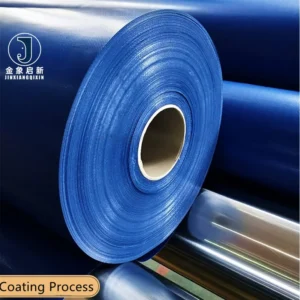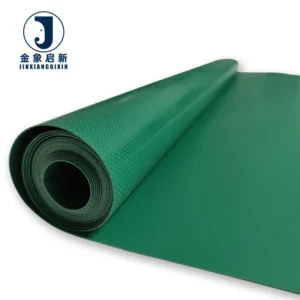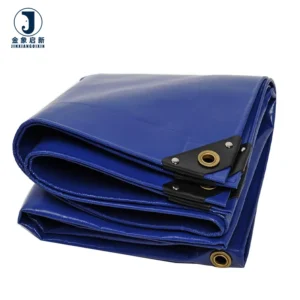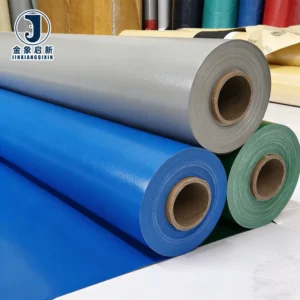
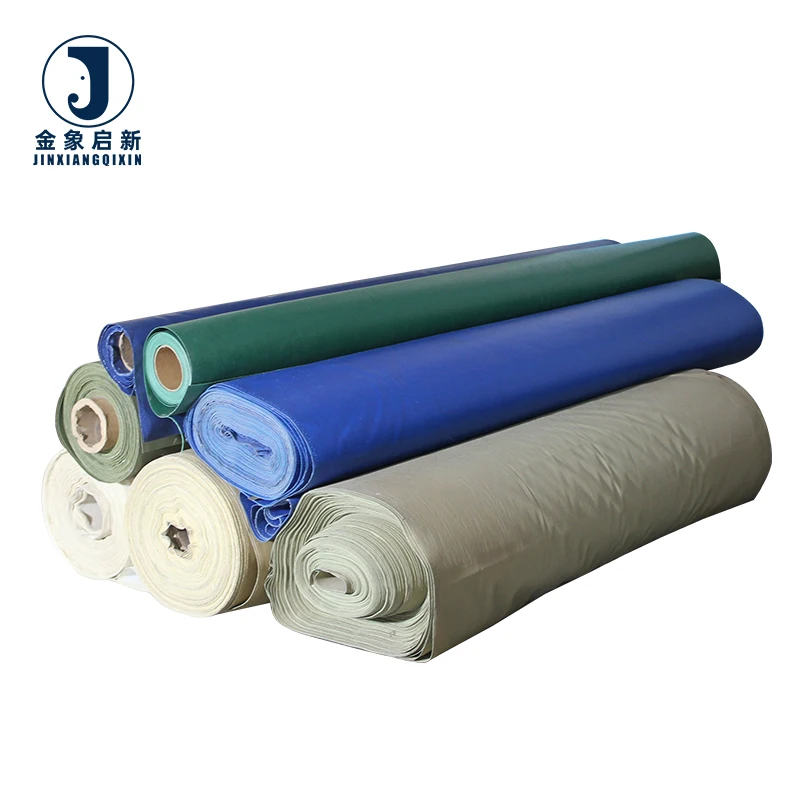
Process-Controlled Coating — Three full production lines with dedicated QA at every stage ensure base fabric denier, weave density, and coating weight are independently verified before rolls leave the facility.
Technical Specifications
| Parameter | Value |
|---|---|
| Product Type | PVC Tarpaulin Roll |
| Coating Material | PE (HDPE weaving with LDPE lamination on both sides) |
| Weight Range | 50 g/m² ~ 220 g/m² available (confirm the grade for this item) |
| Total Thickness | 0.2–0.4 mm / 8 mil–16 mil / Custom |
| Color Options | Blue, Blue/Orange, Green, Grey, Black, Clear, Grey/Green, Orange, or custom |
| UV Treatment | Available (test basis not stated in source — request report before specifying) |
| Waterproof | Yes |
| Anti-Mildew | Yes |
| Tear Resistance | Stated (grade not stated in source) |
| Customization | Custom width, length, color, and printing available |
| Standards | ISO, CE |
Application Suitability
| Application | Exposure & Requirement |
|---|---|
| Tent and awning fabrication | Sustained wind load, repeated folding, UV exposure, seam welding integrity |
| Outdoor weather protection covers | Direct sun, rainfall, temperature cycling, mildew risk in humid climates |
| General cargo and equipment covers | Abrasion from load movement, tie-down stress, puncture from sharp edges |
| Temporary shelter construction | Rapid deployment, waterproofing, structural tensioning at seams |
Why GSM Alone Does Not Tell You How Strong PE Tarpaulin Material and Coating Technology Really Is
Coating weight and base fabric denier must be independently specified and verified — total GSM without a breakdown hides where the strength actually comes from.
When PE tarpaulin material and coating technology is quoted only by total GSM, a roll arriving at the stated weight can still underperform if the HDPE woven base is lighter than expected and the LDPE lamination makes up the difference. The lamination provides waterproofing but does not carry tensile or tear load the way the base fabric does. I have seen bulk orders where the receiving inspection confirmed total GSM yet seam failures appeared within the first season because the base fabric denier was insufficient for the structural demand. [NEED_CITE: tensile and tear test methods for coated fabrics per ISO 1421]
How HDPE Weave and LDPE Lamination Interact Under Load
The HDPE woven base fabric provides the structural backbone — its denier and weave density determine tensile strength and tear propagation resistance. LDPE lamination on both sides seals the weave for waterproofing and adds surface durability, but excessive lamination weight without proportional base fabric strength creates a material that looks heavy yet tears easily at stress concentrations. Understanding this balance is central to specifying PE tarpaulin material and coating technology for awning and tent applications.
Comparing PE Lamination to PVC Coating on Weld Behaviour
PVC coated fabrics typically support high-frequency or hot-air welding that fuses the coating into a continuous seam. PE lamination behaves differently — the LDPE layers melt at lower temperatures and require precise heat control to achieve adhesion without burning through the HDPE base. Fabricators switching between PVC and PE rolls must adjust welding parameters rather than assume the same temperature and dwell time will produce equivalent seam strength. [NEED_CITE: heat welding compatibility differences between PE laminated and PVC coated fabrics]
Reading GSM, Thickness, and Denier Together
Finished GSM combines base fabric weight and lamination weight, while total thickness reflects lamination build on each side. A roll at the upper end of the 0.2–0.4 mm thickness range will carry more LDPE, which improves puncture resistance and surface feel but does not automatically increase tensile capacity. Base fabric denier and weave count are the parameters that govern how the material handles sustained tension at awning frame attachment points. Specifying only thickness or only GSM leaves critical structural properties undefined.
The Hidden Cost of Specifying on GSM Without a Breakdown
When a roll order arrives and the only incoming check is total weight per square metre, a material that meets GSM can still fail at the weld line or tear under wind load if the base fabric was substituted with a lower denier. Fabricators then face warranty claims on finished awnings and tents, and the root cause traces back to an incomplete specification that did not separate base fabric from coating weight. Batch-to-batch colour variation compounds the problem when rolls from the same order are installed side by side on a single structure. [NEED_CITE: roll-to-roll consistency standards for laminated tarpaulin in container-load orders]
Why Technical Buyers Source PVC Tarpaulin Roll Here
Dedicated QA/QC at every production stage means base fabric denier and lamination weight are checked independently, not just total GSM at the end of the line. A 10-person R&D team handles material selection and sample development so fabricators can confirm weld parameters and colour match before committing to a bulk order. Three full production lines and 36 sets of professional equipment support volume capacity while maintaining roll-to-roll consistency. In-process inspection catches coating weight drift before it reaches the finished roll, and 100% pre-shipment inspection provides documented verification per roll. Samples are developed within days for custom colour, width, or GSM confirmation.
Documentation & Verification
- Material specification sheet stating GSM breakdown into base fabric and lamination weight
- Test report for UV treatment where applicable, matched to production batch number
- Pre-shipment inspection record with per-roll GSM and thickness measurement
- ISO and CE certificates with scope covering PE laminated tarpaulin production
- Roll packing list with colour reference and batch traceability per roll
Fabrication, Handling & Storage
- Adjust hot-air welding temperature for LDPE lamination melt point before seaming
- Store rolls upright on cores to prevent flat spots on the lamination surface
- Allow PE tarpaulin rolls to acclimate to ambient temperature before unrolling for cutting
- Use lamination-compatible adhesives for patch repairs on LDPE coated surfaces
- Plan cut patterns around available custom widths to minimize off-cuts and seam joins
- Handle rolls with edge protectors to avoid crushing the LDPE lamination at roll ends
What to Include in Your Inquiry
Provide the intended application and exposure conditions so the correct base fabric denier and lamination weight can be recommended. Specify your target market’s compliance requirements for UV or flame retardant grades, along with required roll width and annual volume. Indicate whether you need fabric by the roll only or finished cut-and-welded panels, and whether sample development is required before bulk production.
Frequently Asked Questions
Q: How is finished GSM verified against the quotation when PE tarpaulin rolls arrive?
A: Pre-shipment inspection records document per-roll GSM and thickness measurements before dispatch. We recommend requesting the GSM breakdown showing base fabric weight versus lamination weight separately, so incoming inspection can confirm structural properties match the specification rather than relying on total weight alone.
Q: PE lamination vs PVC coating — which delivers better seam behaviour for tent fabricators?
A: PE lamination requires lower welding temperatures and precise heat control to bond LDPE layers without damaging the HDPE base. PVC coating supports both hot-air and high-frequency welding. The better choice depends on your existing fabrication equipment and the seam strength required for your tent or awning design.
Q: What UV test basis should be requested for awning fabric specified for outdoor exposure?
A: Request a test report citing a recognized standard and exposure duration relevant to your target market. UV treatment availability should always be supported by documentation rather than supplier claims alone, especially for awning fabricators whose finished products carry performance warranties.
Q: How is roll-to-roll colour variation controlled across a bulk order?
A: Colour consistency is managed through controlled lamination pigmentation and verified during pre-shipment inspection. For orders where rolls will be installed side by side on a single structure, specify your colour reference and request documented verification across all rolls in the shipment.
Q: What documentation accompanies each shipment for customs and incoming quality inspection?
A: Each shipment includes a material specification sheet, roll packing list with batch traceability, certificate of origin, ISO and CE certificates, and pre-shipment inspection records. Test reports for UV or other treatments are matched to the production batch and included where applicable.