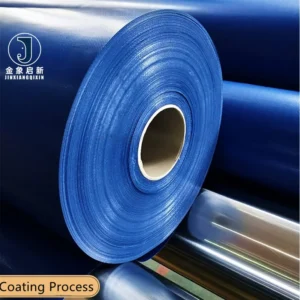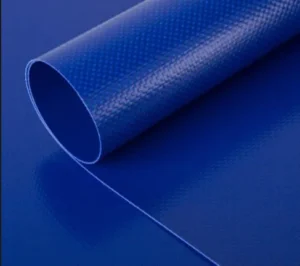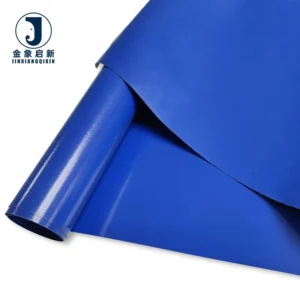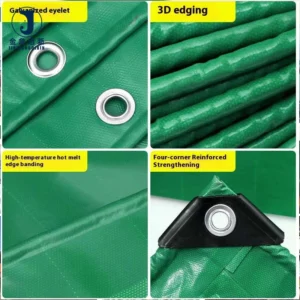
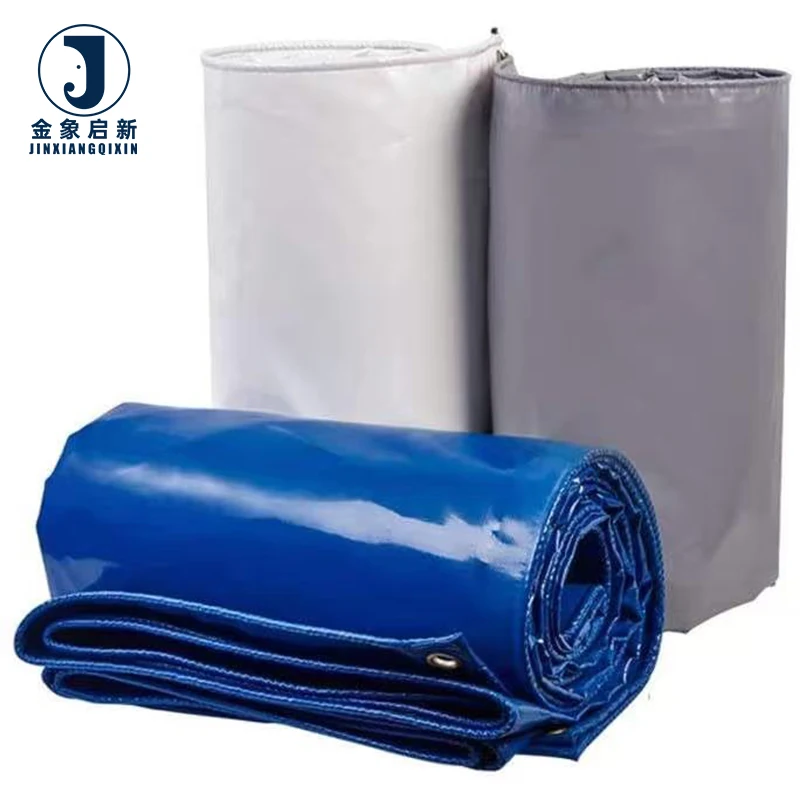
Controlled Coating Weight — Every roll of heavy duty PVC truck side curtains industrial fabric produced under dedicated QA with coating adhesion verified at each production stage before release.
Technical Specifications
| Parameter | Value |
|---|---|
| Product Type | PVC Tarpaulin Roll |
| Material | PVC Coated Fabric |
| Waterproof | Yes |
| Anti-Shrink | Yes |
| Flame-Retardant | Yes (grade to be confirmed per market requirement) |
| UV Resistant | Yes (test basis to be confirmed) |
| Grade | Industrial / Heavy Duty |
| Coating Method | Knife Coated |
Application Suitability
| Application | Exposure & Requirement |
|---|---|
| Truck side curtains | Constant flexing at load points, road debris abrasion, prolonged UV exposure, thermal cycling |
| Lorry covers | Tension under wind load, rain ingress prevention, repeated folding and unfolding |
| Tent covers | Extended outdoor weathering, structural tension, wind-driven rain |
| Industrial fabric covers | Chemical exposure risk, mechanical contact, dust and moisture barrier |
Why the Flame-Retardant Claim Without a Grade Fails on Site
A flame-retardant PVC coated tarpaulin roll only protects your project when the grade matches your local fire code and arrives backed by a test report.
Buyers sourcing PVC coated tarpaulin base fabric denier weave coating weight GSM tensile tear strength data often receive material labelled "flame retardant" with no classification attached. When the fire inspector asks for documentation, a generic claim becomes a rejected shipment. I have watched entire container loads sit on docks while fabricators scrambled for compliant replacement stock [NEED_CITE: fire classification standards for coated textiles in transport and construction applications]. The quotation says one thing; the site compliance officer needs another.
Base Fabric Construction and What It Controls
The denier of the yarn and the weave density of the base fabric together define how this PVC coated tarpaulin roll handles tensile load and resists tear propagation. A heavier denier yarn in a tight weave delivers higher break strength but adds stiffness that complicates folding for side curtain applications. Selecting the right base construction means balancing tear resistance against the handling flexibility your fabrication process demands.
Coating Adhesion and Weld Performance at Flex Points
Knife coating bonds the PVC layer into the base fabric rather than simply sitting on top, which directly affects how the material behaves when heat-welded at seams. Side curtain fabric flexes every time the load shifts, and the weld line experiences concentrated stress [NEED_CITE: seam strength testing methods for coated fabrics under cyclic flex load]. When coating adhesion is weak, the PVC layer delaminates from the base cloth before the weld itself fails, creating a pathway for water ingress along the seam.
How GSM, Denier and Coating Weight Interact
Weight alone tells an incomplete story. A PVC coated tarpaulin roll achieves its tensile and tear strength from the combination of base fabric density and coating weight, not from GSM in isolation. A lighter base cloth with a thick coating may show the same total GSM as a heavier base with a thinner coat, yet the two behave very differently under load. The first tears easily once punctured; the second resists tear propagation through its denser yarn structure. Specifying PVC coated tarpaulin base fabric denier weave coating weight GSM tensile tear strength as a system — rather than a single number — prevents this mismatch.
The Hidden Cost of Undocumented Treatment Claims
When UV or flame-retardant treatment is stated on the invoice but unsupported by a test report, the failure surfaces weeks or months into service. Side curtains fade unevenly across panels that were installed from different rolls, or flame testing on site shows the fabric does not self-extinguish as the specification demanded. Fabricators then face warranty claims they cannot pass back up the supply chain [NEED_CITE: accelerated weathering test protocols for PVC coated textiles]. Batch-to-batch colour variation compounds the problem when replacement rolls arrive visibly different from the original installation.
Why Technical Buyers Source This Roll Stock Here
Three full production lines and 36 sets of professional equipment run this PVC coated tarpaulin roll with controlled coating weight and consistent tension across the web. A 10-person R&D team handles material selection and sample development, matching base fabric denier and coating thickness to your stated application before a production order is placed. Dedicated QA at every stage — from base cloth inspection through coating, curing and winding — means GSM is verified per roll, not assumed from the batch average. ISO and CE certification supports export documentation without last-minute scrambles. Samples for custom width, colour or treatment are developed within days so you confirm the material before committing to volume.
Documentation & Verification
- Material specification sheet confirming GSM, base fabric denier and coating type per roll
- Flame-retardant and UV test reports aligned to your target market standard
- Pre-shipment inspection record covering colour consistency and coating adhesion
- Roll packing list with dimensions and gross weight for container loading
- Certificate of origin and customs documentation for cross-border shipment
Fabrication, Handling & Storage
- Heat-weld at temperatures matched to the knife-coated PVC layer to avoid base fabric scorch
- Store rolls upright on pallets to prevent flat-spot creases across the coated surface
- Allow cold-stored rolls to acclimatise before unrolling to avoid coating micro-cracking
- Use compatible PVC-based adhesives for patch repairs on this coated fabric grade
- Plan cutting layout around the available roll width to minimise off-cuts and seam count
What We Need to Quote Accurately
Provide your end-use application and the environmental exposure conditions the fabric will face, including any fire safety classification required in your market. Confirm the roll width and length that suits your cutting table, along with annual volume expectations. If you need a specific colour or require finished panels rather than roll stock, let us know so the sample stage covers the right format.
Frequently Asked Questions
Q: How do you verify GSM matches the quotation when rolls arrive?
A: Each roll is weighed and measured during pre-shipment inspection, and the result is recorded against the stated GSM on the material specification sheet. You can replicate this check on arrival by cutting a measured sample from the roll edge and calculating weight per square metre. Any deviation beyond the agreed tolerance triggers a replacement before fabrication begins.
Q: Which flame-retardant grades can you supply with this PVC coated tarpaulin roll?
A: Available grades depend on the fire safety standard enforced in your destination market. Confirm the classification you need — such as a building material class or a transport vehicle standard — and the matching test report ships with your documentation. Requesting the grade at inquiry stage ensures the correct additive package is selected during coating.
Q: How is colour consistency maintained across multiple rolls in one order?
A: All rolls in a single production batch are coated from the same compounded PVC mix, and colour is checked against the approved reference under controlled lighting before winding. Rolls are then grouped by batch number on the packing list so you can plan panel placement and avoid mixing batches on visible surfaces.
Q: What roll widths are available for side curtain fabrication?
A: Custom widths are produced to match your cutting table and minimise off-cuts during panel fabrication. Standard stock widths are also held for common side curtain and lorry cover dimensions. Confirm the width that suits your pattern layout at inquiry stage so the production run is scheduled accordingly.