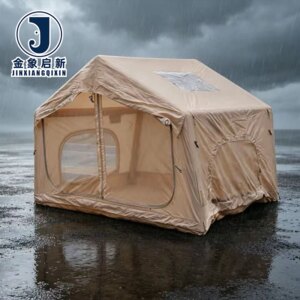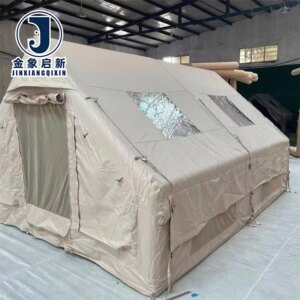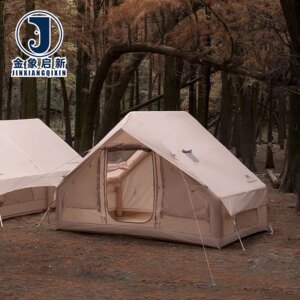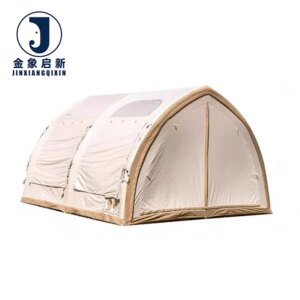
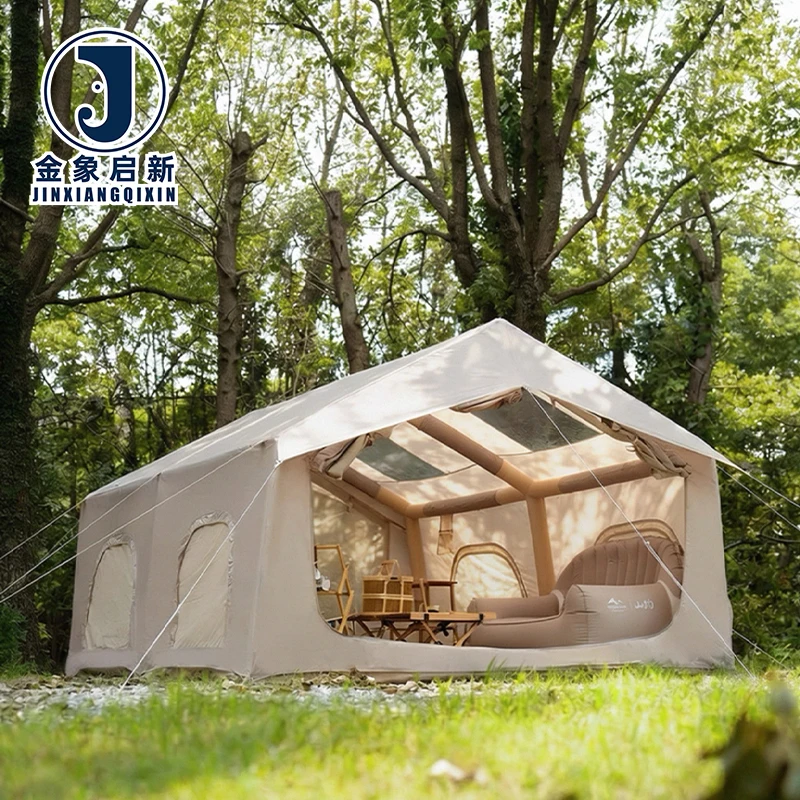
Precision Coating Control — three full production lines manage adhesion and weight consistency across every roll of inflatable structure fabric.
Technical Specifications
| Parameter | Value |
|---|---|
| Product Type | Inflatable Tent Fabric |
| Core Material | PVC Tarpaulin |
| Product Forms | Inflatable structure with single layer construction |
| Waterproof | Yes (precision coating technology) |
| UV Treatment | UV-resistant (test basis not stated) |
| Tear Resistance | Tear-resistant (test basis not stated) |
| Flame Retardant | Fire-retardant (grade not stated) |
| Anti-Static | Anti-static (standard not stated) |
| Certifications | ISO9001, ISO14001, ISO45001, CE |
| Customization Service | OEM & ODM (sample customization, pattern printing) |
Application Suitability
| Application | Exposure & Requirement |
|---|---|
| Temporary site accommodation for infrastructure projects | Prolonged outdoor exposure, wind load on inflated membrane, fire safety compliance on active construction sites |
| Emergency response shelters in disaster relief operations | Rapid inflation cycles, variable weather, immediate deployment without ground anchoring infrastructure |
| Mobile storage solutions for outdoor events | UV exposure during extended assembly periods, public safety fire-retardant requirements, frequent pack-and-deploy handling |
Why Fire-Retardant Inflatable Tent Fabric PVC Coated Without a Grade Is a Compliance Risk
A fire-retardant claim unsupported by a test report leaves the structure owner liable at the point of inspection.
Buyers sourcing membrane material for commercial inflatable shelters often receive a quotation stating "flame retardant" with no reference to a classification system. When the local fire marshal or event safety officer requests documentation, the absence of a grade-specific test certificate halts the project or forces an expensive last-minute material swap. Inflatable Tent Fabric PVC coated for commercial deployment must carry verifiable data matching the jurisdiction’s required standard. [NEED_CITE: fire classification standards for temporary membrane structures in commercial zones]
Coating Adhesion and Air-Holding Integrity
The primary function of inflatable tent fabric is to maintain internal pressure without leakage through the membrane or at welded seams. Precision coating technology applied to the PVC tarpaulin base creates a continuous waterproof barrier that supports sustained inflation. When coating adhesion is inconsistent, micro-delamination occurs at fold points during packing and deployment, eventually compromising the air-holding capacity of the single layer construction.
Fire-Retardant and Anti-Static Treatment for Regulated Environments
Inflatable structures deployed at public events, construction sites, or disaster relief zones operate under specific fire safety and static discharge regulations. This material is available in fire-retardant and anti-static grades — confirm the exact classification required for your market and application before committing to a production run. The R&D team can formulate to a specified standard and provide batch-specific test documentation. [NEED_CITE: anti-static surface resistance requirements for inflatable structures in mining or industrial zones]
Understanding Base Fabric Weave and Coating Weight Interaction
The tear resistance of PVC tarpaulin for inflatable applications depends on the interaction between base fabric denier, weave density, and coating weight rather than any single parameter in isolation. A heavier coating does not automatically yield higher tear strength if the base fabric lacks sufficient yarn count to arrest tear propagation. Precision coating technology controls the PVC layer thickness to complement the structural weave, ensuring the inflated membrane resists wind load and handling stress without adding unnecessary weight that complicates deployment. Surface finish options affect how the material behaves during fabrication; a glossy surface facilitates cleaning in field conditions while a matte finish may improve printing adhesion for branded event structures.
The Cost of Specifying Inflatable Membrane Material on Price Alone
When procurement decisions focus exclusively on per-meter cost without verifying coating weight, fire-retardant grade, or batch consistency, the consequences surface during installation or inspection. A fabric that arrives lighter than the quoted specification may lack the structural rigidity to hold its inflated shape under wind load. Fire-retardant treatment applied without a documented grade leads to failed compliance audits. Colour variation between rolls delivered in the same shipment becomes visible once the membrane panels are welded side by side on the finished structure. [NEED_CITE: weld seam failure rates in coated fabrics with inconsistent coating weight]
Why Technical Buyers Source Inflatable Structure Fabric Here
Deep process control over coating weight and adhesion, developed over nearly 30 years focused on coated fabric, means every roll of Inflatable Tent Fabric PVC coated leaves the facility with verified specification compliance. Three full production lines and 36 sets of professional equipment support bulk volume with reliable on-time delivery for project-timeline-sensitive deployments. A 10-person R&D team handles material selection, pattern printing, and sample development, producing custom samples within days for validation before mass production. Dedicated QA/QC at every production stage with 100% inspection before shipment catches coating inconsistencies and colour deviations before they reach the fabrication floor.
Documentation & Verification
- Material specification sheet stating base fabric type, coating method, and treatment options for each order
- Fire-retardant and anti-static test data provided per batch number for compliance submission
- ISO9001, ISO14001, ISO45001, and CE certification documentation included with every shipment
- Pre-shipment inspection record confirming coating weight and visual consistency across all rolls
- Certificate of origin and customs documentation supporting international logistics requirements
Fabrication, Handling & Storage
- Hot-air welding parameters must be calibrated to the specific coating weight of this PVC tarpaulin to prevent seam failure at inflation stress points
- Store rolls upright on pallets in a dry, shaded area to prevent surface marking and compression deformation of the coated layer
- Allow cold-stored rolls to acclimatise to ambient temperature before unrolling to avoid coating cracking during fabrication
- Use compatible PVC-based adhesives for field repairs on the single layer construction to maintain air-holding integrity
- Plan panel cutting layout to maximise material yield from the supplied roll width and minimise welded seam count on the inflated structure
What We Need to Quote Your Inflatable Membrane Project
Provide the intended application environment, including whether the structure will be deployed in regulated commercial zones requiring specific fire safety documentation. Specify the target fabric weight range, colour requirements, and whether pattern printing or branding is needed on the membrane surface. Confirm whether you require raw roll stock for in-house fabrication or sample approval before bulk production commitment.
Frequently Asked Questions
Q: What fire-retardant grade does the inflatable tent fabric carry and does it meet my market’s requirements?
A: The material is produced with fire-retardant treatment, but the specific grade depends on the formulation matched to your market’s regulatory standard. Provide the classification required by your local authority or event safety specification, and the R&D team will confirm the applicable test standard and supply batch-specific test documentation with your order.
Q: How is anti-static performance verified and what surface resistance standard applies?
A: Anti-static treatment is available for applications where static discharge poses a risk, such as mining or industrial ventilation environments. The applicable surface resistance standard varies by jurisdiction and application. Share your compliance requirement at the inquiry stage so the correct formulation and test protocol can be assigned to your production batch.
Q: What UV-resistance test basis supports the claimed outdoor durability?
A: UV-resistant additives are incorporated into the PVC coating formulation to support prolonged outdoor exposure in inflatable structure applications. The specific test method and exposure duration rating depend on the target market and expected service environment. Request the UV test data sheet for your production batch to verify performance against your project specification.
Q: What OEM/ODM customization is available and what are the minimums?
A: Customization includes material thickness modification, colour matching, pattern printing, and sample development by the 10-person R&D team. Minimum order quantities vary by the extent of customization and roll width required. Submit your specification at the inquiry stage for a quotation with lead time and minimum confirmed for your specific requirements.
Q: How is batch-to-batch color and coating consistency controlled across production runs?
A: Dedicated QA/QC personnel conduct in-process inspection at every production stage and 100% pre-shipment inspection against the approved sample and specification sheet. Colour reference standards and coating weight targets are documented per order, and any deviation outside tolerance is rejected before dispatch to ensure consistency across all rolls in your shipment.